Leaf blower spec sheets are built to mislead you politely. The cheapest blower on the shelf shouts the biggest number it can find — usually air speed, a heroic MPH figure measured at the nozzle tip — while the machine that actually rolls a sodden maple pile across your lawn quotes a smaller speed and moves three times the leaves. That is because leaves are not moved by speed. They are moved by volume: CFM, cubic feet of air per minute, is the river that carries a pile forward, while MPH is just how fast the surface of that river travels. A narrow, fast jet scatters the top layer of a pile and leaves the wet mat underneath exactly where it was. So this guide ranks the best cordless leaf blowers for Canada and the USA the honest way — by rated airflow first — and treats every performance figure for what it is: a manufacturer rating, not a lab result.
The five machines below split along the lines that decide ownership satisfaction: raw airflow, noise, and the battery platform you are buying into for the next decade. One is the benchmark all-rounder, one posts the biggest airflow number in the class, one is engineered to keep the neighbours on speaking terms, and two exist for households already committed to a tool battery ecosystem. Once the leaves are down, our guide to the best patio heaters in Canada and the USA covers stretching the cleared patio into the cold months.
Disclosure: CookSmartPicks is reader-supported. When you buy through links on this page, we may earn an Amazon commission at no extra cost to you. Prices and availability change often — check the current price on Amazon before you decide.
How we chose these leaf blowers
CookSmartPicks is a research-based guide. We do not run a test lab, and we never claim hands-on testing we have not done. For this list we compared manufacturer specifications — rated CFM and MPH, noise ratings, battery platform and kit contents — with independent testing coverage of the Pro Tool Reviews class, whose reviewers measure blowers with anemometers and force rigs, and with long-term owner reports from verified buyers in Canada and the USA. The criteria were rated airflow, spec-sheet honesty, noise, platform breadth and value for owners already holding a brand’s batteries. Every figure below is a manufacturer rating and is labelled as one.
The lineup at a glance
| Product | Best for | Rated CFM | Why it stands out |
|---|---|---|---|
| EGO Power+ LB7654 Cordless Leaf Blower | Best overall | 765 CFM / 200 MPH | The benchmark handheld — big airflow, top rated speed, 300+ tool platform |
| Toro 60V MAX Leaf Blower (900 CFM, model 51827) | Most powerful | 900 CFM / 165 MPH | The highest rated airflow in the handheld cordless class |
| Ryobi 40V HP Whisper Series Leaf Blower | Quietest | 650 CFM / 160 MPH | Whisper Series design rated at just 57 dB — the neighbour-friendly pick |
| Milwaukee M18 FUEL Blower | Best for M18 owners | 450 CFM / 120 MPH | Modest airflow, but runs on the huge M18 ecosystem you may already own |
| Makita 36V (18V X2) LXT Blower XBU03 | Best for Makita owners | 459 CFM / 116 MPH | Two 18V LXT batteries, cruise control, and the world’s largest 18V platform |
1. EGO Power+ LB7654 Cordless Leaf Blower — Best overall
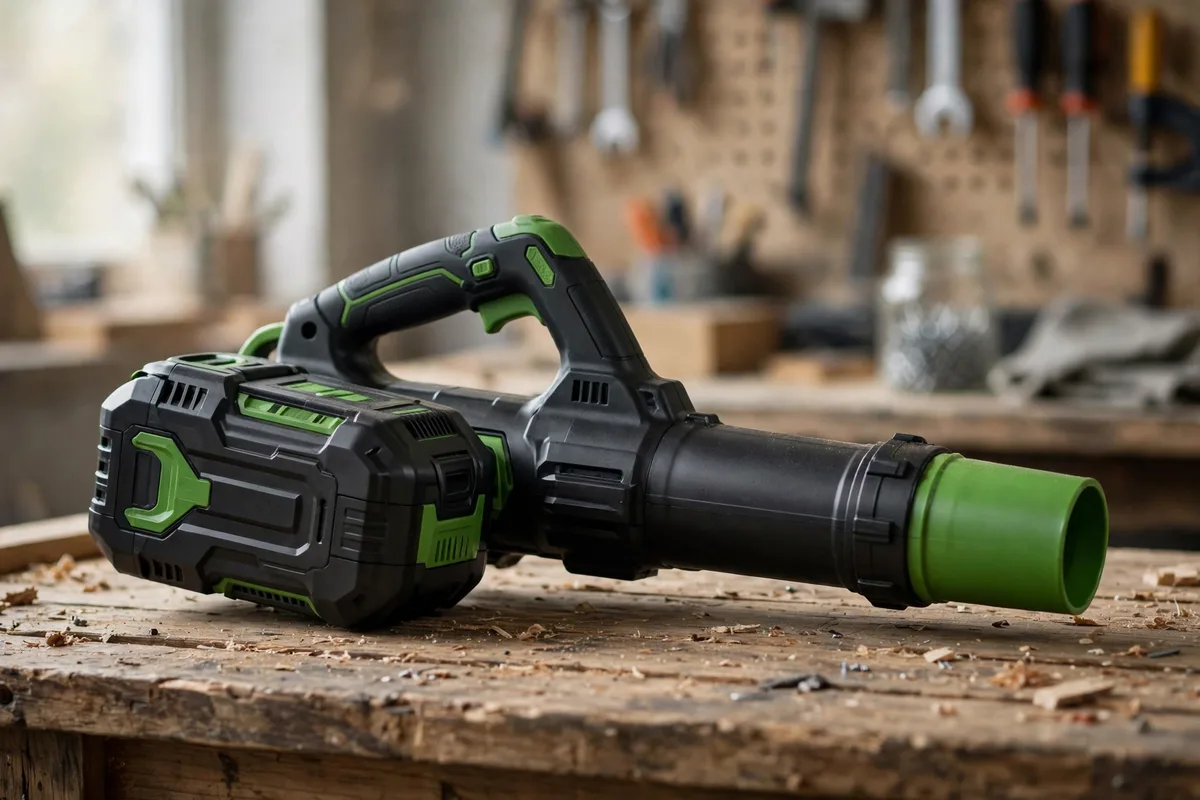
Start with the machine the rest of the class is measured against. The EGO Power+ LB7654 carries a manufacturer rating of 765 CFM and 200 MPH with its turbo mode engaged — figures that put it at or near the top of the handheld class — and it delivers that airflow on EGO’s 56V ARC Lithium platform, which the company says now spans more than 300 tools. The kit version includes a battery and charger, so it works out of the box, and the details owners mention most are the ones that sound boring until you have used a blower for forty minutes: a variable-speed trigger, a thumb-reach turbo button, and nozzle options that trade spread for scouring speed on wet pavement.
The case for the EGO is balance rather than a single headline number. The Toro below out-rates it on CFM, but the LB7654 pairs its airflow with the highest rated air speed here — volume for the lawn, speed for the driveway, enough of both for the matted layer underneath. Independent roundups from Pro Tool Reviews-class testers consistently place it at the front of the handheld pack, and its owner record is the deepest here. The honest costs are platform costs: 56V batteries are EGO-only, spares are a real purchase, and turbo drains a pack quickly — treat it as a burst tool.
Yay · Pros
- Manufacturer-rated 765 CFM and 200 MPH — the most complete power pairing here
- 56V platform spanning 300+ tools, with battery and charger in the kit
- The deepest owner record of any pick in this guide
Hmm · Cons
- Turbo drains a battery fast — it is a burst tool, not a cruising speed
- EGO batteries fit nothing else; spares are a considered purchase
- Out-rated on pure CFM by the Toro below
Best for: most households wanting one blower for every autumn job. Skip if: you already own a deep bench of Milwaukee or Makita batteries — the platform picks below cost you less.
2. Toro 60V MAX Leaf Blower (900 CFM, model 51827) — Most powerful
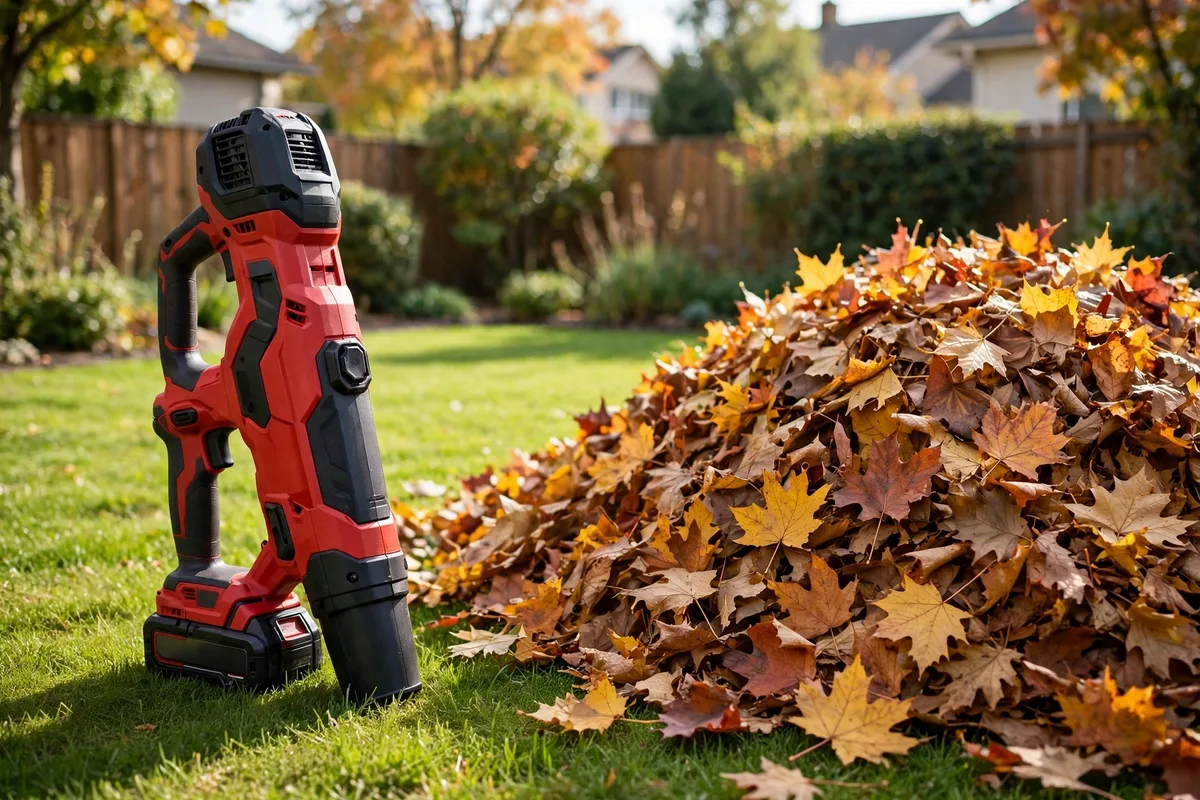
If the EGO is the benchmark, the Toro 60V MAX (model 51827) is the spec-sheet challenger: a manufacturer-rated 900 CFM — the highest airflow figure in the handheld cordless class — with air speed rated at 165 MPH. Toro says the blower reaches full turbo output in about a second, and the Flex-Force 60V platform behind it also runs Toro’s cordless mowers, trimmers and snow tools, so a battery bought for leaf season has year-round work available. On paper, and in the independent coverage so far, this is simply the most powerful handheld blower a homeowner can buy.
The caveat is youth, stated plainly. The 900 CFM model is a newer entrant than the EGO or the Makita, so the long-term owner record — the five-winters-of-use evidence that makes the EGO such a safe recommendation — is still being written. Early owner reports are positive about the power and about runtime at lower settings, and Toro’s service network is a genuine asset if something goes wrong. Buy it for the airflow and the platform’s mow-and-snow breadth; just know you are trading a shorter track record for the biggest number in the class, and that its headline figure is a peak rating, not an all-day output.
Yay · Pros
- Manufacturer-rated 900 CFM — the highest airflow figure in the class
- Flex-Force 60V platform shared with Toro mowers and snow tools
- Toro’s dealer and service network in both countries
Hmm · Cons
- A newer model — the long-term owner record is still being written
- Peak airflow is a turbo figure; sustained output is lower
- Big power tempts big throttle, and runtime falls accordingly
Best for: large lots, heavy tree cover and buyers who want the strongest rated airflow in a handheld. Skip if: a long, proven owner record matters more than the headline number — that is the EGO.
3. Ryobi 40V HP Whisper Series Leaf Blower — Quietest
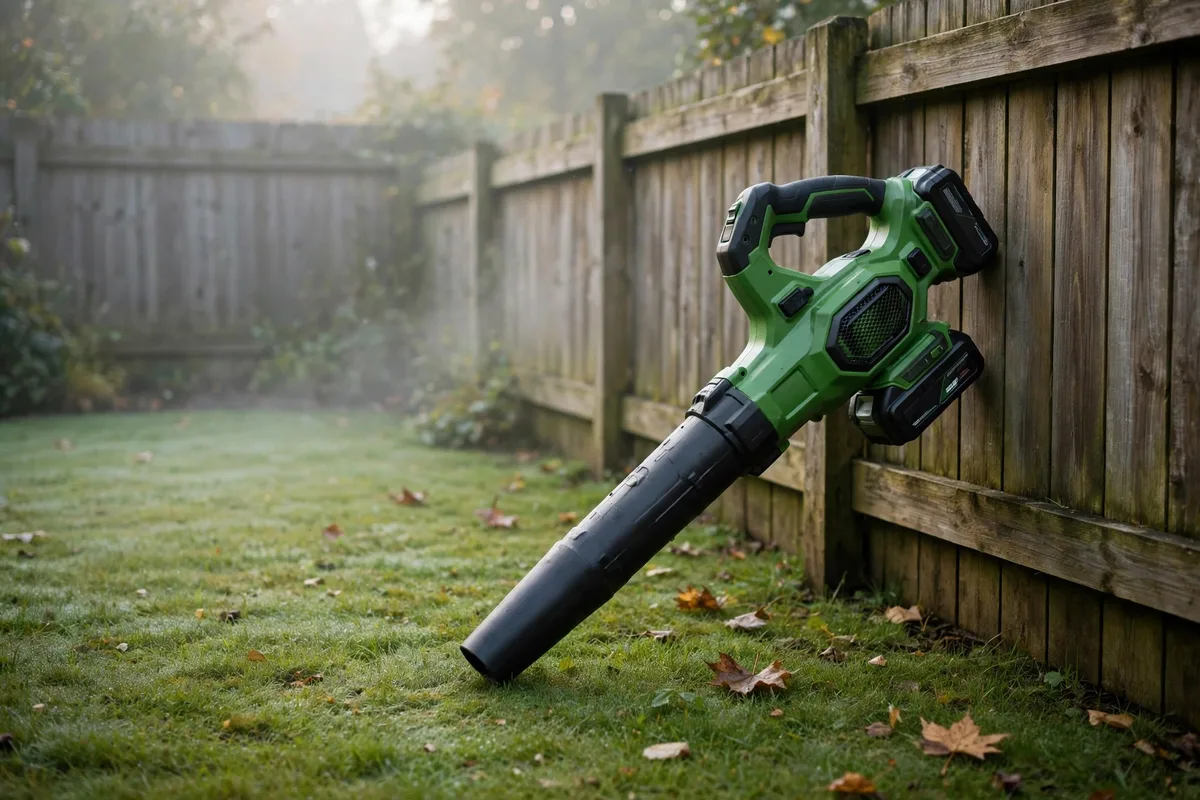
Every other pick in this guide asks how much air a blower can move. The Ryobi 40V HP Whisper Series asks how quietly it can move it. The Whisper design — a larger, slower-turning fan, noise-dampening foam and a repositioned intake — produces a manufacturer noise rating of just 57 dB for the 650 CFM kit version, against the 70-plus dB figures typical of powerful blowers. That kit is rated at 650 CFM and 160 MPH — not a compromise spec, but comfortably in the class’s working range, with enough volume for wet leaves and real autumn piles. Ryobi rates the Whisper design as dramatically quieter than a comparable gas blower, and owners consistently describe holding a conversation beside it.
This is the pick for the bylaw map. A growing list of Canadian and US municipalities restrict blower noise or hours, and plenty of strata and HOA rules do the same; a machine rated at 57 dB defuses most of those conversations before they start. The honest notes: Ryobi’s 40V line is largely a Home Depot channel product in the US, so availability and kit contents differ by retailer and country — check the bundle before assuming a battery is included. And while a rated 650 CFM is plenty for most yards, it is not 765 or 900; big, heavily treed properties may want the extra volume.
Yay · Pros
- Whisper Series design rated at just 57 dB (650 CFM kit)
- Rated 650 CFM and 160 MPH — real working power, not a quiet-toy compromise
- The bylaw- and neighbour-friendly pick for dense streets and HOAs
Hmm · Cons
- Largely a Home Depot channel product in the US — availability varies
- Kit contents vary; confirm battery and charger are in the box
- Less airflow than the EGO and Toro for the biggest piles
Best for: dense neighbourhoods, noise-bylaw towns and anyone who clears early or late. Skip if: your lot is large and heavily treed and maximum airflow outranks quiet.
4. Milwaukee M18 FUEL Blower — Best for M18 owners
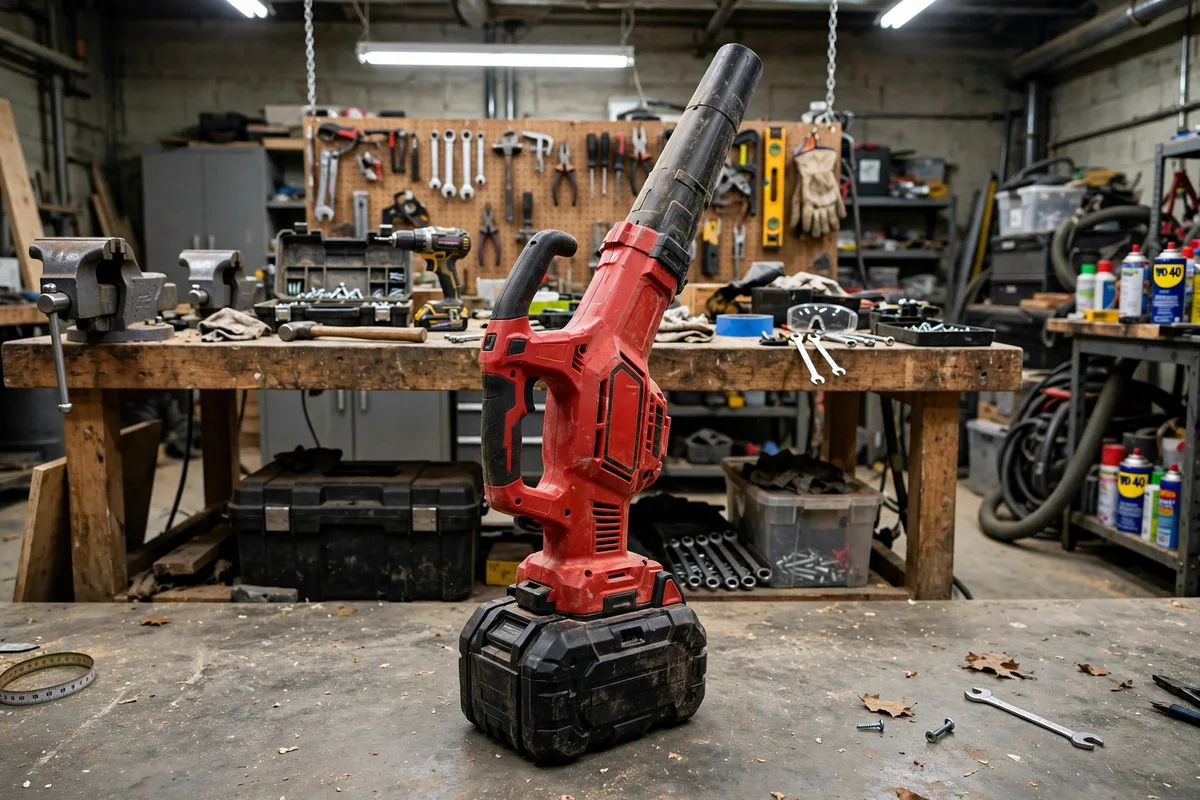
Read the Milwaukee M18 FUEL Blower’s spec sheet cold and it looks like the weakling of this guide: manufacturer-rated 450 CFM and 120 MPH, well below the EGO and Toro. That reading misses the point of the tool entirely. The M18 FUEL exists for the millions of households and tradespeople whose garages already run on Milwaukee’s M18 batteries — one of the largest 18V ecosystems in the trades — and for them the maths is simple: a blower that uses batteries already sitting on the charger, bought as a bare tool, is the cheapest serious blower they will ever own. Its brushless motor, instant throttle and variable speed give it a crisp feel owners praise for shops, decks and driveways.
The honest trade is airflow, and we will not dress it up. At a rated 450 CFM this is a cleanup blower, not a leaf-season heavy lifter: it sweeps driveways, clears clippings and handles light leaf fall all day, but a deep, wet maple carpet takes noticeably longer than with the top picks here. Buy it because the batteries are already in your garage and your jobs are light to moderate. If your autumns are measured in truckloads of leaves and you own no M18 tools, the EGO and Toro earn their airflow honestly.
Yay · Pros
- Runs on the huge M18 ecosystem — bare-tool value if you own packs
- Instant throttle and variable speed — precise for shops and decks
- Brushless FUEL build with a strong trade-user owner record
Hmm · Cons
- Rated 450 CFM / 120 MPH — modest airflow, honestly stated
- Deep, wet leaf carpets on large lawns take noticeably longer
- Poor value if you own no M18 batteries — the platform is the point
Best for: M18 owners wanting a cleanup blower their batteries already power. Skip if: heavy autumn leaf volume is your main job, or you own no M18 tools.
5. Makita 36V (18V X2) LXT Blower XBU03 — Best for Makita owners
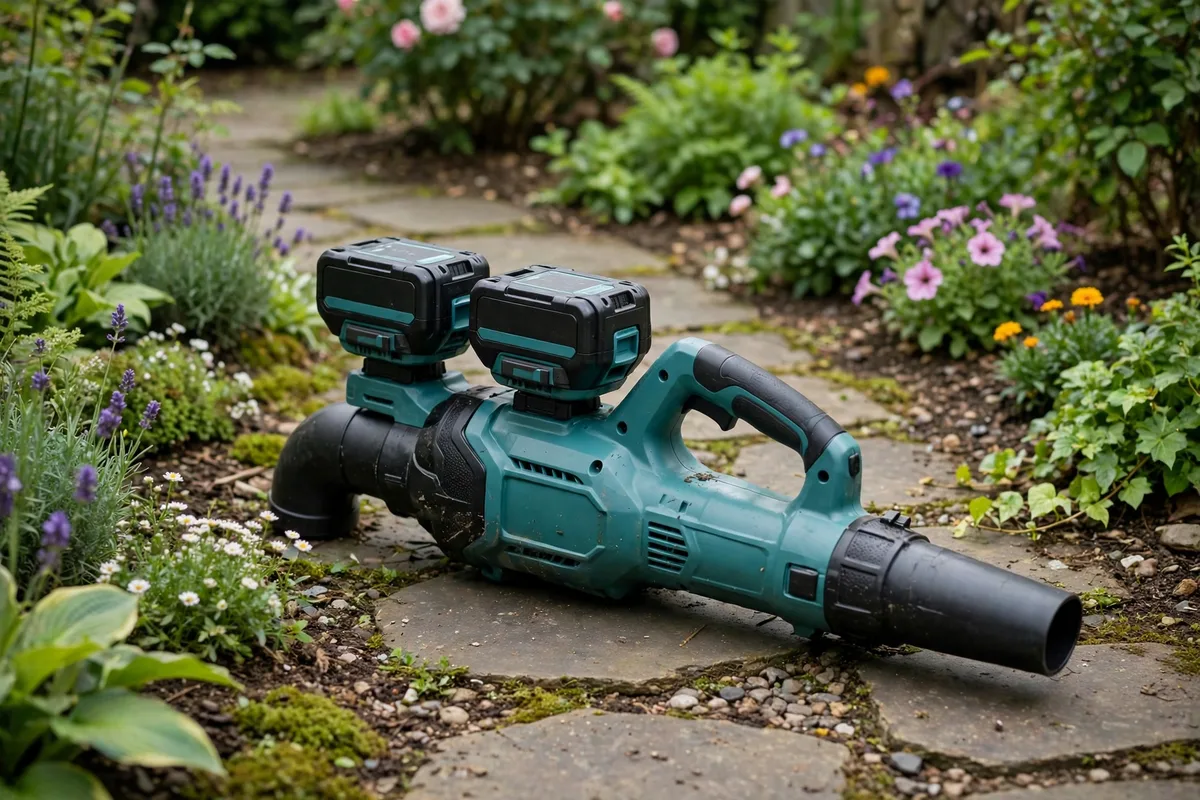
The Makita XBU03 takes the opposite route to power from the high-voltage platforms: it runs two 18V LXT batteries in series for 36V, which means it draws on what Makita calls the world’s largest 18V cordless tool platform — the batteries from your drill, saw and trimmer, doubled up. Output is manufacturer-rated at 459 CFM and 116 MPH: modest next to the EGO and Toro, in line with the Milwaukee, and honestly sufficient for the patios, paths and moderate lawns most owners actually clear. The feature owners single out is the cruise-control lever, which locks a chosen speed so long sessions do not mean a permanently squeezed trigger finger.
Makita’s case is ecosystem depth and tool feel rather than headline numbers. LXT batteries charge quickly, the platform spans hundreds of tools including a full garden range, and the blower is the balanced, well-finished tool its trade users expect. The compromises are structural: it consumes two batteries at once, so a one-battery household is not really equipped; runtime on mid-size packs is tens of minutes at working speeds; and it will not match the big-CFM machines on a wet leaf carpet. For committed LXT owners with moderate yards, it is the natural pick — and its figures are refreshingly unexaggerated in a category addicted to big numbers.
Yay · Pros
- Runs on two 18V LXT batteries — the world’s largest 18V platform, per Makita
- Cruise-control lever owners love for long sessions
- Balanced, well-finished tool; fast-charging batteries range-wide
Hmm · Cons
- Rated 459 CFM / 116 MPH — a moderate blower, not a big-pile machine
- Uses two batteries at once; a spare pair is close to essential
- Runtime at working speeds is tens of minutes per pair
Best for: committed Makita LXT owners with small-to-moderate yards. Skip if: you own fewer than two LXT batteries, or your autumn leaf load is heavy — look up the list.
CFM vs MPH, battery platforms, noise and the Canadian winter: what actually matters
CFM vs MPH — the whole argument, settled. CFM measures how much air the blower moves; MPH measures how fast that air exits the nozzle. Volume does the heavy work: a high-CFM stream behaves like a river, getting under a leaf pile and rolling the whole mass forward, while a high-MPH, low-volume stream behaves like a pressure washer — brilliant at scouring stuck leaves off concrete, poor at moving bulk. The figure that would settle every argument is blowing force, measured in newtons, which combines volume and speed into actual push; a few brands publish it, most do not, and its absence is why spec sheets lead with whichever of CFM or MPH flatters the machine. Shop CFM first, check MPH second, and be suspicious of any blower — usually the cheapest — that advertises speed alone.
Battery platforms — the real purchase. Nobody buys a blower; they buy into a battery platform with a blower attached. The second battery is not an accessory but the difference between finishing the yard and watching a charger, and every platform here locks you in: EGO’s 56V packs fit only EGO, Toro’s Flex-Force only Toro, and the Milwaukee and Makita 18V ecosystems reward households already holding their drills and saws. That is why two modest-airflow picks still earn their places — a blower running on batteries you own beats a stronger one demanding a new charger wall. Price the platform, not the tool: count the batteries included, the cost of a spare, and whether the same packs run your mower, trimmer or snow tools.
Noise — decibels and bylaws. Blower noise ratings are manufacturer figures measured at a standard distance, and decibels are logarithmic: a machine rated 10 dB lower sounds roughly half as loud, which is why the Ryobi Whisper’s rated 57 dB is a bigger real-world gap than the number suggests. This matters legally as well as socially. Municipal bylaws across Canada and the USA increasingly set blower noise limits or permitted hours, some jurisdictions restrict gas blowers outright, and strata and HOA rules add another layer. Check your municipality’s noise bylaw before buying — the quietest pick in this guide exists because that check fails so many powerful blowers.
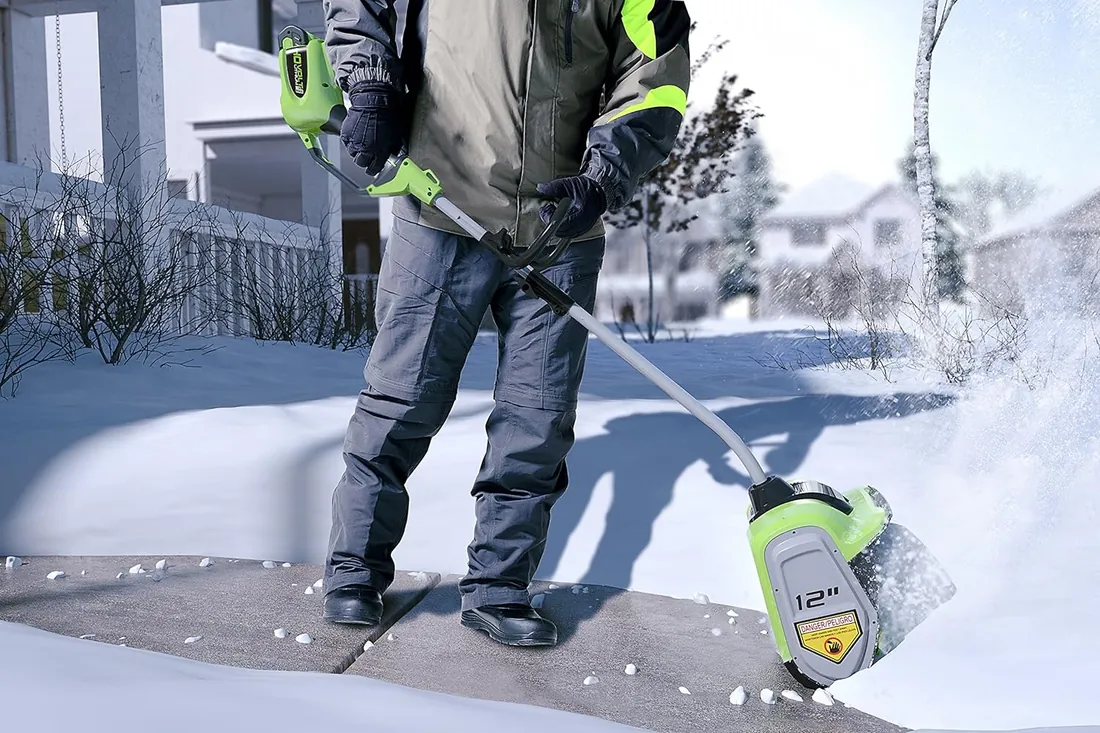
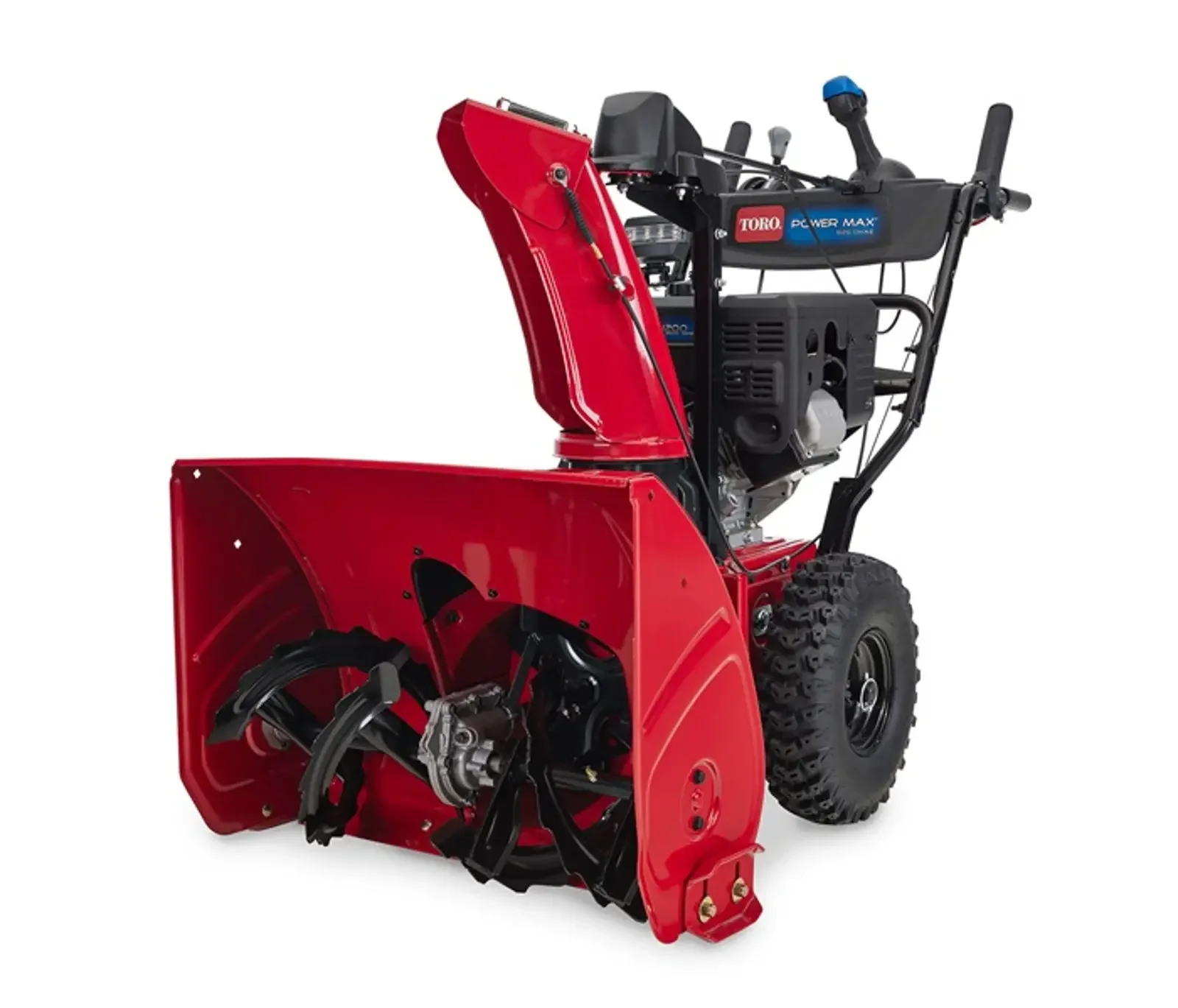
The Canadian bonus: snow, and cold batteries. A strong cordless blower earns a second season in Canada: light, dry, powdery snow — a few centimetres on steps, decks, walkways and car roofs — clears beautifully with the high-CFM picks here. For anything deeper or wetter, step up to our guide to the best electric snow shovels in Canada and the USA for decks and walks, or the best snow blowers in Canada and the USA for full driveways. Cold is the tax: lithium batteries deliver less runtime in deep cold and can refuse a charge when frozen, so store batteries indoors, bring them out only for the job, and never leave the spare pack in an unheated garage overnight.
Leaf blower questions, answered
Is CFM or MPH more important in a leaf blower?
CFM — cubic feet per minute, the volume of air — matters more for most yard work, because moving a pile of leaves is a volume job: a wide river of air rolls leaves forward, while a narrow high-speed jet mostly scatters the top layer. MPH still has its place: speed is what scours stuck, wet leaves off concrete and lifts debris out of grass. The honest shortcut is to shop CFM first for lawns and leaf piles, then check MPH if your main job is driveways and patios — and treat any blower advertising MPH alone with suspicion.
How long does a cordless leaf blower battery last?
It depends on the setting more than the brand. On a low or medium speed — enough for dry leaves on a driveway — most of these platforms run roughly 30 to 60 minutes on a mid-size battery, and longer on the biggest packs. Turbo is the budget-killer: full-power modes commonly drain a battery in 10 to 20 minutes, which is why experienced owners use turbo in short bursts and cruise at half throttle. Treat every runtime figure as a manufacturer rating measured in ideal conditions; cold weather, wet leaves and ageing batteries all shorten real sessions.
Are cordless leaf blowers as powerful as gas?
For most residential jobs, yes — the top cordless models now match or beat mid-range gas handhelds on the figure that matters, with manufacturer-rated airflow figures like 765 and 900 CFM sitting above what many gas handhelds claim. Gas still wins on sustained runtime: a tank runs longer than a battery, and refuelling takes a minute, so professional crews clearing large properties all day keep gas backpacks. For a typical suburban lot, cordless delivers comparable clearing power with no fuel mixing, no pull starts and far less noise — the trade most owners happily make.
Can I use a leaf blower to clear snow?
Yes, within limits every Canadian owner learns quickly. A strong cordless blower handles light, dry, powdery snow — a few centimetres on steps, decks, walkways and car roofs — beautifully, and the high-CFM picks here are the best at it. Wet, heavy or crusted snow is a different job: the blower mostly polishes it. Keep the snow shallow, work before it gets walked on or freezes, and bring the battery in from the cold afterwards. For real accumulations you still want a shovel or a snow blower — the blower is the finishing tool, not the excavation crew.
Why are some leaf blowers so much quieter than others?
Design, mostly. Quieter blowers use larger, slower-turning fans, acoustic foam and carefully shaped air paths to move air without the high-pitched whine of a small fan spinning flat out — Ryobi’s Whisper Series, rated at 57 dB for its 650 CFM kit, is the clearest example in this guide. Gas engines add exhaust and mechanical noise no housing fully tames, which is why even modest cordless models sound calmer. Remember that decibels are logarithmic: a blower rated 10 dB lower sounds roughly half as loud, and ratings are measured at a set distance, so compare like with like.
The short version
Most households should buy the EGO Power+ LB7654 — the benchmark balance of airflow, speed and platform depth. Big, heavily treed lots should take the Toro 60V MAX 900 CFM and its class-leading rated volume, accepting a younger owner record. Streets where noise bylaws bite belong to the Ryobi 40V HP Whisper Series. Households already holding red or teal batteries should stay home: the Milwaukee M18 FUEL and Makita XBU03 trade headline airflow for the economics of a platform you already own. Whichever you choose, shop CFM first, budget for the second battery, and store packs indoors in winter.
Last updated: November 18, 2026. We refresh this guide each season and whenever a pick is replaced by a better one.