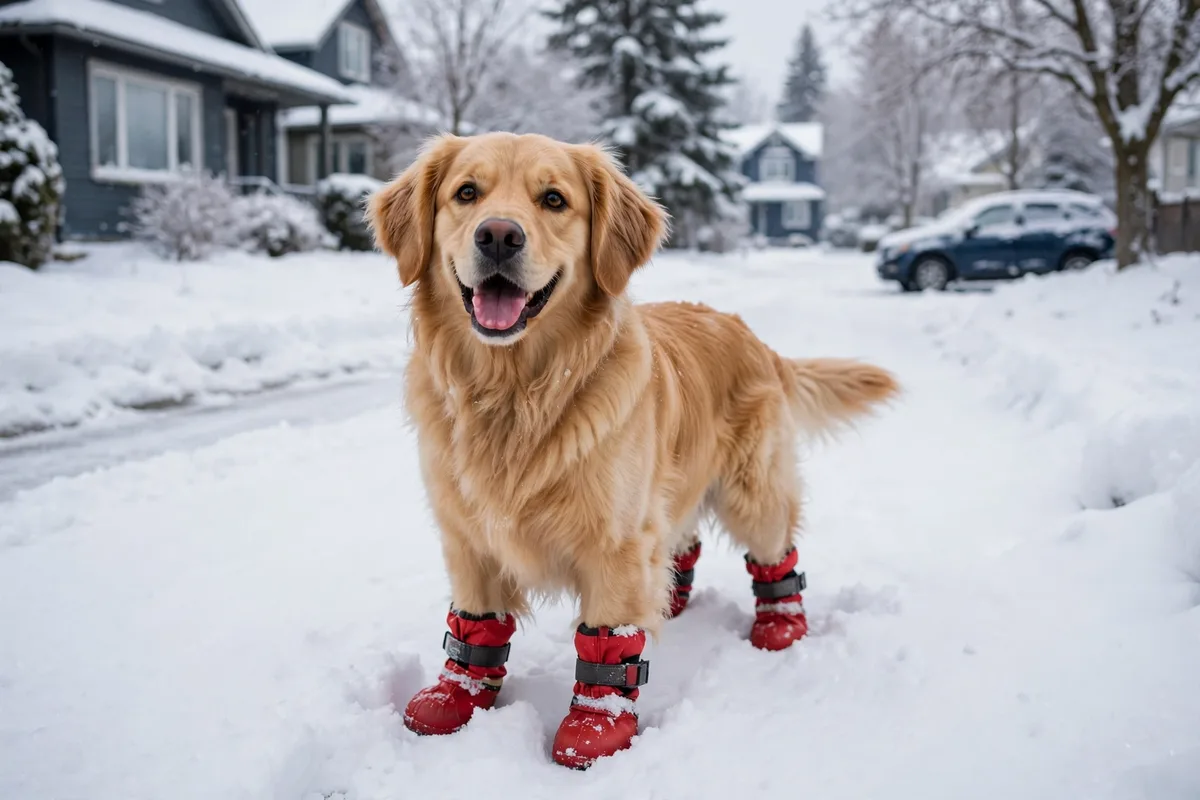
A Canadian winter walk is hard on paws in ways a summer walk never is. The sidewalk outside your door has been dusted with road salt or sprayed with chemical de-icer that stings cracked pads and gets licked off later indoors. Snow packs between a dog’s toes and freezes into ice balls that pull at the hair and force the toes apart with every step. Then there is the cold itself: a −30 °C prairie morning is a different problem from a week of coastal slush, but both can end a walk early with a dog holding one paw up, asking to go home. The best dog boots for winter solve all three problems at once — salt, ice balls and cold — and the five pairs in this guide were chosen for the one test that matters most in real use: whether they actually stay on.
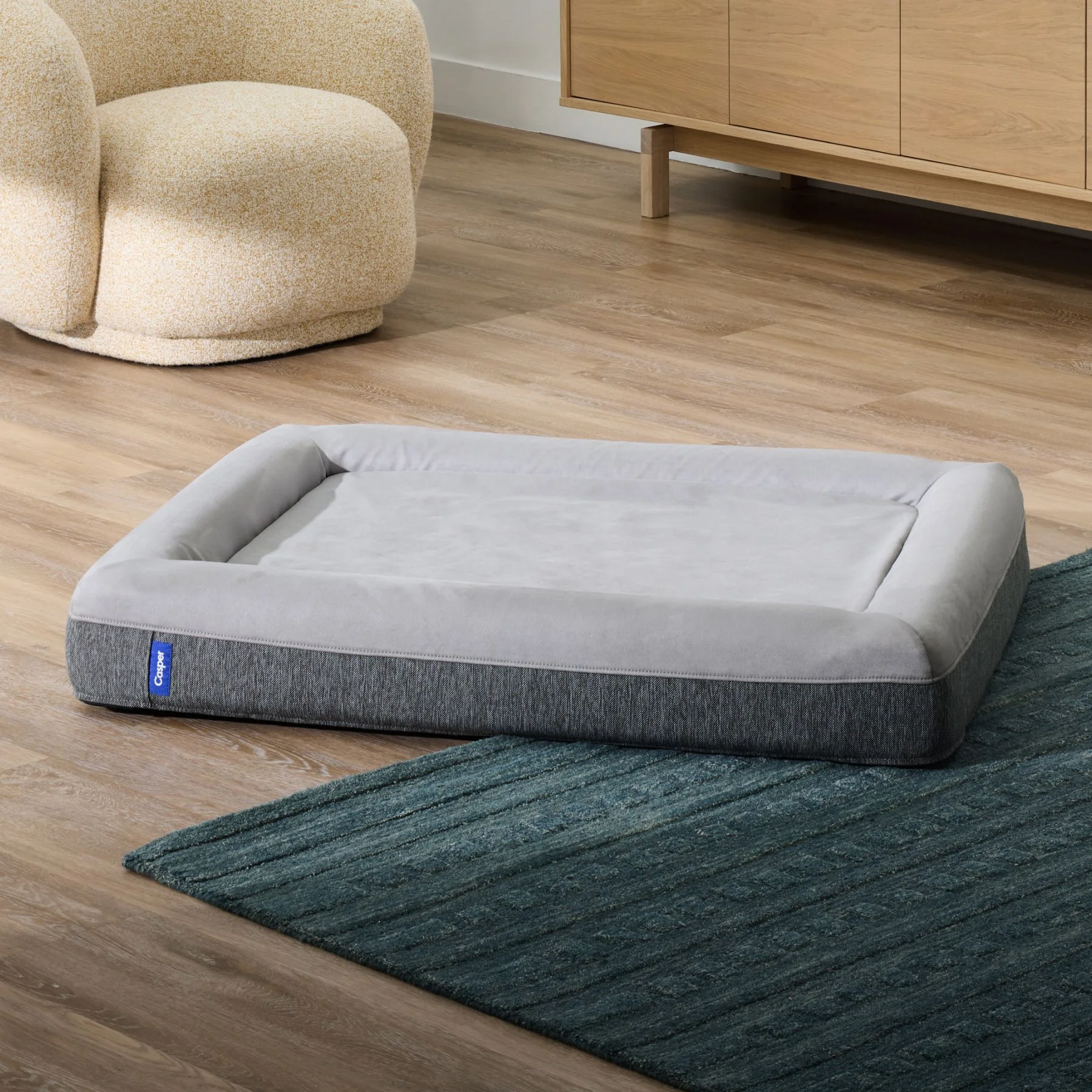
A warm, grippy boot lying in a snowbank two blocks behind you protects nothing, which is why this guide weighs fastening and fit as heavily as insulation. Dogs that spend the rest of the day recovering on the sofa deserve the same research as the walk itself, so if your winter upgrade list runs beyond footwear, our guide to the best dog beds in Canada and the USA is the natural companion read.
Disclosure: CookSmartPicks is reader-supported. When you buy through links on this page, we may earn an Amazon commission at no extra cost to you. Prices and availability change often — check the current price on Amazon before you decide.
How we chose these dog boots
CookSmartPicks is a research-based guide. We do not run a test lab, and we never claim hands-on testing we have not done. For this list we compared brand specifications — materials, linings, soles, closures and size ranges — with Canadian retailer roundups, independent review testing, and owner reports from cold-climate buyers who walk their dogs on salted sidewalks, packed snow and ice all winter. The criteria were warmth, traction, how securely each design stays on, and how honestly each brand describes its own limits. Manufacturer claims are labelled as claims below.
The lineup at a glance
| Product | Best for | Why it stands out |
|---|---|---|
| Muttluks Original Fleece-Lined Dog Boots | Best for deep cold | The Canadian cold-weather classic — fleece lining and a flexible leather sole |
| Canada Pooch Suspender Boots | Best for staying on | All four boots joined by suspender straps, so a loose boot dangles instead of disappearing |
| Ruffwear Polar Trex Dog Boots | Best traction & performance | Vibram outsole grip and a gaiter closure for active winter hiking dogs |
| Canada Pooch Soft Shield Boots | Best everyday city boot | Named best winter dog boot in Treeline Review’s testing; easy on, grippy sole |
| Pawz Rubber Dog Boots | Best budget salt barrier | Thin disposable rubber boots that seal salt and ice melt away from the paw |
1. Muttluks Original Fleece-Lined Dog Boots — Best for deep cold
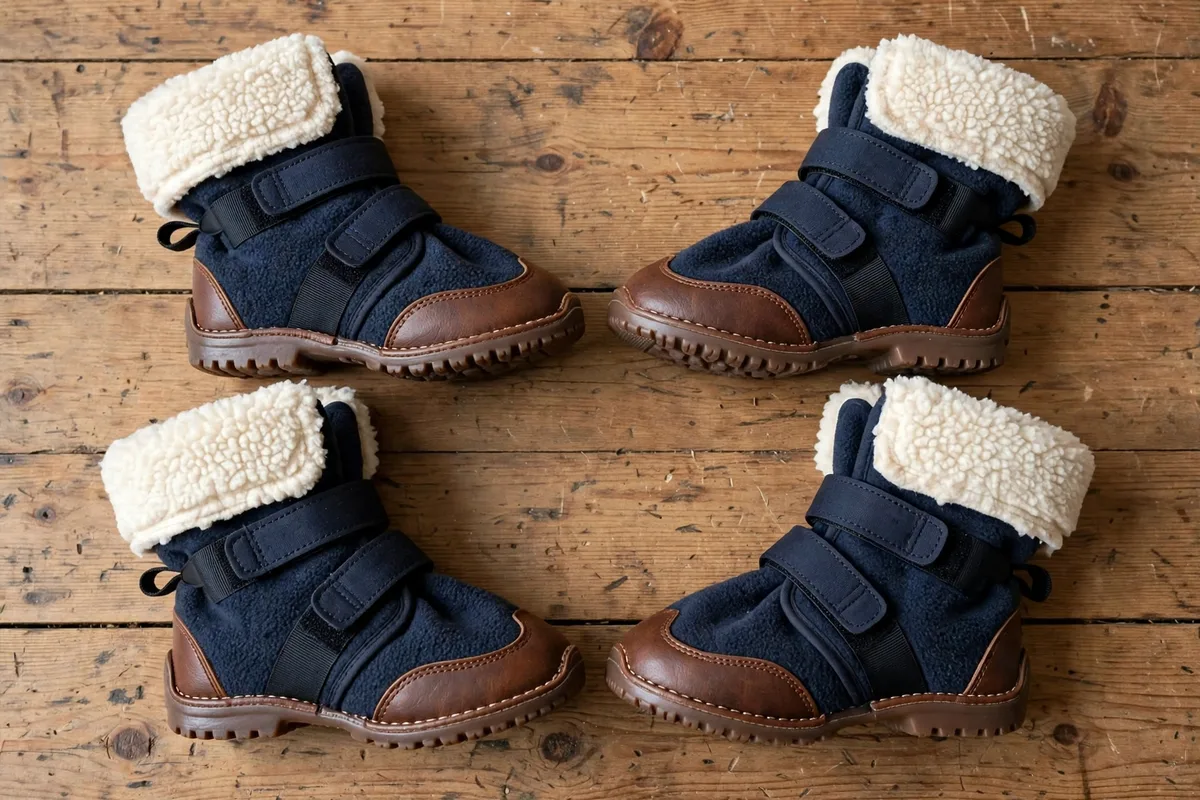
Muttluks has been making dog boots in Toronto, Canada since 1994, and the Original Fleece-Lined model is the boot Canadian owners reach for when the temperature stops being a joke. The lining is genuine fleece for insulation, the upper is a softshell the brand describes as waterproof and windproof, and the sole is flexible leather rather than stiff rubber. That leather sole is the design’s quiet advantage in deep cold: it flexes with the paw instead of fighting it, gives a natural feel for the ground, and keeps its grip character on ice and packed snow where hard soles can skate. For the classic northern problems — salt burning the pads, ice balls building between the toes, snow packing up around the foot — a tall, warm, fleece-lined boot is still the most complete answer, and this is the one with three decades of Canadian winters behind it.
The honest limits are fit and leather care. Fit complaints are the common theme in owner reports — buyers who guessed a size from breed or weight alone often ended up exchanging them, because the sizing only works when the paw is measured properly, weight-bearing, as the fit section below explains. The leather sole also asks for care: the brand advises re-treating the leather after washing to keep it supple. If your winter means weeks below −20 °C and a dog that still wants its full walk, this is the warm, proven, Canadian-made starting point.
Yay · Pros
- Made in Toronto, Canada since 1994 — designed for real Canadian winters
- Fleece lining plus a softshell upper the brand describes as waterproof and windproof
- Flexible leather sole moves with the paw and suits ice, snow and salt
Hmm · Cons
- Fit complaints are the common owner theme — measure carefully before ordering
- Leather soles need re-treating after washing to stay supple
- A premium, warm boot is more than mild coastal winters require
Best for: deep cold, prairie and northern winters, and dogs that walk daily through salt, ice and snowballing conditions. Skip if: your winters are mild and slushy rather than truly cold — the lighter city picks below will suit you better.
2. Canada Pooch Suspender Boots — Best for staying on
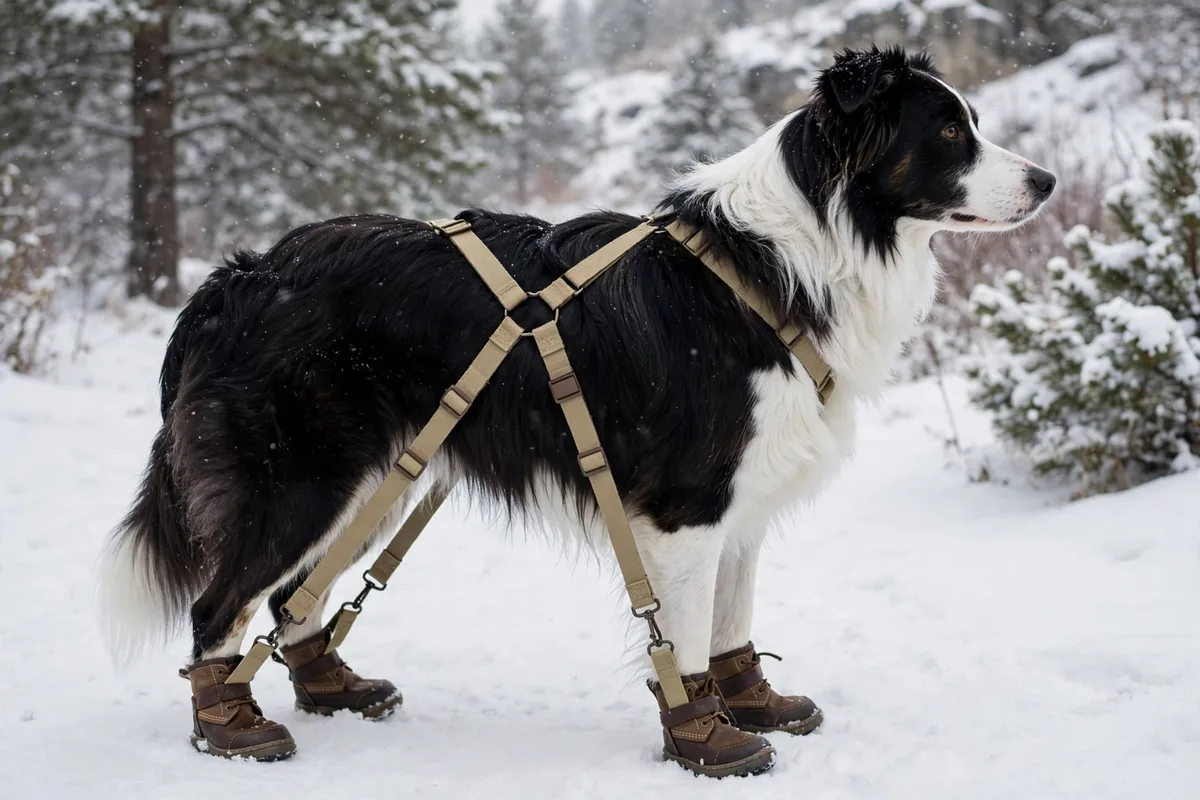
Every dog owner who has used boots knows the real enemy: not cold, but loss. One boot kicks off in deep snow, vanishes under the white, and the set is ruined. Canada Pooch, a Toronto brand, answers that problem mechanically rather than hopefully. On the Suspender Boots, all four boots are connected by adjustable suspender straps that clip over the dog’s back, so the boots work as one system. If a boot does work loose on a stride, it dangles from its strap instead of disappearing into a snowbank — you stop, slip it back on, and walk on. The boots themselves are water-resistant and fleece-lined with a rubber sole and reflective details for dark winter evenings, and the range runs in sizes 1 to 6 plus a Short fit, which gives smaller and shorter-legged dogs a better chance at a proper match than a one-shape range does.
The trade-offs are about routine. A connected system takes a little longer to put on than four independent boots, and some dogs need an extra training session to accept straps over the back. Water-resistant also means what it says — fine for snow and damp sidewalks, not a promise for standing slush. Weighed against retracing a snowy route hunting for a lost boot, the suspender design is the most convincing stay-on solution in this guide.
Yay · Pros
- Suspender straps join all four boots — a loose boot dangles, it does not get lost
- Water-resistant, fleece-lined, with a rubber sole and reflective details
- Sizes 1 to 6 plus Short, from a Toronto brand that designs for Canadian winters
Hmm · Cons
- Takes longer to put on than four separate boots
- Some dogs need extra training to accept straps over the back
- Water-resistant is not waterproof — deep slush is beyond the claim
Best for: dogs that kick boots off, deep-snow routes, and any owner tired of losing a boot mid-walk. Skip if: your dog strongly objects to anything over its back, or you want the fastest possible on-and-off for short door-yard trips.
3. Ruffwear Polar Trex Dog Boots — Best traction & performance
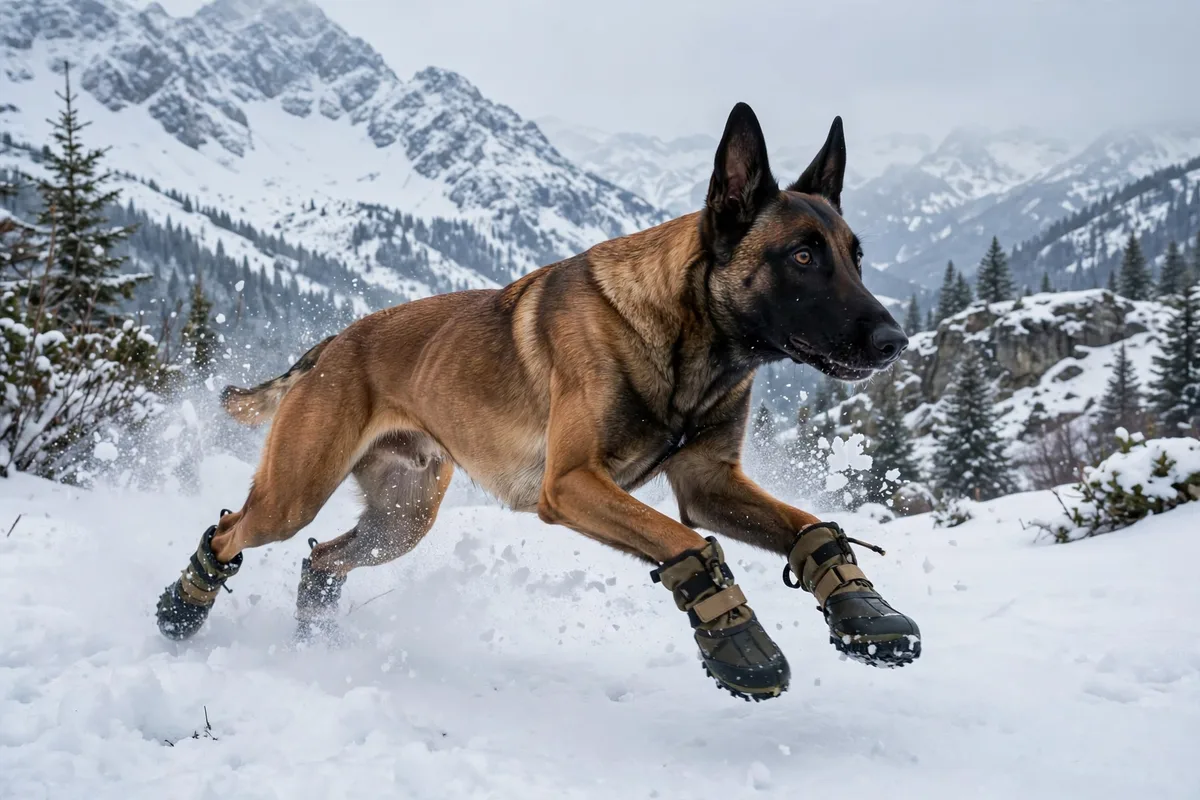
The Polar Trex is what happens when an outdoor-gear company builds a dog boot the way it would build a winter hiking boot. The outsole is a Vibram sole — the same outsole family trusted on human performance footwear — shaped for grip on snow and ice, and the upper is an insulated softshell with a gaiter-style closure that extends up the leg to keep snow from packing in over the top. That makes this the performance pick: the boot for dogs that hike, run and work in winter, on trails where traction is a safety feature rather than a comfort. Ruffwear sells the Polar Trex in pairs rather than fours, which sounds like a quirk until you measure a dog properly and discover the front and rear paws are genuinely different sizes — pairs let you fit each end of the dog correctly.
This is the most technical boot here, and it rewards owners who measure both front and rear paws and spend a short training period letting an active dog learn the new feel at speed. It is more boot than a small city dog on cleared sidewalks will ever use — the Soft Shield or Pawz below serve that dog better. But for winter hikers, trail runners and any dog that has slipped on ice in ordinary boots, the Polar Trex is in a class of its own. The grip is the product.
Yay · Pros
- Vibram outsole grip — the strongest traction story in this guide
- Insulated softshell upper with a gaiter-style closure that keeps snow out
- Sold in pairs, so front and rear paws can each get their correct size
Hmm · Cons
- More boot than a cleared-sidewalk city dog needs
- Buying two pairs in different sizes takes more care at ordering
- Active dogs still need a short break-in and training period
Best for: active winter hiking, running and trail dogs, and any dog that needs real grip on ice and snow. Skip if: your winter walking is short, flat and cleared — you are paying for performance you will not use.
4. Canada Pooch Soft Shield Boots — Best everyday city boot
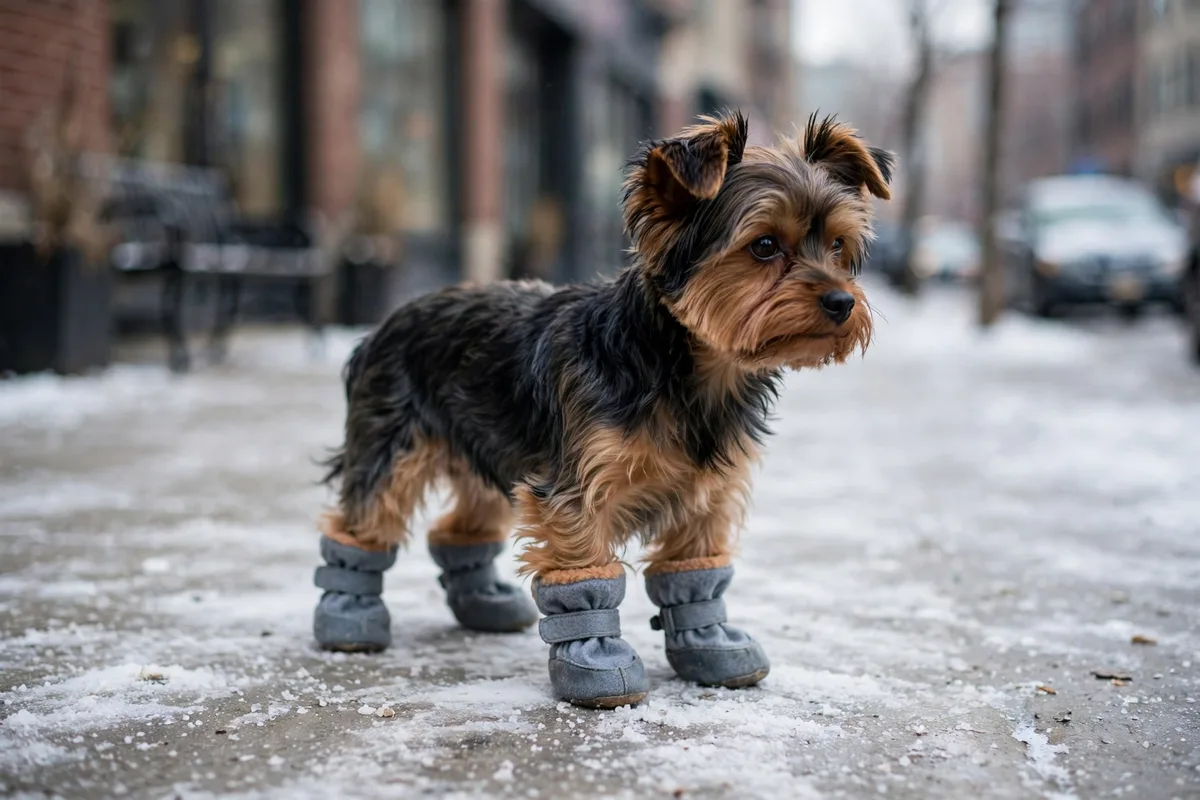
Most winter dog walking is not an expedition. It is the same salted blocks and slushy crossings, twice a day, for five months — and the Soft Shield is built for exactly that routine. Canada Pooch’s everyday boot pairs a water-resistant shell with a soft lining, a rubberised grip sole for slick pavement, and a closure that combines a toggle with hook-and-loop fastening, so the boot goes on quickly and adjusts snugly without a wrestling match at the door. It carries independent recognition, too: Treeline Review’s testing named it the best winter dog boot, which matters in a category where most claims are the brands’ own. For city dogs in Toronto, Chicago, Montreal or New York, this balance of warmth, grip and sheer ease of use is why it earns the everyday slot.
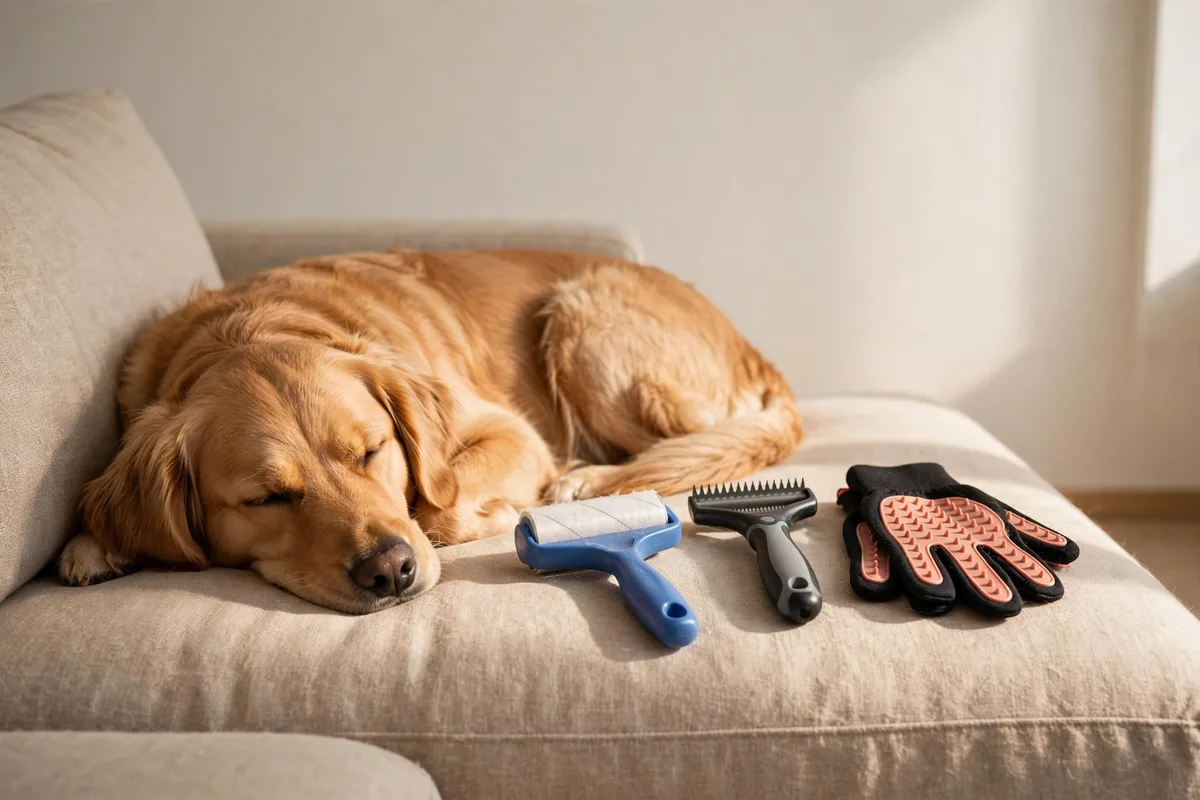
The honest limit is in its key specification: the shell is water-resistant, not waterproof. Snow, damp pavement and light slush are its home ground, but deep slush on a thaw day can soak through. It is also a city boot by design — it does not pretend to the Polar Trex’s trail grip or the Muttluks’ deep-cold heritage. Within its job, though, it is the easiest recommendation here for the largest number of dogs. And because city winter also means wet coats and muddy paws coming back through your home, it pairs naturally with the tools in our guide to the best pet hair removers in Canada and the USA once the boots come off at the door.
Yay · Pros
- Named best winter dog boot in Treeline Review’s testing
- Toggle plus hook-and-loop closure — quick on, snug fit, no doorstep wrestling
- Rubberised grip sole and soft lining, tuned for daily city winter walking
Hmm · Cons
- Water-resistant is not waterproof — deep slush can soak through
- A city boot, not a trail or deep-cold specialist
- Like every boot here, sizing still depends on measuring the paw
Best for: everyday city dogs on salted, slushy sidewalks who need one easy, warm, grippy boot for the daily routine. Skip if: your walks regularly cross deep slush or standing water, or you need trail-grade traction.
5. Pawz Rubber Dog Boots — Best budget salt barrier

Pawz takes the opposite approach to every other pick here: instead of building a warm, structured boot, it makes a thin balloon of natural rubber that stretches over the paw and seals it completely. The boots are sold in packs of 12, are disposable by design, and the brand describes the rubber as biodegradable. There is no insulation and no tread to speak of — and for the specific enemy of the salted sidewalk, that barely matters. What salt and chemical ice melt attack is the pad itself, and a close-fitting rubber barrier stops them touching it at all. Pawz has one more advantage owners report: because the rubber is thin, dogs can feel the ground through it, and many that fuss in structured boots accept Pawz noticeably faster.
Read the limits as clearly as the strengths. With no insulation, Pawz is not a deep-cold boot — on a −30 °C morning it blocks salt but does little against the cold itself, and thin rubber wears through on rough pavement, the honest cost of the disposable model. Fit matters too: too small and the rubber is hard to stretch on; too large and it twists. But as a salt barrier, a backup set in the car, or a first boot for a dog that rejects footwear, nothing here does the specific job for less.
Yay · Pros
- A complete, close-fitting barrier against salt and chemical ice melt
- Thin rubber lets dogs feel the ground — many accept them faster than structured boots
- Sold in packs of 12; disposable, with rubber the brand describes as biodegradable
Hmm · Cons
- No insulation — not a deep-cold boot on its own
- No real tread, and thin rubber wears through on rough ground
- Disposable by design, so heavy users go through packs steadily
Best for: salted sidewalks, ice-melt protection, boot-resistant dogs, and as an affordable backup or first pair. Skip if: deep cold is your main problem — choose the fleece-lined Muttluks and keep Pawz for salt days.
Fit is everything: measuring, staying on, and the paw-wax question
How to measure a paw. Almost every disappointment in this category is a sizing disappointment, so measure before you order anything. Have your dog stand naturally on a sheet of paper, putting full weight on the paw — a weight-bearing paw spreads wider than a lifted one, and the boot has to fit the spread paw, not the relaxed one. Mark the widest points on either side of the pad and measure the width between the marks. Do the front paws and the back paws separately, because they are often different sizes, which is exactly why Ruffwear sells in pairs. Then use the brand’s own chart for the model you are buying; sizes are not standardised across brands, and a dog’s breed or weight is a poor substitute for a measurement. Between sizes, follow that brand’s guidance for that model rather than guessing.
Why boots fall off — and the designs that solve it. A boot stays on when three things are right: the size matches the measured paw, the closure fastens snugly above the paw, and the shape suits the dog. Deep snow adds a fourth force, tugging at every stride. Work through the causes in order — re-measure, re-fasten firmly without restricting circulation, and re-check the fit a few minutes into the walk. If a correctly fitted boot still escapes your dog, change the design rather than tightening forever: a taller gaiter closure, or the Canada Pooch suspender system, which removes loss entirely by keeping all four boots connected over the back. While you are building a winter routine that runs itself, our guide to the best automatic pet feeders in Canada and the USA covers the feeding side of those dark, cold evenings.
Boots or paw wax? The honest comparison. Paw wax — Musher’s Secret is the best-known name — is the no-boot alternative, and it deserves a fair hearing. Rubbed into the pads, it forms a breathable barrier that helps against salt and ice melt, reduces snowballing between the toes, needs no sizing and no training, and suits dogs that simply will not wear boots. Its limits are equally real: it wears off during a walk, it adds no insulation against deep cold, and it gives no grip and no protection against sharp ice or rough frozen ground. Boots are the complete solution — barrier, warmth and, on the right models, traction — at the cost of measuring, fitting and a few training sessions. Our honest advice is not either-or: wax for quick, mild outings and boot-refusing dogs, boots for deep cold, heavy salt and longer walks, and both together on the worst days of the year.
Dog boot questions, answered
Do dogs really need boots in winter?
Not every dog does, but many Canadian and northern US dogs benefit from them. Boots protect against road salt and chemical de-icer, which can dry, crack and irritate paw pads, and against sharp ice and packed snow that wedges between toes. Short-coated, small, senior and low-to-the-ground dogs feel the cold fastest, and any dog that starts lifting paws, limping or licking its feet on a winter walk is telling you the ground hurts. On mild days on clean snow, a healthy, thick-coated dog may be fine barefoot — boots are for the harsh, salted, icy days.
How do I measure my dog for boots?
Measure with your dog standing and putting full weight on the paw, because a weight-bearing paw spreads wider than a lifted one. Place the front paw on a sheet of paper, mark the widest points on either side of the pad, and measure the distance between the marks. Repeat for a back paw, since front and rear sizes often differ. Compare the width to the brand's own size chart — never guess from breed or weight alone — and if your dog falls between sizes, follow the brand's guidance for that model rather than automatically sizing up.
How do I get my dog used to wearing boots?
Start indoors, days before you need the boots outside. Let your dog sniff them, then put on one boot, reward generously, and take it off. Build to all four boots with short, treat-filled sessions on the floor, then brief indoor walks, then a short outdoor walk on an easy surface. Most dogs do a high-stepping, funny walk at first — that is normal and usually fades within a few outings. Keep early sessions short and positive, check the fit after a few minutes, and never force a long walk in brand-new boots.
Why do my dog’s boots keep falling off?
Boots usually fall off for three reasons: the size is wrong, the closure is not snug enough above the paw, or the boot shape does not match your dog's leg. A boot that is too large rotates and slides; one fastened too loosely works down with every stride, especially in deep snow that tugs at it. Measure weight-bearing paws, fasten closures firmly without cutting circulation, and re-check after the first few minutes of a walk. If a well-fitted standard boot still escapes, a suspender design that connects all four boots over the back solves the problem mechanically.
Are dog boots or paw wax better for salt?
They solve the problem differently. Paw wax, such as Musher's Secret, forms a breathable barrier that helps against salt, ice melt and snowballing, needs no fitting, and suits dogs that refuse boots — but it wears off, offers no insulation and gives no grip or protection from sharp ice. Boots give a complete physical barrier, warmth and, on the right models, real traction, at the cost of fitting and training. Many owners use both: wax for quick, mild outings and boots for deep cold, heavy salt and longer walks.
The short version
For deep cold, buy the Muttluks Original Fleece-Lined — the Canadian classic, provided you measure carefully. For a dog that loses boots, buy the Canada Pooch Suspender Boots. For active winter hiking and real ice grip, buy the Ruffwear Polar Trex, in the correct pair sizes for front and back. For the everyday city routine, buy the Canada Pooch Soft Shield, and respect its water-resistant limit in deep slush. And keep a pack of Pawz by the door for salt days, whatever else you own. Measure weight-bearing paws, train in short happy sessions, and winter walks get kinder.
Last updated: November 18, 2026. We refresh this guide each season and whenever a pick is replaced by a better one.