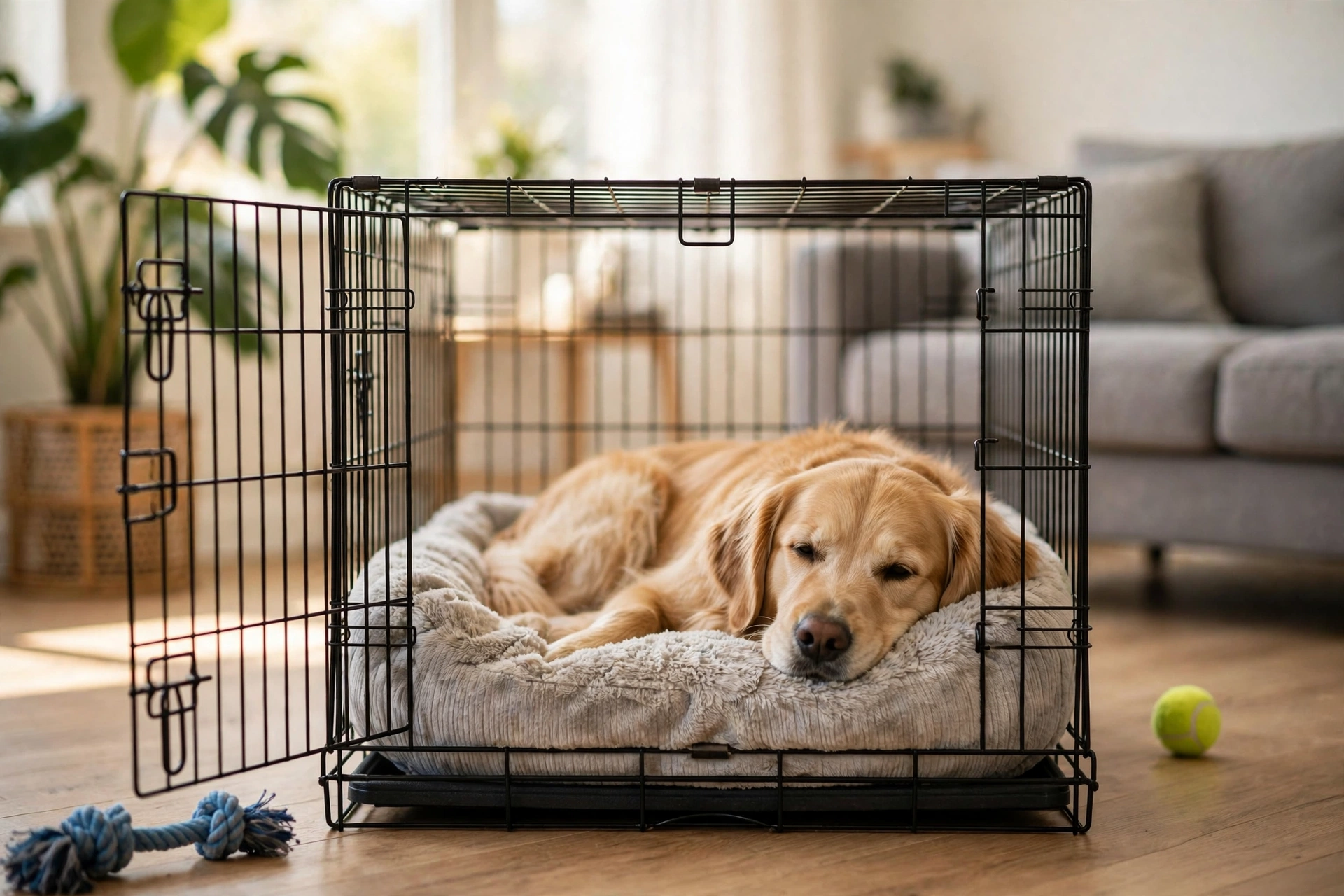
A dog crate looks like the simplest purchase in the pet aisle — a box with a door — until the wrong one fails: a latch a determined dog learns within a week, wire that bends the first time a strong dog leans on the door, a soft crate shredded by a puppy who was never crate-trained to begin with. We compared the crates the specialist roundups keep recommending, and the ones Canadian and American owners keep re-ordering, to build the shortlist below.
The honest headline: for most dogs, the plain wire crate is the right answer, and one model dominates owner feedback so completely that the real decision is which variation of it your dog needs. The exceptions matter, though. Anxious escape artists and frequent flyers need genuinely different crates, and paying wire-crate money for a dog who needs aluminium is the expensive mistake this guide exists to prevent.
How we chose these dog crates
We built this list from the roundups that revisit dog crates every season — PawBench's and Hepper's long-running crate guides, TroveVale's Canada-specific roundup, and the specialist anxiety and airline guides from MyLittleAndLarge and DogSupplyFinder — then checked every model's door layout, wire gauge and airline status against the manufacturers' own specifications. Where testers disagree, we say so. CookSmartPicks does not run its own kennel lab; what we do is reconcile the published evidence and flag the trade-offs the roundups bury.
Three things separated the picks. Containment honesty — wire gauge, latch count and whether the crate can actually hold the dog it is marketed for, because a crate that fails is a safety problem, not an inconvenience. Sizing that grows — divider panels and honest dimensions, because the right crate for an eight-week puppy and a full-grown dog is the same crate bought once. The right shell for the job — open wire for home training, enclosed plastic for den calm and airline cargo, soft sides only for dogs already trained and calm.
The lineup at a glance
| Crate | Best for | Why it made the cut |
|---|---|---|
| MidWest iCrate Double Door | Best overall for most dogs | A 4.7 owner rating on 78,000+ reviews per PawBench, with a divider panel that grows with a puppy |
| MidWest New World | Best value wire crate | Best overall in TroveVale's Canada guide — the most-reviewed crate in their lineup |
| MidWest Ultima Pro | Best heavy-gauge wire | Thicker wire and dual latches for stronger, pushier dogs |
| Petmate Sky Kennel | Best for airline travel | IATA-compliant per Hepper, with 360-degree ventilation |
| EliteField 3-Door Soft Crate | Best soft-sided | Hepper's best overall soft crate — three doors and a washable cover |
| Impact Collapsible Dog Crate | Best escape-proof | Aircraft-grade aluminium — the pick for severe separation anxiety |
1. MidWest iCrate Double Door — Best overall for most dogs
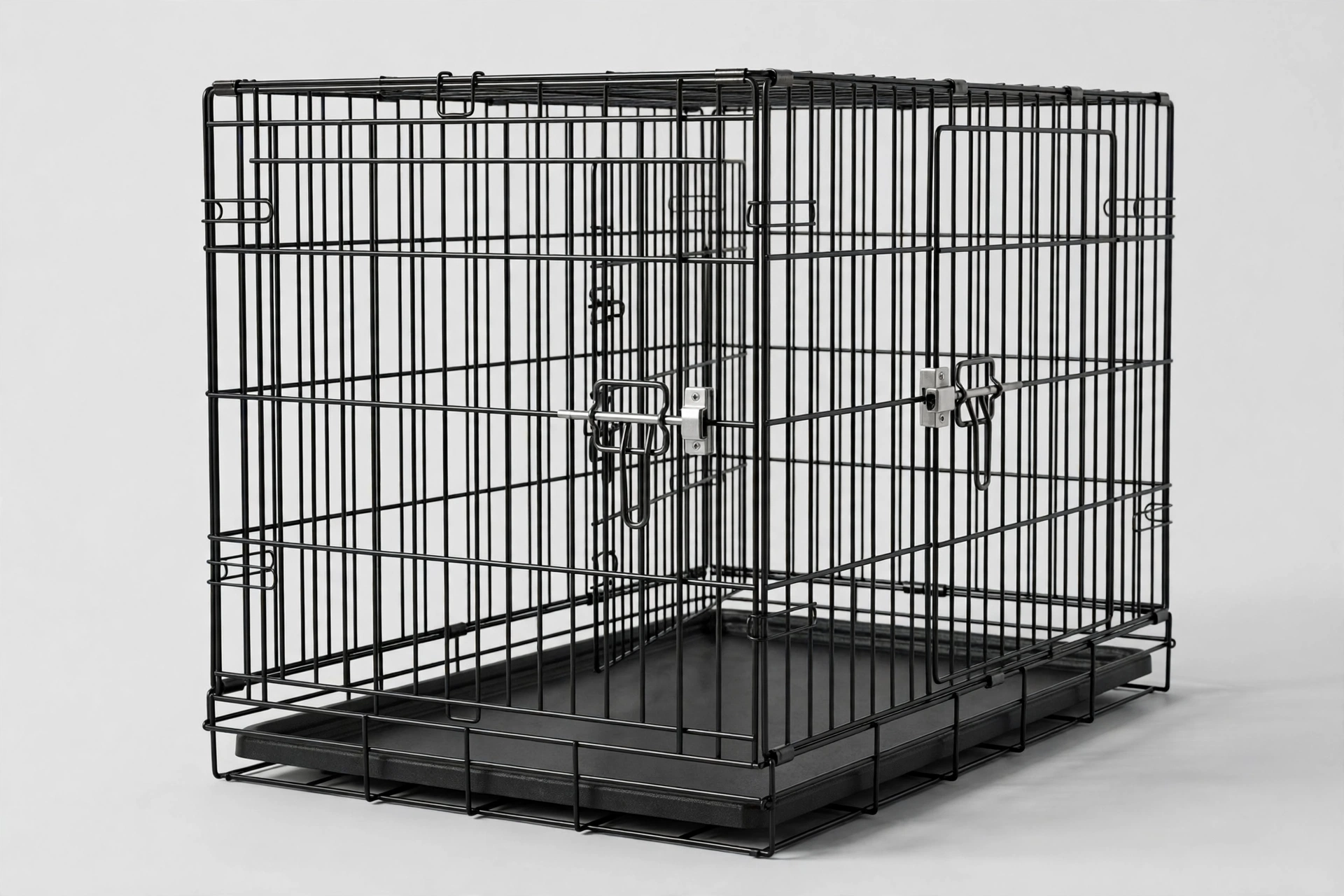
The iCrate is the category's default for a reason: PawBench calls it the most consistently recommended wire crate across owner communities, and it carries a 4.7 owner rating on more than 78,000 reviews — a depth of feedback no rival here matches. The two details that earn it are the divider panel, which shrinks the crate to puppy size and expands as the dog grows (the correct way to house-train, since dogs avoid soiling a space sized to them), and the second door, which lets the crate sit against a wall or in a corner without dictating which way the dog has to enter.
The trade-offs are the standard wire-crate ones. The wire gauge is adequate for a normal dog, not a determined one — a strong, anxious dog who decides to leave will bend it, and the Ultima Pro and the Impact below exist for exactly that dog. It is also a purely functional object: it looks like what it is, and it rattles a little when a big dog leans against the door. For the overwhelming majority of puppies and adult dogs, none of that outweighs the value on offer.
Yay · Pros
- Divider panel grows the crate with your puppy — buy once
- Two doors make placement flexible in any room layout
- The deepest owner-feedback base in the category, per PawBench
Hmm · Cons
- Standard-gauge wire will not hold a determined escape artist
- A single slide-bolt latch per door
- Utilitarian looks — it will not blend into a styled room
Best for: first-time crate buyers, puppy house-training, and calm adult dogs of any size. Skip if: your dog has already escaped or bent a wire crate — go straight to the Impact below.
2. MidWest New World — Best value wire crate
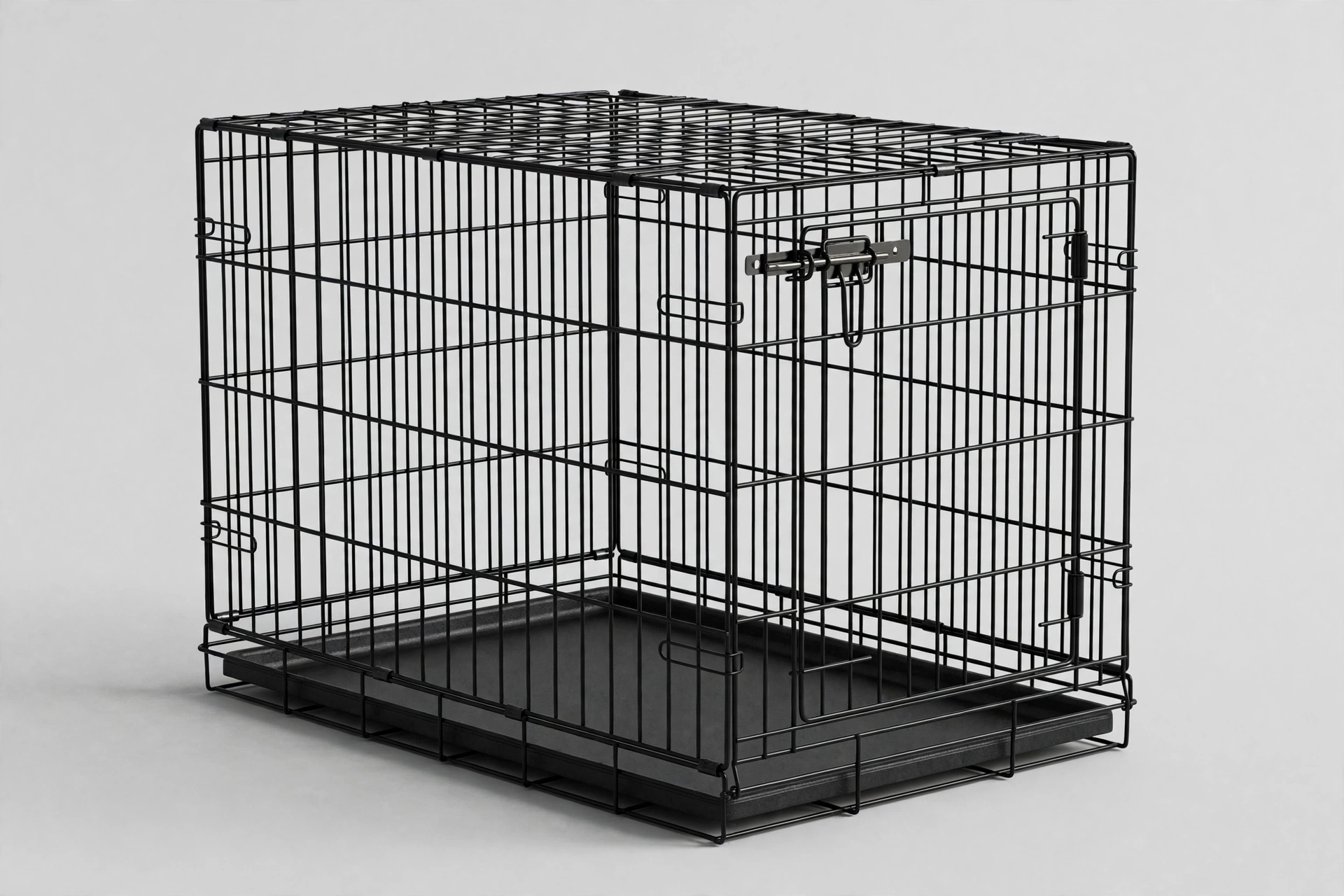
The New World is the iCrate's simpler sibling: one door instead of two, the same folding wire format, and a leak-proof plastic tray underneath that contains accidents properly instead of letting them reach the floor. TroveVale's Canada-specific guide names it their best overall, and it is the most-reviewed crate in their lineup — Canadian buyers in particular have made it the default first crate, which helps with availability and replacement parts on Amazon.ca.
What the lower price gives up is flexibility. With a single door, the crate's position in the room is fixed by which way the door can swing, and the divider panel is not bundled in every size — check the listing for the size you need before ordering, because puppy buyers specifically want that panel. If your dog is past the puppy stage and the crate will live in one spot, the New World covers the whole job for less.
Yay · Pros
- Best overall in TroveVale's Canada guide
- Leak-proof tray contains accidents properly
- Folds flat for storage, moving and travel
Hmm · Cons
- Single door limits where the crate can sit
- Divider panel not included in every size — verify before ordering
- Same standard wire gauge as the iCrate
Best for: budget-conscious first-crate buyers, and Canadian shoppers who want the easiest Amazon.ca availability. Skip if: you need two-door placement flexibility, or your size does not bundle the divider.
3. MidWest Ultima Pro — Best heavy-gauge wire
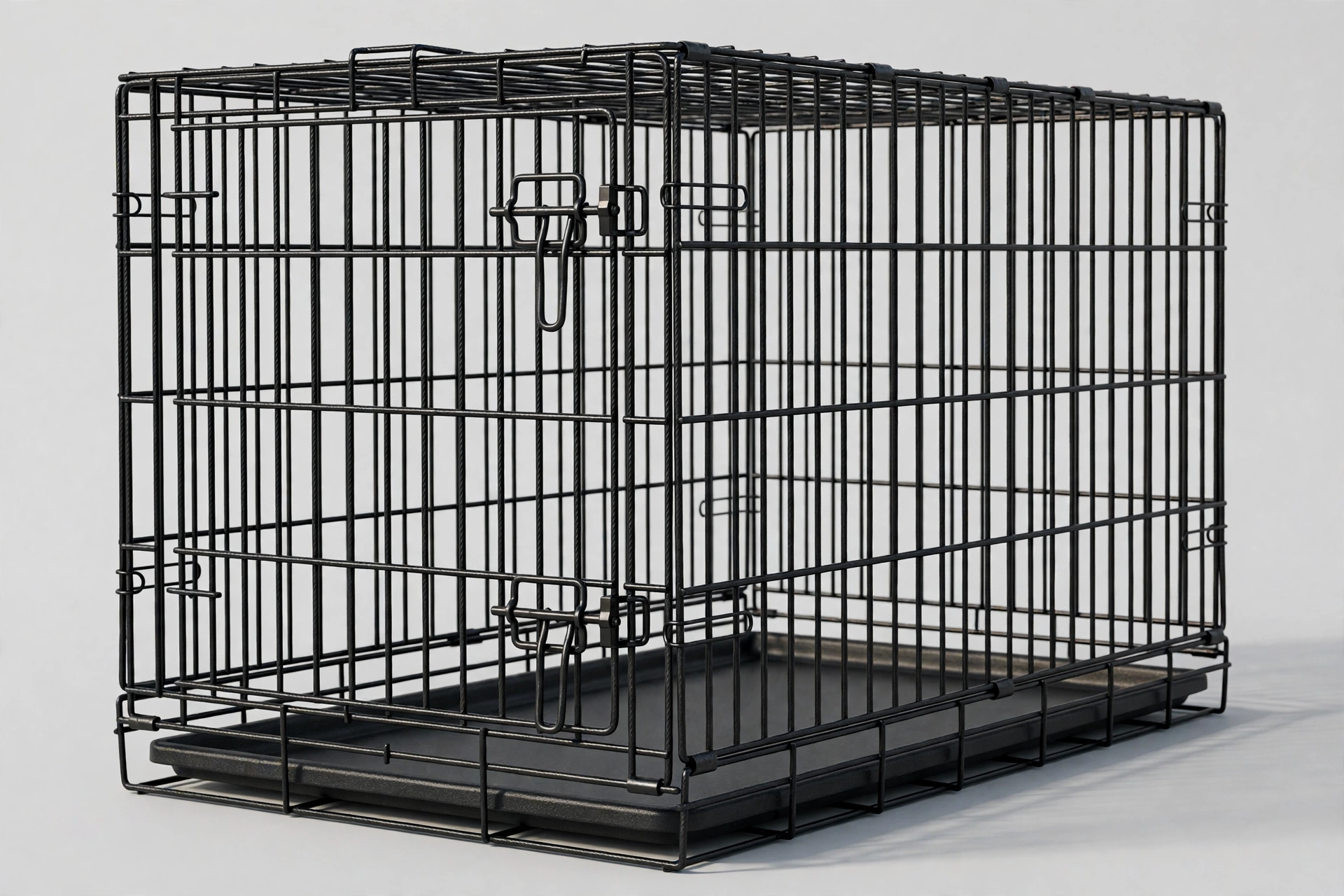
The Ultima Pro is what MidWest builds for the dogs the iCrate cannot hold: noticeably thicker wire throughout, and two slide-bolt latches on the door instead of one. PawBench and Hepper both carry it in their lineups as the heavy-gauge wire upgrade, and for a strong, pushy dog who has started to flex a standard crate door, the dual latches close the most common escape route — prising at the door corner until a single latch walks free.
It is still a wire crate, with wire-crate limits. A truly determined dog with separation anxiety can injure itself against any wire, and no latch count fixes panic — that is the Impact's job, and arguably a behaviourist's. The Ultima Pro also costs meaningfully more than its siblings and weighs more when you need to move it. Buy it as the strongest wire option, with clear eyes about where wire ends.
Yay · Pros
- Heavy-gauge wire resists the bending and flexing that defeat standard crates
- Dual latches close the classic door-corner escape route
- Same folding format and tray system as the rest of the MidWest line
Hmm · Cons
- Costs notably more than the iCrate and New World
- Heavier to carry and reposition
- Still not a match for a genuinely panicked escape artist
Best for: strong, boisterous dogs, and owners upgrading from a standard crate their dog has started to flex. Skip if: your dog panics in a crate or has already escaped one — wire is the wrong material; see the Impact.
4. Petmate Sky Kennel — Best for airline travel
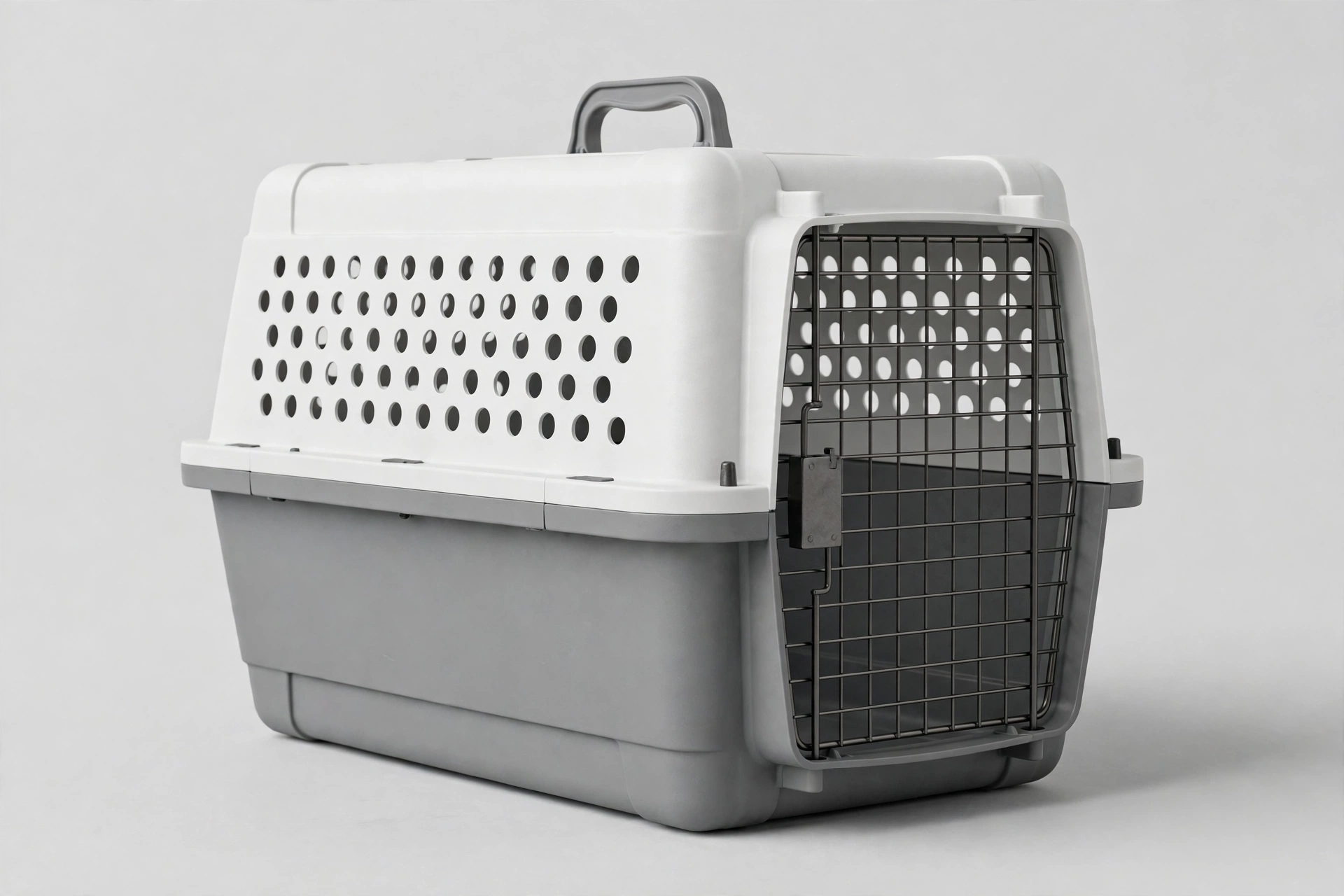
The Sky Kennel is the crate the airlines built their rules around: a solid plastic shell with a wire door, ventilation on all sides — 360-degree ventilation in Petmate's design — and the construction Hepper's plastic-crate guide treats as the airline staple. It is IATA-compliant per Hepper, which is the standard Air Canada, WestJet and the US carriers reference for cargo kennels. The enclosed shell also makes it the calmest home crate here: dogs who find open wire overstimulating often settle faster in a den.
The compromises are everyday ones. A solid shell is bulkier to store than a folding wire crate, the front door is the only entry (no top or side access), and the den that calms one dog hides another from view — you cannot check on the dog at a glance the way you can through wire. Confirm your airline's exact kennel rules, and your dog's measurements against them, before flying; compliance depends on the size you buy, not just the model name.
Yay · Pros
- IATA-compliant design per Hepper — the airline-cargo standard
- Enclosed shell gives anxious dogs a calmer, den-like space
- Ventilation on all sides, as cargo holds require
Hmm · Cons
- Bulky — no folding flat for storage
- Single front door only
- Heavier than wire at the same size
Best for: anyone flying a dog in cargo, and dogs who settle better in an enclosed den. Skip if: storage space is tight, or you want a crate that folds away between uses.
5. EliteField 3-Door Soft Crate — Best soft-sided
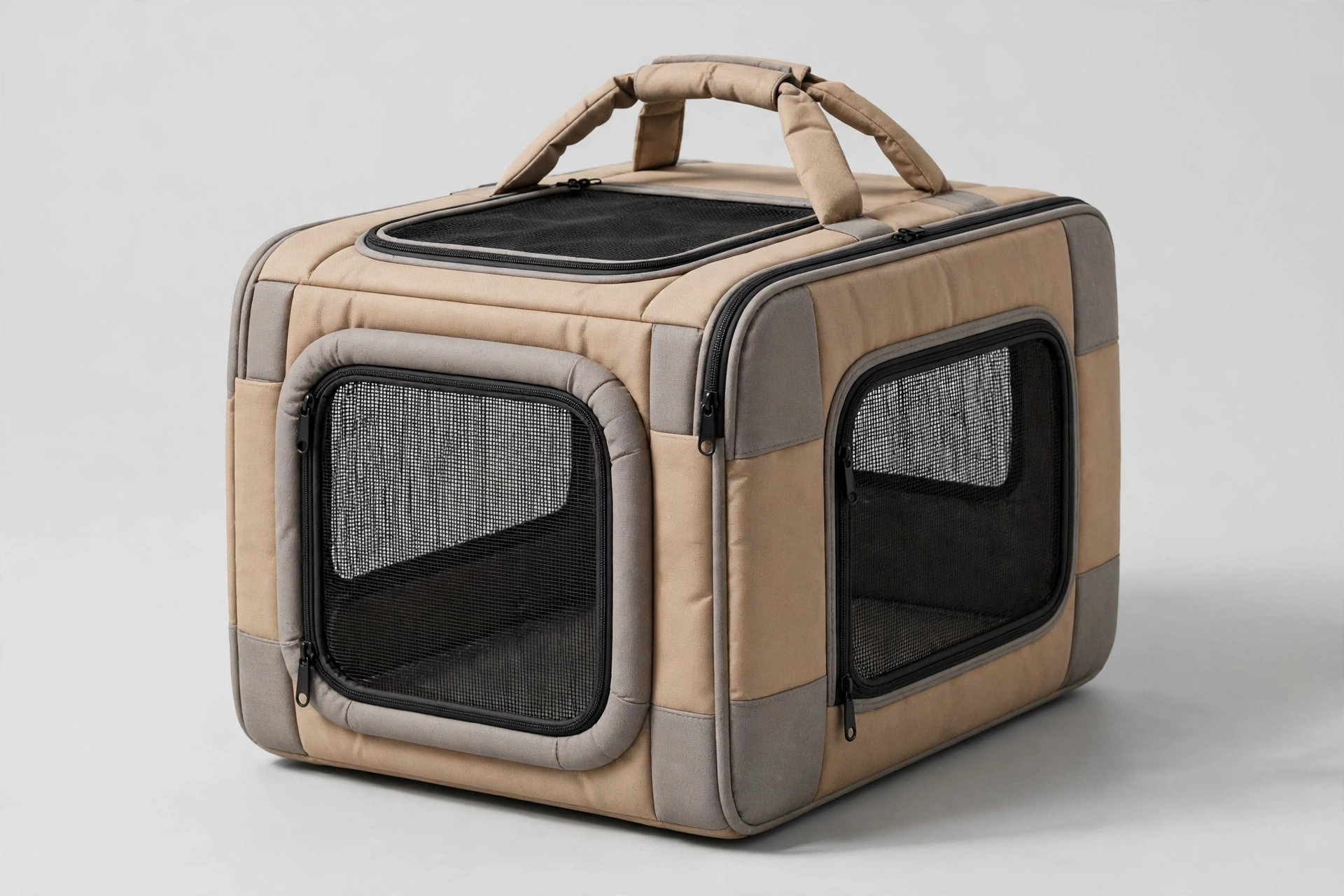
Hepper names the EliteField its best overall in its main crate guide, and the design shows why: doors on the front, top and side — three access points, so loading a dog in a car footwell or at a campsite stops being a negotiation — a frame that folds and sets up without tools, and a cover that comes off and goes in the wash. For a trained, calm dog it is the most pleasant crate here to live with, and by far the easiest to travel with.
The boundary is absolute, and the roundups are blunt about it: a soft crate is for dogs who already accept a crate. Fabric and zips will not survive a chewer, a digger or a dog who objects — one determined afternoon ends it, and an escaped dog loose in a moving car is a genuine hazard. Buy it as the second crate, after training, never as the crate that does the training.
Yay · Pros
- Three doors — front, top and side access
- Machine-washable cover for the inevitable messes
- Folds down for road trips, camping and visiting
Hmm · Cons
- Fabric and zips lose to any determined chewer
- Not a training crate — for already-calm dogs only
- Less structure and security than wire or plastic
Best for: crate-trained, calm dogs; road trips, camping, and homes that host visiting dogs. Skip if: your dog is a puppy, a chewer, or still learning that the crate is home.
6. Impact Collapsible Dog Crate — Best escape-proof
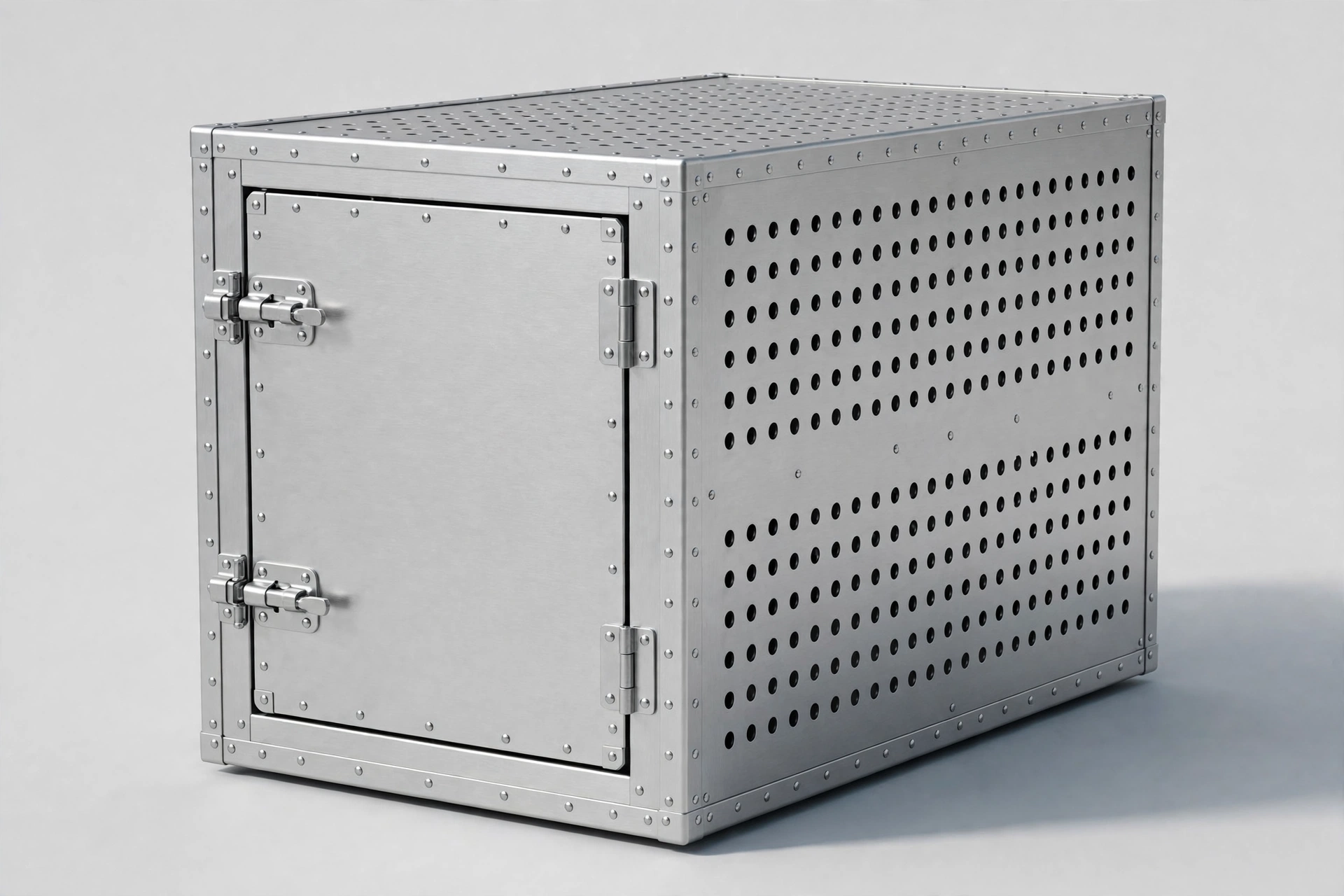
The Impact is built from aircraft-grade aluminium, and it is the pick both MyLittleAndLarge and PawBench give for the hardest cases in this category: severe separation anxiety and repeat escape artists who have already defeated wire. Where a wire crate flexes, aluminium panels do not, and the whole structure is engineered around the reality that a panicking dog applies force in ways that defeat consumer-grade latches. It also collapses for transport, which is how a crate this strong stays usable day to day.
The honesty notes matter. It costs several times what the wire crates here cost — this is a specialist safety purchase, not an upgrade for a contented dog. And no crate, including this one, treats separation anxiety itself; trainers are consistent that the crate contains the dog safely while the behaviour work happens elsewhere. Buy it when the alternative is a dog injuring itself on wire, and it earns its price the first night it holds.
Yay · Pros
- Aircraft-grade aluminium — the strongest construction in this guide
- The consensus pick for severe anxiety and repeat escape artists (MyLittleAndLarge, PawBench)
- Collapses for storage and transport despite the build
Hmm · Cons
- Several times the price of a wire crate
- Complete overkill for the vast majority of dogs
- Contains the dog but does not treat the anxiety — pair it with training
Best for: escape artists, and dogs with severe separation anxiety who have defeated wire crates. Skip if: your dog is calm in a standard crate — the iCrate does that job for far less.
Dog crates: what actually matters
Size it to the adult dog, divide it for the puppy. A crate should let the dog stand, turn around and stretch out flat — and not much more, because excess room invites a toilet corner at the far end. Measure your dog's length and height and match them to the crate's interior dimensions, not its marketing label. For puppies, buy the adult size once and use the divider; that single habit is why the iCrate anchors this list.
Match the shell to the dog's temperament, not your furniture. Wire for training and airflow, enclosed plastic for den calm and flights, soft sides only after training has stuck. The one specialist exception: if crash-tested vehicle transport is the priority, the Gunner G1 — double-wall rotomolded, and the pick DogSupplyFinder's anxiety guide gives for vehicle safety — is the answer none of the six above tries to be.
Plan the cleanup before the first accident. A leak-proof tray is non-negotiable in a wire crate, and bedding will need washing more often than you expect. Loose hair is the other constant of crate life; a pet grooming vacuum earns its keep in any crating household. And in multi-pet homes, treat the dog's crate and the cat's territory as one system — our guide to the best cat trees covers the vertical half of that peace treaty.
Dog crate questions, answered
What size crate does my dog need? Enough room to stand without crouching, turn in a full circle and lie stretched out — and not much more. Measure nose-to-tail and floor-to-top-of-head, then match the crate's interior dimensions. Between sizes, growing puppies size up (with a divider); settled adults take the snugger fit.
Is it cruel to crate a dog? Used properly, no — dogs are den animals, and a crate introduced gradually, never used as punishment and never for excessive hours, becomes the dog's own room. The real welfare risk runs the other way: a dog left loose with separation anxiety can injure itself or destroy a home. Time limits matter either way, and puppies especially need frequent breaks.
Can my dog fly in any of these crates? Only the Sky Kennel is built to the airline-cargo standard — IATA-compliant per Hepper. Air Canada, WestJet and the US carriers each publish kennel rules covering size, ventilation and door construction, and the crate must match your dog's measurements under those rules. In-cabin travel is a different category entirely: small dogs only, in a soft carrier that fits under the seat.
Crate or dog bed — does my dog need both? They do different jobs: the crate is containment and training, while a bed is sleep comfort — and most crated dogs have a bed or mat inside the crate anyway. If the crate will double as the dog's permanent sleeping spot, put the money into the crate first and the bedding second. For the fur that migrates out of both, a handheld vacuum kept nearby is the small purchase owners consistently rate highest.
The short version
Buy the MidWest iCrate if you are crate-training a puppy or simply want the proven default — most owners should start and finish there. Buy the New World if the budget leads and one door suffices, the Ultima Pro if your dog is strong enough to flex standard wire, and the Impact if your dog has already escaped — that jump is about safety, not luxury. Fly with the Sky Kennel, travel by road with the EliteField, and remember the rule underneath all of it: the crate contains the dog; the training does the rest.
Last updated: November 16, 2026. We refresh this guide each season and whenever a pick is replaced by a better one.