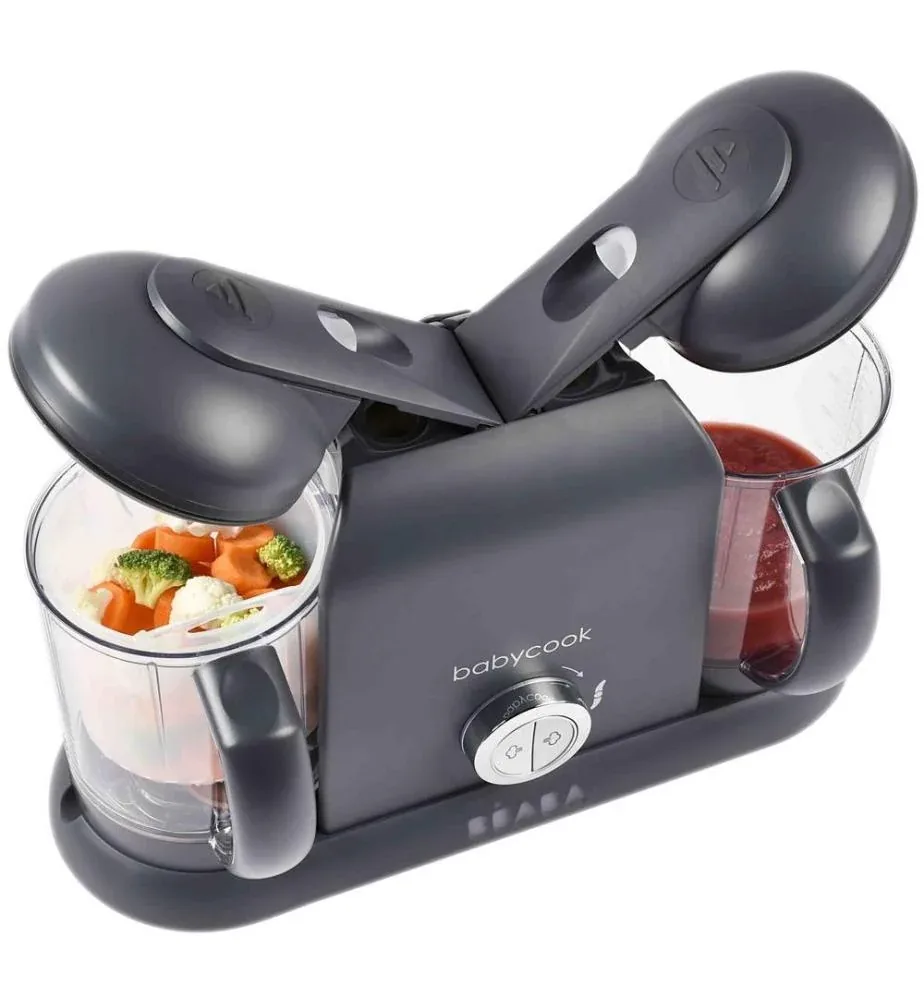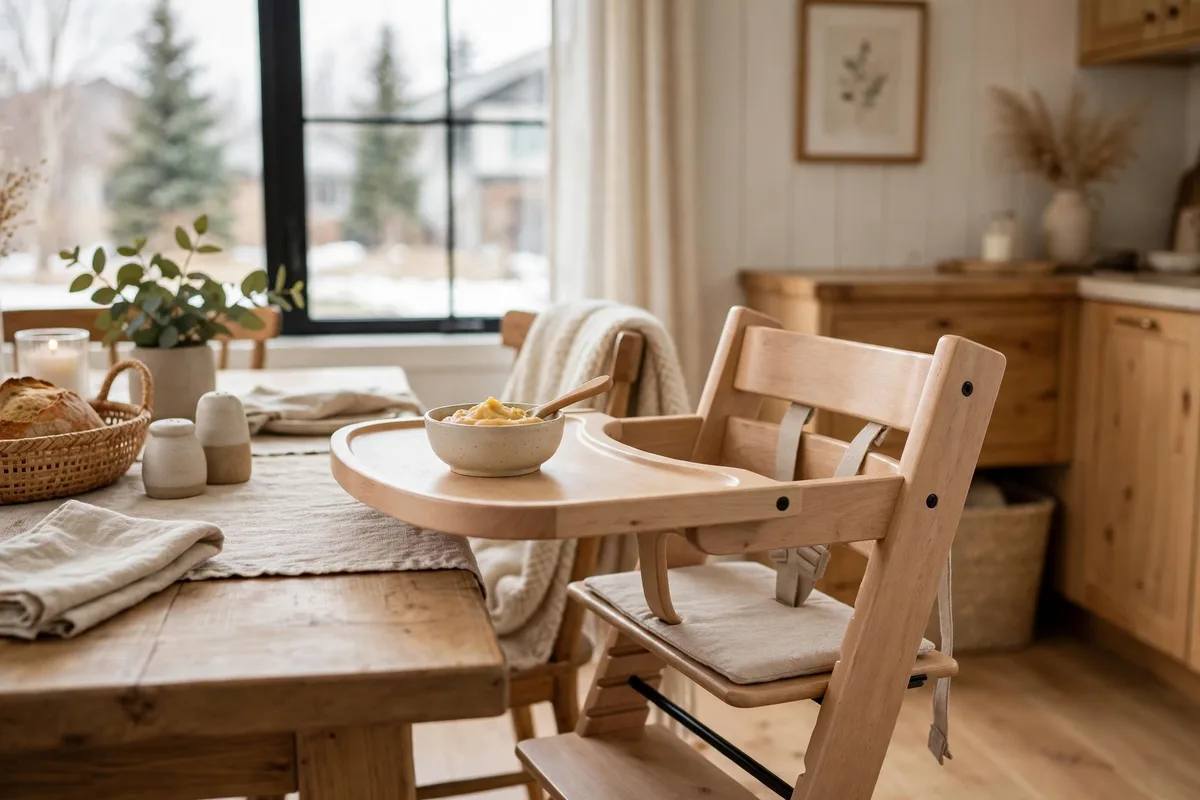
The best high chair is not really bought for the first spoonful of purée — it is bought for the two hundredth, when sweet potato is in the baby’s hair, on the tray, under the tray and somehow on the dog. Weaning is a daily mess event that runs for months, and it changes what matters in this category: the chair you will love is the one that wipes, rinses or dishwashes clean in a minute, and the chair you will regret is the pretty one with forty crumb-trapping seams. That is why this guide is organised around cleaning and lifespan first — how fast each chair returns to clean after a meal, and how many years it genuinely stays useful once the tray comes off. If you are setting up for first foods, our guide to the best baby food makers in Canada and the USA is the natural partner to this one: the maker produces the purée, and the chair survives it.
The five chairs below split into two philosophies. Convertible wooden chairs — the Abiie and the Stokke — cost more up front and then refuse to retire, converting into dining chairs that serve for a decade or longer. Dedicated chairs — the Peg Perego, Graco and IKEA picks — optimise for the baby years themselves: reclines for young babies, folds for small kitchens, and the kind of value that does not sting when the chair is outgrown at three. Neither philosophy is wrong. What is wrong is buying the three-year chair at the ten-year price, or the ten-year chair when your kitchen cannot spare its footprint — so every pick below is labelled with who should skip it, as plainly as who should buy it.
Disclosure: CookSmartPicks is reader-supported. When you buy through links on this page, we may earn an Amazon commission at no extra cost to you. Prices and availability change often — check the current price on Amazon before you decide.
How we chose these high chairs
CookSmartPicks is a research-based guide. We do not run a test nursery, and we never claim hands-on testing we have not done. For this list we compared manufacturer specifications — materials, dimensions, weight limits, harness types and stated safety compliance — with current independent roundups from testing publications in the BabyGearLab and Wirecutter class, and with long-term owner reports from verified buyers in Canada and the USA, paying particular attention to the two complaints that dominate high chair ownership: cleaning burden, and chairs outgrown faster than promised. Manufacturer claims — weight ratings, compliance statements, design heritage — are flagged as claims wherever they appear; behaviour owners consistently report is described as such.
The lineup at a glance
| Product | Best for | Why it stands out |
|---|---|---|
| Abiie Beyond Junior Y Wooden High Chair | Best overall | BabyGearLab’s best-overall pick, with a dishwasher-safe tray and tool-free conversion to a dining chair |
| Stokke Tripp Trapp High Chair | Best premium / grows to adult | The 1972 Norwegian design that adjusts from babyhood through adulthood |
| Peg Perego Siesta High Chair | Best full-featured | Nine heights, five reclines and auto-locking wheels in one padded package |
| Graco Slim Snacker High Chair | Best budget folding | A fast one-hand fold that stores slim and self-standing |
| IKEA Antilop High Chair | Best value | The all-plastic value benchmark that wipes or hoses clean in seconds |
1. Abiie Beyond Junior Y Wooden High Chair — Best overall
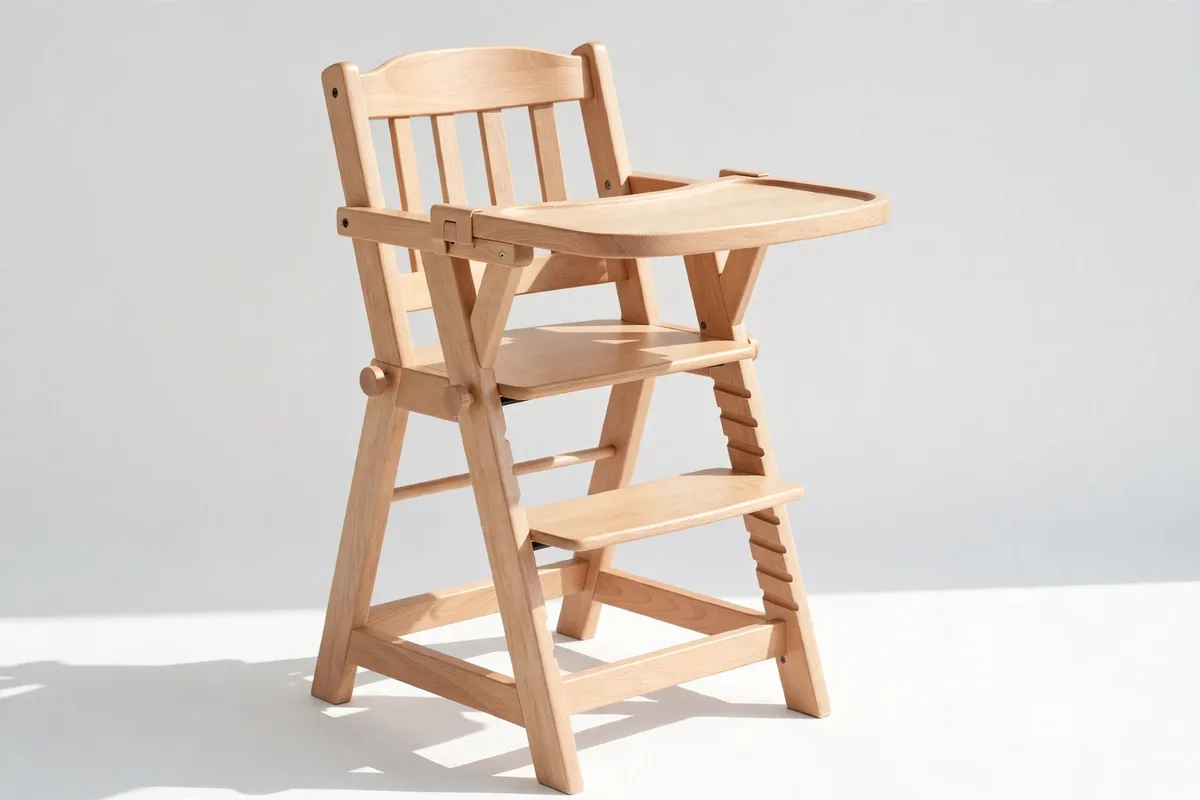
The Abiie Beyond Junior Y takes the top spot on the strength of independent testing and one genuinely clever idea. In BabyGearLab’s high chair testing it earned the publication’s best-overall verdict, and its party trick is the EZ-Seat system: the seat and footrest reposition without tools, so the chair converts from a baby high chair with tray to a youth chair and finally to a regular dining chair that Abiie rates — as a manufacturer claim — to hold up to 250 lb. The frame is beech wood, warm and solid in a way plastic chairs are not, and it pulls up to a standard dining table once the tray comes off, so a child graduates to family meals without leaving the chair behind.
Cleaning is where the Abiie earns its keep. The tray is dishwasher-safe per the manufacturer — arguably the most useful cleaning feature in this category, because tray mess is the mess that happens three times a day — and the smooth wooden frame wipes down without the fabric seams that trap food on padded chairs. Abiie states the chair complies with ASTM F404, the US high chair safety standard covered in the safety section below. The honest trade-offs: wood is heavier than plastic if you move the chair between rooms daily, its footprint is a dining chair’s rather than a folder’s vanishing act, and the purchase only makes sense if you actually use the conversions — a family that will replace it at age three anyway should buy the Graco or the IKEA below.
Yay · Pros
- Best-overall verdict in BabyGearLab’s high chair testing
- Tool-free EZ-Seat conversion to a dining chair rated to 250 lb (manufacturer claim)
- Dishwasher-safe tray and a wipe-clean beech frame
Hmm · Cons
- Heavier than plastic chairs for daily moving between rooms
- Value depends on using the conversions for years
- Dining-chair footprint — no fold for tiny kitchens
Best for: families wanting one chair from first foods through the school years. Skip if: you need a chair that folds away daily, or a cheap second chair for the grandparents — the Graco folds, the IKEA costs less.
2. Stokke Tripp Trapp High Chair — Best premium / grows to adult
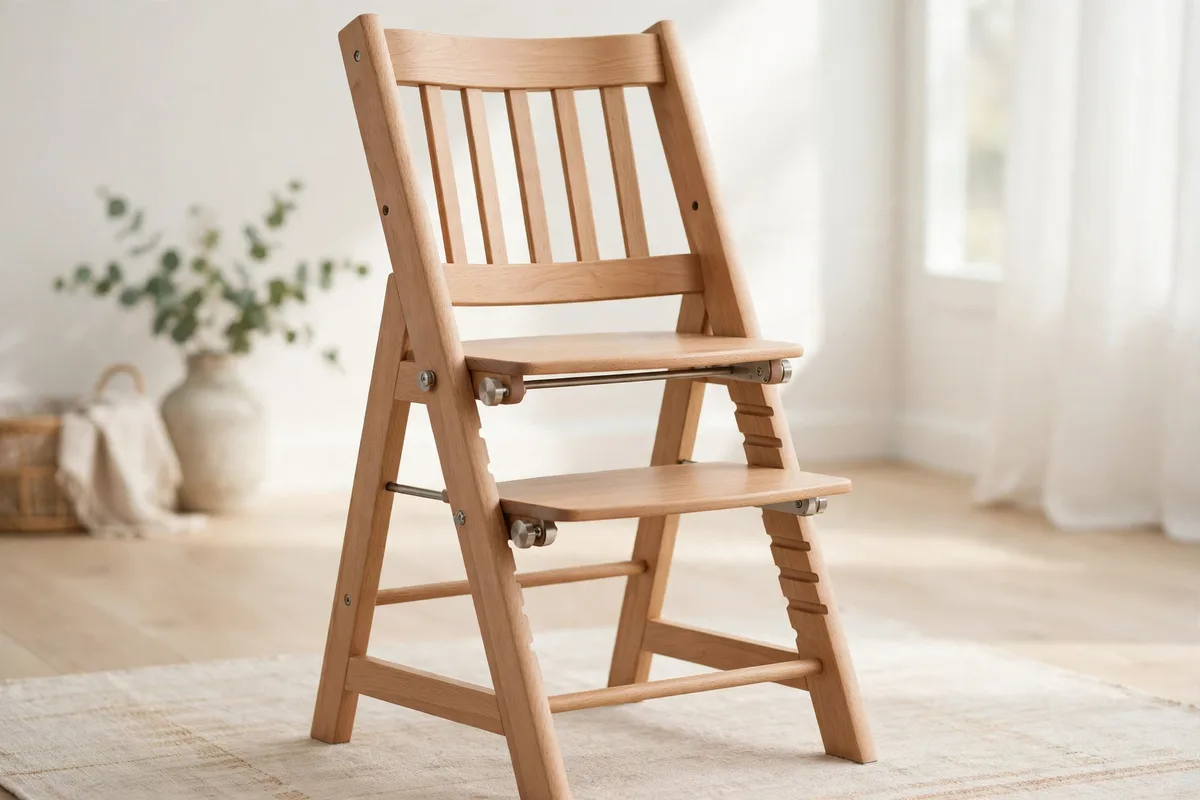
The Tripp Trapp is the design icon of this category — a Norwegian chair launched in 1972 that has outlasted every trend since by doing one thing exceptionally well: keeping a child’s seat and feet at exactly the right height at a normal dining table. The beech or oak frame adjusts in seat and footplate depth and height, so it fits a baby in the optional Baby Set, a toddler, a schoolchild and — per Stokke’s manufacturer rating — a person of up to 136 kg, which makes “grows to adult” a literal description rather than marketing. There is no recline and no tray in the base concept: the child eats at the family table, at family height, from the start.
That purity is also the honest catch, and it is a financial one: the Baby Set that makes the chair usable for babies, and the tray many parents want, are sold separately, so the true starting cost is the chair plus its accessories — check the combined total on the buttons below before comparing it with all-in-one rivals. Cleaning is wipe-down wood, quick for crumbs but with no dishwasher rescue after a truly destroyed meal, and food lands on your table rather than a tray, which some families love for the togetherness and others find is simply mess relocated. Buy it as furniture you will keep for decades and hand down; judged purely as a two-year baby appliance, the maths is much harder to defend.
Yay · Pros
- Adjustable seat and footplate fit from babyhood to adulthood (136 kg per maker)
- Iconic 1972 design in beech or oak that holds its resale value
- Pulls straight up to the family table — no tray required
Hmm · Cons
- Baby Set and tray sold separately — the real starting cost is higher
- No recline, and no tray included in the base chair
- Wipe-clean only — no dishwasher-safe parts
Best for: design-minded families buying once, for decades, at the family table. Skip if: you want an all-in-one box with the tray included, or a recline for a young baby.
3. Peg Perego Siesta High Chair — Best full-featured
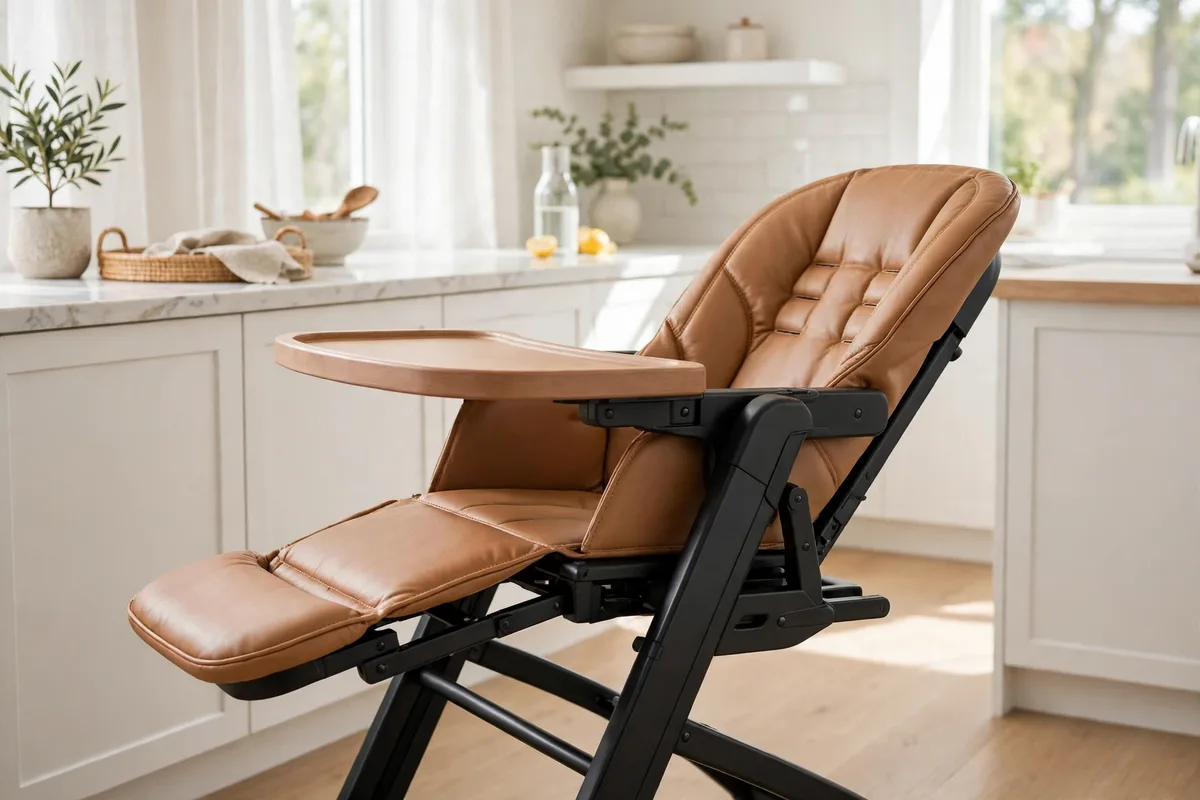
The Siesta is the full-featured counterpoint to the wooden minimalists: a padded, reclining, height-adjustable high chair built to be useful from the earliest weeks of weaning onward. Per the manufacturer it offers nine height positions and five recline positions, so a younger baby can sit semi-reclined for early tastes or a bottle while an older toddler pulls up high at the counter or low at the table. The seat pad is faux leather, which in owner reports is the practical star: it wipes clean like vinyl rather than absorbing like fabric, and it removes when a deeper clean is overdue. When the meal ends, the chair folds compactly for storage.
Moving it is the other half of its reputation — the Siesta rolls on wheels fitted with an automatic lock, and BabyGearLab praised the ease of moving it in its testing, which matters in an open-plan kitchen where the chair migrates between island, table and sink all day. The compromises are size and complexity: this is among the larger, heavier chairs here even folded, the padded seat has seams and crevices that puréed carrot hunts down, and every mechanism is something a minimalist chair simply does not have to go wrong. For families who will use the recline and the rolling daily, it is the most capable dedicated baby chair in this guide.
Yay · Pros
- Nine heights and five reclines (manufacturer figures) cover young babies to toddlers
- Wipe-clean faux-leather pad that removes for deep cleaning
- Rolls on auto-locking wheels — praised by BabyGearLab for ease of moving
Hmm · Cons
- Large and heavy, even folded, next to the Graco or IKEA
- Padded seams trap food that smooth chairs shrug off
- Premium features in a chair still outgrown in the toddler years
Best for: families wanting recline, rolling and padding in one dedicated baby chair. Skip if: storage space is tight, or you want a chair that converts for older children.
4. Graco Slim Snacker High Chair — Best budget folding
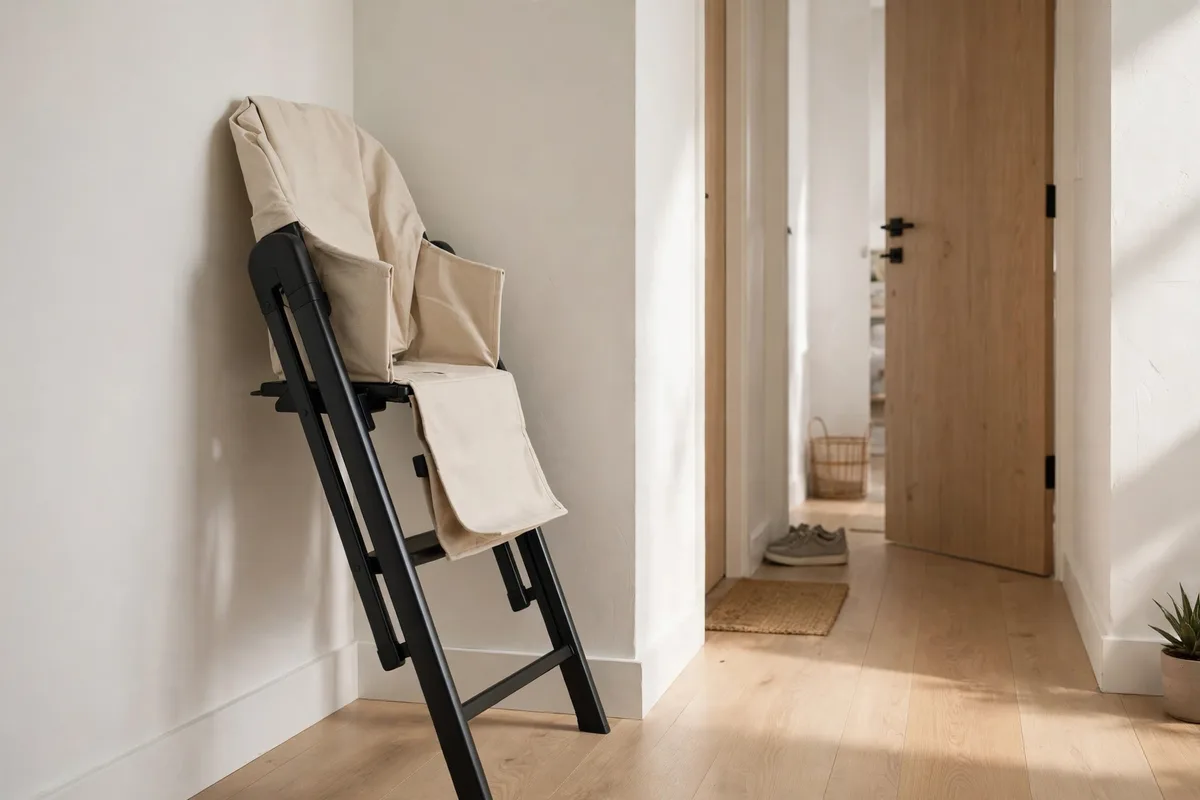
The Slim Snacker is the small-kitchen answer: a full feeding seat that folds — fast, with one hand, per Graco’s design — into a slim, self-standing package that slides beside the fridge or into a closet. That fold is the entire proposition, and owner reports say it delivers: parents in apartments and townhouses consistently praise a chair that disappears between meals instead of colonising a corner. The seat pad wipes clean, the tray covers a proper feeding area, and a large storage basket under the seat swallows the bibs, wipes and board books that keep a toddler seated for the last three spoonfuls.
The budget shows in one place feeding therapists would flag: the footrest is fixed rather than adjustable, so as your baby grows, the 90-90-90 posture described below is harder to maintain — smaller babies’ feet may dangle for a stretch, and bigger toddlers outgrow the geometry sooner than they outgrow the seat. The fabric-and-plastic build is also a baby-years build: nothing here converts or pretends to serve a schoolchild. Judge it on its own terms — a genuinely slim fold, honest wipe-clean practicality and the lowest commitment in this guide — and it is the right chair for small spaces, grandparents’ houses and dining areas that double as everything else.
Yay · Pros
- Fast one-hand fold into slim, self-standing storage
- Wipeable seat pad and a large under-seat storage basket
- The small-space and second-chair specialist
Hmm · Cons
- Fixed footrest — posture support does not adjust as baby grows
- No conversion — outgrown in the toddler years
- Fabric elements need more than a rinse after the worst meals
Best for: apartments, small kitchens and grandparents’ houses. Skip if: an adjustable footrest and decade-long use matter more than the fold.
5. IKEA Antilop High Chair — Best value
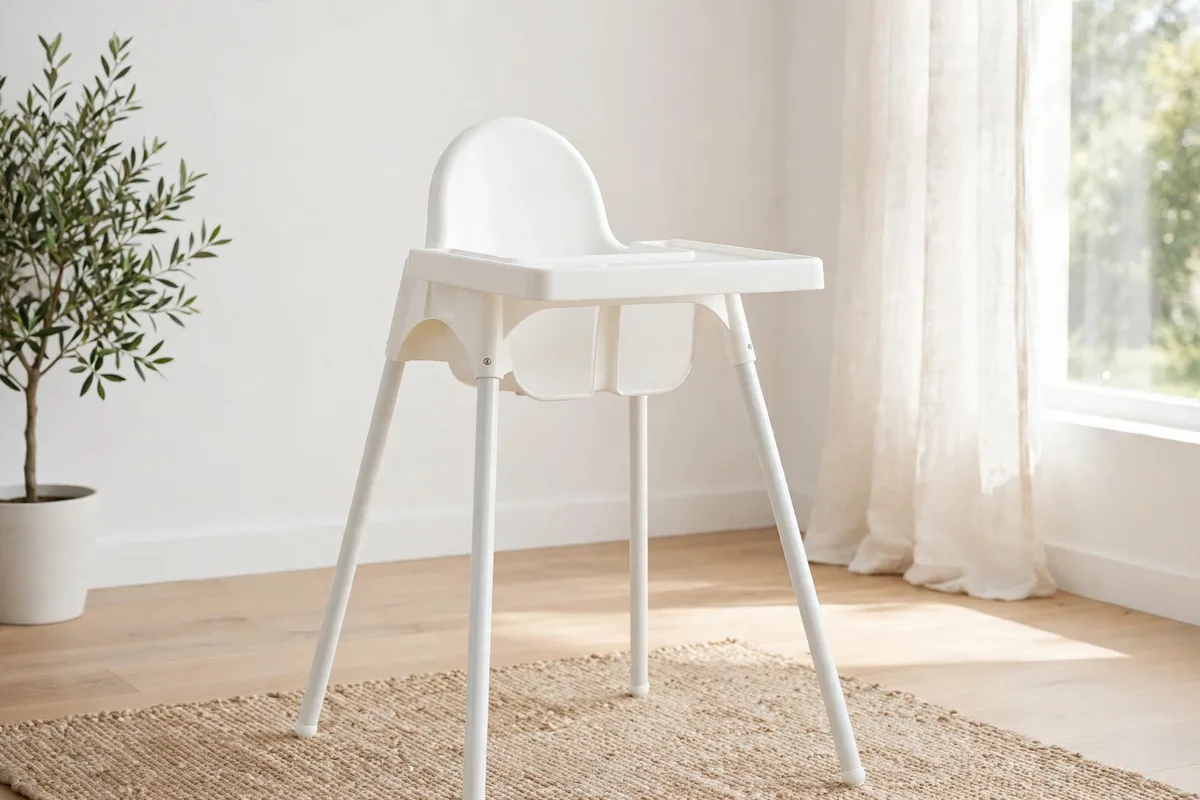
The Antilop is the category’s value benchmark — the chair against which every other high chair’s price is silently judged, and the one most likely to arrive as a friend’s recommendation: “just get the IKEA one.” The design is all plastic: a smooth seat shell on four legs that pop off for travel or storage, with a tray that clips on and off. Cleaning is its legend — there are no seams, no fabric and no crevices, so the whole chair wipes in seconds or, in the stories every parent group trades, gets hosed down in the yard after a spaghetti incident. For a second chair, a daycare, a cottage or a first experiment in weaning, nothing else is close on value.
The compromises are equally famous. The support pillow that smaller babies need for a snug fit, and the tray itself, are sold separately, so the true starter cost is the chair plus its extras. There is no footrest at all — the clearest ergonomic gap in this guide, given the posture case made below — and the fixed geometry fits a narrower age window than any rival here, so most children are done with it while the convertibles are just warming up. None of that dents its role: bought with open eyes as a brilliantly washable baby-years chair, it remains the easiest recommendation in the category to make and the hardest to regret.
Yay · Pros
- The category’s value benchmark — nothing else is close
- All-plastic, seam-free design wipes or hoses clean in seconds
- Legs remove for travel, cottages and storage
Hmm · Cons
- No footrest — the known ergonomic gap
- Tray and support pillow sold separately
- Fixed size is outgrown sooner than any rival here
Best for: budget-first families, second chairs, daycares and cottages. Skip if: you want posture support and years of adjustability — that is the Abiie or Stokke brief.
Posture and safety: the 90-90-90 rule, harnesses and standards
Feeding therapists use a simple geometry check called 90-90-90: seated well, a baby’s hips, knees and ankles each rest at roughly a 90-degree angle, with feet flat on a footrest rather than dangling. The point is stability — a baby whose trunk and feet are supported can concentrate on the hard new skills of chewing, moving food around the mouth and swallowing safely, instead of spending their effort on not wobbling. It is why adjustable footrests are a genuine feature rather than a luxury, why the Antilop’s missing footrest and the Graco’s fixed one are flagged in their reviews above, and why a chair that fits at six months needs adjustment room to still fit at twenty-four.
Harnesses divide into three-point systems (waist and crotch straps) and five-point systems (adding shoulder straps), with a passive crotch post doing part of the work on many designs. Five-point harnesses restrain climbers best — and toddlers all become climbers — while three-point systems are faster at the three-meals-a-day grind; either only works when used every time and adjusted snug, because falls are this category’s signature injury and they overwhelmingly involve unrestrained or climbing children. Check straps for fraying, keep the chair away from counters a child can push off from, and never treat the tray as a restraint — it is a table, not a seatbelt.
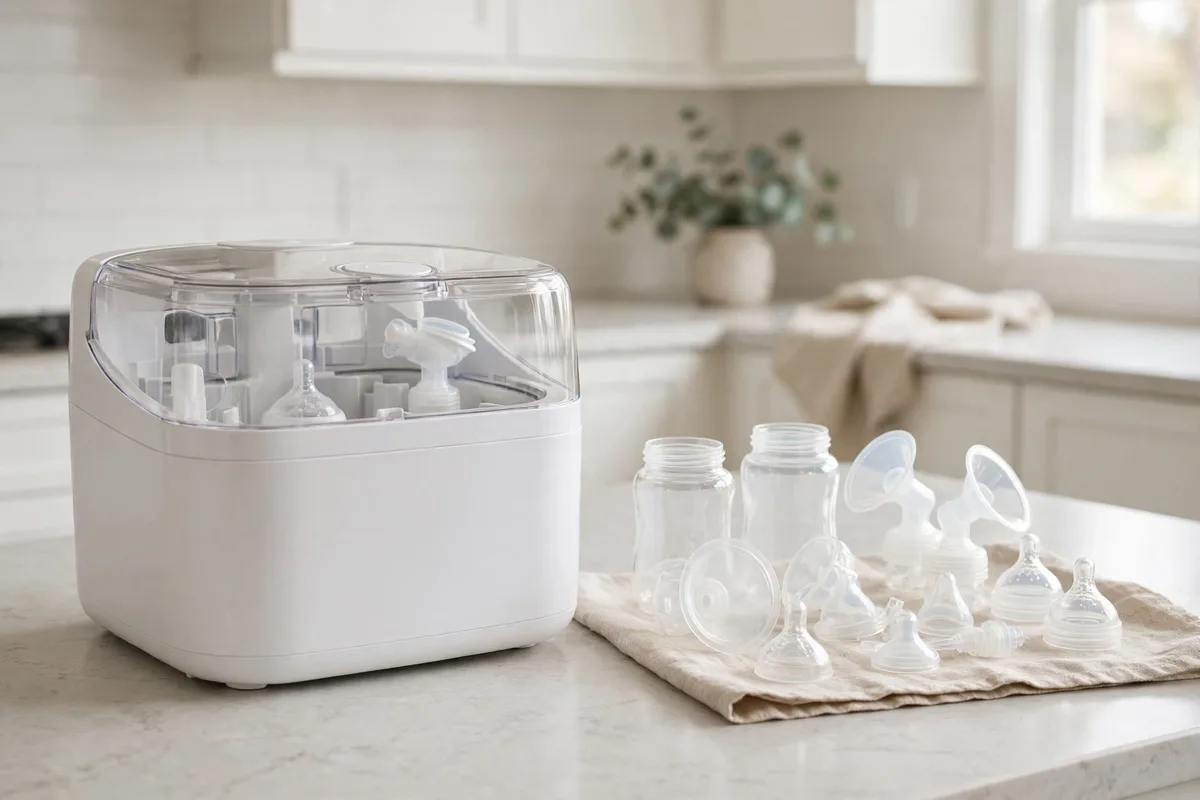
On standards: in the USA, high chairs fall under ASTM F404, the consumer safety specification covering restraints, stability and structure — the Abiie above states compliance with it as a manufacturer claim, and JPMA certification, where shown, indicates testing against that standard. Canada regulates high chairs under the Canada Consumer Product Safety Act and its High Chairs Regulations, and Health Canada’s guidance echoes the same themes: a secure restraint, a wide and stable base, intact parts, and buying from reputable sellers so recall notices reach you. Register the product or keep its model details, check for recalls before accepting a hand-me-down, and retire any chair with a broken restraint. And because feeding gear multiplies around the sink, our guide to the best baby bottle washers in Canada and the USA covers the machines that wash, sterilize and dry the bottles and pump parts piling up beside it.
High chair questions, answered
When should a baby start using a high chair?
Most babies are ready at around six months, when they can sit up unassisted with good head and trunk control and are starting solids — the two milestones usually arrive together, and paediatric guidance in both Canada and the USA ties starting solids to those readiness signs rather than to the calendar alone. A baby who slumps, slides sideways or cannot hold their head steady is not ready, whatever their age. If your baby was born early, go by corrected age and check with your paediatrician or family doctor before the first seated meal.
Is a footrest on a high chair really necessary?
For comfort and focused eating, yes — feeding therapists consistently recommend one. The 90-90-90 position — hips, knees and ankles each near 90 degrees, with feet flat on a support — gives a baby the stable base they need to concentrate on chewing and swallowing instead of bracing against a dangling-leg wobble. Dangling feet are not dangerous in a single meal, but babies eat better and sit longer with support. If a chair lacks a footrest, an adjustable aftermarket bar or even a securely strapped box can bridge the gap while your baby is small.
How long will my child use a high chair?
Expect roughly two to three years in dedicated high chair mode — from about six months until your toddler insists on a regular chair, usually somewhere between ages two and three. Convertible designs stretch that dramatically: the Abiie converts to a dining chair rated by its maker to 250 lb, and the Stokke Tripp Trapp is designed to hold a person through adulthood, so both can stay at the table for a decade or more. Budget chairs are typically outgrown fastest, because fixed seats and footrests stop fitting a growing toddler sooner.
Are wooden high chairs worth the money?
They can be, if the maths is done per year rather than per purchase. A wooden convertible that serves as a high chair, then a toddler chair, then a homework or dining chair for a decade spreads its cost across far more meals than a plastic chair retired at age three — and solid beech chairs hold resale value unusually well in both Canada and the USA. Wood is not automatically better, though: it is heavier to move, and finishes need gentler cleaning than hose-down plastic. Buy wood for lifespan, not for looks alone.
What safety standard should a high chair meet in Canada and the USA?
In the USA, look for compliance with ASTM F404, the standard consumer safety specification for high chairs, which covers restraint systems, stability and structural integrity; many brands also carry JPMA certification, which tests against that ASTM standard. Canada regulates high chairs under the Canada Consumer Product Safety Act and its High Chairs Regulations, and Health Canada advises buying chairs with a secure restraint, a wide stable base and no broken or missing parts. In both countries, the rules only work if the harness is used at every meal — most high chair injuries involve falls.
The short version
Buy the Abiie Beyond Junior Y if you want the chair that tests best overall, dishwashes its tray and converts for a decade of family meals. Buy the Stokke Tripp Trapp if you are furnishing for the long term and accept the separate Baby Set and tray as part of the real price. Choose the Peg Perego Siesta for the recline-and-roll feature set in a dedicated baby chair, the Graco Slim Snacker when the chair must fold away in a small home, and the IKEA Antilop when value and hose-down cleaning outrank posture support and longevity. Whichever you choose, use the harness at every meal — and once the feeding corner is sorted, our guide to the best baby monitors in Canada and the USA covers the other screen you will be watching at nap time.
Last updated: November 18, 2026. We refresh this guide each season and whenever a pick is replaced by a better one.