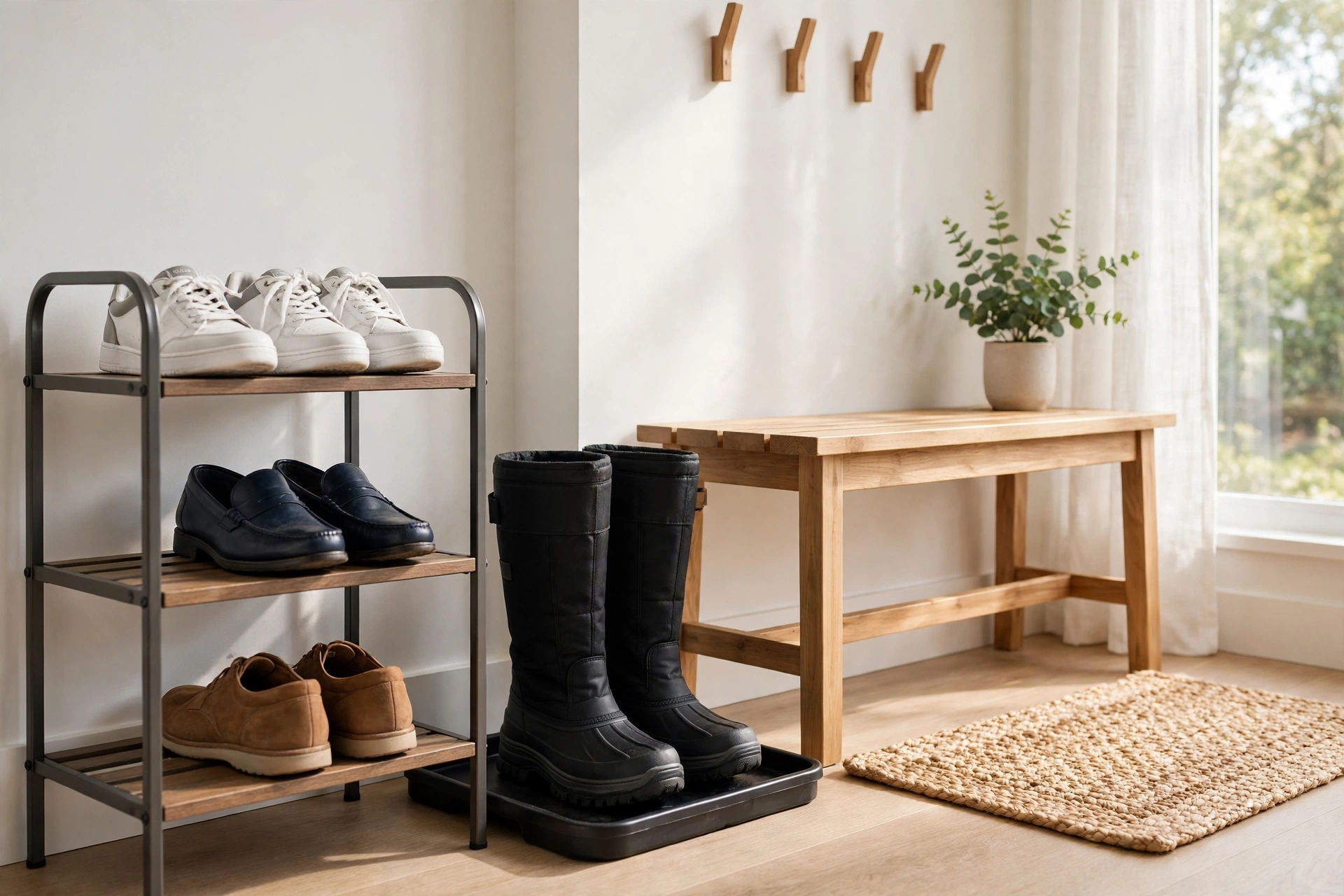
A shoe rack is bought with a tape measure, not a wishlist. The entryways in Canadian and American homes come in a handful of awkward widths, and the rack that looked generous online turns out to block the door swing, swallow the mat, or — the classic northern failure — have tiers spaced too closely for a pair of winter boots. We compared the racks the major testers keep putting through their entryway trials, and the ones owners in both countries keep re-ordering, to build the shortlist below.
The honest headline: sturdiness and fit beat raw capacity. The best-regarded rack here holds fewer pairs than the tall towers, but it does not wobble, sag or shed its slats when a wet boot lands on it — and in a Canadian or northern-US winter, when boots arrive tall, heavy and dripping, that is the test that actually matters. Everything below is split by the decisions that decide the purchase: how much wall you have, whether you need to sit down, and how tall your boots are.
How we chose these shoe racks
We built this list from the tested roundups that revisit shoe storage regularly — Wirecutter's entryway testing, Good Housekeeping's shoe rack picks and TechGearLab's scored reviews, cross-checked against the multi-source analyses that track all of them — then weighed the owner evidence at scale: the review counts and best-seller ranks that show which racks survive real hallways. CookSmartPicks does not run its own shoe rack lab; what we do is reconcile the published evidence and flag the trade-offs the roundups bury.
Four things separated the picks. Sturdiness under load — a rack that jiggles empty will sag full, so tested wobble and durability scores carried real weight. Honest capacity — pairs counted in men's shoes and boots, not in children's sandals. Tier spacing — the standard five to six inches between shelves fits sneakers and fails tall boots, so racks that leave a tall row earned credit. Wet-weather manners — slatted or raised designs that let meltwater drip to a tray instead of pooling under leather.
The lineup at a glance
| Shoe rack | Best for | Why it made the cut |
|---|---|---|
| Seville Classics 3-Tier Resin Slatted | Best overall | Wirecutter's top pick — the sturdiest rack in its jiggle test, with resin slats that shrug off wet boots |
| Whitmor 3-Tier Expandable | Best value | Good Housekeeping's top shoe rack — bars expand from 25 to 46 inches to fit the wall you actually have |
| SONGMICS 3-Tier Bamboo Bench | Best bench seat | A bench you can sit on to pull boots off, with storage shelves underneath and some 25,000 owner reviews behind it |
| Kitsure 3-Tier Stackable | Best budget | The category's number-one best seller — stackable tiers and the lowest commitment for a first entryway fix |
| VASAGLE 5-Tier Industrial | Best for families | Five tiers of family capacity — 4.8 stars from 8,759 reviewers and a 45-day entryway test win |
| Simple Houseware 24-Pocket Over-the-Door | Best for renters | Twenty-four clear pockets on the back of a door — full shoe storage that uses zero floor space |
1. Seville Classics 3-Tier Resin Slatted — Best overall
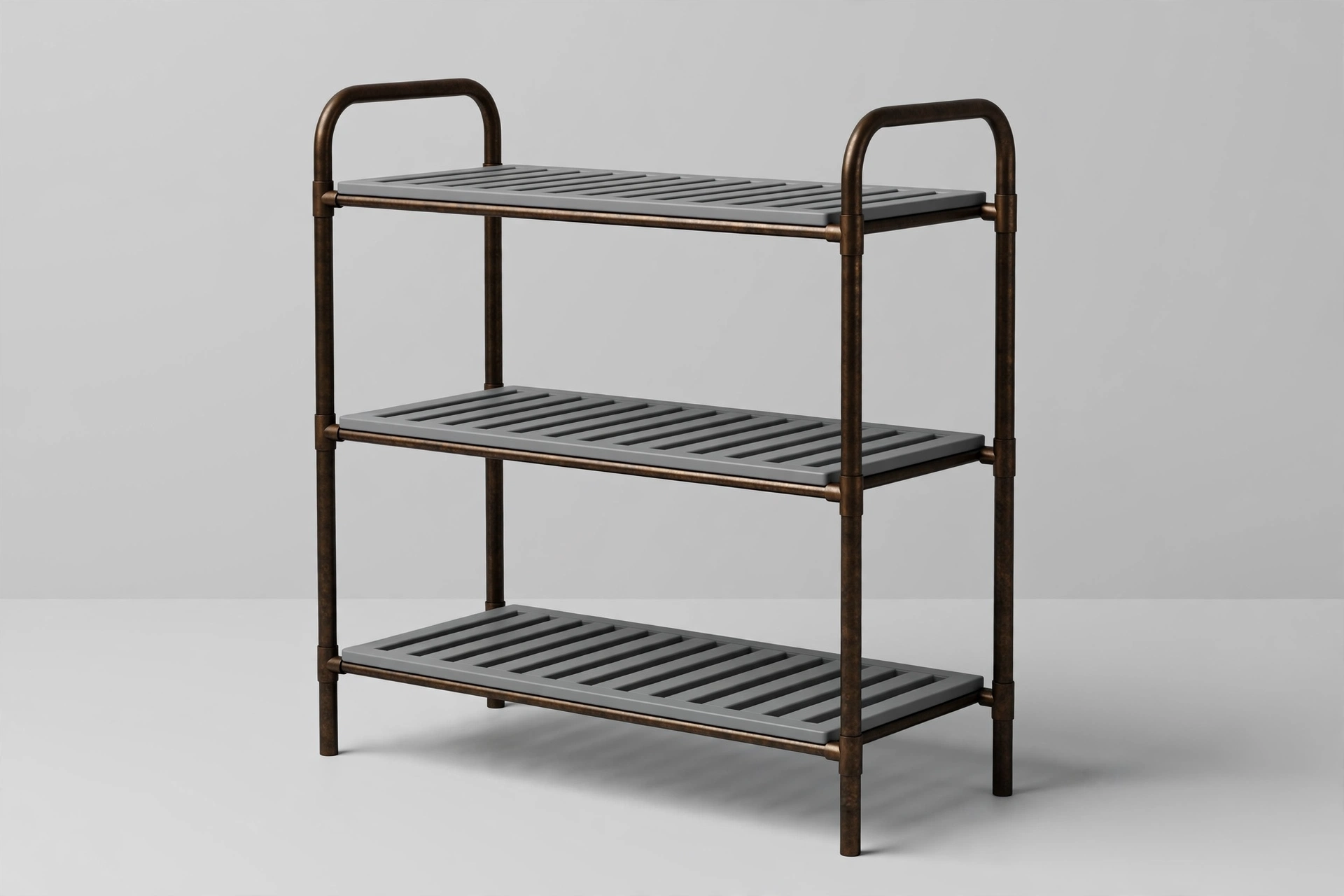
The Seville Classics earns the top spot on the least glamorous evidence in the category: it does not move. It is Wirecutter's top pick, it was the sturdiest rack in Wirecutter's jiggle test, and TechGearLab scored it 9/10 for durability and assembly, per SimplyTheBest's nine-source analysis. The resin slats are the quiet advantage — they do not rust, they wipe clean, and meltwater from a pair of boots drips through to a tray or mat below instead of sitting in a puddle under the leather.
The trade-off is capacity and flexibility. Three fixed tiers hold roughly a dozen pairs depending on size, the width does not adjust, and tall winter boots will not fit between the shelves — they live on the top tier or on the floor row beside it, which is how most owners end up using it. As the rack for a front door that sees daily traffic in all weather, nothing else here is as proven.
Yay · Pros
- Wirecutter's top pick — sturdiest in its jiggle test, 9/10 for durability at TechGearLab
- Resin slats shrug off slush and meltwater; nothing to rust
- Assembles without tools and stays rigid under load
Hmm · Cons
- Fixed width and three tiers — capacity tops out around a dozen pairs
- Tier spacing is too tight for tall winter boots between shelves
- Utilitarian look — it is hallway equipment, not furniture
Best for: front doors and mudrooms that need one sturdy rack that survives wet seasons. Skip if: you need to store a large collection or want storage that doubles as furniture.
2. Whitmor 3-Tier Expandable — Best value
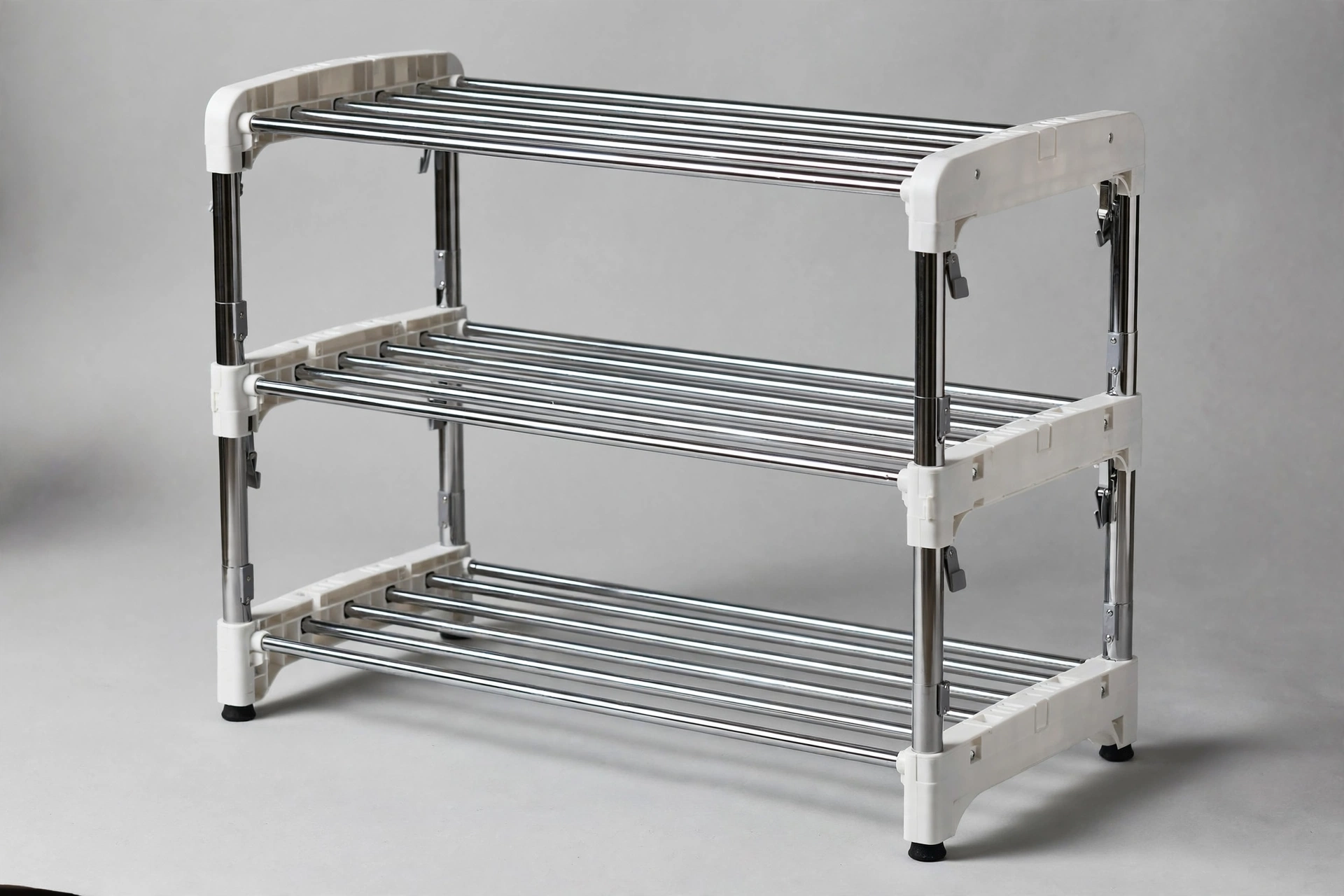
Every other rack in this guide asks you to measure your wall and hope. The Whitmor asks less: its bars stretch from 25 to 46 inches, so the same rack fits a narrow condo entry now and a wider hallway later. It is Good Housekeeping's top shoe rack, and fully extended it holds 18 pairs across its three tiers, per SimplyTheBest — family capacity from a rack that costs value money.
The compromises are the ones the format implies. Extended to full width, the bars carry more flex than a fixed frame, heavy boots are better kept on the bottom tier, and the open-bar design lets small heels slip between the rails. For renters, first homes and anyone whose next entryway is a different size from this one, the adjustability outweighs all of that.
Yay · Pros
- Expands from 25 to 46 inches — fits the wall you have now and the next one
- Good Housekeeping's top shoe rack; holds 18 pairs fully extended
- Light, simple frame that assembles in minutes
Hmm · Cons
- Bars flex more at full extension; heavy boots belong on the bottom tier
- Open bars can catch narrow heels
- Fixed tier height — tall boots still need the top or the floor
Best for: renters and growing households whose entryway size keeps changing. Skip if: you want a rigid, furniture-grade piece — the bench and the VASAGLE below sit sturdier.
3. SONGMICS 3-Tier Bamboo Bench — Best bench seat
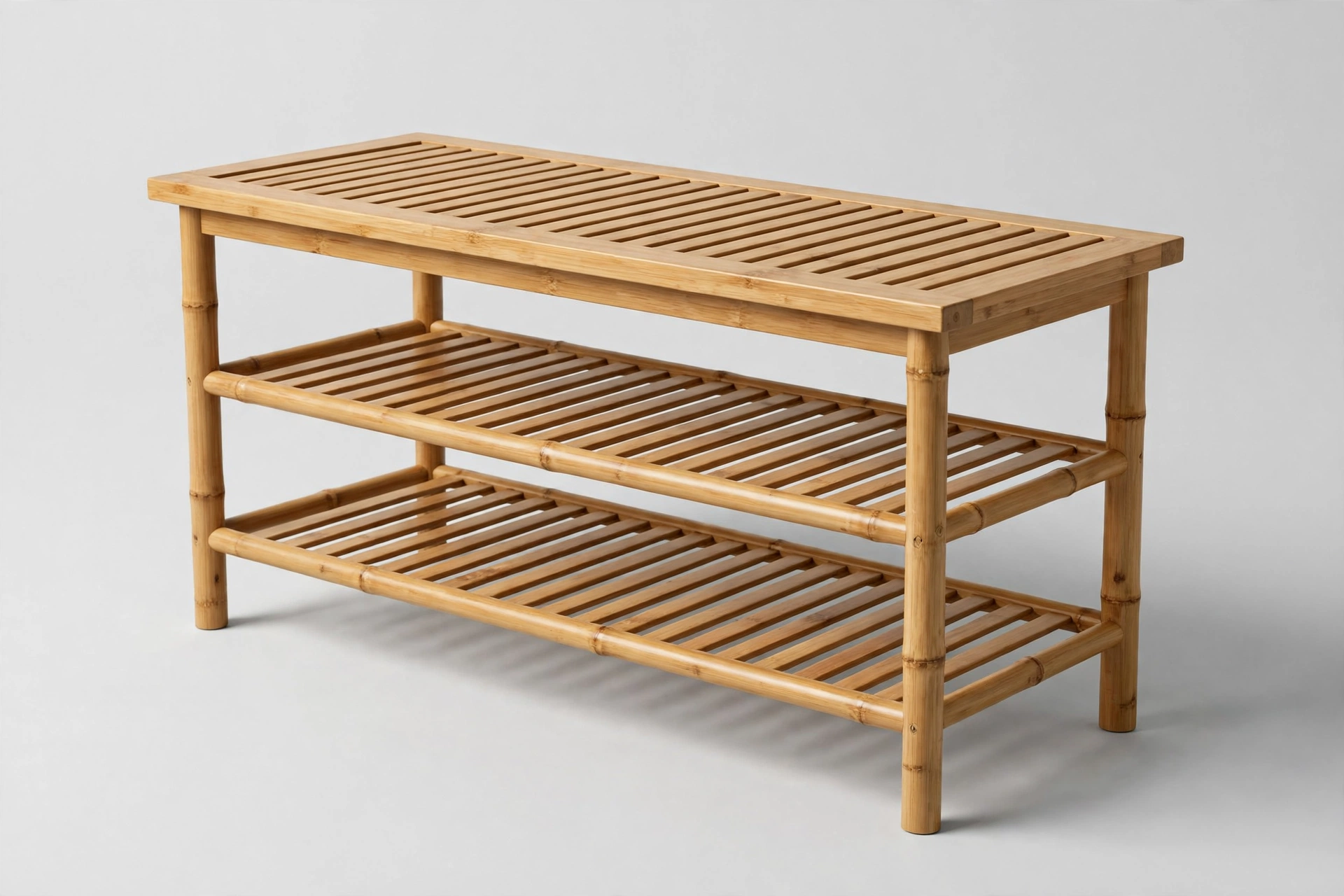
Anyone who has hopped on one foot in a doorway, wrestling a wet winter boot, understands this product instantly: it is a bench you sit on, with shoe shelves underneath. The SONGMICS is an Amazon's Choice pick in the category and holds some 25,000 reviews at 4.6 stars, per TheHomelyNest — the deepest owner evidence here. The bamboo build looks like furniture rather than equipment, which matters in entryways that open straight into living space.
Capacity is the honest cost: two storage shelves under the seat hold fewer pairs than a three-tier rack of the same footprint, and the shelves sit low, so tall boots go on the floor beside it rather than under the seat. Bamboo also asks for a wipe-down habit in slush season. Buy it for the seat and the look; count your pairs first to be sure the shelves suffice.
Yay · Pros
- A real seat for pulling boots and shoes on and off — no doorway hopping
- Some 25,000 owner reviews at 4.6 stars, per TheHomelyNest
- Bamboo finish reads as furniture in open-plan entryways
Hmm · Cons
- Two shelves hold fewer pairs than a three-tier rack
- Low shelves do not fit tall boots underneath
- Bamboo needs wiping down through slush season
Best for: entryways where people sit to change shoes, and homes that want storage disguised as furniture. Skip if: pair count is your problem — the towers below hold far more per square foot.
4. Kitsure 3-Tier Stackable — Best budget
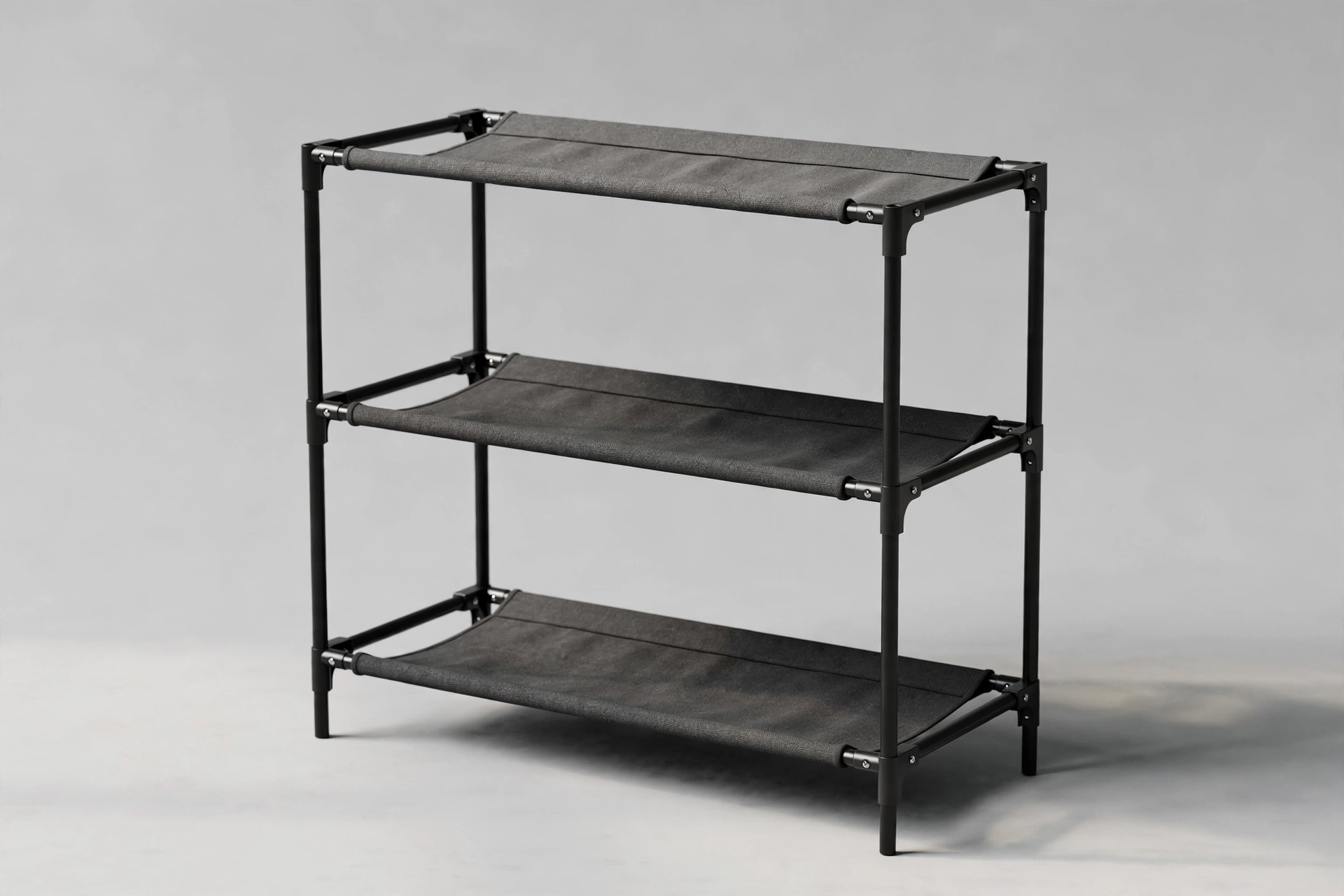
The market has already voted on the budget end of this category: the Kitsure is the number-one Best Seller in Free Standing Shoe Racks, with 40,000+ units bought in the past month, per TheHomelyNest. The design is the familiar metal-tube-and-connector format done competently — three tiers, a small footprint, and the useful trick of being stackable, so a second unit doubles it vertically when the collection grows.
Budget physics apply. The frame is lighter than the Seville or the VASAGLE, the connectors reward careful assembly, and it is a rack for shoes and low boots, not for a row of heavy winter footwear on the top tier. As the first fix for a chaotic doorway — cheap, small, expandable later — its sales rank is the review.
Yay · Pros
- Number-one Best Seller in its category — 40,000+ bought in the past month
- Stackable: add a second unit and grow vertically
- Small footprint suits closets and narrow entries
Hmm · Cons
- Lightweight frame — not the pick for heavy boots up top
- Connector assembly needs care to sit square
- Plain utility styling
Best for: first entryway fixes, dorms, closets and anyone who wants to start small and stack later. Skip if: your daily footwear is heavy winter boots — start with the Seville Classics.
5. VASAGLE 5-Tier Industrial — Best for families
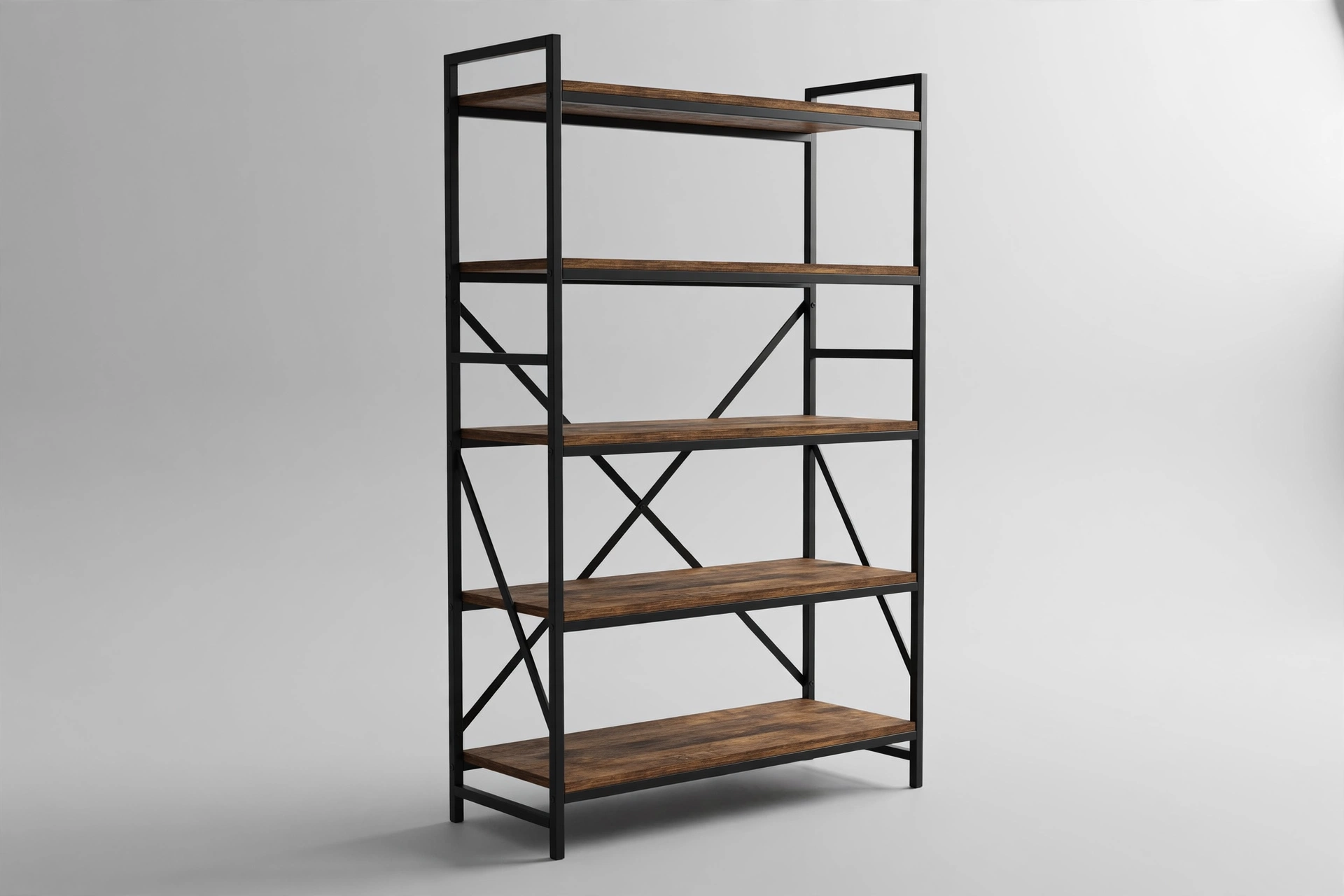
Five tiers change the arithmetic of a family entryway: school shoes, runners, work shoes and the seasonal rotation all get a shelf, in the footprint of a three-tier rack. The VASAGLE carries 4.8 stars from 8,759 reviewers and was named best entryway overall in The Sweet & Simple Kitchen's 45-day test — long enough for wobble and sag to show themselves if they were coming. The industrial frame-and-board styling also survives being looked at, which tall racks often do not.
Height is both the point and the warning: five tiers of shoes is a tall object in a small entry, it needs its wall space measured honestly, and the top shelf suits lighter shoes rather than the heaviest boots. Assembly is the longest here. For a household of four-plus drowning in footwear, it is the capacity answer in this guide.
Yay · Pros
- Five tiers — family capacity in a three-tier footprint
- 4.8 stars from 8,759 reviewers; best entryway overall in a 45-day test
- Sturdy industrial frame that looks deliberate, not improvised
Hmm · Cons
- Tall profile needs honest measuring in small entries
- Longest assembly of the picks here
- Top tiers suit lighter shoes; heavy boots stay low
Best for: families of four or more and anyone whose shoe pile has become a floor feature. Skip if: your entry is a narrow hall where a tall rack would crowd the door swing.
6. Simple Houseware 24-Pocket Over-the-Door — Best for renters
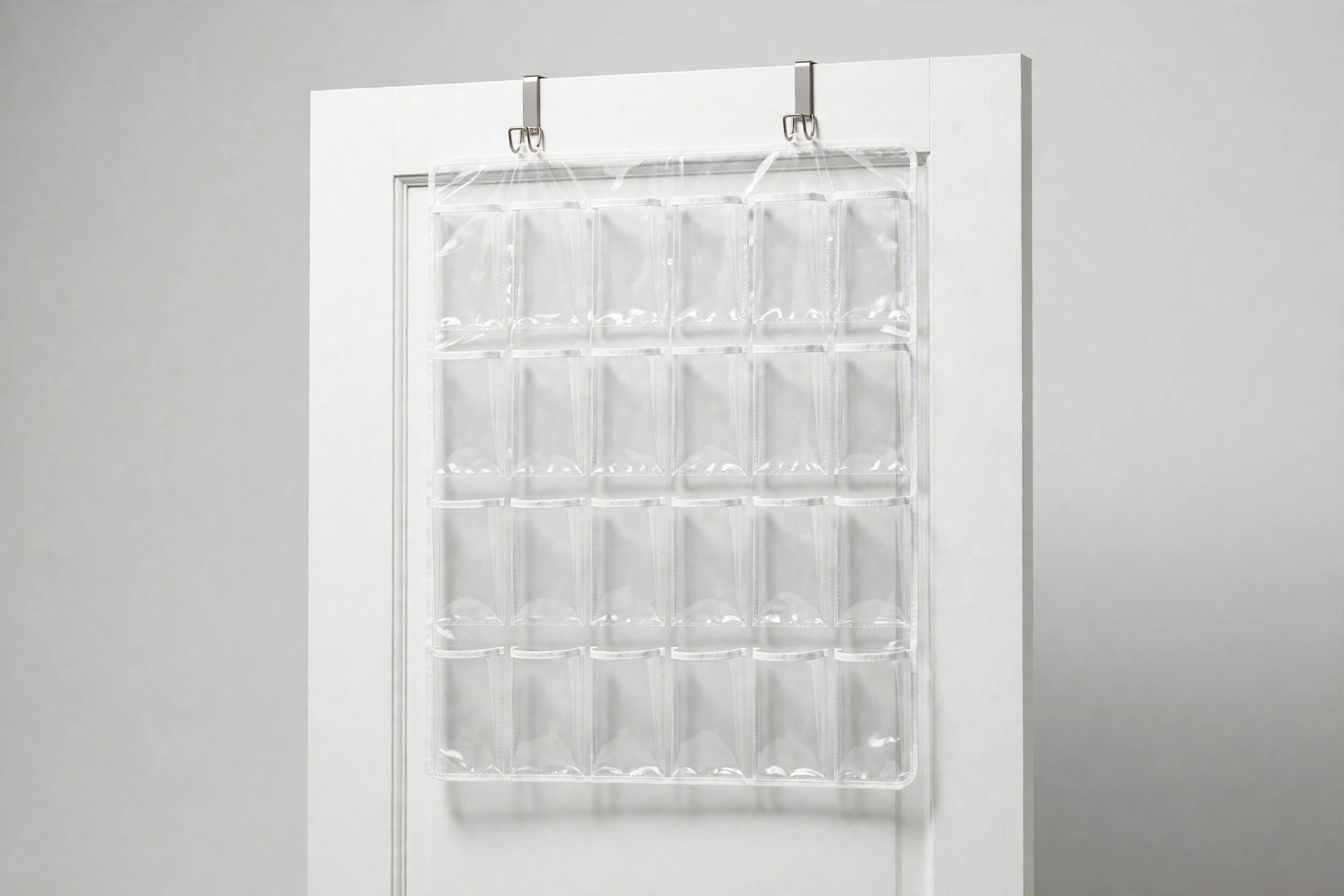
The renter's shoe problem has a specific shape: no floor space to spare and no permission to build anything. This organizer answers both — twenty-four clear pockets hanging from hooks over a standard door, named NestSorted's best over-the-door option. Shoes stay visible, off the floor and out of the closet, and the whole thing leaves with you on moving day, hooks and all.
Pocket storage has honest limits. Bulky winter boots and wide men's shoes stretch the format — this is storage for shoes, sneakers and kids' footwear, not for the Sorel collection — and the door needs clearance to close with the hooks on. Used for what it is good at, it is the only zero-floor-space solution that actually holds two dozen pairs.
Yay · Pros
- Zero floor space — hangs on any standard door
- 24 clear pockets; every pair visible at a glance
- No tools, no holes — fully renter-friendly
Hmm · Cons
- Pockets do not suit bulky winter boots or very wide shoes
- Door needs clearance for the over-door hooks
- Shoes are stored, not displayed — it looks like storage
Best for: renters, dorms, kids' rooms and closets that need a second shoe home. Skip if: most of your footwear is boots — pockets are the wrong shape entirely.
Width, tiers and boot height: what actually matters
Measure the footprint first — width, depth and door swing. Entryway racks fail on inches, not features. Measure the wall, check the rack's depth against the door's swing path, and leave room for the mat. Expandable designs like the Whitmor forgive a rough measurement; fixed towers like the VASAGLE do not. The same measure-first rule runs through every storage category — it is exactly how we tell readers to approach pantry organizers too, because a beautiful organizer that blocks a door is just clutter with shelves.
Boot height is the spec Canadian buyers cannot skip. Standard tier spacing is five to six inches — fine for sneakers, useless for a winter boot with an eight-to-ten-inch shaft. Measure your tallest boot, then choose: a rack with one tall row, a design where boots live on top, or a floor row with a drip tray underneath. That tray matters as much as the rack — slush melts for hours, and a slatted rack over a tray beats a solid shelf standing in meltwater.
Match the format to the household, not the photo. Sit-down households want the bench. Growing collections want stackable or five-tier vertical storage. Renters want the door. And count capacity in your own shoes: a tier that holds four pairs of women's flats holds two pairs of men's boots, and the honest guides count the second way.
Shoe rack questions, answered
How many pairs should a shoe rack hold? Count the shoes that genuinely live at the door — daily pairs for each person, plus the current season's boots — and buy for that number, not for your whole collection. Off-season and dress shoes belong in the closet; a rack sized for everything becomes a tower nobody can see over.
Can a shoe rack handle tall winter boots? Only if the spacing lets it. Standard five-to-six-inch tiers will not take a tall boot upright, so plan a tall row, the top tier, or floor space beside the rack. This is the detail US roundups underplay and Canadian entryways cannot — measure the boot shaft before you order, and keep a drip tray under whatever row the boots land on.
What do I do about slush, salt and grit at the door? Treat the rack as one part of a system: a drip tray under the boot row, a mat that actually fits the entry, and a quick pass for the grit that salt drags in — a small vacuum kept near the door earns its keep all winter, which is why our handheld vacuum guide pairs naturally with this one. Slatted racks like the Seville Classics help by letting meltwater fall through instead of pooling.
Entryway or closet — where should shoe storage live? Daily shoes at the door, everything else in the closet. Splitting the two is what keeps an entryway rack small enough to work; if your closet is where the overflow goes, our closet organizers guide covers the kits and no-drill options that turn it into real storage.
The short version
Buy the Seville Classics if you want the sturdiest everyday rack and your boots can live on top. Buy the Whitmor if your wall width is uncertain or might change. Buy the SONGMICS bench if you sit down to pull boots off, the Kitsure if the budget leads and you may stack later, the VASAGLE if a family's worth of shoes needs one tall home, and the Simple Houseware if the floor is not yours to fill. Whatever you choose, measure the boots first — that is the whole game in a northern entryway.
Last updated: November 16, 2026. We refresh this guide each season and whenever a pick is replaced by a better one.