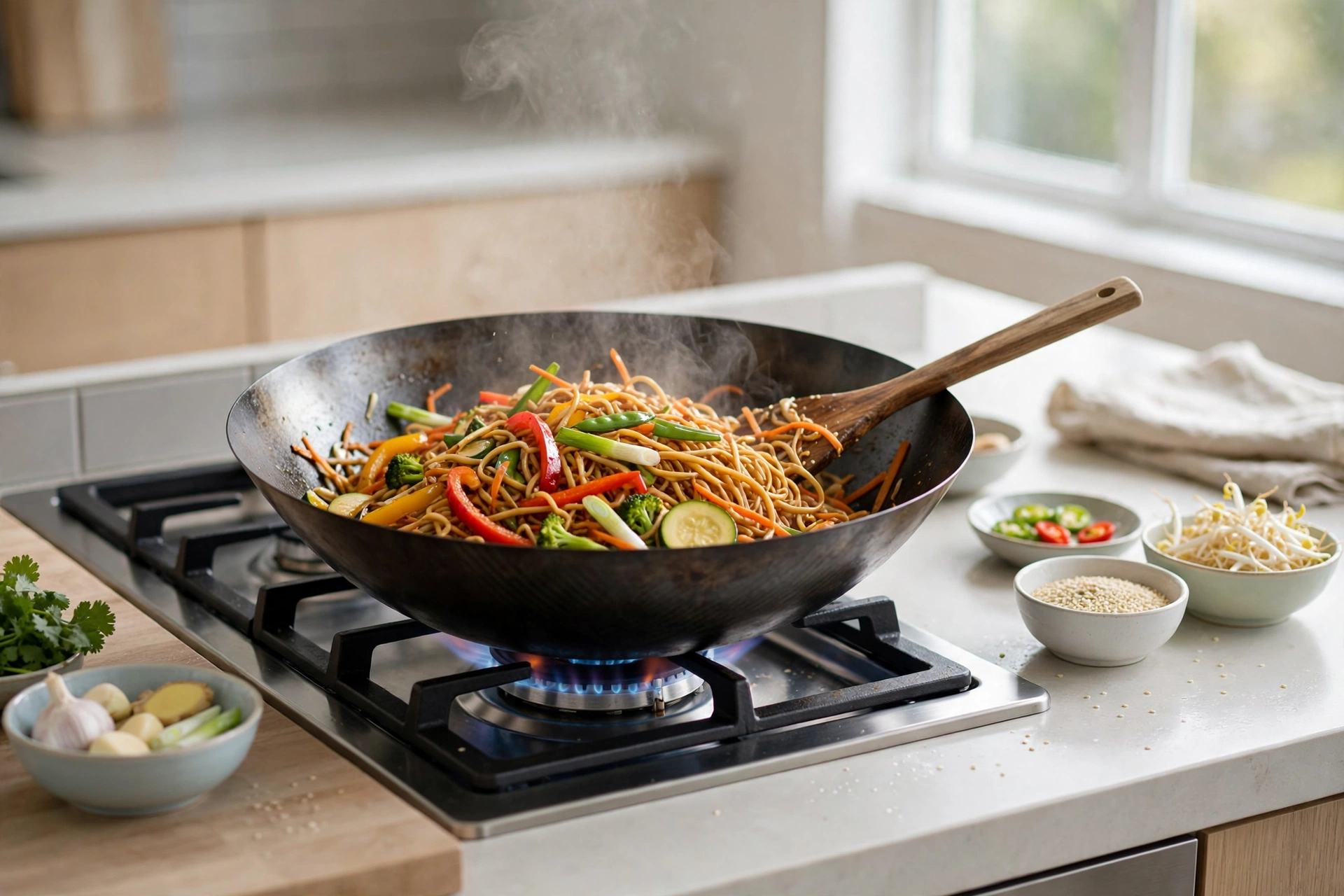
A wok looks like the simplest pan in the kitchen — a bowl with a handle — and it is the one most often bought wrong. Buy a round-bottom wok for a glass-top stove and it wobbles and spins. Buy a nonstick wok for high-heat stir-fry and the coating gives up long before the pan does. Buy a good carbon steel wok without knowing it needs seasoning and the first eggs stick like glue. The right choice depends almost entirely on your stove and how much ritual you are willing to adopt, so we compared the woks that the current roundups keep recommending to build the shortlist below.
The honest headline: carbon steel is still the material that matters, and the split that decides everything is the base. A flat-bottom carbon steel wok like the Babish below works on every stove in a modern Canadian or American kitchen, while the traditional round-bottom designs only earn their keep over a strong gas flame. Everything below is organised around that one decision first, and seasoning effort second.
How we chose these woks
We built this list from the wok roundups that are actively maintained in 2026 — including Sprout & Press, whose testing is led by a CIA-trained chef, TruePicked, which analysed more than 2,100 owner reviews across the category, and the CookwareCanvas wok series — then checked every model's base shape, material and handle design against the manufacturers' own specifications. Where the roundups disagree, we say so. CookSmartPicks does not run its own wok lab; what we do is reconcile the published testing and owner evidence and flag the trade-offs the roundups bury.
Three things separated the picks. Base geometry — flat versus round decides whether the wok sits stable and heats evenly on your specific stove, and it is the filter most buyers skip. Steel and seasoning — carbon steel gauge and whether the pan arrives pre-seasoned decide both the sear you get and the work you owe in the first month. Stove fit in real North American kitchens — induction and glass-top ranges are now common in newer Canadian homes especially, so every pick below is labelled honestly for the burners it actually suits.
The lineup at a glance
| Wok | Best for | Why it made the cut |
|---|---|---|
| Babish 14" Carbon Steel Wok | Best overall | Flat 6-inch base sits stable on every stovetop — the consensus best overall across the 2026 roundups |
| Craft Wok Traditional Hand-Hammered 14" | Best for gas and wok hei | Hand-hammered round bottom built for gas burners and real wok hei |
| YOSUKATA 13.5" Pre-Seasoned | Best pre-seasoned | Arrives pre-seasoned, so the first stir-fry can happen the day it lands |
| Joyce Chen 14" Flat Bottom | Best for electric and flat tops | Flat bottom made for electric, glass-top and induction cooking |
| Helen's Asian Kitchen 14" | Best value carbon steel | Honest carbon steel at the lowest price in this guide |
| T-fal Professional Nonstick 14" | Best nonstick, easy care | Nonstick surface and easy care for weeknight cooking without the seasoning ritual |
1. Babish 14" Carbon Steel Wok — Best overall
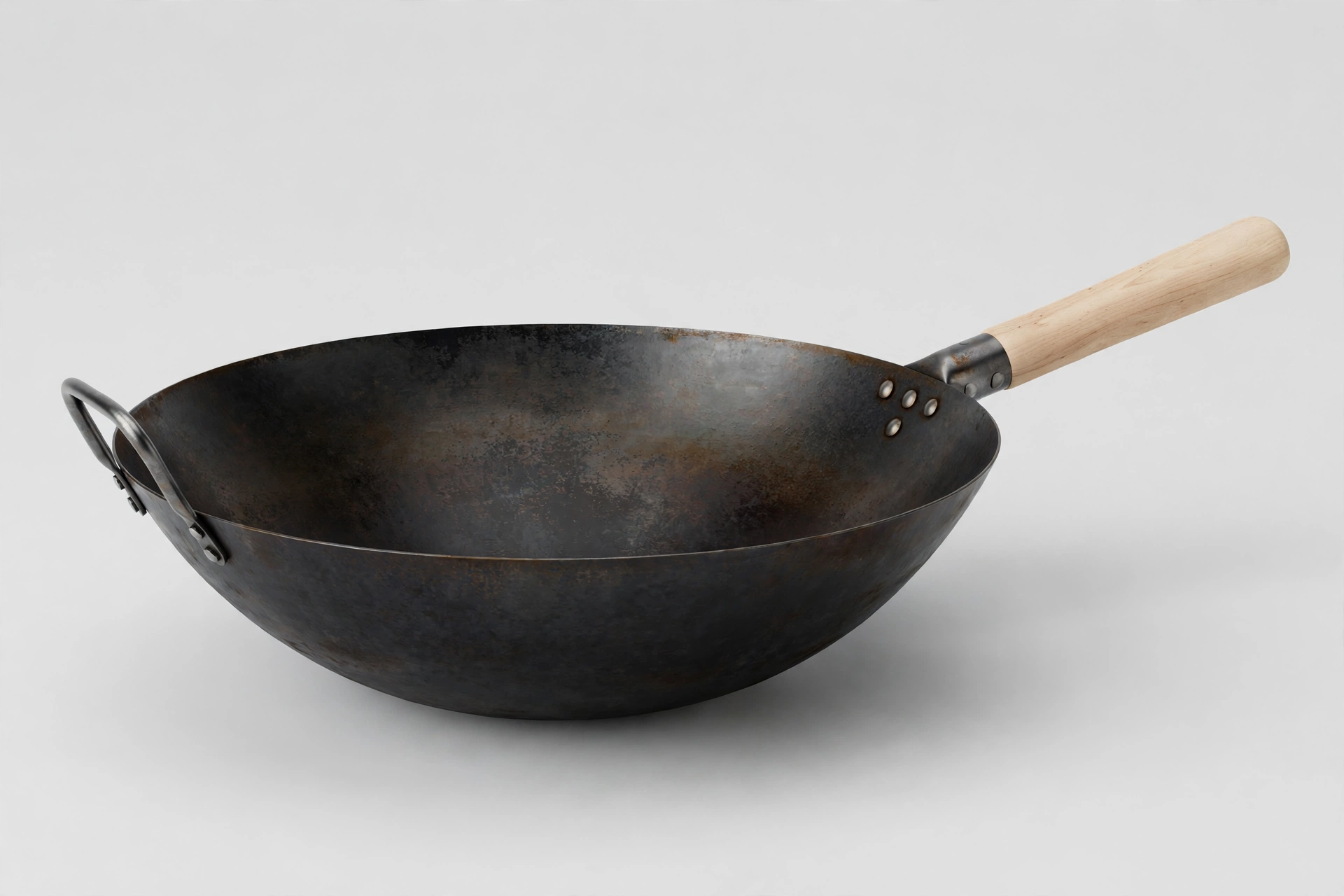
The Babish takes the top spot because it removes the category's biggest friction point: the base. Its flat bottom spans a full 6 inches, which means it sits planted on gas grates, electric coils, glass tops and induction hobs alike — no wok ring, no wobble, no spinning when you toss. Across the 2026 roundups it is the recurring consensus pick for exactly that reason: it is the carbon steel wok a first-time buyer is least likely to regret, because it works on the stove they already own.
The steel seasons up into a properly slick surface with regular use, the high sides handle a family-size stir-fry without spillage, and the shape still gives you the hot base and cool walls that make wok cooking work. The trade-offs are the standard carbon steel ones. It arrives unseasoned, so the first sessions are a project, not a dinner; the flat base means slightly less of the flame-licked character a round-bottom wok gives over gas; and it wants hand washing and a light coat of oil after use. None of that is a flaw — it is the honest price of the material — but buyers who will not pay it should skip to the T-fal below.
Yay · Pros
- 6-inch flat base — stable on gas, electric, glass-top and induction
- The consensus best-overall pick across the current roundups
- Seasons into a genuinely nonstick surface over time
Hmm · Cons
- Arrives unseasoned — first uses are a seasoning project
- Hand wash and oil after use; no dishwasher
- Less wok hei than a round-bottom wok over gas
Best for: most home cooks — anyone who wants one proper carbon steel wok that works on their stove today, whatever it is. Skip if: you cook over a powerful gas burner and chase restaurant wok hei above all else — the Craft Wok below is built for you.
2. Craft Wok Traditional Hand-Hammered 14" — Best for gas and authentic wok hei
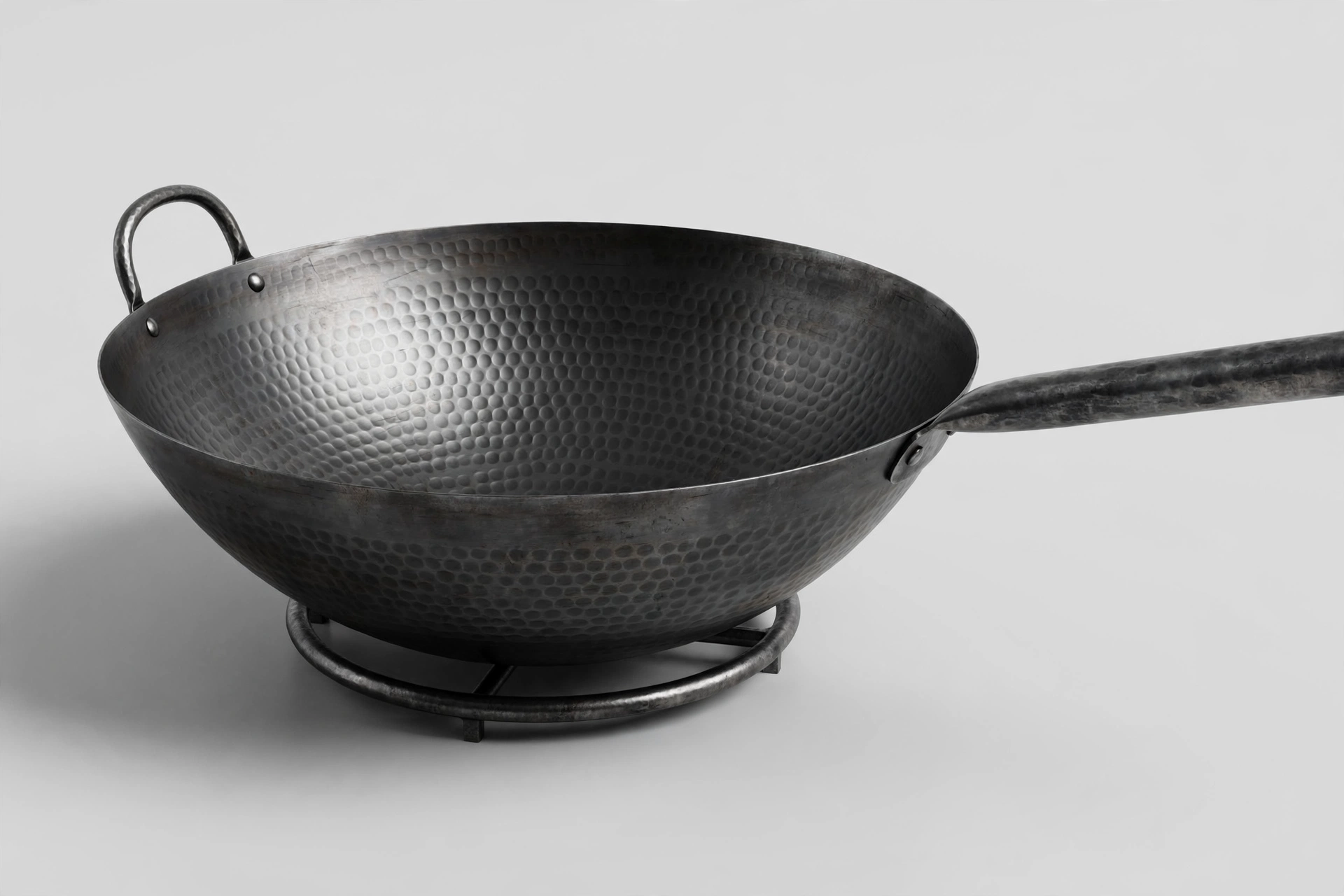
This is the wok the traditionalists mean when they say wok. Each one is hand-hammered from a single sheet of carbon steel, and the dimpled surface is not decoration — the hammering helps food release and gives the pan its character. The round bottom drops into the flame of a gas burner so the heat wraps up the sides, which is how you get wok hei, that faintly smoky sear that flat pans cannot reproduce. For gas-stove cooks who stir-fry several times a week, the roundups consistently put this at the top of the authentic pile.
The conditions are real, though. A round bottom needs a wok ring to sit on most gas grates and is simply the wrong tool for electric, glass-top and induction stoves — it will not sit stable or couple with the heat. It also arrives needing a thorough initial seasoning, and the traditional shape asks for proper wok technique: keep food moving, work in batches, let the steel do the searing. Meet those conditions and nothing else here cooks quite like it. Ignore them and it becomes an ornament.
Yay · Pros
- Hand-hammered carbon steel with genuine wok hei potential over gas
- Round bottom wraps flame up the sides the traditional way
- Built to last decades with basic carbon steel care
Hmm · Cons
- Gas only in practice — unstable and unsuited to flat tops and induction
- Needs a wok ring on most grates
- Full seasoning ritual required before first use
Best for: gas-stove cooks who stir-fry often and want the real restaurant-style result. Skip if: your kitchen has an electric, glass-top or induction range — choose any flat-bottom pick here instead.
3. YOSUKATA 13.5" Pre-Seasoned — Best pre-seasoned
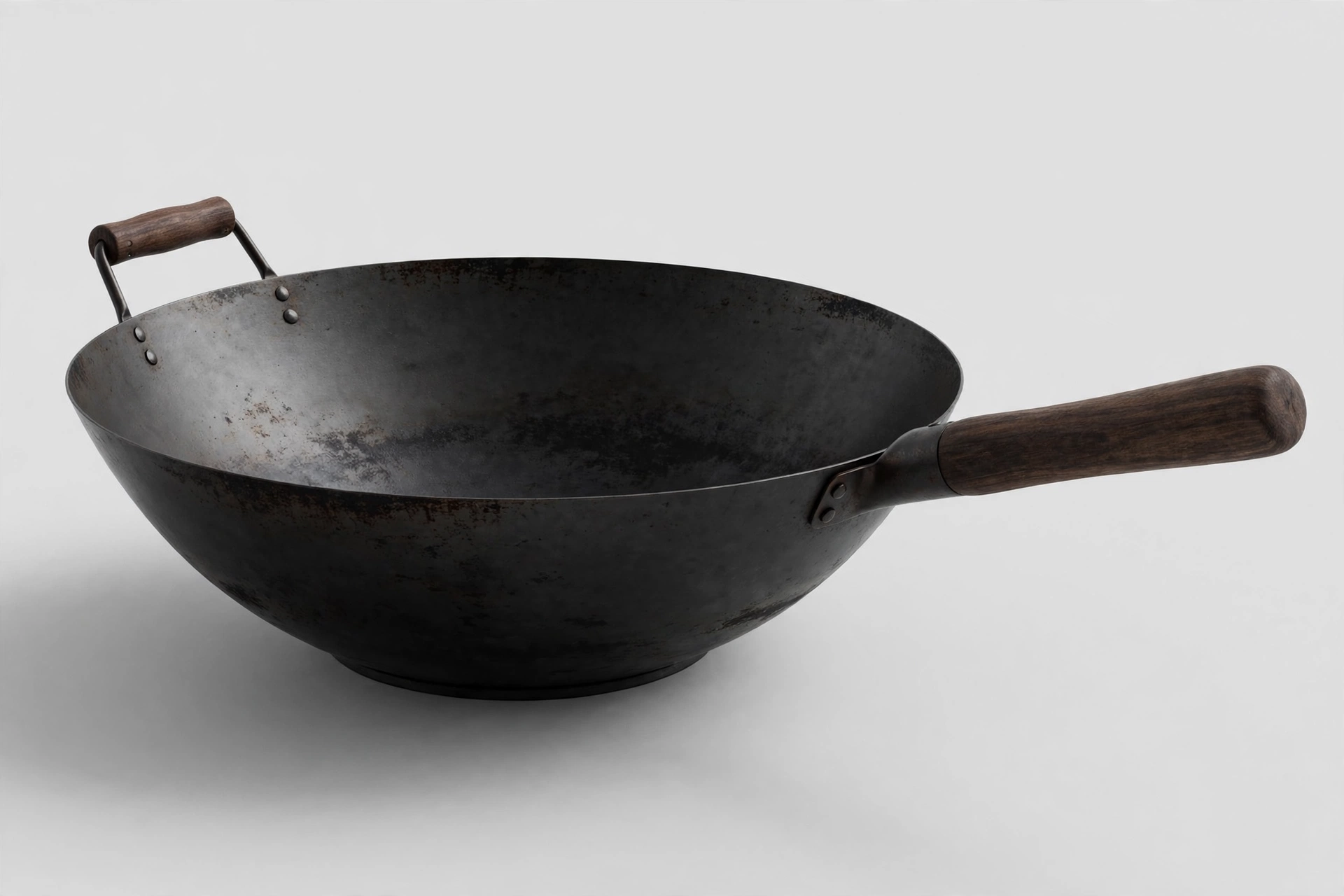
The seasoning ritual is where carbon steel woks lose half their buyers, and the YOSUKATA exists to delete it. It arrives pre-seasoned from the factory, so the pan is ready to cook the day it lands — no smoking oil sessions on the stovetop, no blueing steel over a burner before dinner can happen. At 13.5 inches it is a touch smaller than the 14-inch standard, which suits couples and smaller households, and the flat bottom keeps it compatible with the full range of home stovetops.
Honest framing matters here: pre-seasoned does not mean fully seasoned. The factory layer is a head start, not the finished surface — the pan still improves noticeably over the first months of cooking, and it still wants the carbon steel courtesies of hand washing and drying on the heat. Owners who expected a nonstick pan out of the box are the ones who leave disappointed reviews; owners who understood they were buying a shortcut into carbon steel, not an exemption from it, rate it highly.
Yay · Pros
- Pre-seasoned — ready to cook on day one
- Flat bottom works across gas, electric, glass-top and induction
- Slightly smaller size suits one- to three-person cooking
Hmm · Cons
- Factory seasoning is a head start, not the finished surface
- 13.5 inches is snug for big family stir-fries
- Still needs carbon steel care — hand wash, dry, oil
Best for: buyers who want carbon steel results without the first-weekend seasoning project. Skip if: you cook for four or more at once — the 14-inch picks give you the extra room.
4. Joyce Chen 14" Flat Bottom — Best for electric and flat tops
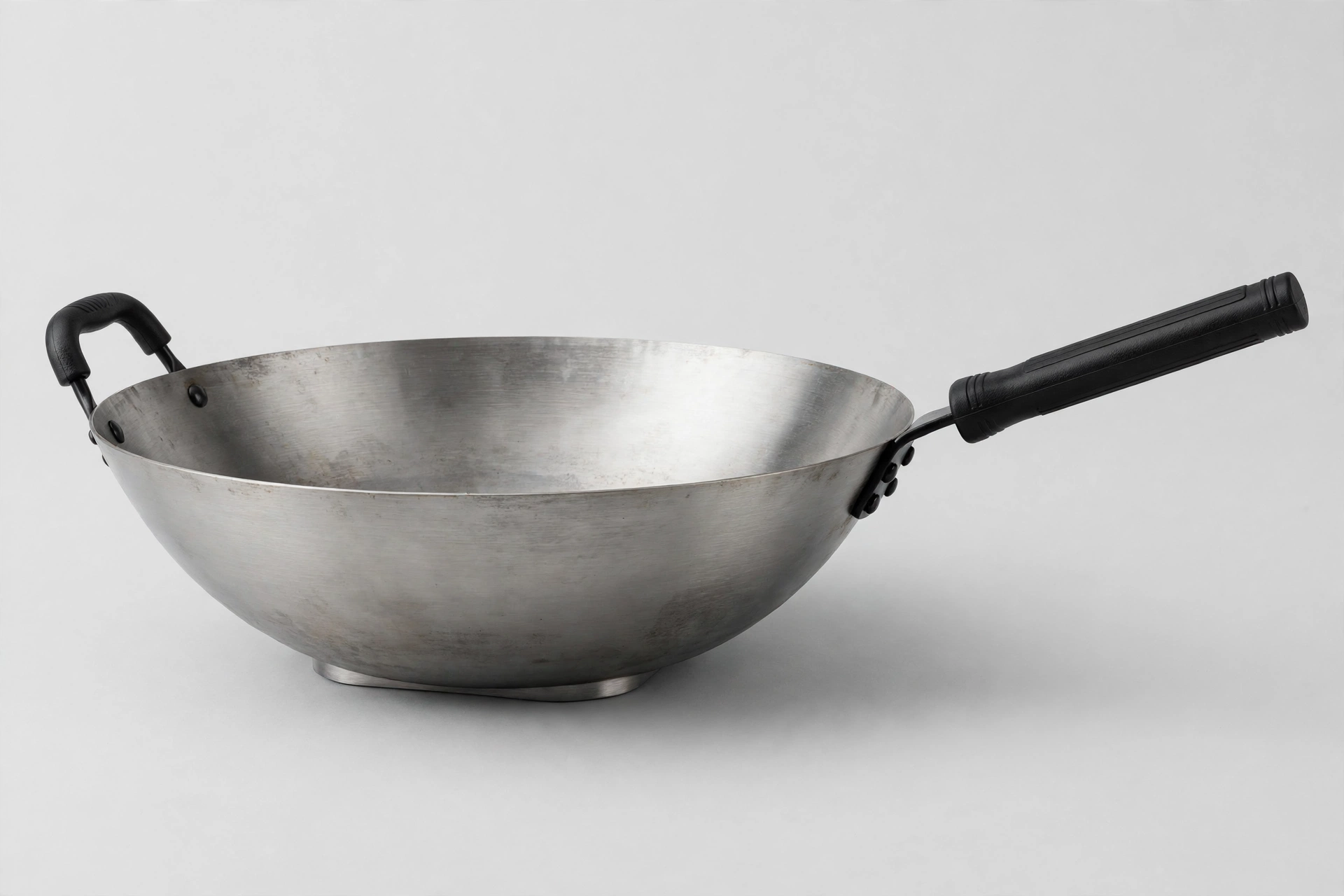
Joyce Chen has been selling woks to North American kitchens for decades, and this flat-bottom model is the one the roundups reach for when the question is an electric or glass-top stove. The wide flat base makes full contact with coils and ceramic hobs, the carbon steel is light enough to toss one-handed, and the heat-resistant handles suit cooks who move the pan on and off the burner constantly. For the many Canadian and American homes where gas simply is not an option, this is the traditional-material answer that actually fits the stove.
The compromises show at the extremes. The steel is lighter than the Babish or Craft Wok, so it heats fast but also cools faster when a big load of cold vegetables lands — batch cooking matters more here. And like every unseasoned carbon steel pan, it needs its seasoning sessions up front and hand care after. Within those limits it is the most proven flat-top wok in this guide, with a long owner history behind it.
Yay · Pros
- Flat bottom designed for electric, glass-top and induction stoves
- Light enough for genuine one-handed tossing
- Decades-long track record in North American kitchens
Hmm · Cons
- Lighter steel sheds heat faster under big loads
- Arrives unseasoned — seasoning sessions required
- Less searing mass than the heavier picks
Best for: electric, glass-top and induction households that want real carbon steel. Skip if: you regularly cook large, wet loads in one batch — the heavier Babish holds its heat better.
5. Helen's Asian Kitchen 14" — Best value carbon steel
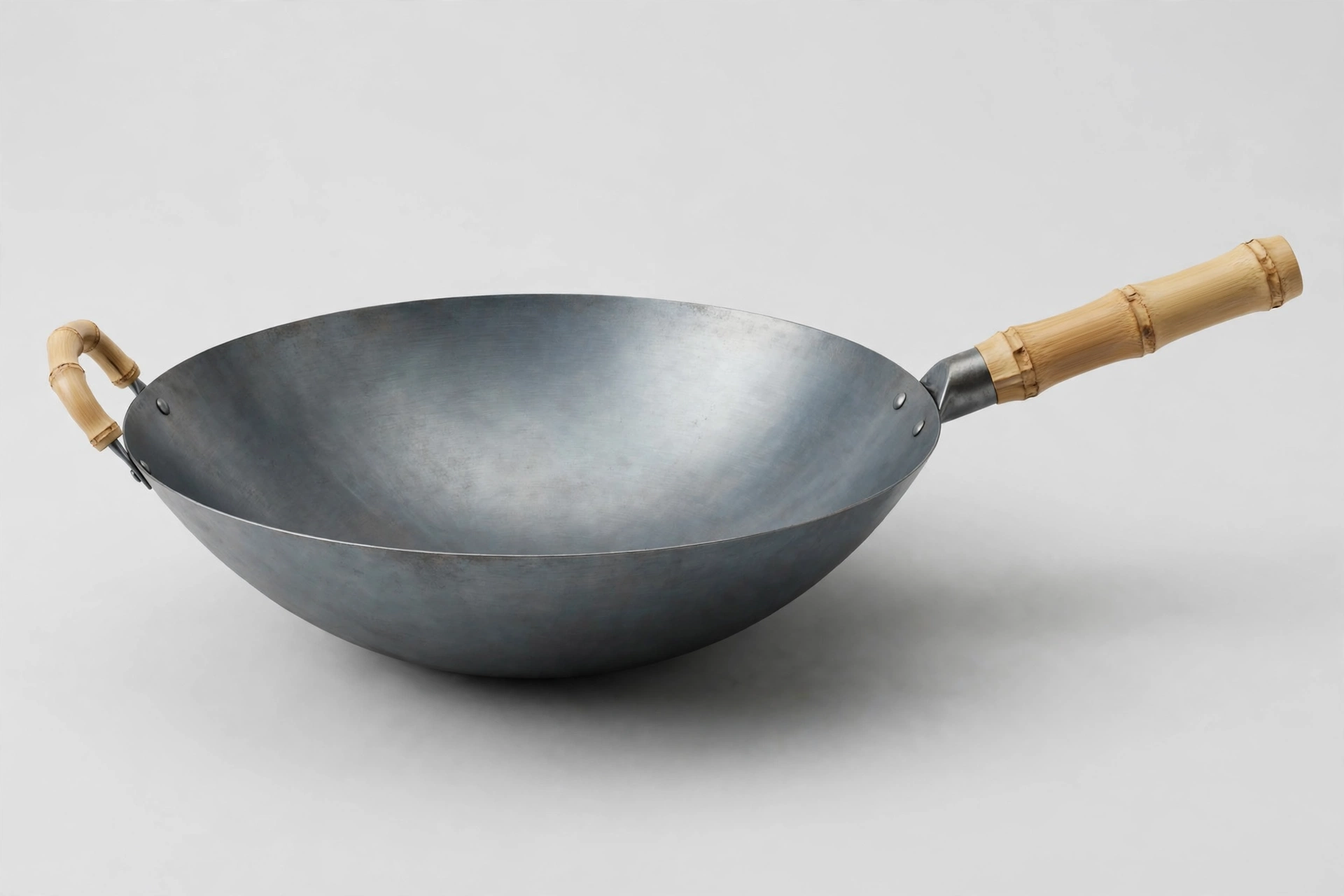
Helen's Asian Kitchen is the budget line of the carbon steel world, and this 14-inch flat-bottom wok is the cheapest honest way into the material. You get real carbon steel that seasons, sears and lasts the way carbon steel does, with a bamboo handle that stays cool and a flat base that behaves on modern stovetops. For a first wok — or a cottage, student kitchen or second pan — the roundups keep it in the value slot because the cooking surface itself gives up very little to the pricier names.
Where the saving shows is finish and fittings. The handle hardware is plainer, the steel wants a careful first seasoning to get past an awkward sticky phase, and quality can vary a little more from pan to pan than with the premium picks. None of that stops it cooking a proper stir-fry once seasoned. Treat it as the apprentice's wok: inexpensive enough to learn on, good enough that many cooks never bother upgrading.
Yay · Pros
- Real carbon steel at the lowest price in this guide
- Flat bottom suits modern electric and glass-top ranges
- Bamboo handle stays cool in use
Hmm · Cons
- Plainer finish and fittings than the premium picks
- First seasoning takes patience to get past the sticky phase
- Slightly more pan-to-pan variation reported by owners
Best for: first-wok buyers, students, cottages and anyone testing whether wok cooking suits them. Skip if: you want buy-once polish and the heaviest steel — step up to the Babish.
6. T-fal Professional Nonstick 14" — Best nonstick, easy care
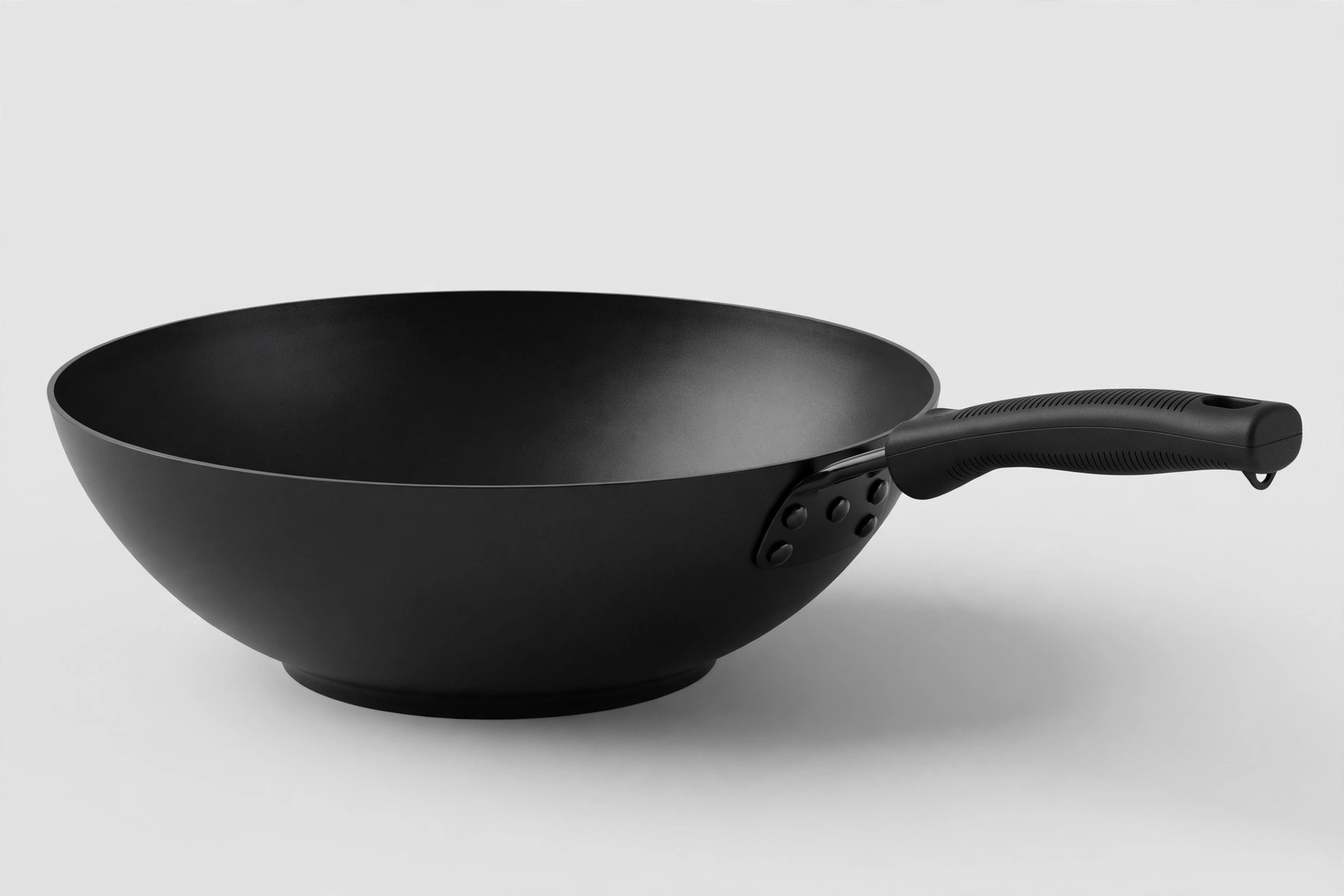
Not every wok buyer wants a seasoning ritual, and for them the T-fal Professional is the honest alternative. The nonstick surface releases eggs, noodles and sticky glazes from day one, cleanup is a wipe rather than a routine, and the flat bottom sits happily on everyday stovetops. If your wok cooking is weeknight fried rice and vegetable stir-fries at moderate heat, it does that job with the least friction of anything here — the same easy-care logic that drives our best nonstick frying pans guide.
The limits are the material's, and they should be stated plainly. Nonstick coatings cannot take the ripping heat carbon steel thrives on, so genuine wok hei is off the table, and the coating is a consumable — with regular use it will wear over years where a carbon steel pan improves. Use it at moderate heat, keep metal utensils gentle, and it earns its place. Ask it to be a restaurant wok and it will disappoint you on a schedule.
Yay · Pros
- Truly nonstick from day one — no seasoning, ever
- Easiest cleanup in this guide
- Flat bottom for everyday electric and gas stovetops
Hmm · Cons
- Cannot take true high-heat wok cooking — no wok hei
- Coating wears over years; carbon steel improves instead
- Not the pick for metal-utensil, high-heat technique
Best for: weeknight cooks who want stir-fry results with zero pan maintenance. Skip if: high-heat searing is the point of your wok cooking — every carbon steel pick above serves you better.
Woks: what actually matters
Match the base to your stove, first and always. Round bottoms belong on gas, ideally with a wok ring; flat bottoms belong everywhere else. This single decision matters more than brand, price or steel thickness, and it is why newer Canadian homes full of induction and glass-top ranges should start their search with the flat-bottom picks. If you are building out a full pan set around that stove at the same time, our best cookware sets guide applies the same stove-first logic to the rest of the cupboard.
Carbon steel is the default for a reason. It is light enough to toss, tough enough for metal utensils and high heat, and it builds its own nonstick surface through seasoning — a pan that gets better for decades. Its only costs are the rituals: season it at the start, dry it after washing, oil it lightly. If searing meat is as much of your cooking as stir-frying, the same logic explains why so many wok owners also keep one of the pans in our best cast iron skillets guide beside the wok.
Size by household, not appetite. Fourteen inches is the home standard because it fits a family stir-fry on a domestic burner without crowding; the 13.5-inch YOSUKATA suits one to three people. Bigger is not better on a home stove — an oversized wok spreads the heat too thin at the base and steams instead of searing.
Wok questions, answered
Do I really need to season a carbon steel wok? Yes, unless it arrives pre-seasoned like the YOSUKATA — and even then the surface keeps improving with use. Seasoning is polymerised oil bonded to the steel; it is what makes the pan release food and resist rust. The process is an afternoon at most, and every unseasoned pick here rewards it.
Can I use a wok on an induction stove? A flat-bottom carbon steel wok, yes — carbon steel is magnetic, and the Babish, Joyce Chen, YOSUKATA and Helen's Asian Kitchen picks all sit flat enough to couple with an induction hob. A round-bottom wok cannot; there is no stable contact for the induction field to work through.
What is wok hei, and can I get it at home? Wok hei is the smoky, seared flavour that comes from food tossing through the flame and vapour of a very hot wok. A round-bottom wok over a strong gas burner — the Craft Wok here — gets closest. Flat-bottom woks on home electric or induction stoves can sear beautifully, but the full effect needs flame licking the sides, and it is fair to say most home kitchens approximate it rather than reproduce it.
Carbon steel or nonstick — which should a beginner buy? Decide by heat and habits. If you will cook hot and often, carbon steel is the beginner's long-term answer: it forgives technique mistakes and improves for years. If you cook gently and hate maintenance, the T-fal is the honest beginner pick — just know its coating sets a ceiling on both heat and lifespan.
The short version
Buy the Babish 14" if you want one carbon steel wok that works on any stove — it is the consensus best overall for a reason. Buy the Craft Wok if you cook over gas and chase real wok hei. Buy the YOSUKATA if seasoning puts you off, the Joyce Chen if your stove is electric, glass-top or induction, the Helen's Asian Kitchen if the budget leads, and the T-fal if easy care leads. Everything else is the base: match it to your burner first.
Last updated: November 16, 2026. We refresh this guide each season and whenever a pick is replaced by a better one.