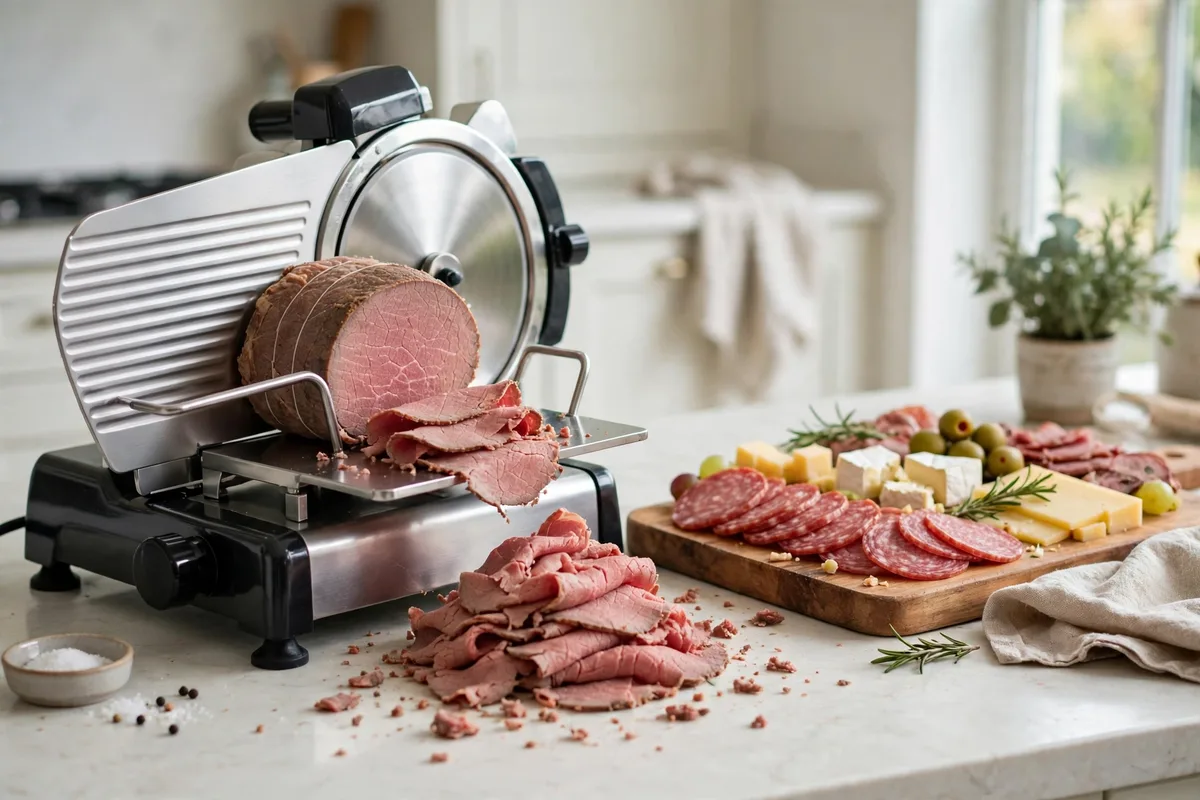
The whole roast in the deli case costs one thing per pound; the same roast, run through the slicer and stacked in a plastic tub, costs noticeably more. That gap is the slicing premium — you pay it every week for a machine you do not own. The best electric meat slicer closes that gap at home. One Sunday roast becomes a week of sandwiches sliced exactly as thin as you like them, a brisket becomes even strips ready for jerky, and a salami with a block of aged cheddar becomes a charcuterie board that looks shop-made. The five slicers here were chosen for home kitchens, not delis: they span from a near-commercial 10-inch machine to a compact that tucks into a cupboard, and they split on the questions that decide ownership happiness — blade size, drive type, how they clean, and how safely they handle.
Whole cuts keep longer than sliced meat and let you portion on your schedule rather than the store’s. Slice a roast, eat half the slices fresh this week, and seal the rest flat for the freezer — our guide to the best vacuum sealers in Canada and the USA is the natural partner purchase, because sliced meat sealed without air keeps its texture far longer than sliced meat in a zip bag. Wattage and blade figures below are manufacturer-listed, and weighed against independent roundups and owner reports.
Disclosure: CookSmartPicks is reader-supported. When you buy through links on this page, we may earn an Amazon commission at no extra cost to you. Prices and availability change often — check the current price on Amazon before you decide.
How we chose these meat slicers
CookSmartPicks is a research-based guide. We do not run a test lab, and we never claim hands-on testing we have not done. For this list we compared manufacturer specifications — blade diameter and material, motor wattage and drive type, thickness range, weight and footprint — with independent slicer roundups and owner reports from verified buyers in Canada and the USA. Two themes from that owner record shaped the ranking. The first is cleanup: slicers live or die on whether the blade comes off easily and whether food hides behind it. The second is durability — motors that strain, carriages that flex and light bodies that wander all surface in owner reports within the first year, and picks were marked down for patterns, not anecdotes.
The lineup at a glance
| Product | Best for | Why it stands out |
|---|---|---|
| BESWOOD 10-Inch Electric Deli Meat Slicer (240W) | Best near-commercial | A full 10-inch blade, a built-in sharpener and 33 lb of planted stability |
| Cuisinart Kitchen Pro Food Slicer FS-75 | Best for most homes | The name-brand pick, with removable parts and the strongest support story |
| OSTBA Electric Meat Slicer 8.7-Inch (200W DC) | Best value & quietest | A quiet-running DC motor and two removable blades, smooth and serrated |
| Chef’sChoice 615A SlideCarve Electric Slicer | Best all-metal build | Cast-aluminium construction and a gear-driven, high-torque motor |
| CUSIMAX Electric Meat Slicer 8.7-Inch | Best compact | The generous 8.7-inch blade size in a cupboard-friendly machine |
1. BESWOOD 10-Inch Electric Deli Meat Slicer (240W) — Best near-commercial
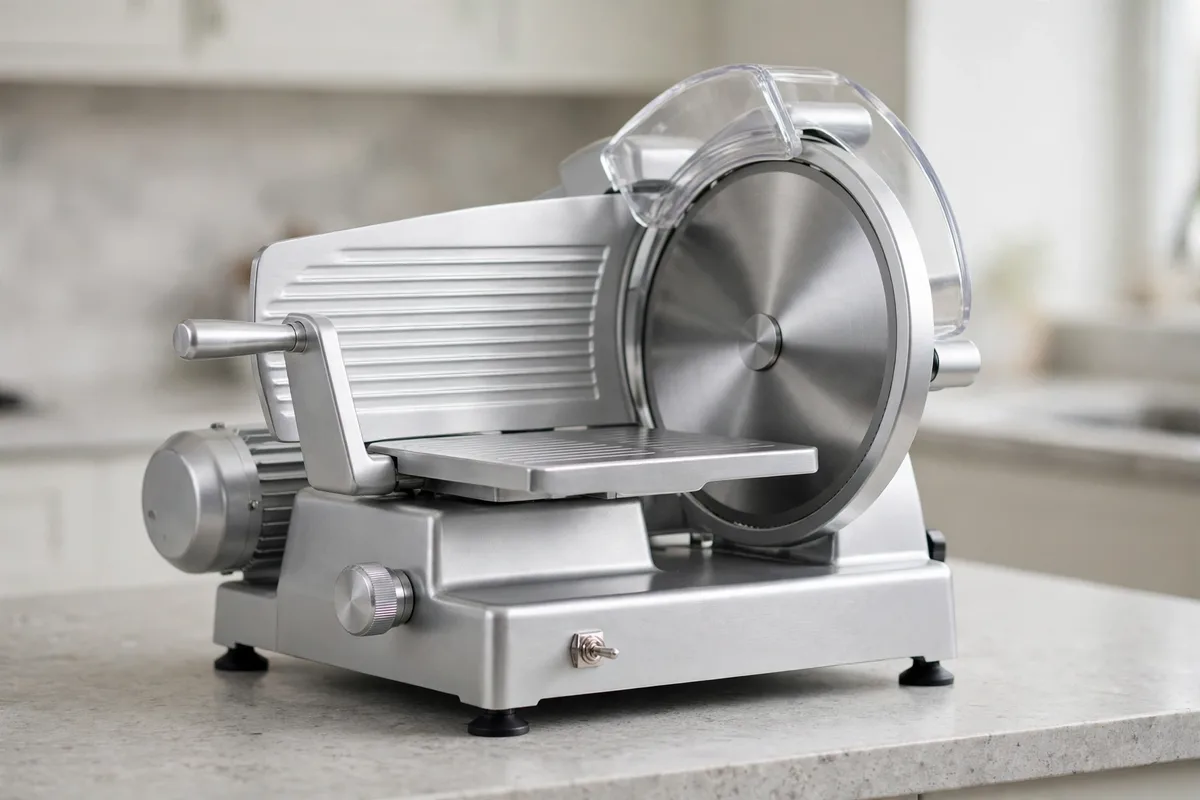
The BESWOOD is the slicer home buyers choose when they want the deli counter itself, not a toy version of it. Its manufacturer-listed centrepiece is a 10-inch chromium-plated carbon steel blade — a full-size deli diameter that lets a whole roast, a wide brisket flat or a large salami pass in one clean stroke instead of being wrestled through in sections. The manufacturer-listed 240W motor is the strongest in this guide, the body is aluminium, and a built-in blade sharpener rides on the machine, so the edge that dulls gradually over months of slicing can be restored in seconds instead of being postponed. At roughly 33 lb, the machine plants itself on the counter and stays planted — no walking, no creeping toward the edge mid-slice — and that stability is a safety feature as much as a convenience.
Its thickness runs from paper-thin to about 1/2 inch. The honest costs of admission are size and cleanup. This is a dedicated-counter-space machine: wide, deep and heavy enough that nobody happily hauls it in and out of a cupboard, so it earns a permanent home or becomes an expensive ornament. And the recurring owner complaint across roundups is cleaning behind the blade — meat and juice migrate into the gap between blade and housing, and a thorough clean takes deliberate minutes with the machine unplugged and a glove on. Neither point dents what it is: the closest thing to a commercial deli slicer a home kitchen can reasonably run.
Yay · Pros
- Full 10-inch blade, 240W manufacturer-listed — whole roasts in one pass
- Built-in sharpener keeps the edge honest
- Roughly 33 lb of planted stability under load
Hmm · Cons
- Cleanup behind the blade is the known owner complaint
- Needs dedicated counter space; too heavy to store away
- Oversized for occasional slicing households
Best for: high-volume households, jerky makers and anyone who wants genuine near-commercial slicing at home. Skip if: your counter is small or slicing is an occasional job — the Cuisinart or CUSIMAX below will make you happier.
2. Cuisinart Kitchen Pro Food Slicer FS-75 — Best for most homes
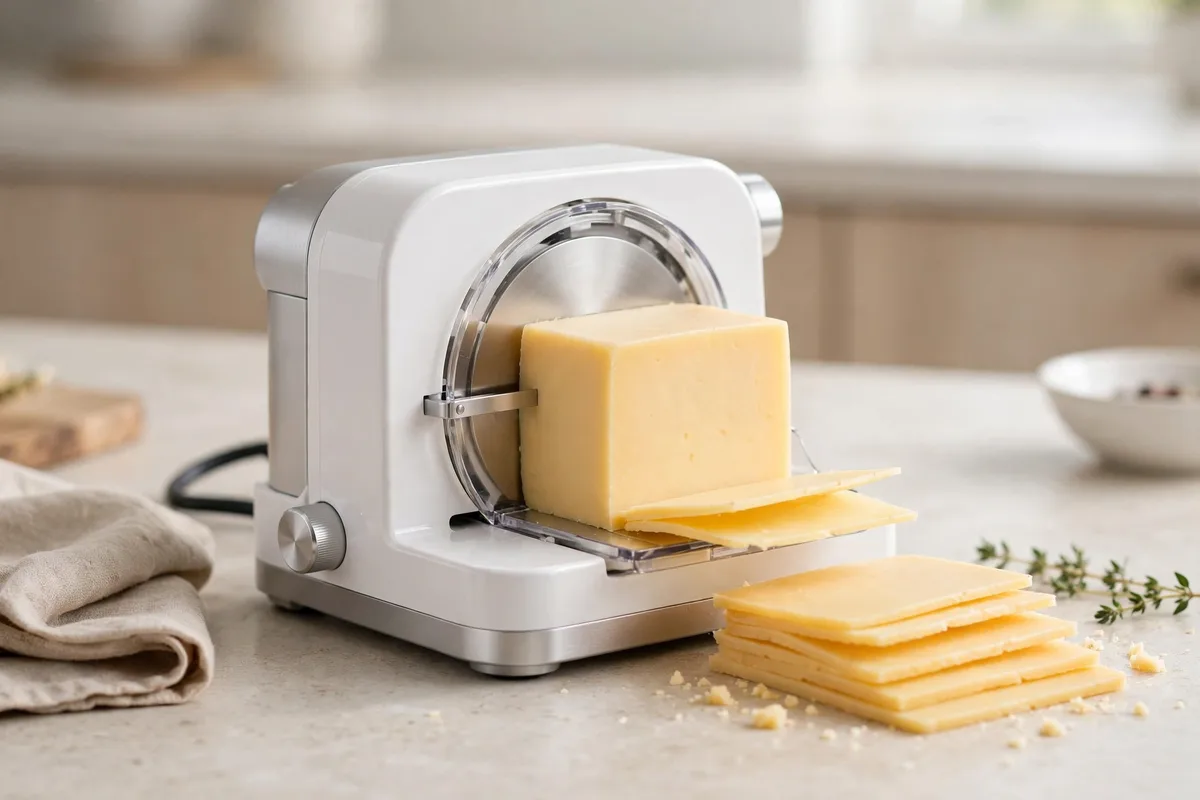
The Cuisinart FS-75 answers a fair question: what if I want deli-thin slices on Sunday without giving a semi-commercial machine a permanent home on my counter? Its specification centres on a manufacturer-listed 7.5-inch undulated stainless steel blade — the wavy edge helps release sticky foods like cheese — driven by a manufacturer-listed 130W motor, with a thickness range from 1/32 inch to 1/2 inch — at its thinnest settings it shaves roast beef and ham the way sandwich shops do. What elevates it above the no-name crowd is everything around the slicing. Cuisinart is an established North American brand with real warranty handling and parts support on both sides of the border, and in a category where a failed motor on an unknown brand often means a machine in the landfill, that support story is a legitimate buying reason.
The design also respects the cleanup ritual. The blade removes for washing, the food carriage comes off, and the surfaces that touch food are reachable — the easiest full clean in this guide, and why it suits most homes. The honest trade is the flip side of its friendly size. The body is light, and owners report it can walk slightly under a heavy, dense roast; the fix is a non-slip mat underneath and a calmer feed rate, but the BESWOOD’s planted mass is genuinely better at this one job. The 7.5-inch blade also caps food width — fine for family roasts and cheese blocks, limiting for wide brisket. For the typical household’s actual menu, those are the right compromises.
Yay · Pros
- Slices from 1/32 inch in a compact, storable body
- Removable blade and carriage — the easiest full clean here
- Strongest warranty and support story in the guide
Hmm · Cons
- Light body can walk under heavy roasts
- 7.5-inch blade limits the widest foods
- 130W (manufacturer-listed) is the gentlest motor here
Best for: most homes — weekly sandwich slicing, cheese and charcuterie in a machine that stores away and cleans fast. Skip if: you regularly slice full-size roasts or brisket and want the blade and mass to match — see the BESWOOD.
3. OSTBA Electric Meat Slicer 8.7-Inch (200W DC) — Best value & quietest
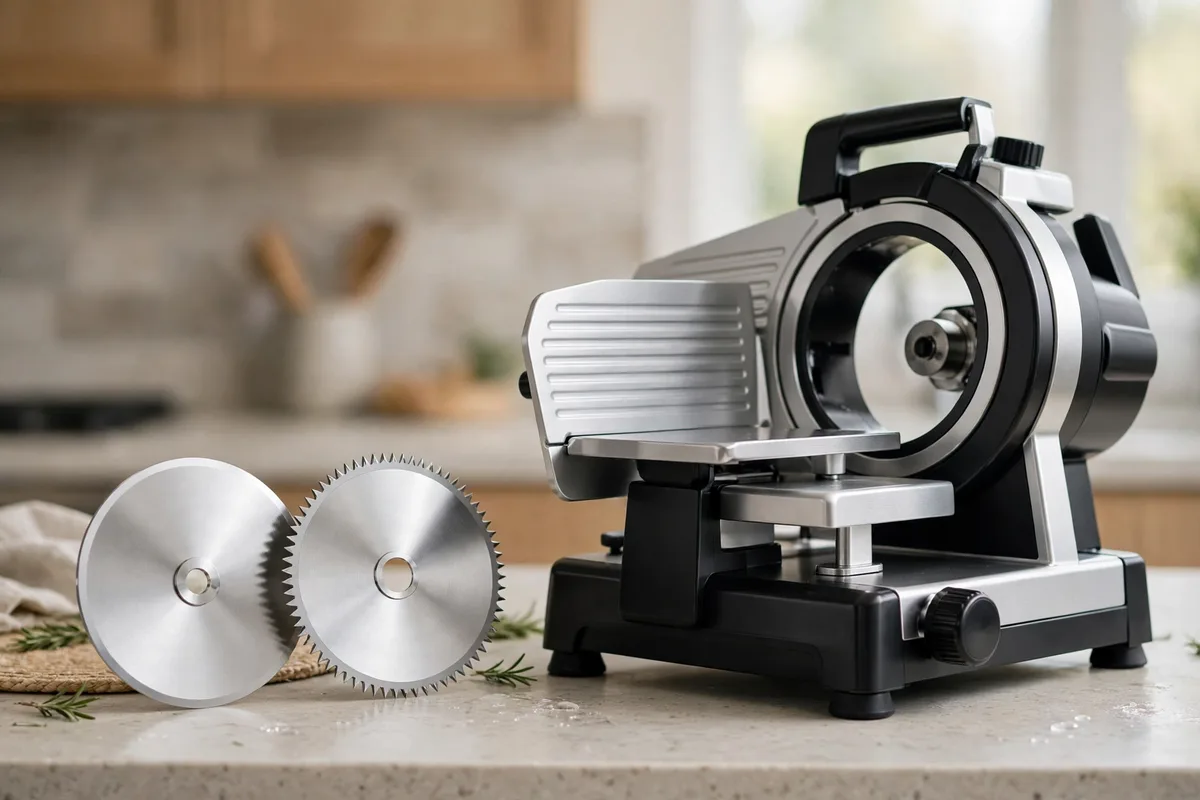
The OSTBA is the thinking shopper’s value pick, and its headline is the motor. Where most home slicers here use a conventional AC motor, the OSTBA runs a manufacturer-listed 200W DC motor — the design independent roundups consistently single out for quieter running, which matters when slicing happens in an open-plan kitchen while the household is still asleep. The 8.7-inch blade is the generous middle: wide enough for bacon slabs, brisket and sandwich loaves that crowd a 7.5-inch machine, in a body that still stores sensibly. Better still, OSTBA ships two removable blades — smooth for meat, serrated for bread and crusty foods — so one edge is never forced to be mediocre at everything. The thickness range runs up to 3/4 inch, the thickest maximum in this guide.
Cleanup is the second half of the value case. The blades remove, the carriage and pusher come off, and the parts that collect meat and juice are reachable and washable — owner reports praise exactly this, and it answers the behind-the-blade complaint that follows the BESWOOD around. The honest note is about the badge: OSTBA is a newer brand with a shorter track record than Cuisinart or Chef’sChoice, so long-tail questions — parts availability in five years, support out of warranty — have less evidence behind them. That uncertainty is priced in, and the specification per dollar is the strongest here.
Yay · Pros
- 200W DC motor (manufacturer-listed) — the quiet-running design roundups single out
- Two removable blades included: smooth for meat, serrated for bread
- Thickness to 3/4 inch; removable parts simplify washing
Hmm · Cons
- Newer brand — long-term parts story unproven
- Thinner support network than the heritage brands
- Mid-weight body — not BESWOOD-planted
Best for: value hunters who want the quiet motor, both blades and easy washing in one mid-size machine. Skip if: a long-established brand and proven parts support matter more to you than specification per dollar.
4. Chef’sChoice 615A SlideCarve Electric Slicer — Best all-metal build
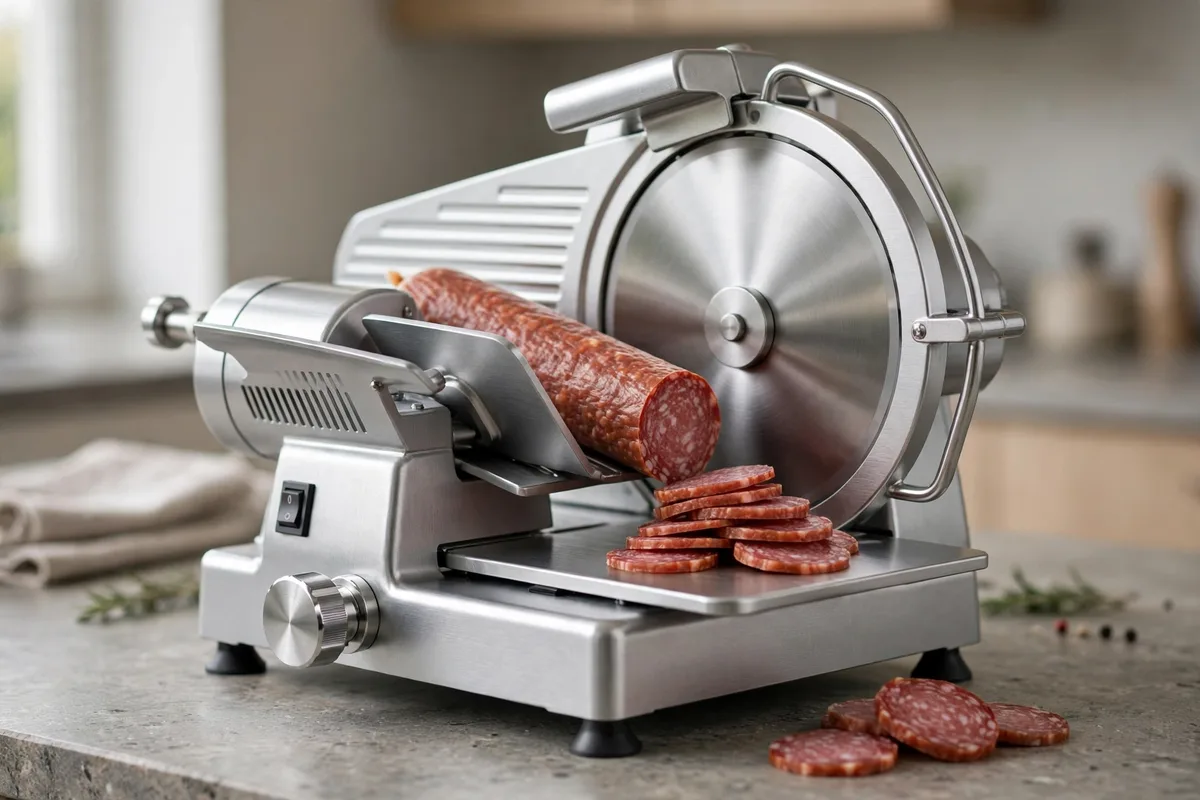
The Chef’sChoice 615A is what happens when a slicer is built like a kitchen tool instead of an appliance. Its construction is cast aluminium and stainless steel throughout — the all-metal build in this guide — and under the housing sits a high-torque, gear-driven motor rather than the belt drive most rivals use. That distinction is this machine’s whole argument. A belt drive transmits power through a rubber belt that can slip and stretch when a dense, chilled roast resists the blade; a gear drive meshes metal teeth directly, so torque arrives without the belt’s give, and the blade holds its speed through exactly the foods — firm salami, aged cheese, chilled brisket — that make lesser slicers bog down and tear. The 7-inch blade is the smallest here, but it spins in a cantilevered design that leaves room for a large tray to catch slices.
The trade-offs are price tier and blade diameter. The 615A sits in the premium tier of home slicers, and what the money buys is construction and drive, not size. A 7-inch blade means wide foods get trimmed or turned, where the BESWOOD simply swallows them. In return you get a machine that feels machined rather than moulded, from a brand whose core business for decades has been edges. For a buyer who slices dense foods often, the gear drive and metal build are the specification; for a light-duty sandwich household, they are more machine than the menu requires.
Yay · Pros
- Cast-aluminium and stainless — the all-metal build here
- Gear-driven motor holds blade speed through dense foods
- Cantilevered design fits large trays; parts remove for cleaning
Hmm · Cons
- Premium price tier — you pay for build and drive
- 7-inch blade is the smallest here
- Heavier than the plastic-bodied compacts
Best for: long-term owners who slice dense, chilled foods often and want metal construction and gear drive. Skip if: blade diameter is your priority or the budget is value-tier — the BESWOOD and OSTBA answer those briefs.
5. CUSIMAX Electric Meat Slicer 8.7-Inch — Best compact
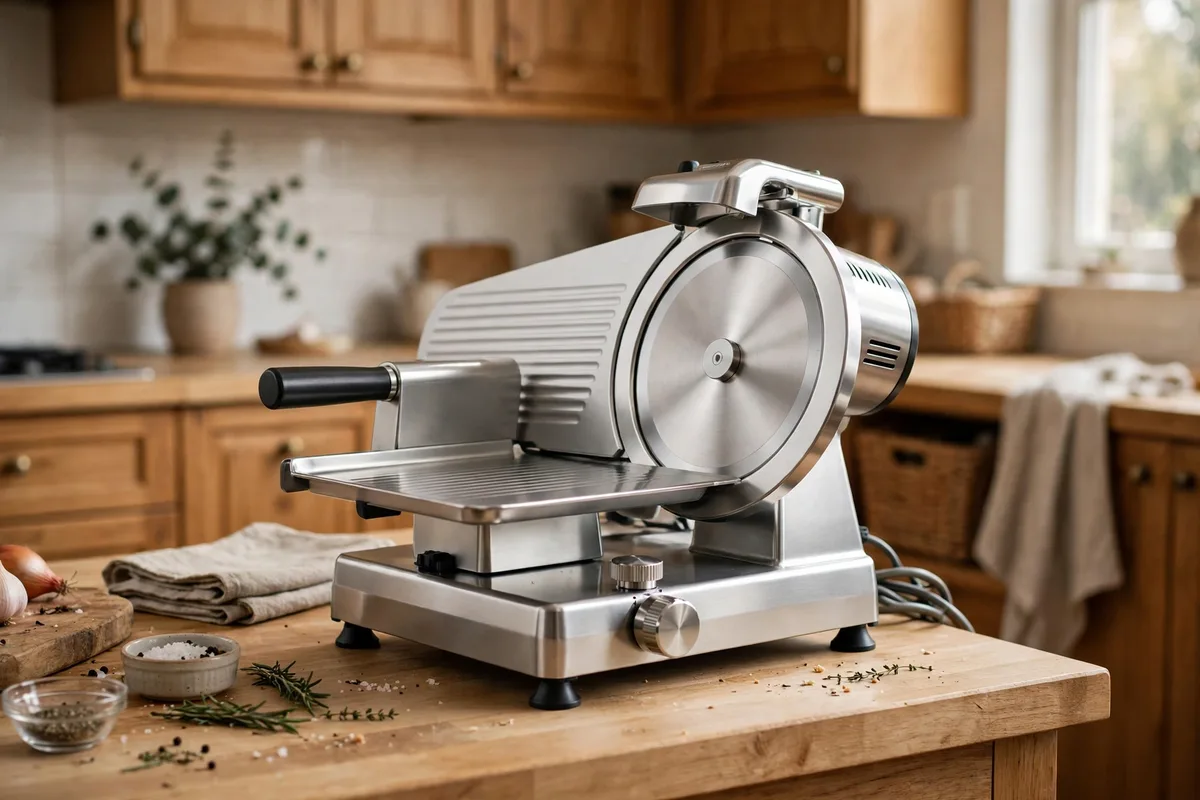
The CUSIMAX is the compact pick that keeps showing up in value roundups, and the specification explains why. An 8.7-inch stainless steel blade is the generous middle size — wide enough for bacon, brisket and sandwich loaves, small enough for a machine that lives in a cupboard between uses — driven by a manufacturer-listed 200W motor, with dual blades so meat and bread each get an appropriate edge. The food carriage removes for washing, which keeps this machine on the right side of the cleanup divide that separates slicers people keep using from slicers they quietly stop using. Listings put the thickness range at roughly 1 to 20mm — a listing figure, not a lab measurement — spanning shaved deli slices to hearty steak and jerky cuts. For apartments and households slicing a few times a month, this is the footprint-to-capability ratio that makes sense.
The honest trade is build weight. The CUSIMAX is a lighter machine than the BESWOOD class, and it behaves like one: it asks for a steady hand on the pusher and a sensible feed rate on dense, chilled meat, where the heavy machine simply powers on. Owners who slice gently report clean, even results; owners who lean on it report the flex common to light slicers. Like the OSTBA, it is a value brand rather than a heritage one, with a shorter evidence trail on long-term parts and support. Buy it for the job it is built for, and it earns its place in roundups honestly.
Yay · Pros
- 8.7-inch blade and dual blades in a compact, storable body
- 200W motor (manufacturer-listed) — strong for the size class
- Removable food carriage keeps the cleanup routine short
Hmm · Cons
- Lighter build — rewards a gentle feed rate
- Thickness range is a listing figure, not a lab measurement
- Value-brand track record on long-term parts
Best for: small kitchens and moderate-volume households wanting the 8.7-inch blade without the big footprint. Skip if: you slice dense roasts weekly and want planted, heavy-machine stability — that is BESWOOD territory.
Blade size, belt vs gear drive, the chill rule and the cleanup ritual
Blade size: 7.5 vs 10 inches — what actually fits. Blade diameter decides the widest food that passes in one stroke, and the honest way to shop it is against your menu, not your ambitions. A 7 to 7.5-inch blade — the Cuisinart and Chef’sChoice territory — takes sandwich loaves, cheese blocks, small roasts and most salami whole, in machines that store in a cupboard. An 8.7-inch blade, on the OSTBA and CUSIMAX, adds wide bacon slabs and brisket flats. A 10-inch blade, the BESWOOD alone here, takes full roasts without trimming or turning — and demands permanent counter space as its rent. A good knife from our guide to the best kitchen knives in Canada and the USA squares a brisket in seconds. Belt vs gear drive: most home slicers drive the blade through a belt — simple and adequate for soft and medium foods. Gear drive, the Chef’sChoice’s route, trades a little noise for torque that does not slip when a firm, chilled cut resists. If your slicing is mostly cooked roasts and cheese, belt drive serves you well; if it is dense, cold and frequent, gears earn their premium.
The firm-not-frozen rule. Every slicer here slices best — and safest — on meat that is firm, never rock-frozen. Chill the cut until it is stiff and holds an edge, typically 30 to 60 minutes for a roast from the fridge, then slice while it still yields slightly to thumb pressure. Firm meat does not fold, tear or grab; it parts in even sheets, which is how delis produce paper-thin slices without drama. Rock-frozen meat forces the motor, dulls or chips the edge and can shove the carriage in ways your hands should not be near. Firmed meat is also the jerky maker’s secret — uniform strips dry evenly — and our guide to the best food dehydrators in Canada and the USA covers the drying half of that project. The cleaning-and-safety ritual: unplug the machine before anything comes apart, every time. Wear a cut-resistant glove on the hand that handles the blade — a slicer blade is a circular knife, and deserves the respect you would give one. Remove the blade as the manual directs, wash it separately wiping away from the edge, and clean the place owners forget: behind the blade, where slices, fat and juice collect. Wash the carriage and pusher, dry everything fully, and park the thickness dial at zero so the edge sits protected. Five unhurried minutes, done every time, is the whole ritual.
Meat slicer questions, answered
Is a home meat slicer worth it?
For households that buy whole roasts, bulk cheese or deli meat regularly, yes. Pre-sliced meat carries a slicing premium at the deli counter, so slicing at home steadily recovers the machine's cost while giving you control over thickness — shaved for sandwiches, thicker for jerky and charcuterie. The honest conditions are counter or storage space, a few minutes of careful cleaning after every use, and enough slicing volume to justify both. If you buy a small pack of sliced meat once a month, a good knife is the smarter purchase; weekly slicers save money and eat better.
What size blade do I need on a meat slicer?
Match the blade to the widest food you slice regularly. A 7 to 7.5-inch blade handles sandwich loaves, most cheese blocks and small roasts, and suits weekly family slicing in a compact footprint. Step up to 8.7 inches if you slice wide bacon, brisket or homemade bread often, and to 10 inches for full-size roasts, large salami and near-commercial volume. Remember that blade size drives the whole machine's footprint and weight, so buy for your real menu rather than the largest number — an oversized slicer that lives in a cupboard slices nothing.
Can a meat slicer cut frozen meat?
No — not rock-frozen, and this is the rule that protects both the blade and your fingers. A fully frozen roast forces the motor, dulls or chips the blade edge and can shove the food carriage unpredictably. The working standard is firm but not frozen: chill meat in the freezer until it is stiff and holds its shape — often 30 to 60 minutes for a room-temperature roast — then slice while it still yields slightly to pressure. Partially firmed meat is also how delis get paper-thin, even slices without tearing, so the safety rule and the quality rule are the same rule.
How do you clean an electric meat slicer safely?
Unplug the machine first, always, and wear a cut-resistant glove on the hand that handles the blade. Remove the blade exactly as the manual directs — usually a centre knob or release — and wash it separately in hot soapy water, wiping away from the edge, never scrubbing toward it. Wipe the carriage, food pusher and tray, and clean behind the blade housing, where slices and juice collect; that hidden spot is the one owners most often miss. Dry every part fully before reassembly, and store the slicer with the thickness dial set to zero so the blade edge is protected.
Can a home meat slicer slice cheese and bread too?
Yes, within limits. Firm and semi-hard cheeses slice well on most home slicers — use the serrated blade where one is supplied, chill the block first, and expect soft cheeses like brie to smear rather than slice. Crusty bread and sandwich loaves also slice evenly, which is why several models ship a serrated blade marketed for bread. What home slicers do not love is anything rock-hard, bony or fully frozen. Clean the blade between food types, especially after raw meat, and treat cheese and bread as a bonus role for a machine bought mainly for meat.
The short version
Buy the BESWOOD 10-Inch if slicing is a weekly, high-volume habit and a permanent counter spot is available — it is the near-commercial machine here, sharpener included. Most homes should buy the Cuisinart FS-75: deli-thin slices, the easiest clean and a brand that will still answer the phone in five years. Choose the OSTBA for the strongest value specification — a quiet DC motor and both blades — the Chef’sChoice 615A if metal construction and gear-driven torque justify a premium, and the CUSIMAX if the kitchen is small and the slicing is moderate home volume. Whichever you choose, chill the meat firm, glove the hand that meets the blade, and clean behind it every time.
Last updated: November 18, 2026. We refresh this guide each season and whenever a pick is replaced by a better one.