The best electric roaster oven for most households is a 22-quart model — the Oster leads this guide — because it roasts a turkey up to about 24 pounds, frees the main oven for everything else, and its small sealed cavity keeps the bird moister than a big oven does. An 18-quart roaster is the right size for birds up to roughly 20 to 22 pounds and for kitchens that cannot store the larger pan. Everything after that choice is dial honesty and storage, and this guide covers both.
The five picks span the class’s real range: the 22-quart leaders from Oster and Hamilton Beach, the 18-quart standards from Nesco (the brand that invented the category in 1931) and Proctor Silex, and Rival’s value entry. Each was checked for true turkey capacity, temperature range and Canadian availability. For the rest of the hands-off fleet, our best slow cookers in Canada and the USA guide slow-cooks, the best multi-cookers in Canada and the USA guide multi-cooks, and the best electric warming trays in Canada and the USA picks keep the finished dishes at serving temperature.
Disclosure: CookSmartPicks is reader-supported. When you buy through links on this page, we may earn an Amazon commission at no extra cost to you. Prices and availability change often — check the current price on Amazon before you decide.
How we chose these electric roaster ovens
Capacity claims were translated before anything else: a roaster’s quarts are pan volume, so we ranked by the turkey weight each maker actually specifies — about 24 pounds for the 22-quart class, 20 to 22 for the 18-quart class — and by whether the bird clears the domed lid, because a breast touching the lid steams instead of roasting. Every pick is a true roaster oven with a removable pan and a lift-out rack; those two features decide both the cooking (air circulation under the bird) and the cleanup (a pan that goes to the sink).
Temperature range and dial honesty came next — the class is famous for dials that drift, so we weighted models with wide, usable ranges and owner reports of stable holding — followed by the unglamorous logistics: wattage around the class-standard 1,450 watts, cord and storage footprint for an appliance that lives in a cupboard ten months a year, and Canadian retail availability in the autumn season when these are actually bought. Two no-name roasters with unlisted wattage and no domestic service channel were cut.
The lineup at a glance
| Product | Best for | Why it stands out |
|---|---|---|
| Oster Roaster Oven with Self-Basting Lid (22-Quart) | Best overall (22-quart) | The 22-quart standard: a 24 lb turkey, a self-basting lid, a second oven for the holidays |
| Nesco 18-Quart Roaster Oven (Circle of Heat) | Best heritage design | The original since 1931: sidewall heat for the evenest cooking in the class |
| Rival Roaster Oven (18-Quart) | Best budget | The seasonal value pick: a real roaster at a third off the heritage price |
| Hamilton Beach Roaster Oven (22-Quart, with Buffet Pans) | Best 22-quart alternative | The convertible: a 22-quart roaster that becomes the buffet server after carving |
| Proctor Silex Roaster Oven (18-Quart) | Best simple value | The plain answer: a dependable 18-quart roaster with nothing to upsell |
1. Oster Roaster Oven with Self-Basting Lid (22-Quart) — Best overall (22-quart)
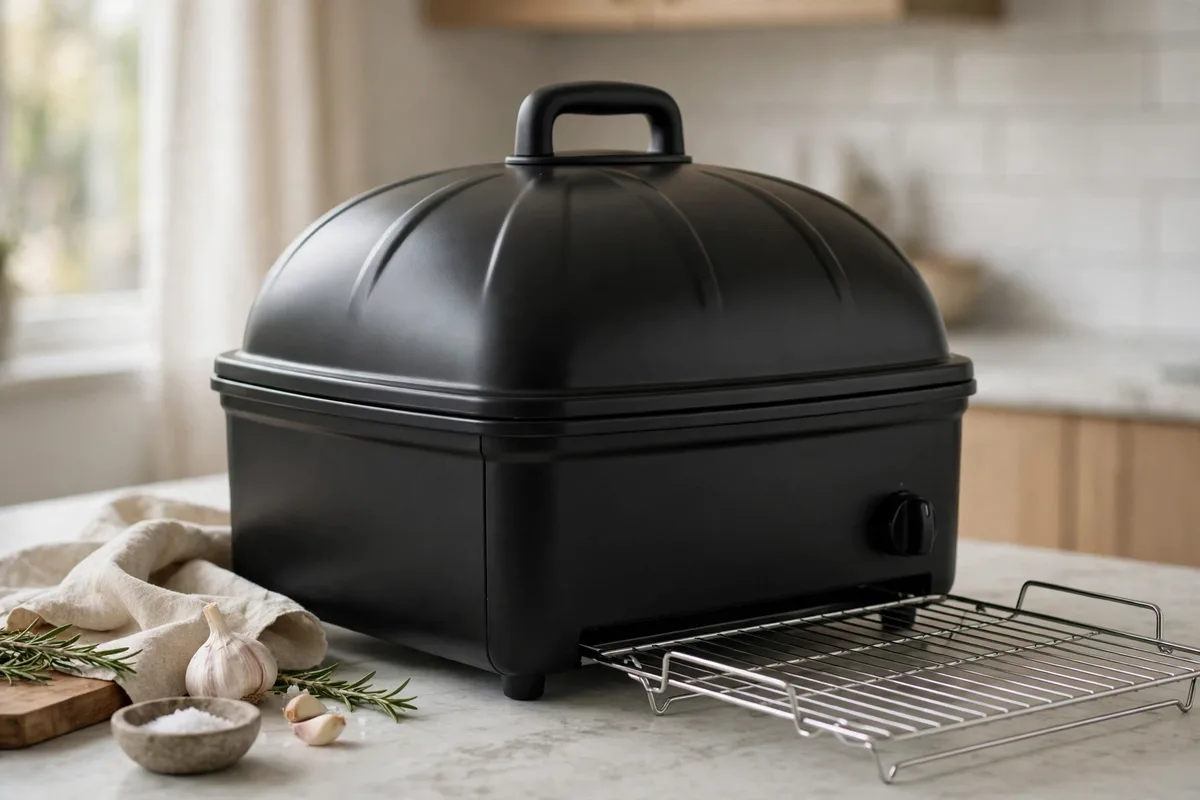
The Oster 22-quart is the class’s reference appliance: a self-basting roaster (the lid’s design returns condensation to the bird, per the maker) with a removable enamel-on-steel pan, a lift-out roasting rack, and a temperature dial spanning the useful 150 to 450°F range. The capacity claim is the honest headline — a turkey up to about 24 pounds — and the pan’s size doubles as the household’s biggest batch vessel: chili for a team, soup for a freezer, or the second casserole course of a holiday, all in one cavity that heats evenly and holds moisture like a Dutch oven’s big sibling.
In service, the Oster’s virtues are steadiness and scale. Owner reports across many holiday seasons describe birds that come out notably moist, a dial that — once its offset is learned, as with every roaster — holds temperature faithfully, and a pan that cleans without drama thanks to the enamel surface. The self-basting lid is a modest feature with a real effect across a five-hour roast: fewer lid lifts, less heat lost, less basting theatre for the cook.
Oster’s Canadian retail presence is broad, and the price sits where the class should — well under a countertop oven’s. For the household that hosts the big dinner, this is the second oven that pays for itself the first November it frees the range for pies, sides and sanity.
Ownership adds one habit: learn the dial’s offset once with an oven thermometer and mark it on the lid with tape, and the Oster becomes the most predictable oven in the house. Stored lid-down with its pan nested, it takes one deep shelf — the rent it charges for eleven months of the year, repaid every holiday.
Size the bird honestly: a 22-quart roaster is rated by its maker for a turkey up to about 26 lb, but the practical test is lid clearance — the domed self-basting lid needs an inch above the breast, so a tall bird roasts better started breast-down for the first hour, then turned.
Yay · Pros
- Turkey up to ~24 lb per Oster
- Self-basting lid; removable enamel pan and rack
- 150–450°F range — bakes and slow-cooks too
Hmm · Cons
- Largest storage footprint here
- Dial benefits from a thermometer check
- Lid and pan are hand-wash kinder than dishwasher
Best for: Most households — the full-size default Skip if: Your birds never pass 18 lb and storage is tight — the 18-quart class serves you smaller
2. Nesco 18-Quart Roaster Oven (Circle of Heat) — Best heritage design
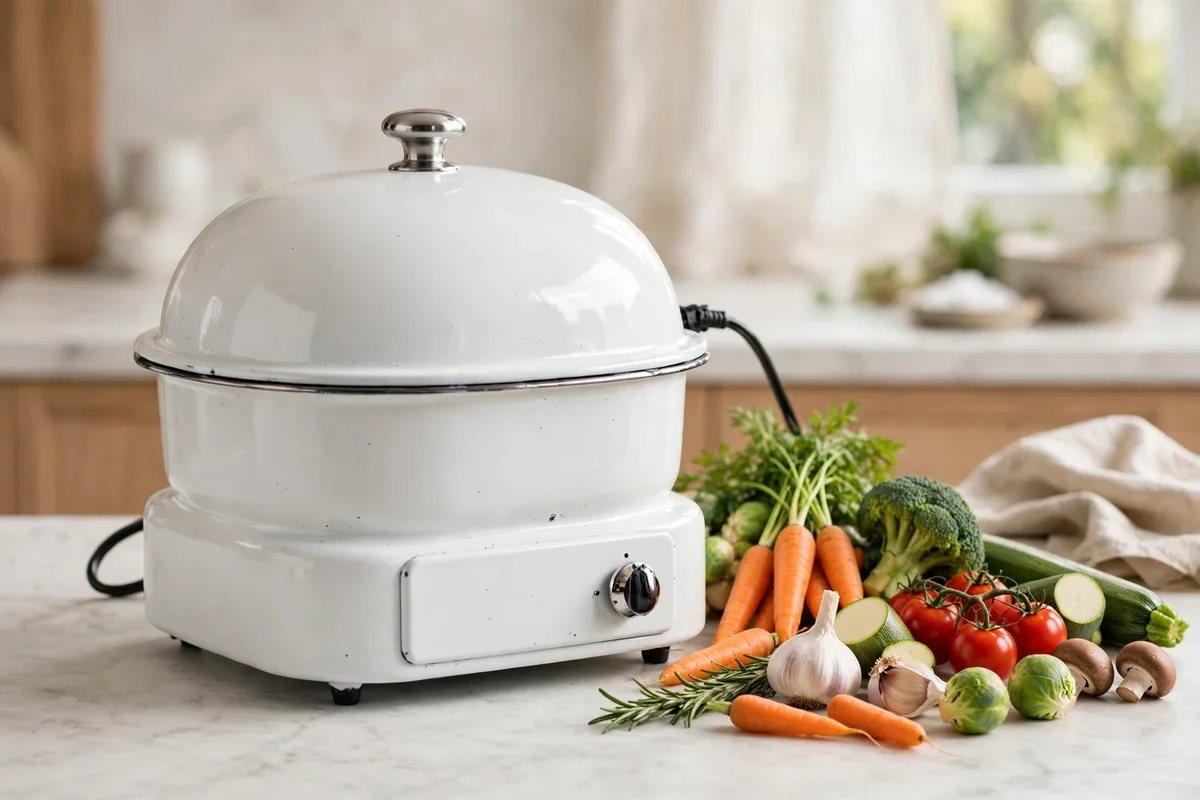
Nesco invented the roaster oven — the company’s 18-quart has been in continuous production since 1931, built around its Circle of Heat design, which places the element around the sidewalls rather than under the pan, so food cooks from the sides like an oven rather than scorching from below. The result the design promises, and generations of owners confirm, is unusually even cooking and a roaster that doubles as a genuine baker: cakes, breads and casseroles emerge with oven manners, not slow-cooker apologies.
The 18-quart capacity covers turkeys to roughly 20 to 22 pounds by the maker’s guidance, and the porcelain enamel pan and rack lift out for the sink. Nesco’s dial spans the class’s working range, and the brand’s longevity is itself a specification: parts, pans and replacement lids for a Nesco remain orderable decades later, a service proposition none of the newer entrants can match and few try to.
In Canada it sells through appliance and online retail at a mid-class price. For the household whose birds are moderate and whose cooking year includes as much baking and batch work as roasting, the original is still arguably the best-designed roaster here — ninety years of iteration is a difficult specification to beat.
Ownership is the long game: a Nesco bought today joins a lineage of machines still roasting in their fourth decade, and its pan’s porcelain, treated kindly, outlasts the nonstick coatings of lesser rivals by generations. It is the pick for buyers who read ‘since 1931’ as a promise rather than a slogan.
The porcelain cookwell is the cleaning story: it lifts out, soaks in the sink, and releases the baked-on ring that makes roaster cleanup dreaded — a five-minute job instead of a half-hour scrub, every single use, for the life of the roaster.
Yay · Pros
- Element wraps the sidewalls — even, oven-like heat
- In production since 1931; parts still available
- Porcelain pan; bakes as well as it roasts
Hmm · Cons
- 18-quart ceiling — no 24 lb birds
- Utilitarian styling
- Cord storage is an afterthought
Best for: Households that value the originator’s design and steady heat Skip if: You need the 24 lb bird — step up to the 22-quart picks
3. Rival Roaster Oven (18-Quart) — Best budget
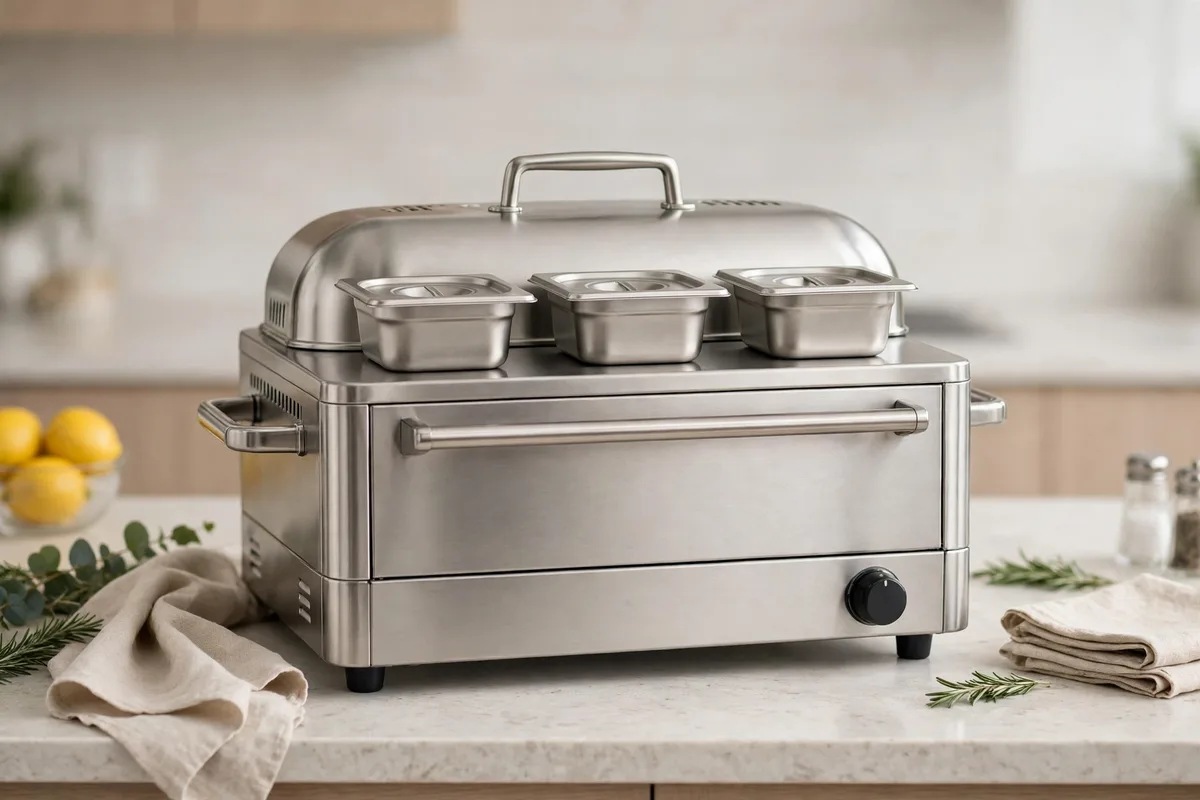
Rival’s 18-quart roaster is the category’s budget doorway: a straightforward roaster oven with a removable pan, a roasting rack and a temperature dial covering the standard range, at a price that routinely undercuts the heritage brands by a third or more. For the household whose roaster works two weekends a year — the holiday bird and one summer batch — the arithmetic is honest: the Rival roasts the turkey, holds the temperature adequately once its dial offset is learned, and asks little of the cupboard or the wallet.
The economies show where economies live: the pan’s enamel and the lid’s fit are a grade below the Oster and Nesco, the dial’s markings are optimistic in the way of the whole class, and the styling is purely functional. None of it prevents a good bird — the physics of a sealed cavity does the heavy lifting — and owner reports describe seasons of perfectly satisfactory service, which at this price is the entire brief.
Canadian availability is through mass retail and online channels, spiking in autumn. Buy it as the rational seasonal tool: thermometer-check the dial on its first cook, treat the pan kindly, and the Rival will roast your holidays for years at the lowest cost of entry in this guide.
Its ownership charm is disposability’s opposite: because it cost little, it gets lent, taken to the cottage, and pressed into community-hall service without anxiety — the roaster that actually goes where roasting is needed, which is a genuine virtue in a seasonal appliance.
A budget roaster earns its keep on the second-oven problem, not the first: the Rival’s honest role is the holiday overflow unit — the rolls, the dressing, the second bird — bought once, stored eleven months a year, and priceless on the one day it works.
Yay · Pros
- Lowest price in the guide
- Removable pan and rack included
- Perfectly capable seasonal workhorse
Hmm · Cons
- Thinner fit and finish than the leaders
- Dial accuracy needs the thermometer ritual
- Brand support is thinner in Canada
Best for: Budget hosts who need a working roaster for the season Skip if: You roast monthly and want the heritage build — Nesco is your pan
4. Hamilton Beach Roaster Oven (22-Quart, with Buffet Pans) — Best 22-quart alternative
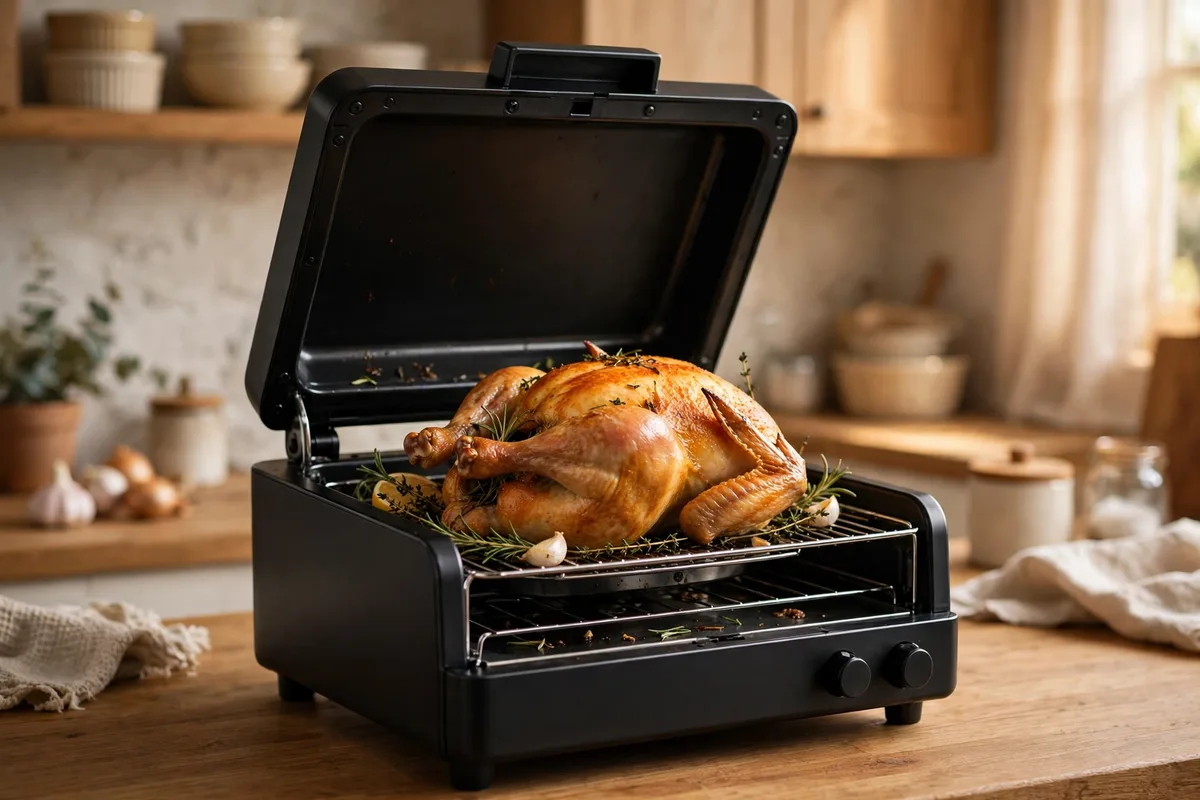
Hamilton Beach’s 22-quart roaster matches the class leader’s capacity — turkeys to about 24 pounds — and differentiates on versatility: many configurations include buffet pans that convert the roaster into a triple server after the bird is carved, so the appliance that cooked the dinner holds the dinner. The dial spans the standard range, the pan and rack lift out, and the lid’s dome gives tall birds their clearance. For the household whose holiday is a buffet rather than a sit-down, that convertibility is the feature that matters.
Performance follows the class pattern with the brand’s usual competence: even enough heat, a dial to be learned once, and a cavity that keeps a bird moist across a long roast. Owner reports praise the buffet conversion and the pan’s cleanup, and Hamilton Beach’s Canadian service network — among the strongest of any small-appliance brand here — makes the warranty a domestic conversation.
Priced beside the Oster, the choice between them is feature taste: the Oster’s self-basting lid against Hamilton Beach’s serving versatility. Households that host buffet-style will feel the difference every event; plated-dinner households will not go wrong with either, and this guide’s ordering reflects the majority case, not a quality gap.
Ownership runs on the brand’s ubiquity: replacement pans, racks and buffet inserts stay findable, and the machine’s plain design ages without dating. It is the 22-quart for households that think in systems — cook, hold, serve, store — rather than single feats.
The buffet pans change the maths for hosts: three lidded pans turn the roaster into a serving station that holds food at a safe serving temperature — above 140°F — through a long party, replacing chafing dishes and their fuel cans entirely.
Yay · Pros
- 24 lb capacity plus buffet-server conversion
- Strong Canadian service network
- Dome lid clears tall birds
Hmm · Cons
- Big footprint, like all 22-quart models
- Extras vary by retailer bundle
- Heavier lift when loaded
Best for: Large families wanting 22-quart capacity with buffet extras Skip if: You never serve buffet-style — the Oster’s lid serves you better
5. Proctor Silex Roaster Oven (18-Quart) — Best simple value
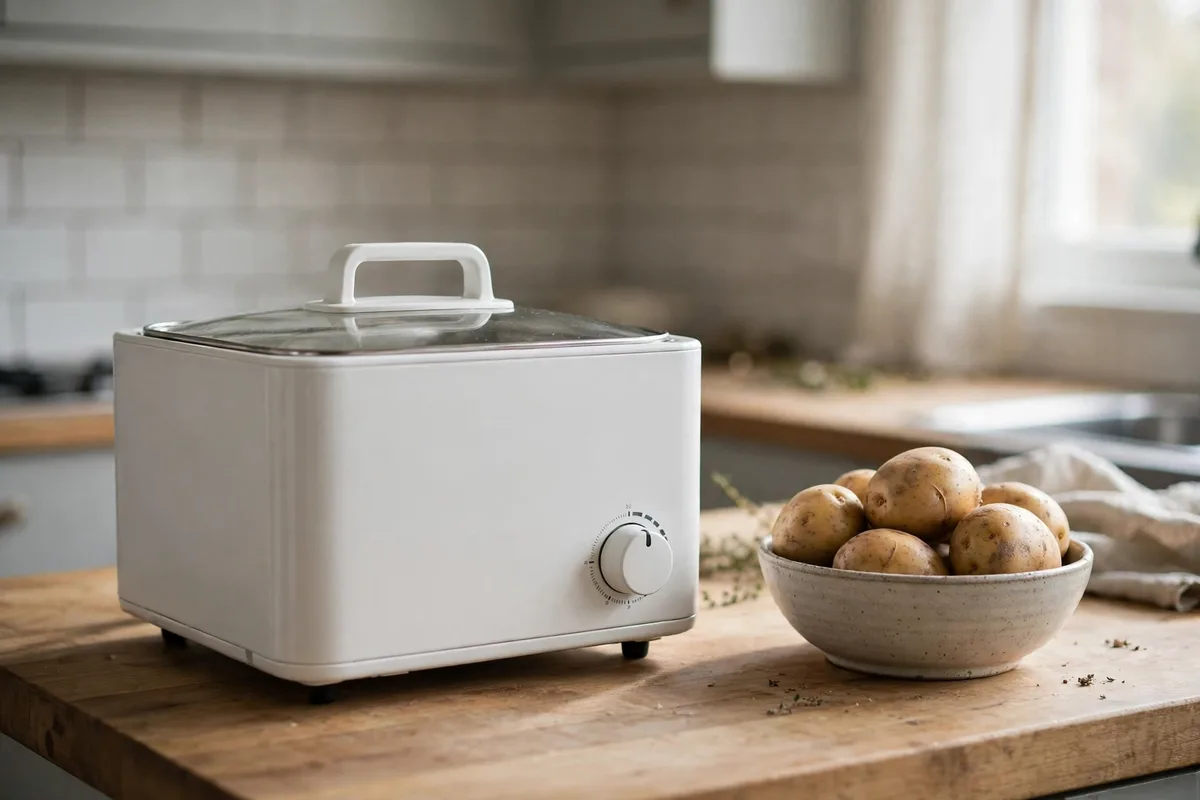
Proctor Silex’s 18-quart roaster is the class in its simplest form: a roaster oven, a removable pan, a rack, a dial — the Hamilton Beach family’s value brand delivering the category’s physics without a single flourish. For a household roasting a moderate bird twice a year, that is not a compromise list; it is the entire requirement, met at one of the lowest prices in the guide. The cavity’s sealed moisture does the culinary work, and the brand’s small-appliance reliability does the rest.
The pan size suits turkeys to about 20 pounds by the usual class guidance, plus the year-round second jobs — a big soup, a double casserole, a ham — that justify the shelf. Dial accuracy follows the class ritual (learn it once with a thermometer), and cleanup is the standard pan-to-sink routine. Owner reports describe exactly the service the brand promises: unglamorous, repeated, uneventful — the highest praise a seasonal appliance can earn.
Canadian availability is broad through mass retail. For the first-time roaster buyer who wants the experiment at minimum cost — or the experienced host who needs a second unit for the garage-and-porch overflow — Proctor Silex is the sensible name on the box.
Its ownership pattern is the family hand-me-down: these plain roasters circulate among relatives for decades, arriving at each new kitchen with the dial’s offset already taped to the lid by the previous owner — an appliance with a folk tradition is an appliance that works.
For small households the 18-quart size is the point: it roasts a chicken plus a week of meal-prep vegetables using counter space a toaster oven would envy, and it stores inside a standard base cabinet between uses.
Yay · Pros
- The class’s essentials at a value price
- Reliable Hamilton Beach family engineering
- Ideal second/overflow roaster
Hmm · Cons
- 18-quart ceiling
- Plainest feature set here
- Dial is unnumbered on some versions
Best for: Small households and first-time roaster buyers Skip if: You want buffet extras or a self-basting lid
The 22-pound turkey test: capacity, temperature honesty and counter maths
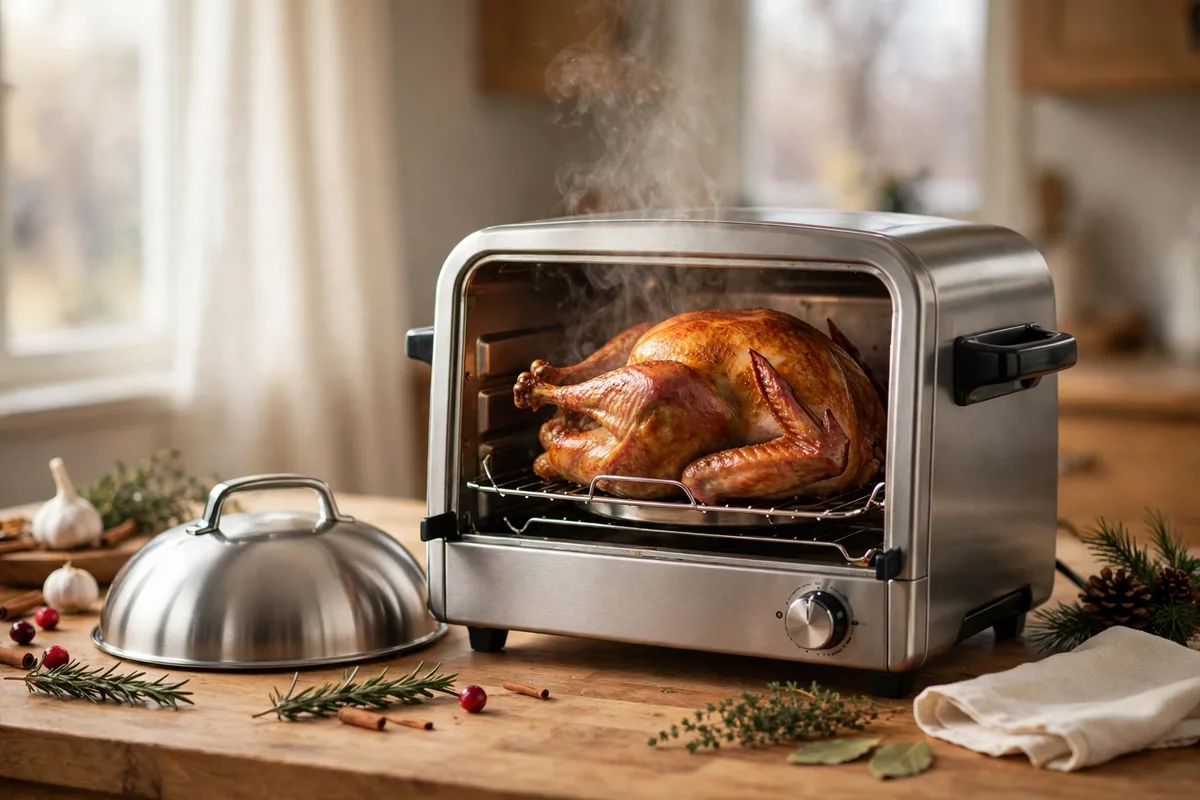
A 22-quart roaster holds a turkey up to about 24 pounds; an 18-quart model tops out around 20 to 22 pounds — those are the makers’ figures, and they assume a bird that sits below the lid’s dome with room for air to circulate. The quart number is the pan’s volume, not the bird’s weight, and the two are confused every November. Measure your bird, then your roaster: the breast should clear the lid by an inch, or the skin steams instead of browning where it touches.
Temperature honesty is the category’s open secret: a roaster’s dial is a suggestion the element interprets generously, and independent testing of the class routinely finds actual temperatures running 15 to 25 degrees off the dial in either direction. The fix is unglamorous and total — an oven thermometer inside the roaster for the first hour of your first cook, a note of the offset on a piece of tape on the lid, and accuracy forever after. Turkey is forgiving of many things; a 25-degree error across five hours is not one of them.
The roaster’s real thermal virtue is moisture: the sealed, small cavity holds the bird’s own humidity around it far better than a big oven’s draughty box, which is why roaster turkeys baste themselves and why the method’s devotees describe the moistest birds of their cooking lives. The trade is browning — humid air crisps skin reluctantly — and the standard solutions are a high-heat finish (the last 20 to 30 minutes at the dial’s top, lid ajar for the final stretch) or a brief transfer to the hot oven for the skin while the roaster keeps everything else warm.
Energy and heat spillover argue for the roaster all summer: an 18-to-22-quart roaster draws roughly 1,450 watts at full tilt — comparable to a small oven but heating a fraction of the air volume — and it can do its work on a porch or in a garage, keeping the kitchen cool and the cook sociable. For canning-day overflow, soup-kitchen batches, and the second-oven holidays, that portability is the feature that outlives the turkey.
Storage is the honest cost, and it is seasonal: a 22-quart roaster is a small suitcase of an appliance that most households use hard for two months and store for ten. The nesting trick — the lid inverted, the pan holding the roaster’s own cord, rack and a season’s worth of slow-cooker liners — shrinks it to one shelf. Households without the shelf should buy the 18-quart class or borrow; the guide’s value picks are priced so that even a borrowed-once-a-year pattern can justify owning.
And the gravy dividend, the roaster’s parting gift: the pan’s drippings, the rack’s easy lift, and a cavity that goes straight onto the counter for carving beside its own juices make the roaster the best gravy station in the house. More than one household in the owner reports keeps the roaster for the gravy workflow alone and lets the turkey be the excuse.
Roaster oven questions, answered
What size turkey fits in an 18- or 22-quart roaster oven?
By the makers’ figures, a 22-quart roaster fits a turkey up to about 24 pounds, and an 18-quart model up to roughly 20 to 22 pounds — assuming the breast clears the domed lid by about an inch for air circulation. When in doubt, size up: an oversized roaster cooks a smaller bird happily, while a crammed bird steams where it touches the lid and browns unevenly.
How long does a turkey take in a roaster oven?
Plan on roughly the same time as a conventional oven — about 13 to 15 minutes per pound for an unstuffed bird at 325°F — and trust a meat thermometer, not the clock: the thigh should read 165°F (74°C). Roasters often run slightly fast or slow versus their dials, so check temperature an hour before the estimate and adjust. Rest the bird 20 to 30 minutes before carving.
Can I bake and slow-cook in a roaster oven, or is it just for turkey?
Yes — a roaster is a small, sealed oven, and most models bake, roast and slow-cook across a dial range of roughly 150 to 450°F (maker’s figures). Cakes, casseroles, baked potatoes for a crowd and big-batch soups are all standard roaster work. What it will not do is broil or air-fry: there is no top element or fan, so foods that need dry, directional heat belong in the main oven.
Does a roaster oven cook turkey as well as a regular oven?
Often better, for a specific reason: the roaster’s small sealed cavity holds the bird’s moisture around it, so the meat self-bastes and stays juicy, while the skin browns less eagerly than in a big dry oven. The standard fix is a high-heat finish — the last 20 to 30 minutes at the top of the dial — or a brief oven blast for the skin. Moist meat, managed skin: most households take that trade happily.
How do I clean and store a roaster oven?
The removable pan and rack wash at the sink (many are dishwasher safe per their makers), and the roaster base wipes down — never immerse the base, which holds the element. A liner pan is the cleanup shortcut many owners swear by for turkey day. Store with the lid inverted and the cord inside the pan to save a shelf’s worth of space.
Does a roaster oven use less energy than my oven?
At full heat, a large roaster draws about 1,450 watts — similar to a countertop oven — but it heats a much smaller air volume than a full-size oven and can run on a porch or in a garage, keeping the kitchen cool. For a single turkey or a summer of batch cooking, it is meaningfully thriftier than heating the big oven; for daily small meals, a smaller appliance still wins.
The short version
Buy the Oster 22-quart for the full-size default, or the Hamilton Beach 22-quart if your holidays run buffet-style. The Nesco 18-quart is the heritage design with the evenest heat, while the Rival and Proctor Silex deliver the same sealed-cavity physics at value prices. Whichever arrives: check the dial once with an oven thermometer, tape the offset to the lid, and trust a meat thermometer — 165°F in the thigh — over any clock.
Last updated: November 18, 2026. We refresh this guide each season and whenever a pick is replaced by a better one.