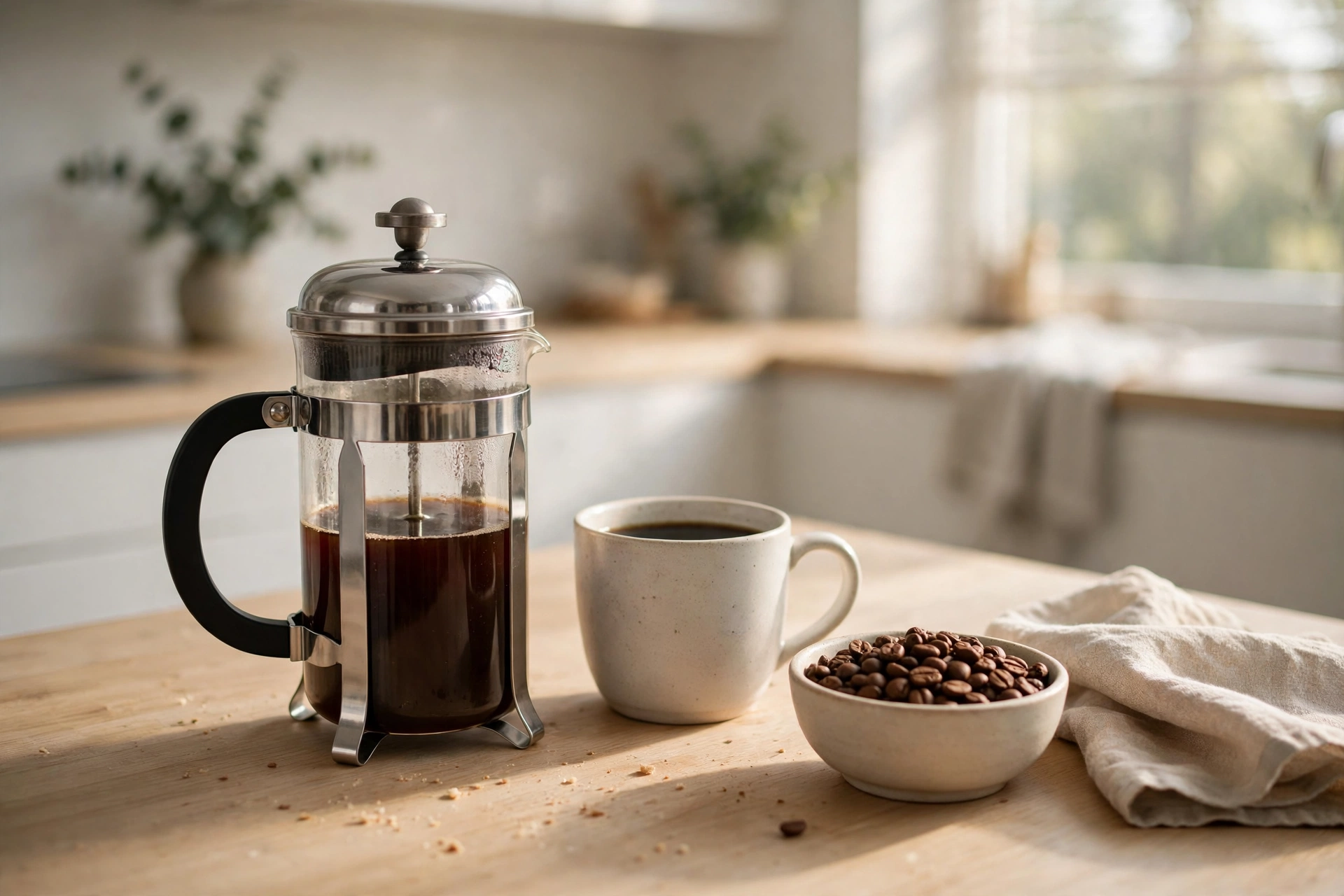
A French press is the simplest brewer in the coffee world — a beaker, a plunger, no paper filters, no pods, no power cord — and yet the presses themselves are not interchangeable. The filter design decides how much grit lands in your cup, the wall construction decides whether the second mug is still hot, and the size printed on the box is, frankly, optimistic: a "34 oz / 8-cup" press fills about two large mugs, not eight of anything. We compared the presses the major test kitchens keep recommending, and the ones Canadian and American owners keep re-ordering, to build the shortlist below.
The honest headline: filtration is the whole game. The ESPRO presses filter twice and pour a cup closer to drip coffee than to classic press mud, while the classic single-screen designs cost less and taste more traditional. Everything below is split by the decisions that actually matter — glass or steel, how much sediment you tolerate, and how many mugs you really brew.
How we chose these French presses
We built this list from the tested roundups that revisit French presses regularly — Wirecutter's current picks, America's Test Kitchen's and Serious Eats' hands-on testing, Bon Appétit's and Business Insider's recommendations, and specialist comparisons like Roastworthy, ProvenKitchenTools and ChefPicks that track owner ratings across Amazon in both countries — then checked every model's capacity, materials and filter design against the manufacturers' own specifications. Where testers disagree, we say so. CookSmartPicks does not run its own coffee lab; what we do is reconcile the published evidence and flag the trade-offs the roundups bury.
Three things separated the picks. Sediment control — how much grit and sludge reaches the cup, which comes down to filter design more than anything else. Heat retention and durability — single-wall glass cools fast and breaks; double-wall steel holds heat through a long breakfast and survives a cottage trip. Honest capacity — we judged every press by the mugs it actually fills, not the "cups" on the box.
The lineup at a glance
| French Press | Best for | Why it made the cut |
|---|---|---|
| ESPRO P3 | Best overall | Wirecutter's top pick — a dual micro-filter that pours a near-grit-free cup |
| Bodum Chambord | Best classic glass | America's Test Kitchen Best Buy and Wirecutter runner-up — the original glass press, refined over decades |
| Secura 34 oz Stainless Steel | Best stainless value | Double-wall steel with 4.7 stars from 36,000+ owner ratings behind it, per TheHomelyNest |
| Fellow Clara 24 oz | Best premium for two | Serious Eats' favourite after testing 17 presses — double-wall steel sized honestly for two mugs |
| ESPRO P7 | Best for low sediment in steel | The lowest-sediment press in Roastworthy's testing, with ESPRO's dual micro-filter in a steel body |
| GROSCHE Dublin | Best Canadian pick | ChefPicks' top pick in Canada — a double-wall steel press from a Canadian brand |
1. ESPRO P3 — Best overall
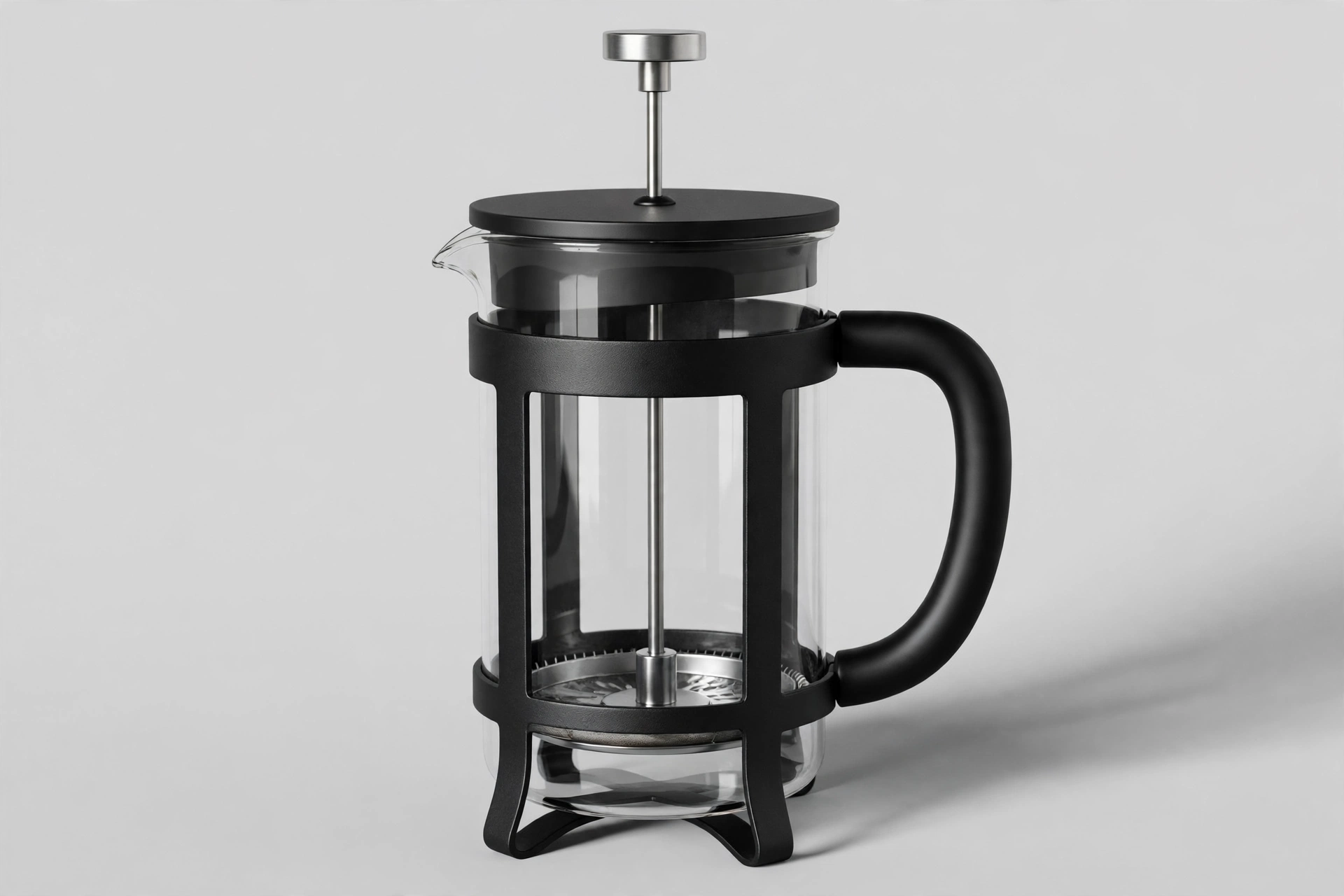
The P3 is Wirecutter's current top pick and Bon Appétit's best inexpensive press, per ProvenKitchenTools, and the reason is the filter. Where a classic press pushes grounds through a single mesh screen, the P3 uses two micro-filters that lock together, so the cup pours almost free of the grit and sludge that define — and divide people over — French press coffee. If you love the body of press coffee but hate chewing the last sip, this is the design that fixes it.
The beaker is glass, which cuts both ways: you can watch the brew, and the coffee stays visible and honest, but glass is single-wall, so it loses heat faster than the steel picks below and it can break. Replacement beakers exist, which softens the risk. The P3 also costs more than a basic glass press — you are paying for the filter system, and for most daily drinkers that is exactly the right place to spend.
Yay · Pros
- Dual micro-filter pours a near-grit-free cup — the cleanest glass press here
- Wirecutter's top pick and Bon Appétit's best inexpensive press
- Glass beaker lets you watch the brew and judge strength by colour
Hmm · Cons
- Single-wall glass loses heat faster than double-wall steel
- Glass can break — replacement beakers are available but cost extra
- Pricier than a basic glass press
Best for: daily press drinkers who want the full-bodied cup without the mud at the bottom. Skip if: the press will travel to cottages and campsites — take a steel pick instead.
2. Bodum Chambord — Best classic glass
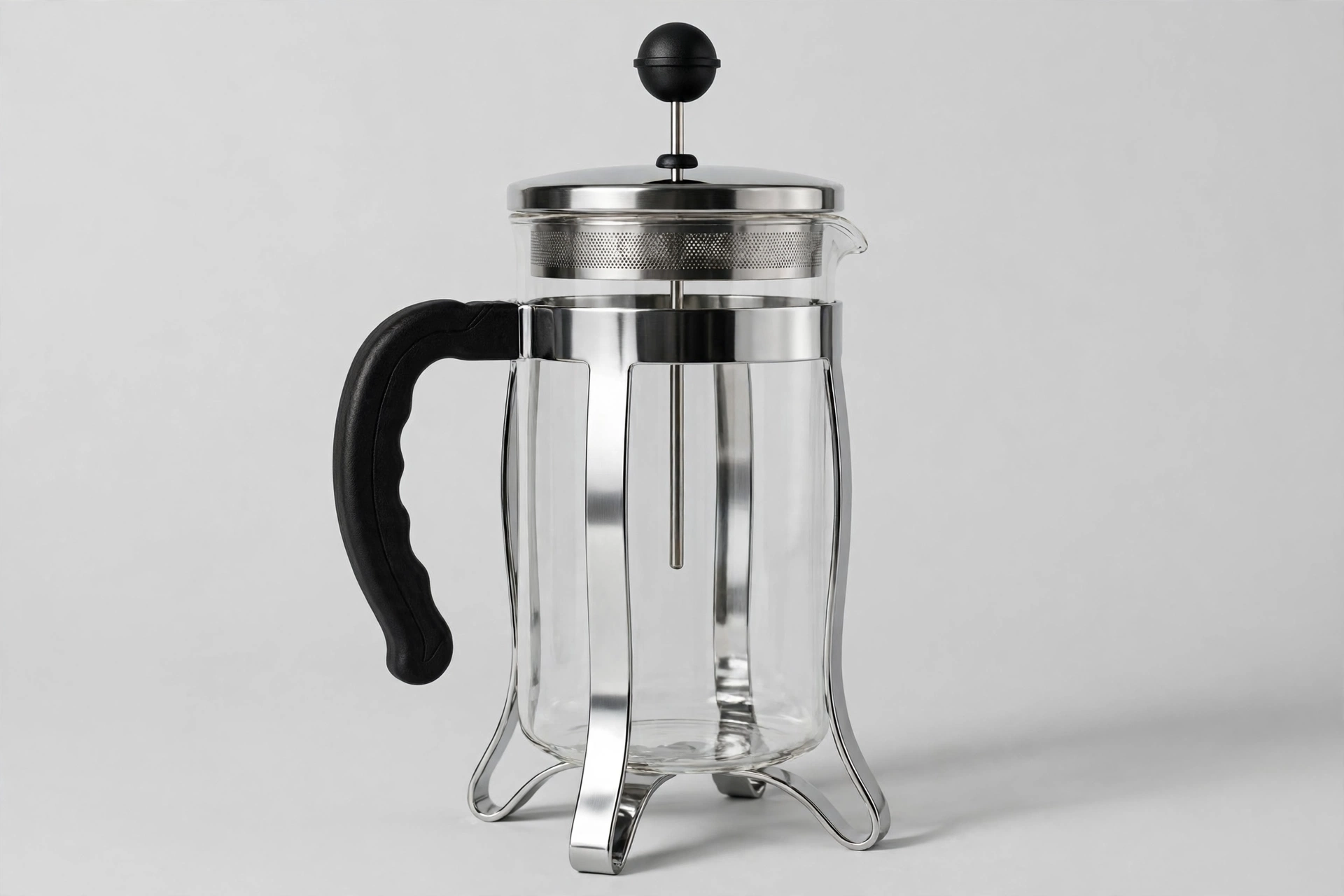
The Chambord is the press most people picture when they picture a French press — glass beaker, polished steel frame, black handle — and the test kitchens keep validating the picture. It is America's Test Kitchen's Best Buy, Business Insider's best overall and Wirecutter's runner-up, per ProvenKitchenTools, and owners back it up at scale: 4.6 stars from roughly 29,000 ratings, per TheHomelyNest. The single mesh screen makes a traditional cup, rich and heavy-bodied, with the light sediment that style has always carried.
The trade-offs are the classic ones. Glass breaks, and Chambord beakers are the ones most likely to meet a sink edge eventually — replacements are widely sold, which is part of the ownership story. The steel frame and lid are not insulation, so a slow second cup will be a cooler one. Buy it as the benchmark it is: the traditional press, done properly, at a fair price.
Yay · Pros
- America's Test Kitchen Best Buy and Wirecutter runner-up
- The classic design — replacement beakers and parts are easy to find
- Rich, traditional press flavour at a mid-range price
Hmm · Cons
- Single screen leaves the traditional light sediment in the cup
- Glass beaker is the breakage risk, as with all glass presses
- No insulation — the second cup cools while it waits
Best for: traditionalists who want the benchmark glass press and the classic cup it makes. Skip if: grit in the last sip bothers you — the ESPRO filters above and below exist for you.
3. Secura 34 oz Stainless Steel — Best stainless value
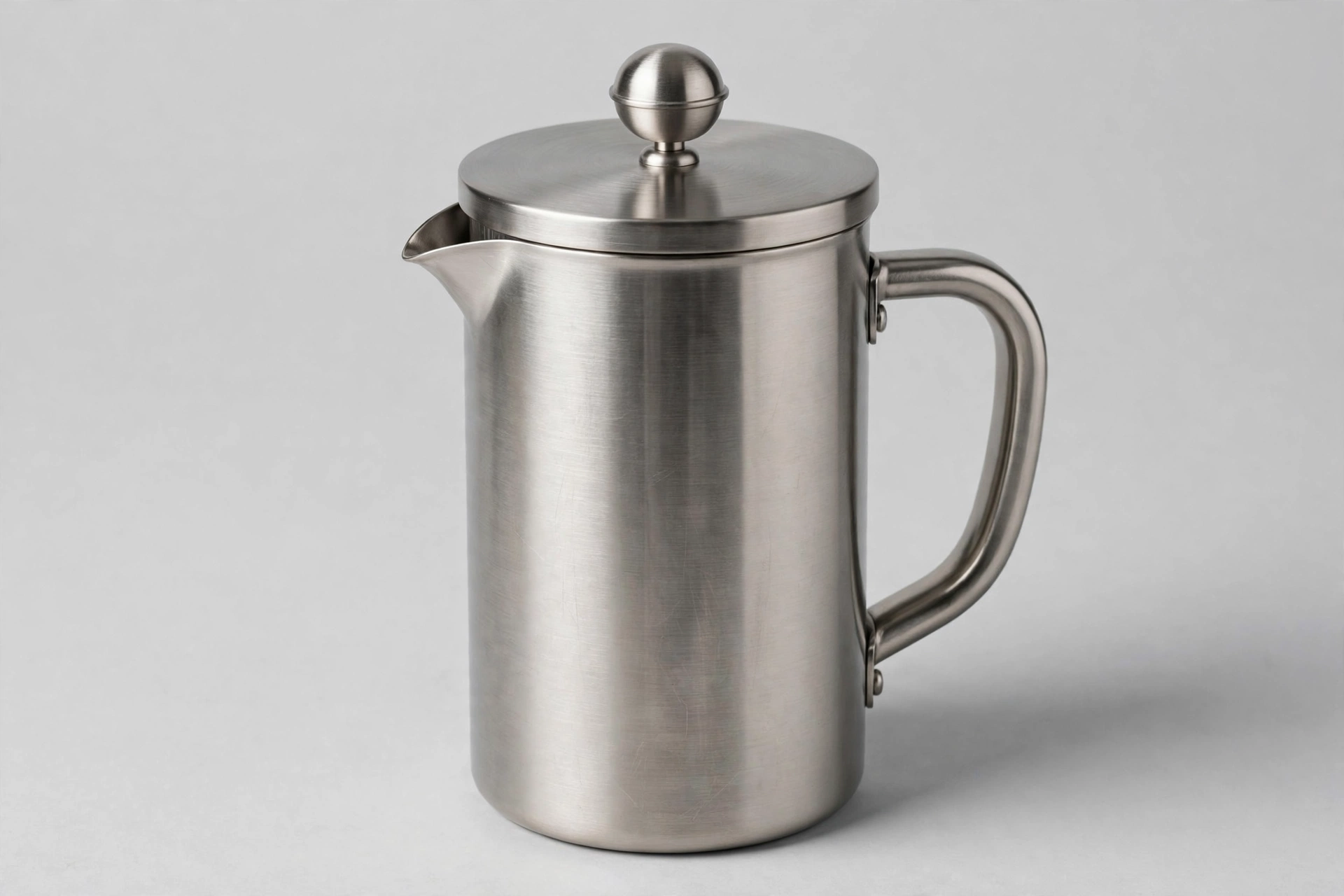
The Secura is the value answer to the glass problem: a double-wall stainless steel body that cannot shatter, holds heat far longer than a beaker, and costs less than most of the glass names in this guide. Owners have voted in unusual numbers — 4.7 stars from 36,000+ ratings, per TheHomelyNest, one of the deepest rating pools in the category. The double wall is the real feature: brew a full press at the start of breakfast and the last pour is still properly hot.
What you give up is visibility and a little filtration finesse. You cannot watch the coffee brew or judge its colour through steel, and the single-screen filter makes a traditional cup with traditional sediment — this is not the low-grit pick. Treat the "34 oz" honestly, too: that is two generous mugs, not a crowd. For a household that wants one durable press that just works every morning, the maths is hard to argue with.
Yay · Pros
- Double-wall steel — no breakage, and the coffee stays hot
- 4.7 stars from 36,000+ owner ratings, per TheHomelyNest
- Costs less than most glass presses in this guide
Hmm · Cons
- Steel hides the brew — no judging strength by colour
- Single screen means classic sediment in the cup
- "34 oz" means two large mugs, despite the 8-cup label
Best for: households that have broken a glass beaker before and want steel durability at a value price. Skip if: a grit-free cup is the priority — that is ESPRO territory.
4. Fellow Clara 24 oz — Best premium for two
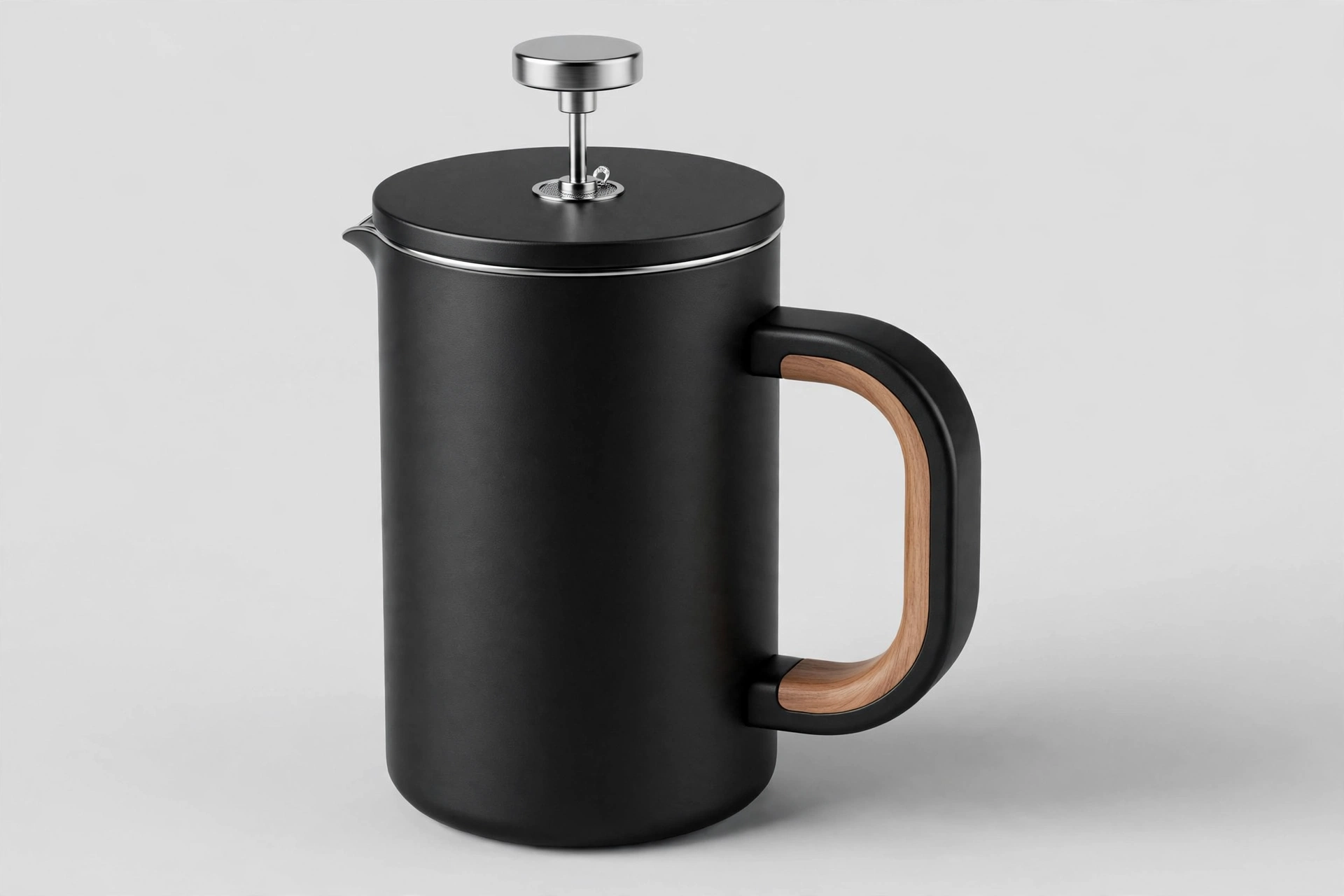
The Clara is the design-led pick, and the testers back the looks with results: it was Serious Eats' favourite after testing 17 models, per ProvenKitchenTools, and Roastworthy's number one. The double-wall steel body is vacuum-insulated, the interior is nonstick-coated so grounds rinse out instead of clinging, and ratio markings inside the wall take the guesswork out of measuring coffee and water. At 24 oz it is sized honestly for what two people actually drink.
That sizing is also the limitation: this is a two-mug press, and households brewing for four will find it small. It is also the premium price in this guide, buying insulation, finish and easy cleaning rather than capacity. As a couple's daily press — or the gift version of this category — it is the one that feels a class above.
Yay · Pros
- Serious Eats' favourite after testing 17 presses; Roastworthy's top pick
- Vacuum-insulated double-wall steel keeps the second mug hot
- Nonstick interior and ratio markings make brewing and cleanup easier
Hmm · Cons
- 24 oz is two mugs — too small for family breakfasts
- The premium price in this guide
- Matte finish deserves a soft cloth, not a scouring pad
Best for: couples who brew two mugs every morning and want the premium, insulated version. Skip if: you regularly brew for three or more — size up to the 34 oz picks.
5. ESPRO P7 — Best for low sediment in steel
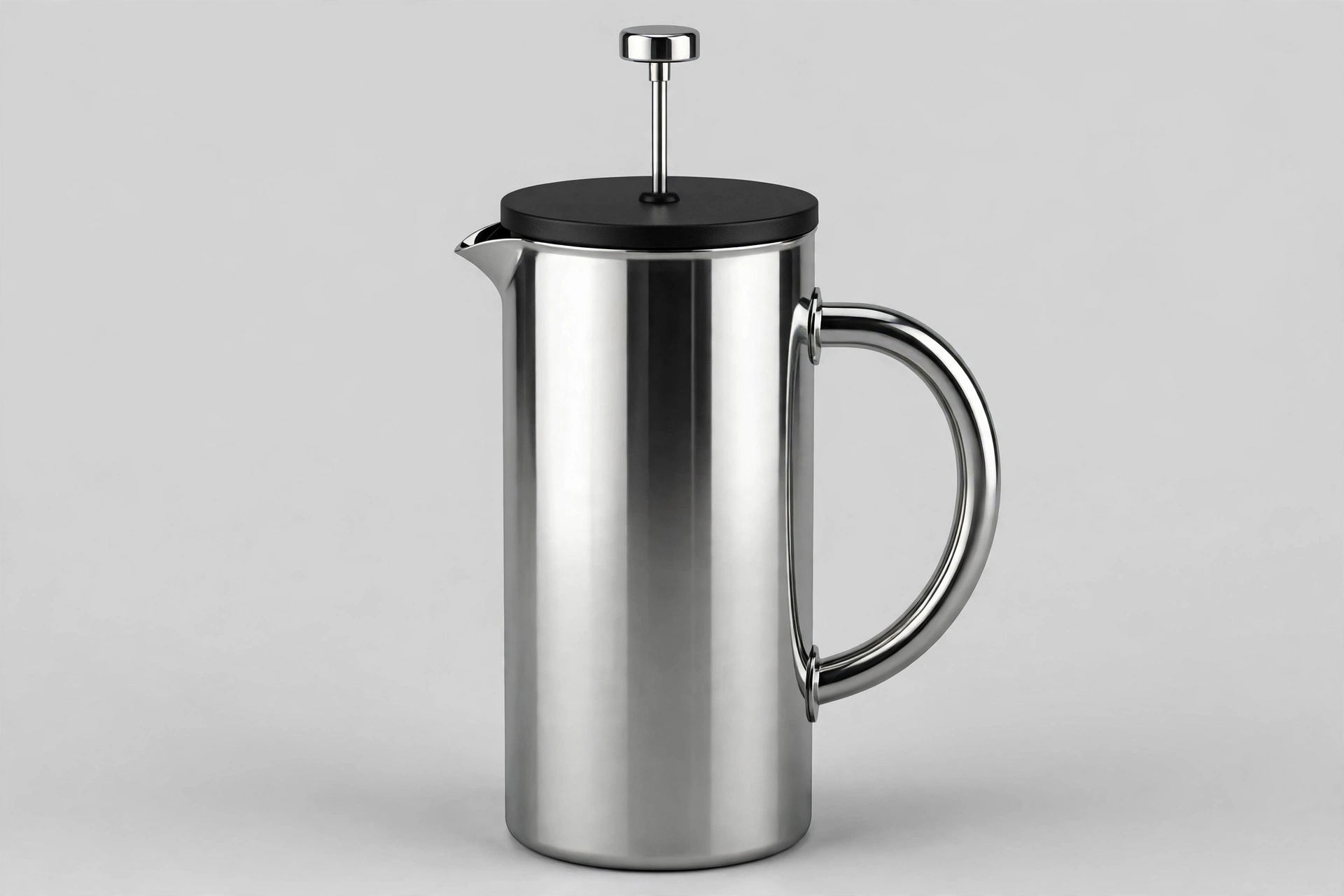
The P7 takes the P3's dual micro-filter system and puts it in a double-wall stainless steel body — and in Roastworthy's testing it delivered the lowest sediment of the presses they compared. That combination is the point: the clean cup of the ESPRO filter with the heat retention and knock resistance of steel, for drinkers who refuse to choose between the two. The insulated wall keeps a full press hot through a slow morning in a way no glass beaker can.
The costs are price and ritual. The P7 sits at the premium end, and the dual-filter plunger asks for a rinse-and-shake cleaning routine a single screen does not — the filters that catch the grit also hold onto grounds if you leave them. Steel also hides the brew, as with the Secura. For the sediment-averse, it remains the most complete press in this guide.
Yay · Pros
- Lowest sediment in Roastworthy's testing, via the dual micro-filter
- Double-wall steel insulates and cannot shatter
- The clean cup of the P3 with the durability of steel
Hmm · Cons
- Premium pricing
- Dual filters need a proper rinse after every brew
- No view of the coffee while it steeps
Best for: sediment-haters who also want steel durability and heat retention. Skip if: the budget leads — the P3 delivers the same filter idea in glass for less.
6. GROSCHE Dublin — Best Canadian pick
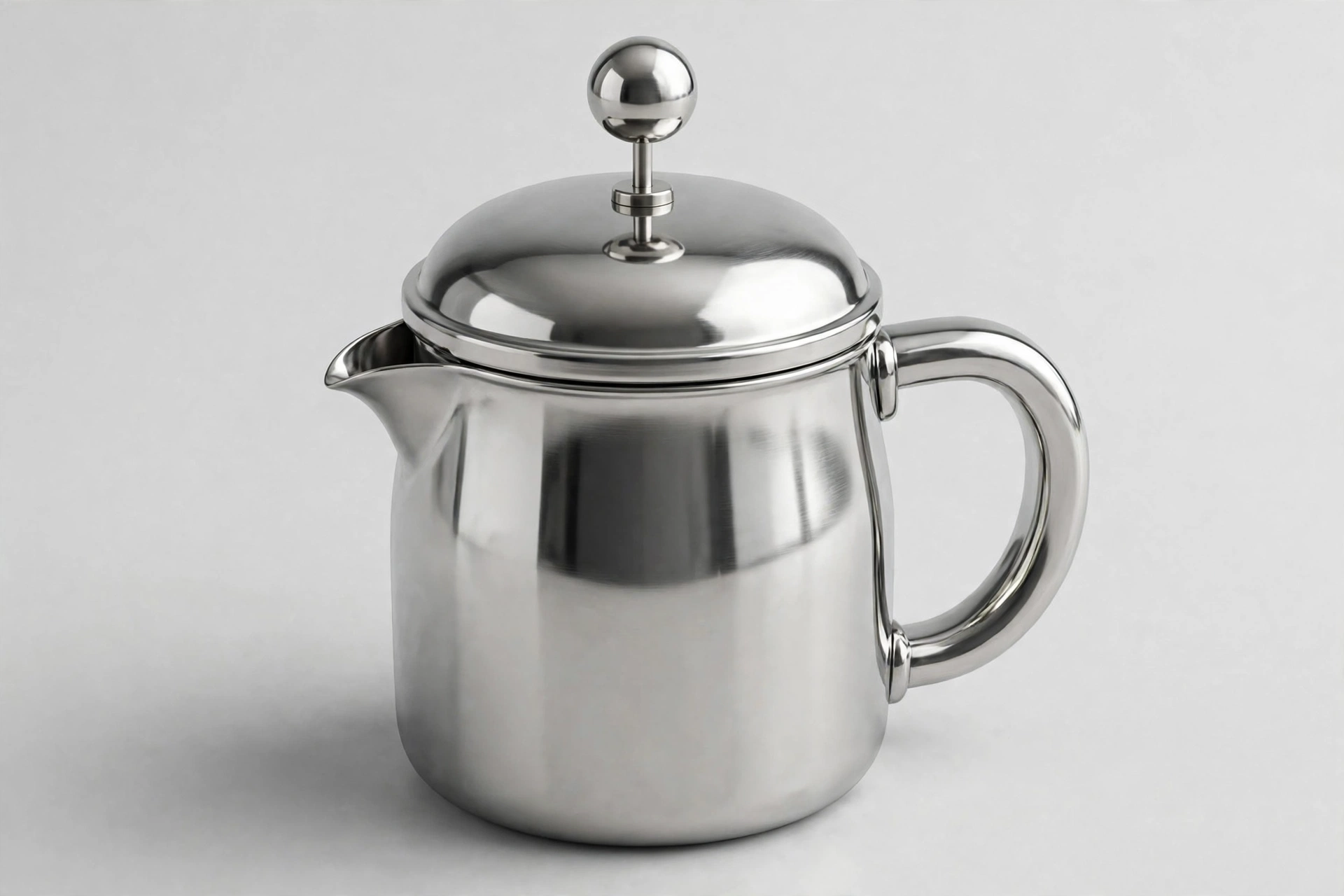
GROSCHE is a Canadian brand, and its Dublin is ChefPicks' top pick in Canada — a double-wall stainless steel press that keeps coffee hot and shrugs off the knocks that end glass beakers. That skill set is exactly what Canadian use looks like: a press that works at the cottage and the campsite as well as the counter, with no cord and no electricity needed, and no fragile beaker to wrap in a tea towel for the drive.
The Dublin makes a traditional single-screen cup, so expect the classic light sediment the ESPRO pair filters out, and steel means no watching the brew. Within those honest limits it is a sturdy, well-priced insulated press — and for Canadian buyers, the rare category pick that starts at home.
Yay · Pros
- ChefPicks' top pick in Canada, from a Canadian brand
- Double-wall steel — insulated, unbreakable, cottage- and camp-ready
- No cord, no power: brews anywhere a kettle boils
Hmm · Cons
- Single screen leaves traditional sediment
- Steel body hides the brewing coffee
- Less widely stocked in US stores than the Bodum and Secura
Best for: Canadian buyers who want an insulated steel press from a home-grown brand, for home and cottage alike. Skip if: a grit-free cup matters more than insulation — choose an ESPRO.
Filters, walls and sizes: what actually matters
The filter decides the cup. A single mesh screen makes classic press coffee — full-bodied, with fine sediment settling in the last sips. A dual micro-filter design like ESPRO's strains far finer and pours a cleaner cup closer to drip. Neither is "right"; they are different drinks from the same grounds, and this choice matters more than brand, size or finish.
Glass shows, steel keeps. Glass lets you watch the bloom and judge strength by colour, but it is single-wall and breakable. Double-wall stainless holds heat through a long breakfast and survives travel. If your press lives on one counter, glass is a pleasure; if it moves, camps or serves slow mornings, steel earns its premium. Water temperature and pour control matter either way — a good gooseneck kettle makes hitting just-off-boiling water and a gentle, even pour much easier than a stovetop pot.
Read capacity in mugs, not "cups". Press sizing counts small 4 oz cups. A 34 oz press pours two large mugs; a 24 oz press like the Clara pours two regular ones; a 12 oz press is a solo brewer. Buy for your real morning, and remember a press also needs headroom — grounds and water should not fill it to the brim.
French press questions, answered
Why is my French press coffee gritty? Grind size first: too fine, and particles pass any screen. Use a coarse, even grind — our guide to the best coffee grinders covers the burr grinders that make coarse settings consistent. Then pour gently, leave the last half-inch in the press, and if grit still bothers you, a dual-filter press like the ESPRO P3 or P7 is the structural fix.
How long should coffee steep in a French press? About four minutes is the standard working steep for coarse grounds in just-off-boiling water. Press slowly, then decant everything into mugs or a carafe right away — coffee left sitting on the grounds keeps extracting and turns bitter, which is the most common home press mistake.
Can a French press make cold brew? Yes — it is the budget cold brew method: coarse grounds, cold or room-temperature water, a long steep in the fridge, then press and pour. Any pick in this guide doubles as a cold brew vessel, which is part of the category's value.
French press or drip machine — which should I buy? A press gives you full control, a heavier-bodied cup and zero counter footprint, one batch at a time. A drip machine gives you programmable, hands-off volume for households. If mornings are a production line, our drip coffee maker guide covers that side; if coffee is a ritual for one or two, the press wins on flavour per dollar.
The short version
Buy the ESPRO P3 if you want the best all-round press and a cup without the mud. Buy the Bodum Chambord if you want the classic glass benchmark, the Secura if steel durability on a budget leads, and the Fellow Clara if two perfect mugs are the whole job. Buy the ESPRO P7 if sediment is your deal-breaker and steel is your material, and the GROSCHE Dublin if you are shopping in Canada and the press will see a cottage. Everything else is capacity: count your mugs, not the cups on the box.
Last updated: November 16, 2026. We refresh this guide each season and whenever a pick is replaced by a better one.