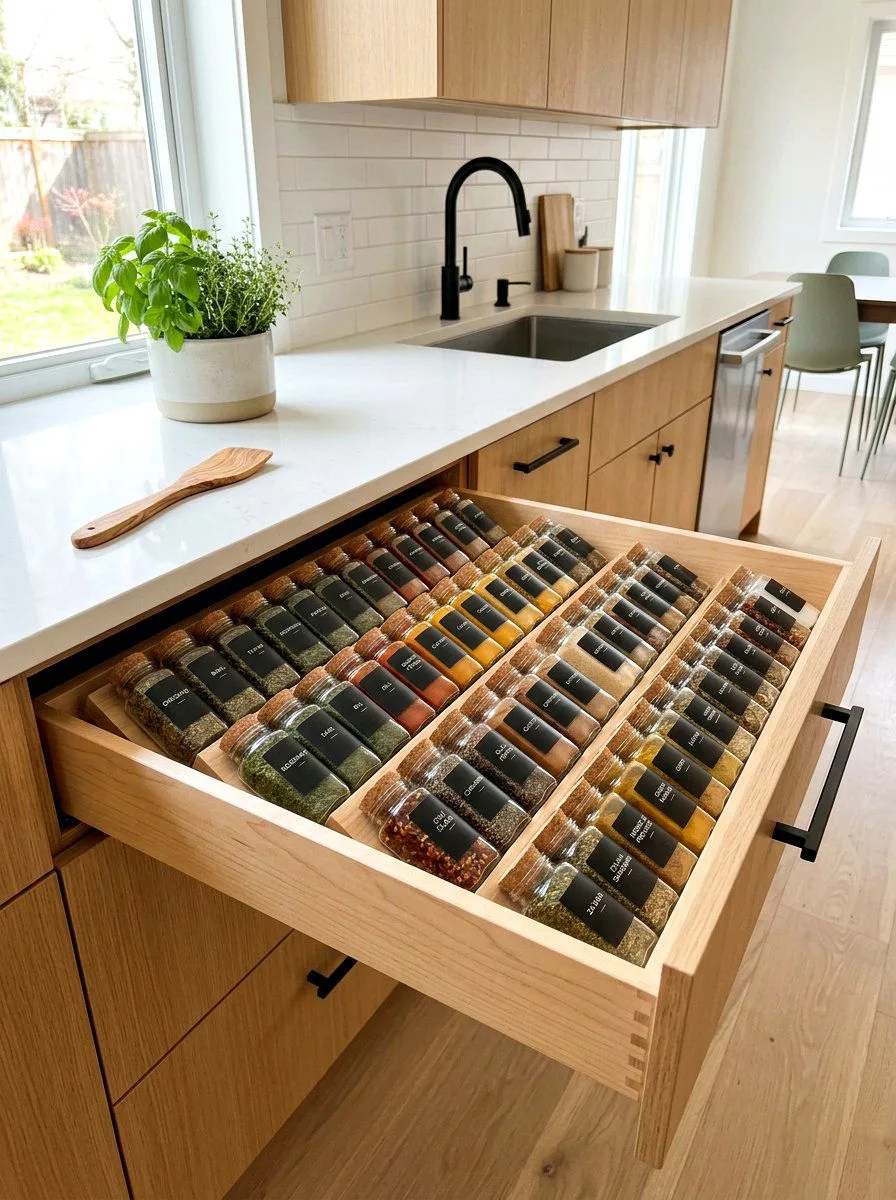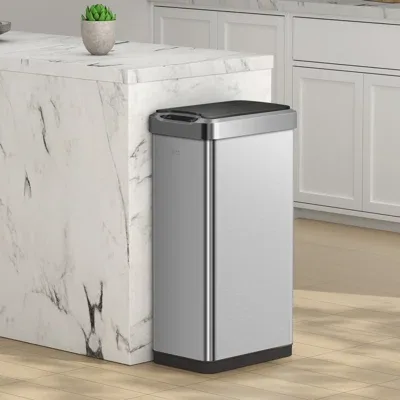
The best motion sensor trash can opens for a hand full of eggshells and stays shut when you walk past it — that false-trigger discipline, plus a lid that actually seals odours in, is what separates the good cans in this guide from the annoying ones. We compared the touchless kitchen cans that independent roundups recommend for 2026, from 50-litre family standards to an 80-litre two-bin flagship, with separate Canada and USA buying links for each.
A sensor can belongs with the rest of the tidy-kitchen kit in our best under-sink organizers guide, and more storage ideas live in the Home Organisation hub.
Motion Sensor Trash Cans at a Glance
| Sensor can | Capacity | Power | Best for |
|---|---|---|---|
| EKO Mirage-T | 50L / 13.2 gal | Battery or optional adapter | Most kitchens — sensor discipline and finish |
| simplehuman 58L Sensor Can | 58L (34L trash + 24L recycling) | Plug-in / rechargeable options | Trash and recycling in one footprint |
| iTouchless 13 Gallon | 49L / 13 gal | Battery or AC adapter | Kitchens where bin smell is the problem |
| Ninestars DZT-50-25 | 50L / 13.2 gal | Battery powered | The proven 13-gallon format for less |
| Kohler Touchless | 49L / 13 gal | Battery powered | Heavy-gauge steel that shrugs off dents |
| EKO Mirage X | 80L / 21 gal | Battery or optional adapter | High-volume households and party kitchens |
How We Researched This Guide
CookSmartPicks is a research-based guide. We do not run a test kitchen, and we never claim hands-on testing we have not done. For this guide we compared manufacturer specifications with independent coverage — KitchenwareSets' six-week sensor-can testing, BakingBakewareSets' automatic-can reliability trials, HomesGys' 2026 motion sensor roundup and Countertop Dishwasher Guide's spec-ranked smart-can comparison — plus owner reviews in Canada and the USA. Capacities are stated in litres and US gallons as the makers list them.
How we score
The scores in this guide are CookSmartPicks’ own editorial ratings. We set them from our research of the expert reviews and sources listed in this post — they are our ratings, not scores quoted from another publication.
1. EKO Mirage-T Touchless Trash Can (50L) — Best Overall
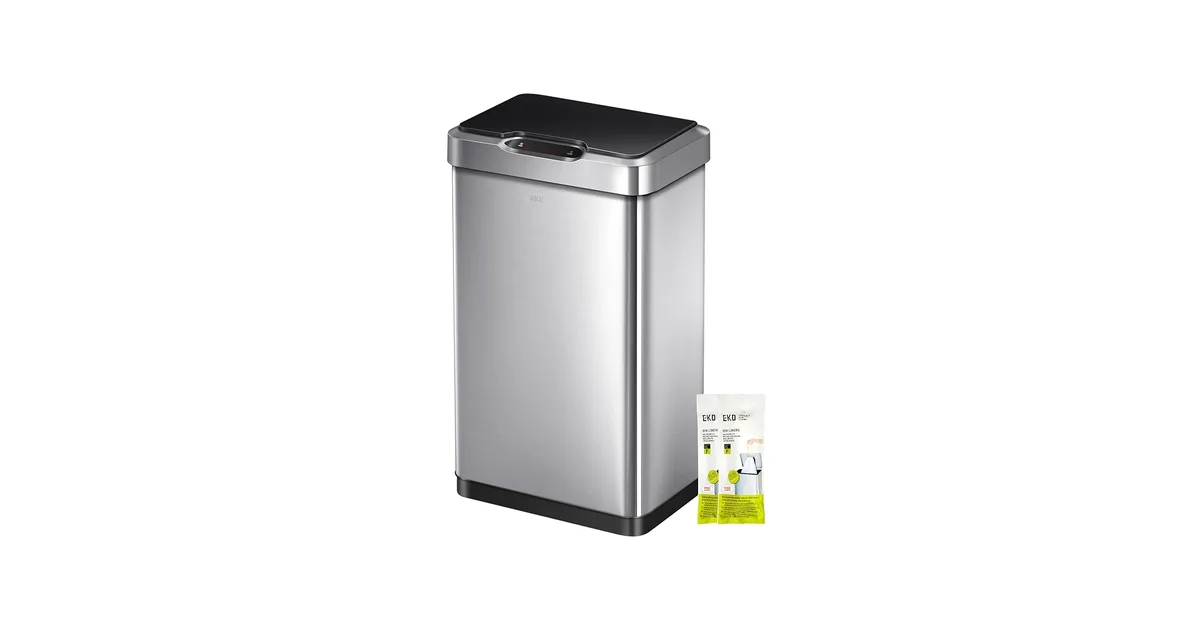
The Mirage-T is the consensus pick of 2026: in BakingBakewareSets' six-week trials its sensor was 'flawless' — opening instantly to a wave, resisting false openings better than any rival when walked past, and running a 3-second countdown so the lid does not snap shut mid-plate-scrape. The brushed stainless finish genuinely repelled fingerprints and water spots in the same testing.
The soft-close lid descends silently and seals well enough that odour control is a strength without any filter consumables. The one long-term caveat owners raise is common to all sensor cans: the electronic lid mechanism is the part that can fail years in, so keep the receipt.
Yay · Pros
- Best sensor discipline in independent testing
- Fingerprint-resistant brushed stainless that stays clean
- Soft-close lid with stay-open countdown
Hmm · Cons
- 50L may be small for very large families
- Electronic lid is the long-term failure point, as on all sensor cans
Best for: most family kitchens wanting touchless without the annoyances. Skip if: you need recycling in the same unit — see the simplehuman.
2. simplehuman 58L Sensor Can — Best Dual Compartment
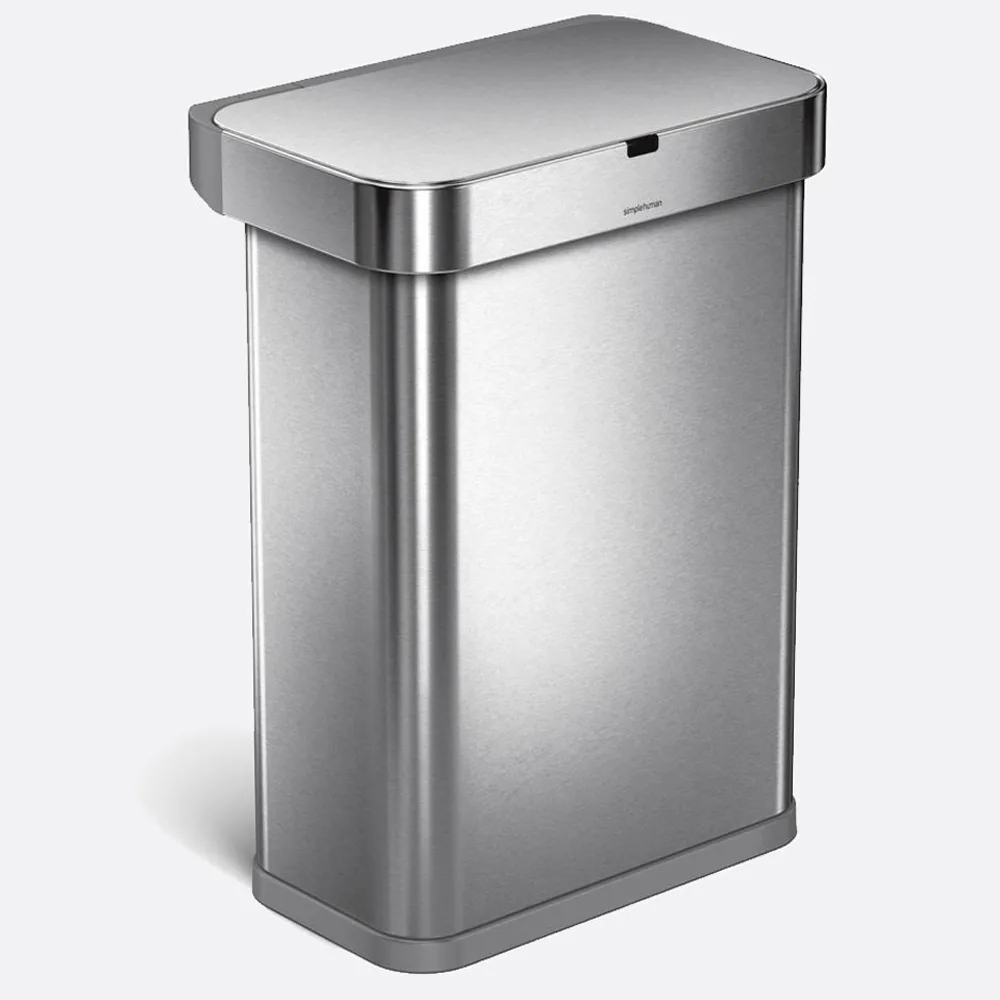
simplehuman's 58-litre can solves the two-bin problem: a 34-litre trash compartment and a 24-litre recycling compartment behind one lid, driven by a dual-array sensor that also answers to voice control. KitchenwareSets' testing names it the absolute best touchless can available, and the nano-silver fingerprint-proof coat wiped clean with a dry cloth after deliberately greasy handling.
It is the premium route — the can, and simplehuman's custom liner pockets and bags, cost more than standard tall kitchen bags. Households that recycle seriously tend to find the single footprint worth it.
Yay · Pros
- Trash plus recycling in one can
- Motion and voice control, fast and accurate
- Fingerprint-proof nano-silver finish genuinely works
Hmm · Cons
- Premium price, and custom liners add running cost
- Large footprint for small kitchens
Best for: households that want one handsome bin for trash and recycling. Skip if: your kitchen cannot spare the floor space or the budget.
3. iTouchless 13 Gallon Sensor Trash Can — Best Odour Control
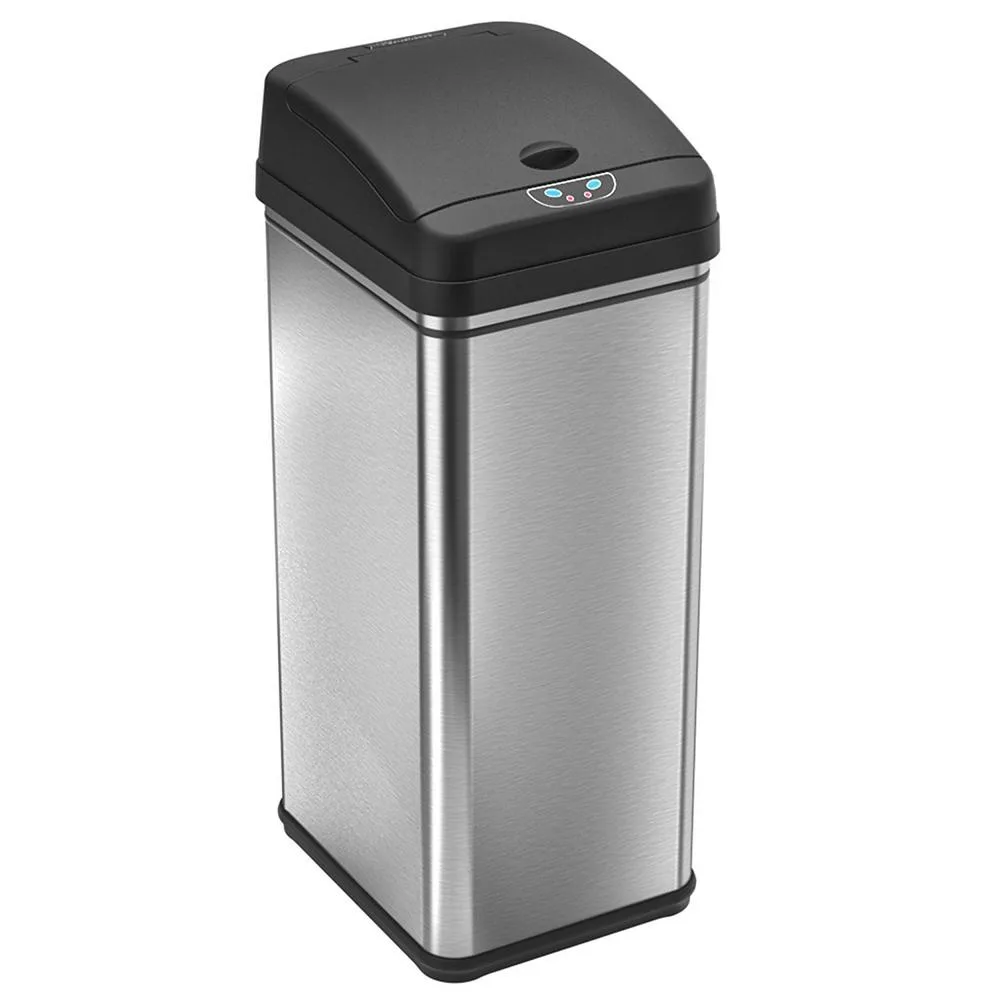
iTouchless built its name on one extra weapon: a natural carbon filter tucked in the lid that actively neutralises bin odours instead of just sealing them in — the reason KitchenwareSets names it the best alternative for smell-conscious kitchens. The sensor lid itself is a proven, long-running design with a wide opening for bulky scraps.
Filters are a consumable (replaced every few months) and the stainless finish is a step below EKO's for fingerprints. If odour is your number-one complaint, those trades are the right ones.
Yay · Pros
- Carbon filter actively fights odour
- Wide lid opening handles bulky scraps
- Battery or plug-in power flexibility
Hmm · Cons
- Filters are an ongoing consumable cost
- Finish shows fingerprints more than the EKO
Best for: small kitchens and apartments where the bin lives close to the cook. Skip if: you do not want filter replacements on your shopping list.
4. Ninestars DZT-50-25 Touchless Trash Can — Best Value
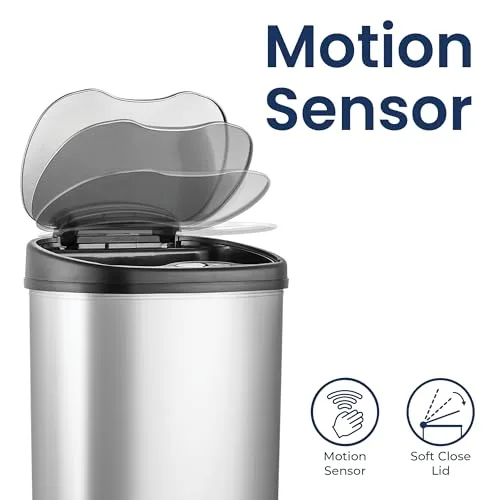
Ninestars has sold sensor cans longer than almost anyone, and the DZT-50-25 is its workhorse: a 13.2-gallon rectangular stainless can with a water-resistant infrared sensor and a fingerprint-resistant base finish, at a price well under the premium names. HomesGys' roundup keeps it on the list as the tried-and-true format done right.
Expect competent rather than class-leading sensor manners, and a lid action with a little more mechanical noise than the EKO's. For a second can — laundry, garage, cottage — or a value-first kitchen buy, it is the sensible line on the list.
Yay · Pros
- Proven format from a specialist brand
- Water-resistant sensor survives splashes
- Undercuts the premium cans on price
Hmm · Cons
- Sensor less disciplined than EKO's
- Lid action is not the quietest
Best for: value buyers and second-location cans. Skip if: false-trigger discipline is your top priority.
5. Kohler Touchless Kitchen Trash Can (13 Gallon) — Best Premium Build
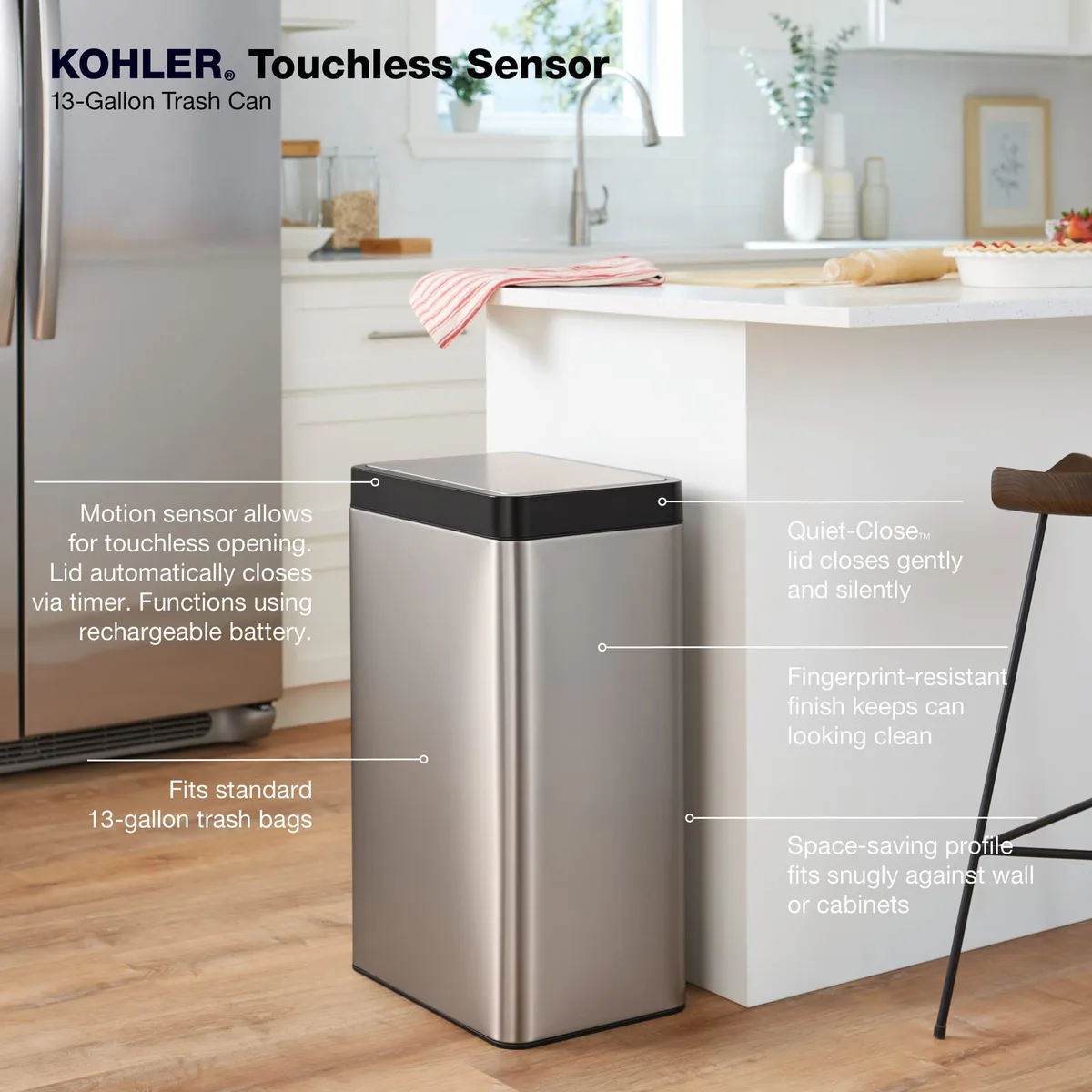
Kohler builds its can like a plumbing fixture: heavy-gauge stainless steel that testers describe as resisting the dents and creases that kill lighter cans, with a flush-fit rim that hides and secures the bag — KitchenwareSets' best premium build. The silhouette is deliberately furniture-like, for kitchens where the bin is on show.
You pay for the metal: it is among the priciest single-compartment cans here, and its sensor feature set is simpler than simplehuman's. Buy it for the next decade, not for gadgets.
Yay · Pros
- Heaviest, most dent-resistant build in this guide
- Bag-hiding rim keeps the top tidy
- Design-forward finish for open kitchens
Hmm · Cons
- Premium price for a single compartment
- Feature set is simple next to simplehuman
Best for: design-led kitchens buying once, for years. Skip if: you want dual compartments or voice control.
6. EKO Mirage X Sensor Trash Can (80L) — Best for Big Families
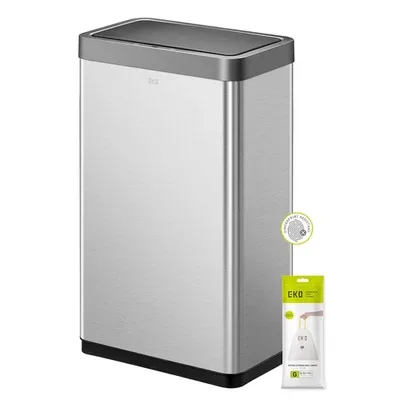
When 50 litres means a bag change every day, the Mirage X stretches the same formula to 80 litres — about 21 gallons — with the smooth lid action and sturdy stainless body HomesGys credits in its big-capacity slot. It takes the same disciplined sensor approach as its smaller sibling.
It needs the floor space to match and costs more than the 50L; measure your bin nook first. For big families, batch cooks and entertainers, the fewer bag changes are worth both.
Yay · Pros
- 80 litres — the fewest bag changes here
- Same trusted EKO sensor and finish
- Sturdy build at a size rivals skip
Hmm · Cons
- Large footprint
- Costs more than the 50L Mirage-T
Best for: large families and high-volume kitchens. Skip if: your bin lives in a tight under-counter nook.
How to Choose the Best Motion Sensor Trash Can
Size to your household: 50 litres (13.2 gallons) is the family standard; 80-litre and dual-compartment cans suit big households and built-in recycling. Sensor manners matter: look for a can that opens on a deliberate wave and ignores passers-by, with a stay-open or countdown feature while you scrape plates. Power is a running cost: battery cans go anywhere but eat D-cells; plug-in and rechargeable cans cost nothing to feed but need an outlet near the bin spot. Odour control is the lid, not the label: a soft-close lid that seals fully does most of the work; carbon-filter models like the iTouchless add a second line of defence.
Keep Reading
Working through a nearby shortlist too? See our guides to Best Spice Rack Organizers and Best Electric Kitchen Composters, or browse every guide in Home Organisation.
Head to Head: How These Six Cans Differ in Daily Use
The headline capacities in this guide hide three practical differences. The first is what a single lid is actually covering. The EKO Mirage-T, the Ninestars DZT-50-25 and the Kohler are all single-compartment cans of about 50 litres, so the choice between them is about sensor manners, finish and build — the Mirage-T for the disciplined sensor and fingerprint-resistant finish described in its review above, the Kohler for heavy-gauge steel, and the Ninestars for the same familiar format at a value tier, with a little more mechanical noise. The simplehuman 58L is a different proposition altogether: its 58 litres are split into a 34-litre trash compartment and a 24-litre recycling compartment, so it holds less household trash than a 50-litre single bin despite the bigger number on the box. The EKO Mirage X, at 80 litres in one compartment, is the only pick here that genuinely swallows more rubbish per bag.
The second difference is how each can deals with smell, and the approaches are not interchangeable. Most of these cans rely on the lid itself: a soft-close lid that shuts fully and evenly keeps odours in between openings, which is why the Mirage-T scores well on odour control without any consumables. The iTouchless adds a natural carbon filter in the lid as a second line of defence, which helps in a small kitchen where the bin sits close to the cook, but it converts odour control into an ongoing replacement task. Neither approach fixes a bag left in the can for a week in a warm kitchen — the filter and the seal slow smells down; they do not abolish them.
The third difference is power, and it decides where the can can live. Battery-only models like the Ninestars and the Kohler can stand anywhere, including a spot with no outlet in reach. The EKO models run on batteries with an optional adapter, and the iTouchless offers battery or AC power, so both can graduate to plug-in use if the bin moves next to a socket. The simplehuman offers plug-in and rechargeable options, which suits a fixed, planned bin position. None of these arrangements is best in the abstract: a can in the middle of an island run wants battery power, while a can parked permanently beside a counter outlet might as well use it.
Sizing a Sensor Can to Your Household — and Your Bags
Start with the bag, not the bin. The standard tall kitchen bag is built around the 13-gallon, roughly 50-litre format that four of these six cans follow, which is why that size is the safe default for a family of four: bags are sold everywhere in Canada and the USA, they fit without stretching or slipping, and a full one is still a reasonable carry to the curb or the chute. A can much smaller than its bag wastes plastic bunched around the rim; a can much larger tempts you to overfill a bag past what it can lift. Before choosing anything unusual, check that the bag size you already buy — or are willing to switch to — matches the can, and remember that dual-compartment and custom-liner models, the simplehuman in particular, are designed around their own liner system rather than a loose supermarket bag.
Then do the fill-rate maths for your own household. Capacity comparisons are simple arithmetic: an 80-litre can holds about 60 percent more than a 50-litre can, so a household that fills a 50-litre bag every two days would fill the Mirage X in a little over three days at the same rate — roughly one fewer bag change a week, bought with noticeably more floor space. Recycling changes the equation in the other direction. A household that separates recycling diligently sends less volume to the trash compartment, so the simplehuman's 34-litre trash side may fill no faster than a full-size single bin, while its 24-litre recycling side suits households whose recycling is mostly cans, bottles and packaging rather than bulky cardboard, which rarely fits any indoor bin and is better broken down straight to the garage or balcony.
Finally, measure the home the can will live in, in three directions. Check the floor footprint against your bin nook, check the height with the lid fully open against the counter overhang above it — a sensor lid that clips an overhang every time it opens will be switched to manual within a month — and leave a clear approach in front, because the sensor needs a hand waved above it, not a hip bumping past it. Kitchens where the bin spot is tight in any one of those directions should favour the standard 50-litre format; the larger and dual-compartment cans reward kitchens that have a deliberate, permanent place for them.
Living With a Sensor Can: Cleaning, Power and the Things That Wear Out
A sensor can has two kinds of cleaning, and owners who only do the first eventually complain about the second. The bin itself wants the same routine as any kitchen can: bag out, a wipe or wash of the inner bucket or walls, attention to the rim where bags fold over, and a fully dry interior before a fresh bag goes in, because moisture trapped under a bag is where most bin smells actually start. The lid wants a gentler version of the same care. Wipe the sensor window clean with a soft, damp cloth — a sensor eye filmed with cooking grease or dust is a common, fixable cause of a can that opens late, opens twice or stops noticing hands. Keep water out of the lid's electronics and battery compartment, and never hose down or immerse a powered lid.
Power discipline is mostly about not being surprised. Battery models in this guide typically run for months on a set of batteries, as the FAQ below notes, but a lid that slows down, opens partway or needs a second wave is usually asking for fresh batteries rather than announcing a failed motor — swap the full set at once, with the type the maker specifies, before concluding anything is broken. Plug-in and rechargeable models trade that chore for a cable to route safely away from wet floors and small children. If your can offers both battery and adapter power, pick one arrangement and settle it; a can that is repeatedly moved, unplugged and re-batteried is a can whose lid takes knocks.
Be honest about what wears. Across this category, owner experience points to the electronic lid mechanism as the part most likely to fail years in — the guide flags this in the Mirage-T's review, and it applies to rivals too — which is why keeping the receipt and the warranty details is practical advice, not filler. Hinges and soft-close dampers can also lose their smoothness if the lid is regularly forced shut by hand or slammed by a falling bag. Work with the mechanism instead: let the lid close itself, keep the sensor zone clear of stacked items, and lift a stuck bag out rather than rocking the whole can. A sensor can looked after that way is a simple appliance; one fought with daily becomes an ordinary bin with a lid you open by hand anyway.
Frequently Asked Questions
Do motion sensor trash cans open when you walk past?
Cheap ones do. The better models in this guide use focused infrared zones that need a hand above the lid, and reviewers specifically praise the EKO Mirage-T for resisting false openings in busy kitchens.
How long do batteries last in a sensor can?
Months, typically — most run on 4 to 6 C or D batteries or a rechargeable pack. Plug-in models avoid the cost entirely if your bin spot has an outlet.
Are sensor cans hygienic?
They remove the dirtiest touch in the kitchen — the bin lid — from cooking. A fingerprint-resistant finish and a smooth soft-close lid keep the outside easy to wipe down.
What size kitchen trash can do I need?
A 13-gallon (about 50-litre) can is the standard for a family of four using standard tall kitchen bags. Bigger households or recycling-in-one should look at 58 to 80 litres.
The Short Version
For most kitchens, the EKO Mirage-T 50L is the best motion sensor trash can of 2026: the most disciplined sensor in testing, a genuinely fingerprint-resistant finish and a soft-close lid that seals. The simplehuman 58L is the recycling household's upgrade, and the Ninestars DZT-50-25 is the value route to the same touchless routine. Keep the rest of the kitchen flowing with our best over-sink dish racks guide.