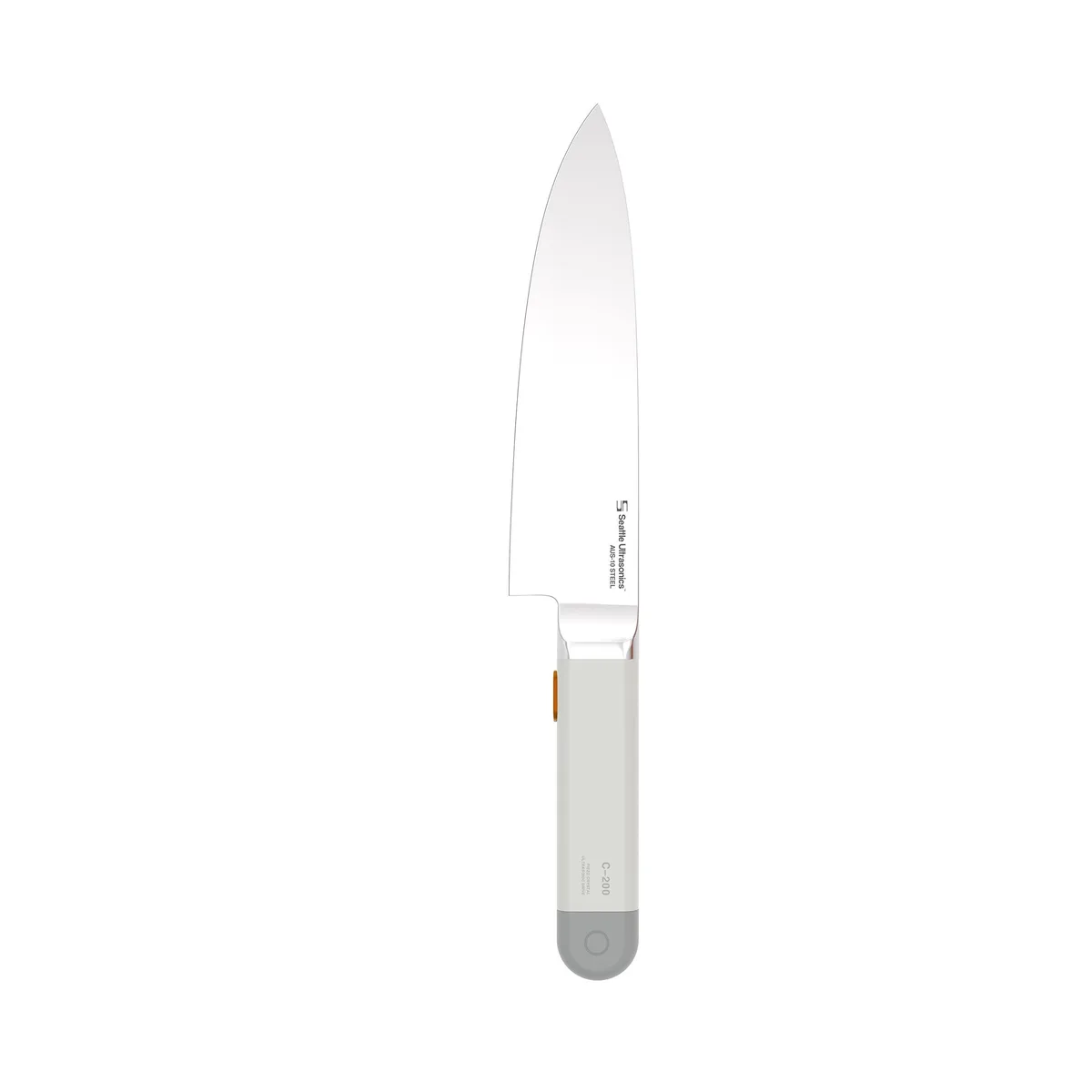
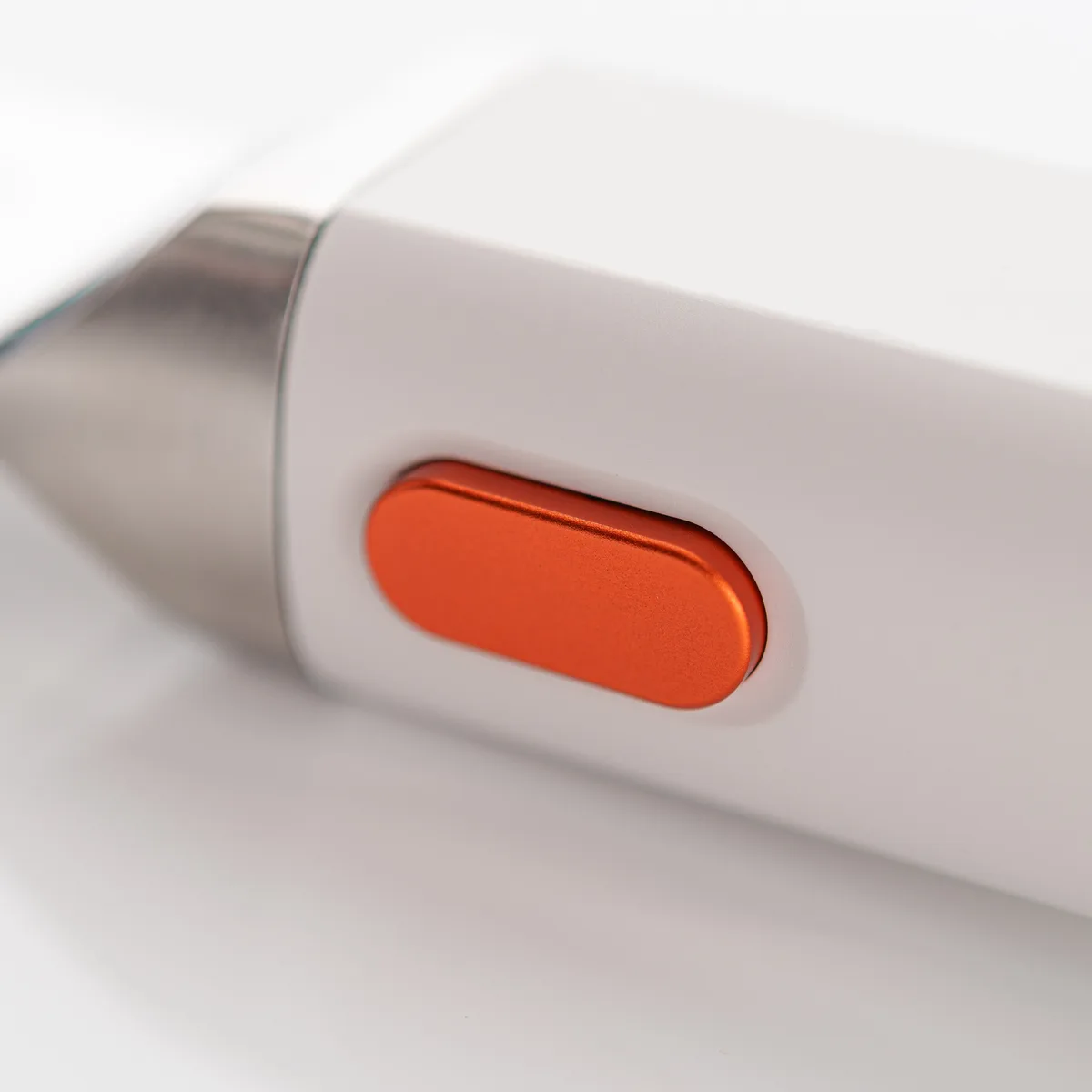
A chef's knife with a power button sounds like a joke product. The Seattle Ultrasonics C200 is not one. Press the orange button on the handle and the blade starts vibrating more than 30,000 times a second — too fast to see, hear or feel — and the knife starts gliding through food with far less pushing from you. It was one of the most talked-about kitchen gadgets at CES 2026, it picked up a TIME Best Inventions mention, and the first batches sold direct from the maker have sold out. This page explains how it works, who it genuinely helps, and what is still unconfirmed — including whether and when it reaches Amazon and Canada.
One thing to say early: this is a forward-looking page, not a buying guide. The C200 is not listed on Amazon yet, so the buttons below are Keep Checking searches, and there are no scores. If you need a great knife today, our best knife sets guide covers the ones you can buy right now.
The C200 at a Glance
| Detail | What the maker states |
|---|---|
| Blade | 8-inch (200 mm) Japanese AUS-10 stainless steel, 60 HRC, 13-degree edge per side |
| Vibration | Over 30,000 times a second (operating range 30–55 kHz), from piezoelectric crystals in the handle |
| Battery | 1,100 mAh removable lithium-ion pack; USB-C charging; over 20 minutes of continuous ultrasonic use per charge |
| Water resistance | IP65 — rinse and hand wash it like a normal good knife; not a dishwasher product |
| Extras | Built-in 6-axis sensor for guided sharpening; optional solid-mahogany wireless charging tile, sold separately |
| Status | Sold direct from the maker in batches; early batches sold out. Amazon listing and Canadian availability unconfirmed |
How an Ultrasonic Knife Actually Works
Industrial ultrasonic cutters have sliced food in factories for years. The C200 shrinks that idea into a knife handle. Inside are PZT-8 piezoelectric ceramic crystals — the same family of material used in medical and industrial ultrasonics. Run a current through them and they flex, thousands of times a second, sending that energy down the blade while the handle itself stays calm. Seattle Ultrasonics is clear on this point: you cannot see the blade move, hear it run, or feel vibration in your hand.
Why bother? Friction. A normal knife wedges food apart, and soft or sticky foods grip the blade as it passes. A blade that is microscopically buzzing slips instead of gripping, so food releases more cleanly and the cut takes less force. The maker says its robot-arm testing — over 100,000 recorded cuts — measured up to 50% less cutting force with the power on. That is the maker's own figure, not an independent lab result, but early hands-on coverage from The Verge, Engadget and others describes the same falling-through-a-tomato effect, and The Guardian's review gave the knife four stars out of five.
The Knife Underneath the Electronics
Strip the electronics away and the C200 still has to work as a knife, because the battery will sometimes be flat. The blade is Japanese AUS-10 stainless steel in a single-layer construction, hardened to 60 HRC with a 13-degree edge per side — proper Japanese-knife numbers, sharper-angled than most Western knives. It is a good spec sheet, and reviewers who used it switched off still rated it as a decent chef's knife.
There is one honest trade-off: there is no full tang, because the handle is full of battery and circuit board instead. The maker says the bolster joint was robot-tested to over 50 pounds of downward force — more than their testers' arms could produce — and the warranty is one year. Treat it like a chef's knife, not a cleaver: splitting lobster shells and hacking frozen meat are still jobs for a heavier blade. Sharpening is normal whetstone work, with one twist — a built-in motion sensor pairs with the maker's Assisted Sharpening experience to coach your angle, and the ultrasonics stay off while you sharpen.
Who This Is Really For
The most interesting C200 owners may not be gadget collectors at all. Cutting with half the force matters if your hands hurt: arthritis, carpal tunnel, reduced grip strength, or an injury that makes prep work a chore. For a cook who has started avoiding hard squash, crusty loaves and thick-skinned tomatoes because pushing a knife through them is painful, a knife that does more of the pushing is a real quality-of-life product, not a novelty. That accessibility angle is the strongest reason this knife exists.
It also suits keen home cooks who prep a lot of soft, sticky produce — tomatoes, cheese, onions, herbs — where the non-stick effect of the vibrating blade is most obvious. Who should skip it: anyone who wants a knife that can be thrown in a drawer and forgotten (this one has a battery to charge), anyone doing heavy bone and frozen work, and anyone on a budget. This is a premium-priced knife by any measure; the maker sells it direct, and we do not print prices on forward-looking pages because launch pricing moves around.
Battery, Washing and Living With It
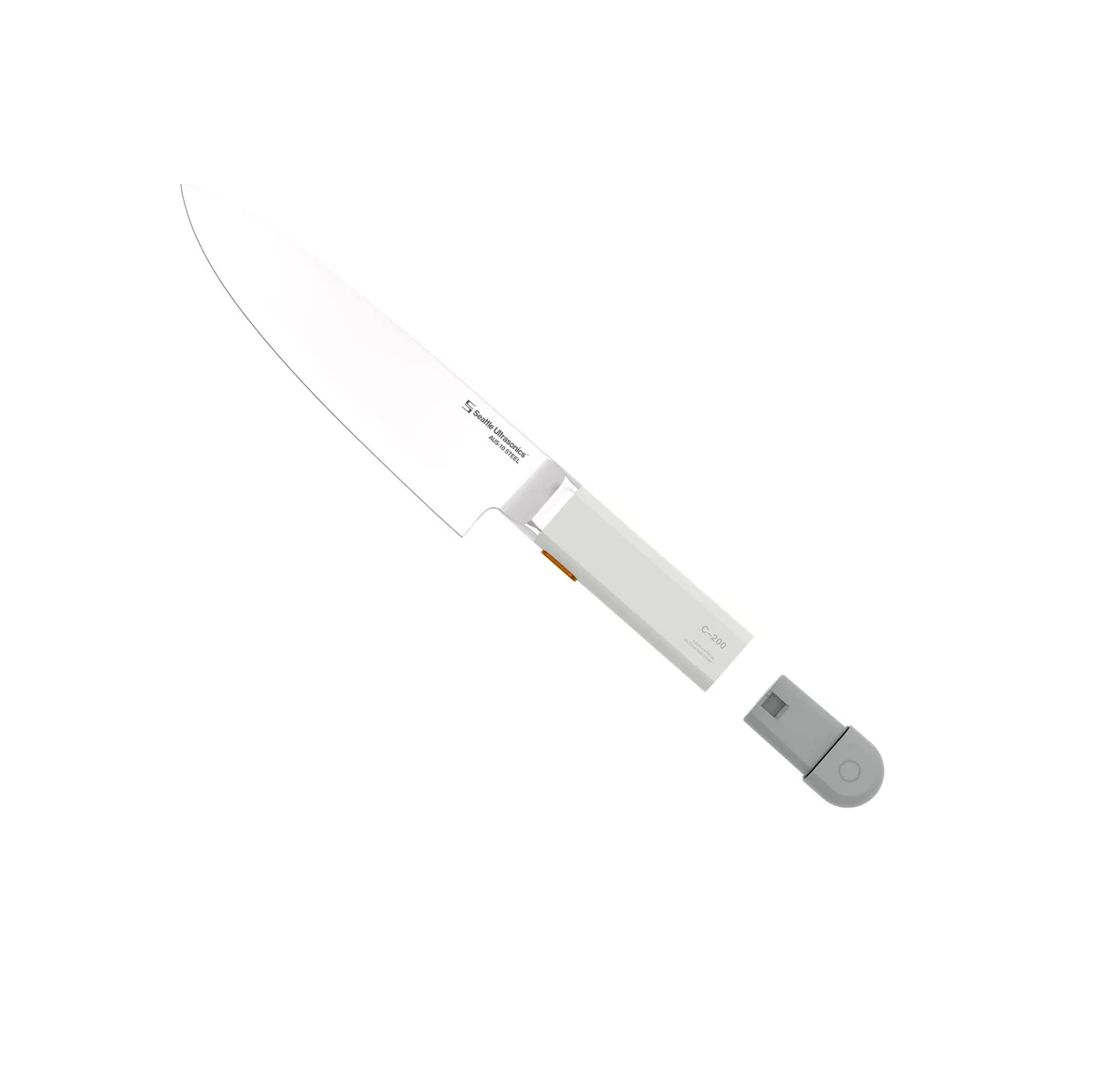
The battery is a removable 1,100 mAh pack that slides out of the handle — a good design decision, because a worn-out pack should not mean a dead knife. The maker rates it at over 20 minutes of continuous ultrasonic cutting per charge, and points out that a typical weeknight prep uses the power for only three to five minutes in total, since you press the button only while actually cutting. Charging is USB-C (cable not included, to cut e-waste), or via the optional wireless charging tile — a solid mahogany block that stores the knife and holds enough charge to refill it eight to ten times.
The knife is IP65-rated, so it rinses under the tap and hand-washes like any good knife. Keep it out of the dishwasher — the maker advises against it for the electronics, and dishwasher heat is hard on any fine edge anyway. Battery safety certifications (IEC 62133-2, UN 38.3) and food-contact compliance are listed on the maker's site, which matters for a product with a lithium battery sitting in a wet kitchen.
What Is Still Unconfirmed
Three things, stated plainly. Amazon availability: unconfirmed — there is no official Amazon listing yet, which is exactly what the Keep Checking buttons below are for. Canadian availability: unconfirmed — the maker ships within the US from its own store; a Canadian retail channel has not been announced. Long-term durability: early reviews are positive, but electronics in a knife handle are new territory, and no reviewer has years of daily use to report yet. If those unknowns bother you, the sensible move is to wait for the second wave of coverage — or buy a proven conventional knife now and keep this page bookmarked.
How to Use This Page
Forward-looking pages work differently from our normal buying guides. There are no prices and no scores here — for products that are not on sale yet, there is nothing honest to score. The buttons read Keep Checking on Amazon and open a tagged search on Amazon.ca or Amazon.com, so you can watch availability yourself. Confirmed facts come from manufacturer pages and launch coverage; anything less certain is labelled reported, expected or unconfirmed, right in the text.
Frequently Asked Questions
Is an ultrasonic knife safe?
The maker says it is no more dangerous than any other sharp knife, and there is a fair point underneath the marketing: most kitchen cuts happen when a dull knife needs force and then slips. A knife that cuts with less force is easier to control. It is still an 8-inch blade at 60 HRC — treat it with the same respect as any chef's knife.
How long does the C200 battery last?
Over 20 minutes of continuous ultrasonic cutting per charge, per the maker. Because you only power the blade while you are actually cutting, the maker estimates three to five minutes of powered time covers a typical weeknight dinner prep, so a charge lasts through many meals.
Can you sharpen the C200 like a normal knife?
Yes. The blade is conventional AUS-10 steel and sharpens on whetstones, fixed-angle systems or rolling sharpeners; the maker advises against pull-through and electric sharpeners. Keep the ultrasonics off while sharpening. A built-in sensor can coach your sharpening angle through the maker's Assisted Sharpening experience.
Is the Seattle Ultrasonics C200 available in Canada or on Amazon?
Not confirmed yet. As of this page's publication the maker sells direct from its own US store in batches, and early batches sold out. There is no official Amazon listing and no announced Canadian retail channel, so use the Keep Checking buttons to watch Amazon.ca and Amazon.com.
Who should not buy an ultrasonic knife?
Anyone who splits bones or frozen food with their main knife (keep a cleaver for that), anyone who wants zero-maintenance tools — this one has a battery — and anyone on a tight budget. It is a premium knife aimed at cooks who prep often, and especially at cooks whose hands find cutting hard work.
The Short Version
The C200 is a genuinely new kind of kitchen tool: a good Japanese-steel chef's knife that, at the press of a button, vibrates over 30,000 times a second and cuts with far less effort. The strongest case for it is not novelty — it is the cook whose hands ache by the end of prep. The honest unknowns are Amazon and Canadian availability, and long-term durability. Watch both with the buttons below; buy a conventional knife from our knife sets guide if you need one today.