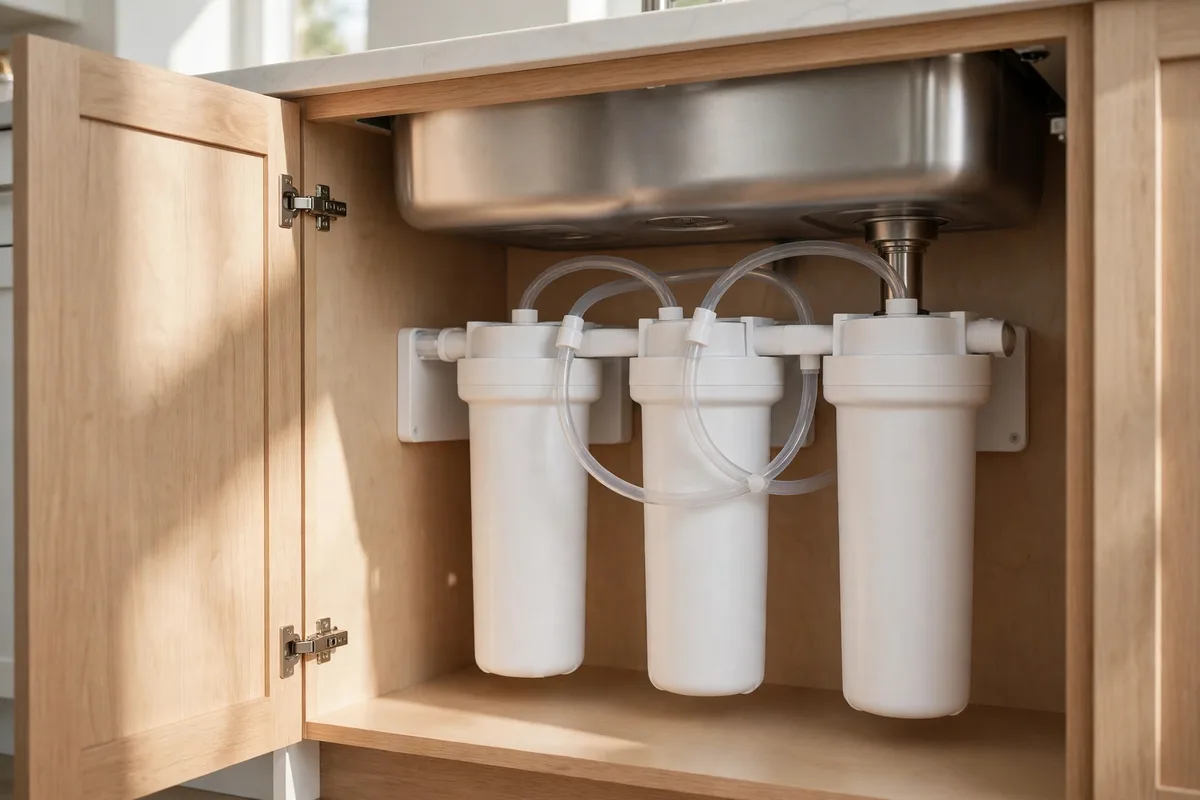
An under-sink water filter is the point where home water filtration stops being a jug in the fridge and becomes part of the plumbing: a system mounted in the cabinet under the kitchen sink, feeding either your main faucet or a small dedicated tap, filtering every litre you drink and cook with without taking up counter space. It is also the tier where the real decisions live. Do you need reverse osmosis, with its membrane, its wastewater and its near-total reduction — or will a good non-RO filter, which keeps the minerals and wastes nothing, cover your actual concern? Tank or tankless? And what will the filters cost you every year after the box is paid for? This guide compares the five under-sink systems that matter in Canada and the USA on certification first, running costs second, and day-to-day practicality after that. If you are not ready for plumbing at all, start with our guide to the best water filter pitchers — the same concerns, answered at fridge-door level.
One boundary before the lineup. This page covers plumbed under-sink systems only: units that tap into the cold-water line under your sink. The countertop reverse osmosis machines that sit beside the sink — no installation, renter-friendly — are a different category with different trade-offs, and they have their own guide: our roundup of the best countertop reverse osmosis water filters. Readers keep asking us to merge the two lists; we keep refusing, because a system you must plumb in and a system you must not are answers to different questions. What follows is for homeowners — and renters with a landlord’s blessing — who want the strongest filtration in the house to disappear under the sink and stay there.
Disclosure: CookSmartPicks is reader-supported. When you buy through links on this page, we may earn an Amazon commission at no extra cost to you. Prices and availability change often — check the current price on Amazon before you decide.
How we chose these under-sink water filters
CookSmartPicks is a research-based guide. We do not run a test lab, and we never claim hands-on testing we have not done. For this list we compared manufacturer specifications and performance data sheets, the certification listings of the accredited bodies that certify drinking-water systems (NSF International, the Water Quality Association and IAPMO), the published laboratory work of Water Filter Guru — which has lab-tested more than 70 filters with before-and-after samples run through accredited laboratories — and long-term owner reports from both Amazon storefronts. Three filters of our own decided the lineup. First, an RO system had to carry, or be independently lab-verified against, the relevant NSF/ANSI standards — 58 for reverse osmosis, 53 for health-effect contaminants, 42 for taste and odour — because in this category a claim without a listing behind it is advertising. Second, its true running cost had to be calculable: filter life stated by the manufacturer, in months or gallons, so a reader can work out the yearly bill before buying. Third, it had to be sold properly in both Canada and the USA, with local support and refills that do not require cross-border shipping. One non-RO system earned its place by being the strongest answer for readers whose water needs fixing, not stripping.
The lineup at a glance
| Product | Best for | Why it stands out |
|---|---|---|
| Cloud RO | Best lab-verified results | The strongest published independent lab results in this class, with remineralization built in |
| Waterdrop G3P800 | Best tankless | No storage tank, fast flow, smart faucet with a live TDS readout — the modern under-sink format |
| iSpring RCC7 | Best value standard | The best-selling under-sink RO format for years: a proven 5-stage tank system with cheap, universal filters |
| APEC ROES-PH75 | Best budget certified | WQA Gold Seal certification and US-assembled build at the lowest entry point here |
| Clearly Filtered Under-Sink Filter | Best non-RO | No wastewater, no tank, a 15-minute install — and the broadest tested contaminant list of any non-RO system here |
1. Cloud RO — Best lab-verified results
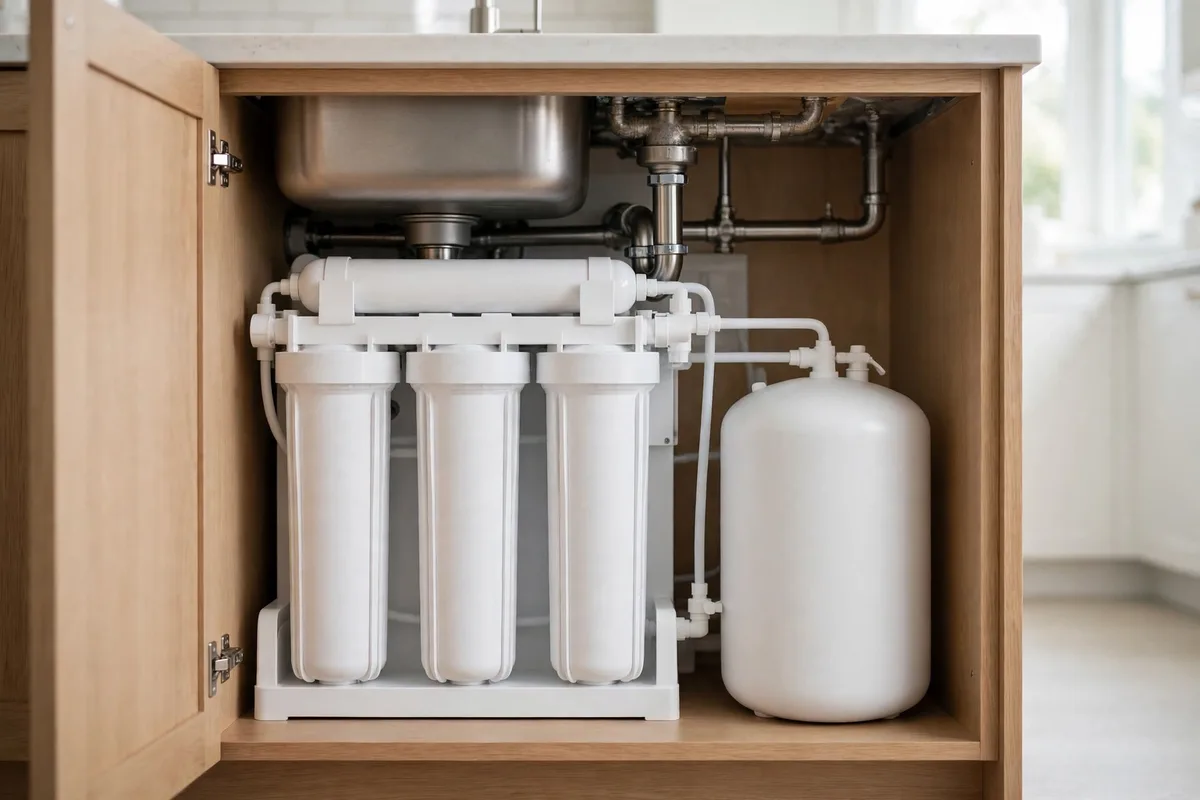
Cloud is the newer name at the top of this category, and it got there on paperwork rather than advertising. The Cloud RO is a tank-based reverse osmosis system whose maker publishes third-party laboratory results for its water — and in Water Filter Guru’s independent lab testing, which runs before-and-after samples through an accredited laboratory, the Cloud system posted the strongest overall results of the under-sink RO systems covered, reducing the tested contaminants — lead, PFAS compounds and the rest of the standard panel — to at or near the laboratory’s detection limits. That evidence style matters. Most RO marketing quotes the membrane’s theoretical rejection rate; Cloud’s case rests on samples of actual output water, tested by someone else. The system adds a remineralization stage after the membrane, putting calcium and magnesium back into water that RO would otherwise leave flat and slightly acidic — the taste complaint that follows every RO system is largely designed out here.
The ownership profile is conventional in the ways that matter: a pressurised storage tank, a dedicated faucet, and filter stages on a published replacement schedule, with an app-connected monitoring system that tracks filter life and water quality so the change reminder is based on use rather than a calendar guess. The honest costs are the usual RO costs, stated plainly. Like every membrane system on this page it sends reject water to the drain — modern systems run far more efficiently than the RO units of twenty years ago, but “some wastewater” is the physics of the technology, and a household on a tight water budget or a sensitive septic setup should weigh it. It is also the premium-priced route into this category, and a younger brand than iSpring or APEC, which means a shorter long-term track record in owner reports. Buy it when the lab sheet is the argument: this is the pick for readers who asked “which one removes the most, and who verified it?”
Yay · Pros
- The strongest published independent lab results here — accredited-lab samples of the actual output water
- Remineralization built in, so RO water tastes like water rather than like nothing
- App-tracked filter life and water quality take the guesswork out of maintenance
Hmm · Cons
- Premium pricing, and a younger brand with a shorter owner track record
- Like all RO, it produces reject water and needs a drain connection
- Tank-based design still claims real cabinet space
Best for: evidence-first buyers — households with a specific, serious contaminant list who want published lab proof and remineralized taste. Skip if: your budget is the deciding factor — the iSpring and APEC below deliver certified RO for less.
2. Waterdrop G3P800 — Best tankless
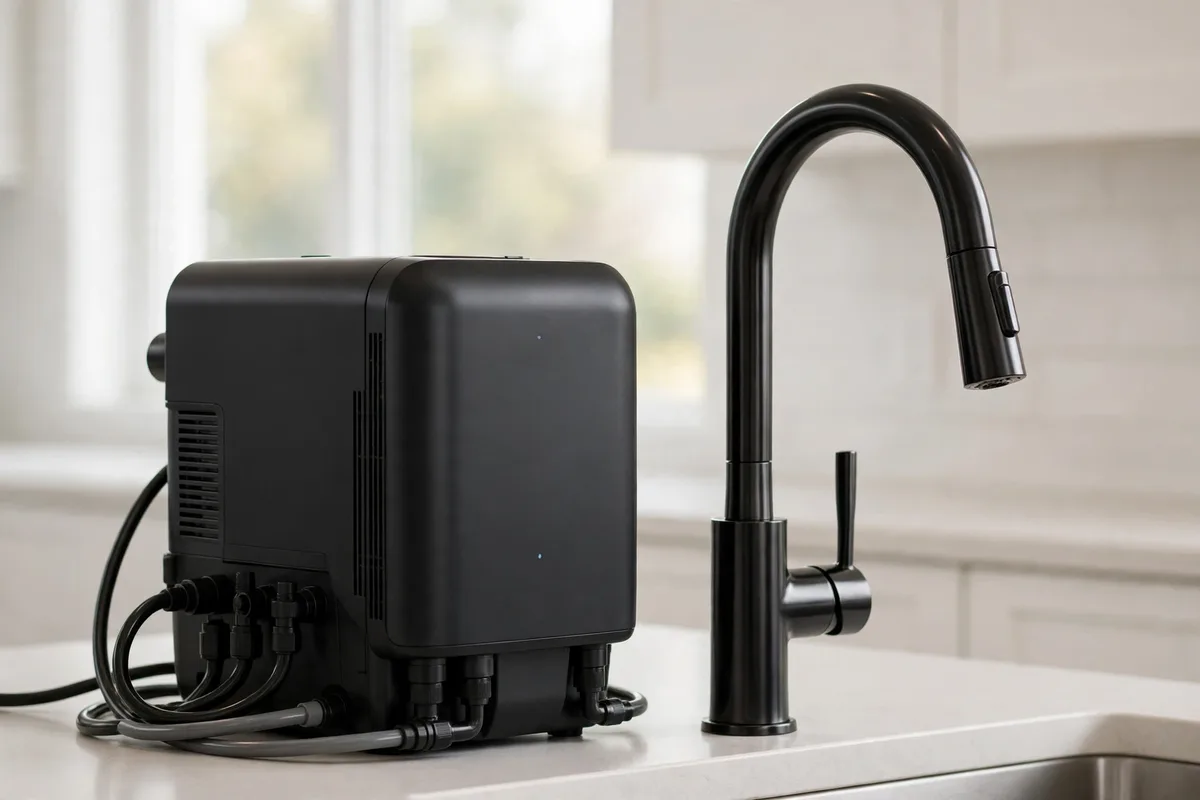
The G3P800 is what under-sink RO looks like after a redesign from first principles. There is no storage tank: the unit is a single slim cabinet-friendly box that filters on demand, which removes the two classic tank complaints at once — the cabinet space a tank swallows, and the standing water a tank holds between uses. Flow is the headline specification: the G3P800 is rated at 800 gallons per day, which in practice means a glass fills in seconds rather than the slow, thinning stream of an ageing tank system, and its smart faucet displays a live TDS readout and filter-life status at the tap, so the state of the system is visible every time you pour. Waterdrop lists the system as certified to NSF/ANSI 58 for TDS reduction and tested against the contaminant panels of standards 42, 53 and 401 — and, in the distinction this site always draws, readers should note which of those are certifications and which are test results, and check the current listing before buying, because the paperwork is revised as listings are renewed.
Tankless design changes the maintenance maths, mostly for the better. Instead of four or five small cartridges on staggered schedules, the G3 series uses composite filters — the pre-filter and RO membrane in twist-out cartridges on 12- and 24-month cycles — so a filter change is a thirty-second twist with no wrenches, no drained tank and no spilled cabinet. The trade-offs: the unit needs electrical power under the sink, which not every cabinet has; its improved drain ratio is better than old tank systems but RO still rejects water by design; and the proprietary composite cartridges cost more per change than the universal filters the iSpring below uses, even if they change half as often. Cabinet depth is the other check — measure before ordering, because “tankless” describes the water storage, not a promise that the box is small. For modern kitchens, renters-turned-owners and anyone whose under-sink space is already spoken for, this is the format the category is moving toward.
Yay · Pros
- No tank — full cabinet space kept, no standing water, and a fast 800-gallon-per-day rated flow
- Smart faucet shows live TDS and filter life every time you pour
- Twist-out composite filters on 12- and 24-month cycles — the easiest changes here
Hmm · Cons
- Needs a power outlet under the sink, which older cabinets may not have
- Proprietary cartridges cost more per change than universal filters
- Still an RO system: reject water to the drain is part of the technology
Best for: modern kitchens short on cabinet space, and anyone who wants RO without the tank, the slow pour or the wrench work. Skip if: your under-sink cabinet has no power outlet and adding one is not on the table.
3. iSpring RCC7 — Best value standard
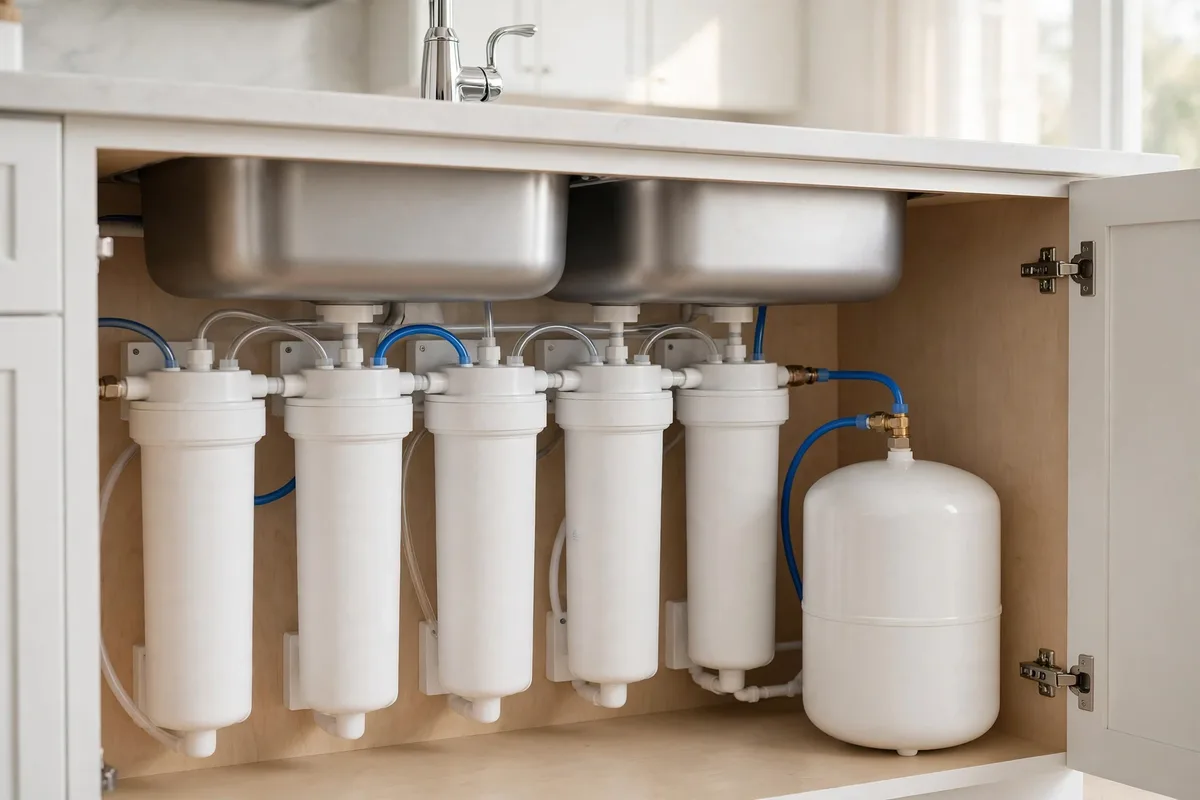
If the Cloud is the lab-sheet pick and the Waterdrop is the redesign, the RCC7 is the institution. iSpring’s 5-stage tank system has been reported as Amazon’s best-selling under-sink RO system for eight consecutive years, and the reason is boring in the best way: it is the standard architecture — sediment filter, two carbon stages, RO membrane, polishing filter, storage tank, dedicated faucet — executed at a price the rest of the category has to answer, and certified to NSF/ANSI 58 by an accredited listing. Longevity at that sales volume produces something no launch review can: an enormous body of long-term owner reports covering a decade of installs, replacement parts that are stocked everywhere, and a support trail of answered questions for every install problem a first-timer can meet. The filters are the standard 10-inch format, which means replacements are cheap, universal and sold by many makers — the lowest running-cost structure of any RO system on this page.
The compromises are the format’s, and they are honest ones. A tank system pours at the speed of its tank pressure, slows as the tank empties, and asks for a meaningful block of cabinet. The multi-cartridge schedule — pre-filters roughly twice a year, membrane every two to three years — is more dates to track than the Waterdrop’s two twists, and the install is a genuine DIY project involving the drain saddle and the cold-water tap, though it is the most-documented install in the category. Output is rated at 75 gallons per day, ample for drinking and cooking but not a whole-house answer. None of that has dented its position, because the arithmetic keeps winning: certified RO, the cheapest filters in the business, and a parts trail a decade deep. For a first under-sink system bought on value rather than novelty, this remains the default recommendation — the one to beat, and the one the others on this page are priced against.
Yay · Pros
- NSF/ANSI 58-certified RO in the proven 5-stage format, at the value end of the category
- Standard-size filters: the cheapest, most widely stocked replacements here
- Eight years as the category’s best seller means deep owner knowledge and parts availability
Hmm · Cons
- Tank takes cabinet space and flow fades as the tank empties
- More cartridges on more schedules than the tankless designs
- A fuller DIY install — drain saddle, feed tap and faucet hole
Best for: value-first homeowners who want certified RO with the lowest lifetime filter bill and a decade of owner experience behind the model. Skip if: cabinet space is tight or filter changes must be tool-free — that is the Waterdrop’s brief.
4. APEC ROES-PH75 — Best budget certified
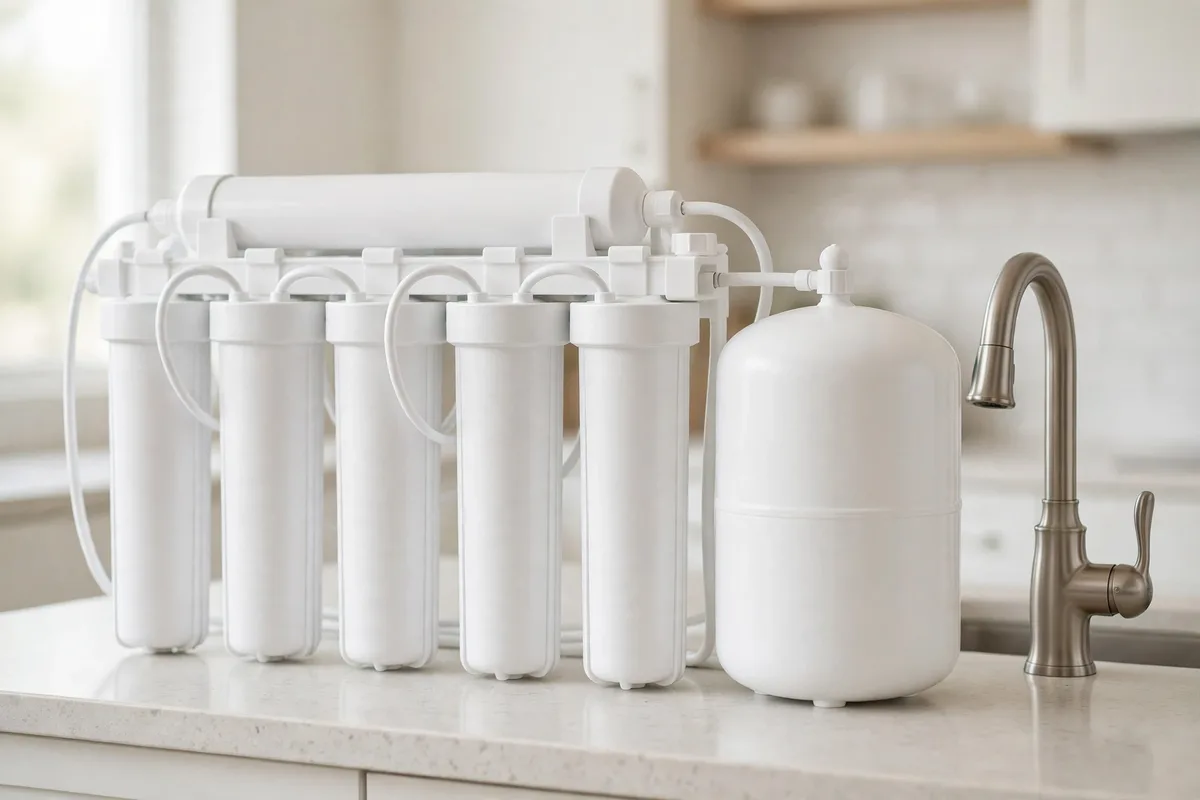
APEC is the quiet Californian maker whose systems anchor the budget end of the certified market, and the ROES-PH75 is its most complete package: a 6-stage, 75-gallon-per-day tank system built around the same standard architecture as the iSpring, with two distinctions. The first is certification pedigree: APEC’s ROES line carries the WQA Gold Seal — certification to the relevant NSF/ANSI standards administered by the Water Quality Association — which puts verified paperwork behind a price tier where many rivals offer test claims instead. The second is the PH stage: an additional calcite stage after the membrane that raises the water’s pH and adds back a measure of the alkalinity RO strips out. Readers should hold that feature at its true size — it changes taste and pH modestly; it is not a health treatment — but for drinkers who find straight RO water flat, it is a real preference, and APEC builds it in rather than selling it as an accessory.
APEC assembles its systems in the USA and uses standard-format filters, so the ownership story matches the iSpring’s: inexpensive universal replacements, a twice-a-year pre-filter rhythm, a membrane on a multi-year cycle, and a tank in the cabinet. Where it differs is emphasis — the fittings and filter housings feel a step sturdier in owner reports, and support is a domestic phone call, which matters in year three rather than week one. The compromises mirror its rival’s: tank pace and tank space, a full DIY install, and reject water as the cost of the membrane’s work. Canadian buyers should confirm the Amazon.ca listing and parts shipping before ordering, since APEC’s footprint is US-first. Between this and the RCC7, the honest summary is that you are choosing between the category’s best seller and its best-certified budget alternative — either is a defensible buy, and the current listings and filter-pack prices on the day you shop are a reasonable tiebreaker.
Yay · Pros
- WQA Gold Seal certification at the budget end of the RO market
- Built-in pH/alkalinity stage for readers who dislike the flat taste of straight RO
- US-assembled, standard-format filters, and domestic support
Hmm · Cons
- Same tank footprint and pour pace as every tank system here
- The pH stage is a taste feature, not a health claim — buy it for the right reason
- Canadian parts and support footprint is thinner than the US one
Best for: budget buyers who refuse to trade certification for price, and anyone who wants the alkalinity stage built in. Skip if: you want the deepest discount ecosystem of filters and parts — the iSpring’s scale wins that contest.
5. Clearly Filtered Under-Sink Filter — Best non-RO
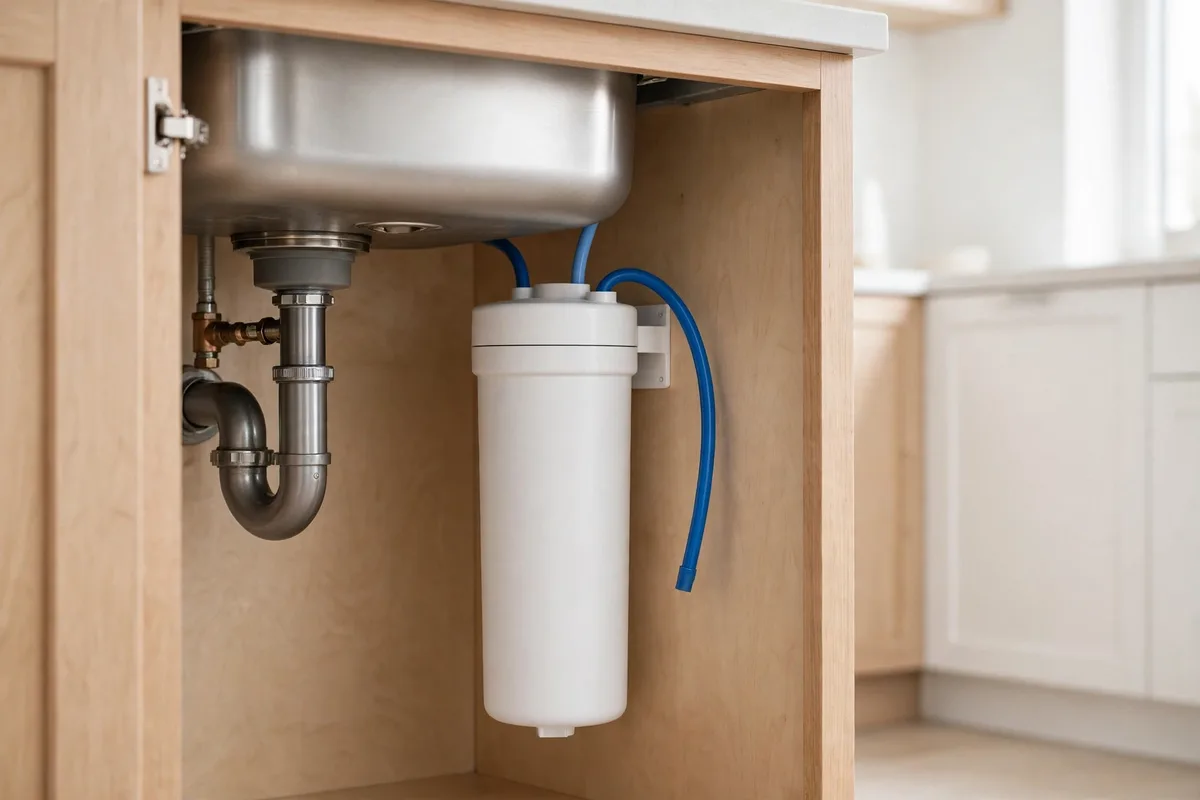
Not every kitchen needs a membrane. The Clearly Filtered under-sink system is the strongest non-RO design here: a single plumbed filter stage, installed in-line on the cold-water feed in about fifteen minutes with no drain connection, no tank and no separate faucet — filtered water comes out of your existing tap, at full line pressure, with zero wastewater. Because there is no membrane, the minerals stay in the water, and so does the flow rate. The filtration claim is the brand’s signature one: the company publishes independent laboratory reports, run to NSF/ANSI protocols by an accredited lab, covering a target list of 230-plus contaminants including lead, PFAS compounds and fluoride. This guide’s standing distinction applies exactly as it did in our pitcher roundup: that breadth lives in the tested column — published lab results, which Clearly Filtered deserves credit for publishing in full — while its formal certifications are narrower. A reader who understands that distinction is getting the broadest tested non-RO evidence base available; a reader who needs every claim under certification should buy RO.
The practical profile suits a specific and large group: renters whose landlords allow a reversible in-line install, households on wells or septic systems where RO reject water is a genuine problem, and anyone whose concern list is lead, PFAS and taste rather than dissolved solids, hardness or nitrates — the things only a membrane reliably handles. The filter cartridge is rated in gallons rather than months, and heavy households will move through it faster than the marketing’s household-of-four assumptions; do the arithmetic in the guide below before deciding the running cost suits you. It is also a smaller, US-centred brand: Canadians should check the Amazon.ca listing, refill availability and return terms first, because a filter you cannot easily re-order is a filter that quietly expires in place. Within its honest limits, though, this is the under-sink upgrade with the least plumbing, the least waste and the least cabinet disruption on the page.
Yay · Pros
- No wastewater, no tank, no extra faucet — a 15-minute in-line install on the existing tap
- The broadest published lab-tested contaminant list of any non-RO system here, fluoride included
- Keeps the minerals and full tap pressure that RO removes
Hmm · Cons
- Most of the famous list is lab-tested, not certified — the formal certifications are narrower
- Cannot do the membrane’s jobs: dissolved solids, hardness and nitrate reduction need RO
- Smaller US-centred brand — Canadian buyers should confirm refills and returns first
Best for: septic and well households, waste-conscious buyers, and anyone whose list is lead, PFAS and taste — not dissolved solids. Skip if: your concern is hardness, nitrates or total dissolved solids — only the RO systems above address those.
Tank, tankless or no membrane: choosing your format
Start with the contaminant, then pick the format. Reverse osmosis is the only technology on this page that reduces dissolved solids, and it carries the broadest certified claims for lead, PFAS and fluoride — if your water report or your concern list names those, you are buying RO and the only question is the format. A tank system (Cloud, iSpring, APEC) is the proven, cheapest-to-run architecture: it filters slowly into a pressurised tank so the tap pours fast, and its costs are cabinet space and a pour that fades as the tank drains. A tankless system (Waterdrop) filters on demand at high rated flow, returns the cabinet space and simplifies filter changes, in exchange for a power connection and pricier proprietary cartridges. A non-RO filter (Clearly Filtered) wastes nothing and installs in minutes, and honestly cannot do the membrane’s work. None of these is “best” outside the shape of your kitchen, your water and your budget — which is why this guide ranks by job rather than declaring one winner.
Then do the two pieces of arithmetic the brochures skip. First, running cost: add up a year of filters at the manufacturer’s stated lives for your household size — standard-format cartridges (iSpring, APEC) are the cheapest per year, composite tankless cartridges the dearest per change but the least frequent, and the non-RO cartridge sits between, its cost set by your gallons. Second, the install reality: every RO system here needs a drain connection and a hole or an existing sprayer opening for its faucet; tankless adds a power outlet. Measure the cabinet, check for the outlet, and look at your sink deck before ordering — most “difficult installs” in owner reports are unmeasured cabinets, not defective systems. And if the honest conclusion is that plumbing is more than your situation allows, that is a legitimate answer: the countertop RO systems reduce nearly as much with no install at all, and the pitchers handle the taste-and-lead basics for the price of fridge space.
Under-sink water filter questions, answered
Is reverse osmosis worth it over a regular under-sink filter?
It depends entirely on your list. RO is the only route here to certified reduction of dissolved solids, and it carries the strongest certified claims for fluoride and broad PFAS coverage. If your concerns are lead, chlorine taste and the common metals, a good non-RO filter covers them with no wastewater, no tank and a fraction of the install. Read your municipal water report — in Canada it is published by your city or utility; in the USA, your water system’s annual Consumer Confidence Report — and buy for the contaminants actually in it, not the ones in the advertisement.
How much water does an RO system waste?
Every membrane system sends reject water to the drain; that stream is how the membrane cleans itself. Older systems were genuinely profligate. Modern designs are far thriftier — tankless systems quote drain ratios around two parts pure water to one part reject, and efficient tank systems are in a similar neighbourhood — but the honest figure for your shortlist is the ratio on the manufacturer’s current specification sheet, and households on septic systems or strict water budgets should weigh it seriously. It is one of the two honest reasons the non-RO pick exists on this page.
Can I install an under-sink system myself?
Most owners do, and the non-RO system here is a fifteen-minute in-line job. A tank or tankless RO install is a half-day project for a careful beginner: tapping the cold line, fitting the drain saddle, and mounting the faucet — which needs a hole in the sink deck or an unused sprayer opening. The standard-format systems have the deepest libraries of install documentation and owner answers. If your plumbing is old, corroded or entirely unfamiliar, a plumber’s hour is cheap insurance against a leak under a cabinet you rarely open.
What do the filters cost per year?
There is no single figure, which is exactly why this guide refuses to print prices and insists on the arithmetic instead: take the manufacturer’s stated life for each stage, at your household’s usage, and total a year. Standard-format systems (iSpring, APEC) run cheapest because their cartridges are universal and competitively made by many brands. Tankless composite cartridges cost more per change and change less often. The non-RO cartridge’s year depends on your gallons. Any of them costs less than the same filtration bought by the bottle — but the system with the lowest sticker is not automatically the system with the lowest year.
The short version
For the strongest verified results, buy the Cloud RO — published accredited-lab evidence, remineralization, and monitoring that removes the maintenance guesswork. For the modern format, the Waterdrop G3P800 trades the tank for speed, space and thirty-second filter changes. For value that has been proven at scale for years, the iSpring RCC7 remains the standard: certified RO on the cheapest filters in the business. On a budget that still demands certification, the APEC ROES-PH75 brings WQA Gold Seal paperwork and a pH stage. And if your water needs fixing rather than stripping — or your septic system says no to reject water — the Clearly Filtered under-sink filter is the honest non-RO answer. Choose by contaminant, verify by certification, and budget by the year of filters, not the day of purchase.
Last updated: November 16, 2026. We refresh this guide each season and whenever a pick is replaced by a better one.