The best baby carrier is the one that holds your baby’s hips in the hip-healthy M-position — knees higher than the bottom, thighs supported to the knee — and the Ergobaby Omni and Tula picks below lead this guide because both carry the International Hip Dysplasia Institute’s acknowledgment and adjust from newborn to toddler without inserts. A carrier’s first job is a developing skeleton; comfort, for baby and wearer, is the close second this guide ranks next.
The five picks divide by family and phase: two adjustable structured all-rounders, an all-seasons structured alternative, a premium breathable design, and the wrap that owns the newborn weeks. Each entry states its weight range and positions in the open. The carrier pairs with the best high chairs in Canada and the USA guide for the months when the baby graduates to the table, the best baby monitors in Canada and the USA picks for peace of mind at night, and the best baby play mats and activity gyms in Canada and the USA guide for play on the floor between carries.
Disclosure: CookSmartPicks is reader-supported. When you buy through links on this page, we may earn an Amazon commission at no extra cost to you. Prices and availability change often — check the current price on Amazon before you decide.
How we chose these baby carriers
Hip health gated this list before comfort was allowed to speak: every structured pick had to hold the IHDI-acknowledged M-position — knees above the bottom, thighs supported to the knee — and carry the International Hip Dysplasia Institute’s acknowledgment, because a carrier’s first job is developing hips, not convenience. Narrow-based designs that dangle the legs were excluded outright, whatever their review counts.
Newborn honesty came next: minimum weights and newborn configurations were read from the makers’ own specifications, and carriers that need a separate insert to be safe for newborns say so here. Wearer fit — waist-belt load transfer, strap options, lumbar support — decided the ranking within the class, because the carrier a parent can wear for an hour is the carrier that gets used. Every pick is available through normal Canadian baby retail.
The lineup at a glance
| Product | Best for | Why it stands out |
|---|---|---|
| Ergobaby Omni (360/Breeze) All-in-One Carrier | Best overall | The reference carrier: one purchase from the first week to the last carry |
| Tula Free-to-Grow Carrier | Best fit | The tailor’s carrier: a seat that adjusts to the baby, not the size chart |
| Lillebaby Complete All Seasons Carrier | Best all-seasons | The climate carrier: a panel that zips between Canadian winter and summer |
| BabyBjörn Carrier Harmony (3D Mesh) | Best premium design | The design carrier: Swedish minimalism in breathable mesh |
| Solly Baby Wrap (Modal Stretch Wrap) | Best for newborns | The fourth-trimester wrap: a custom fit in the softest fabric in the category |
1. Ergobaby Omni (360/Breeze) All-in-One Carrier — Best overall
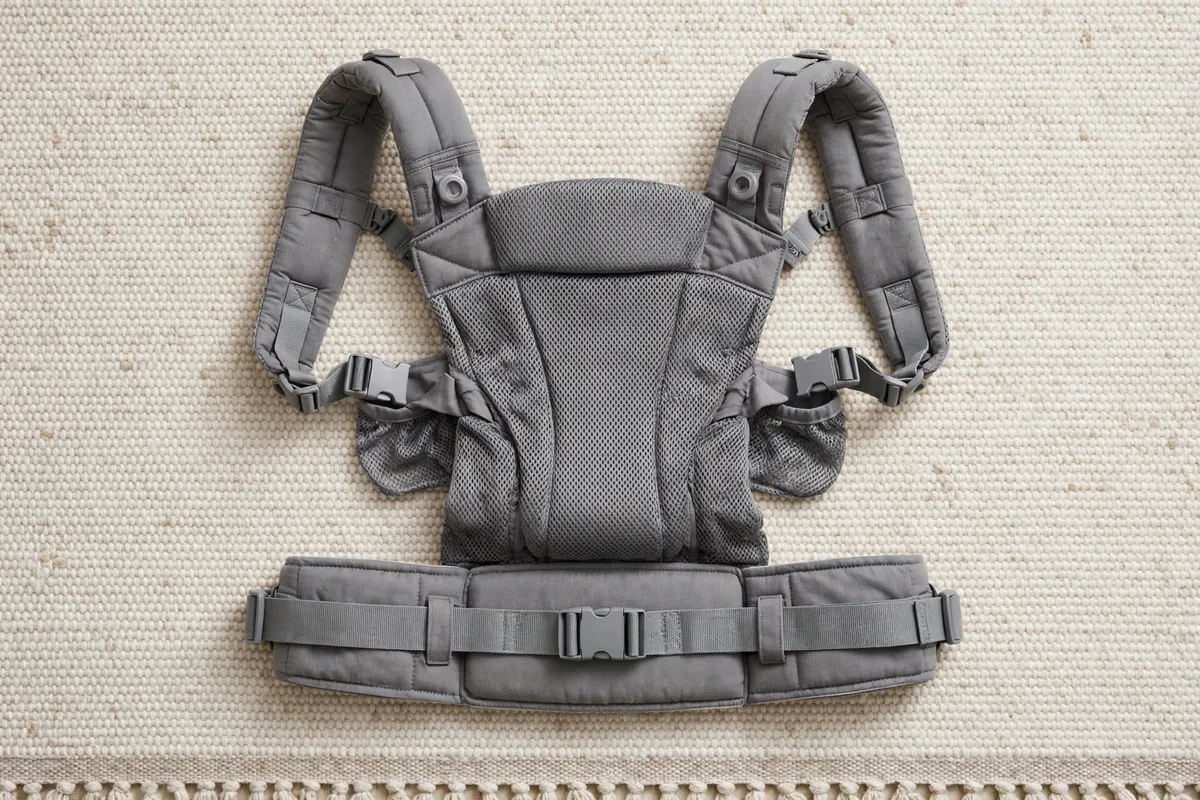
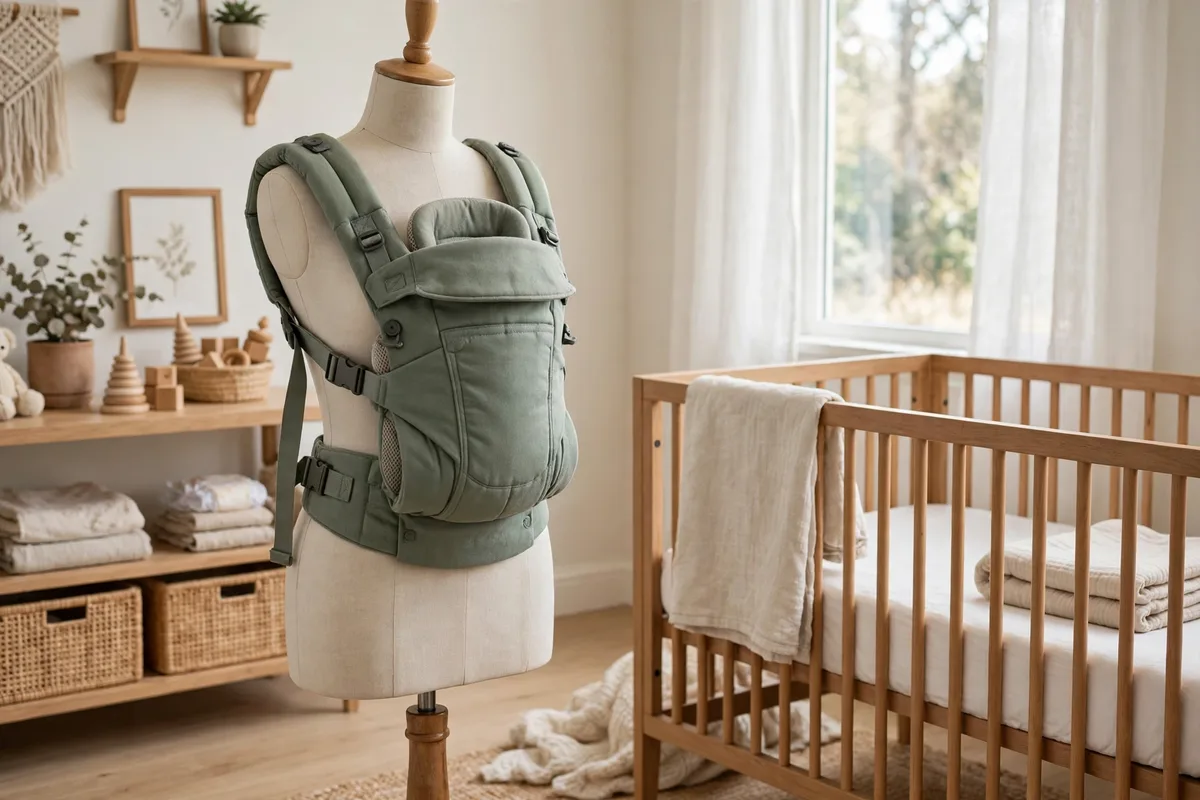
The Omni line is the structured carrier perfected into a single purchase: it adjusts from newborn (7 lb, no insert in current Omni models) to toddler (45 lb class), carries in every position — front inward, front outward, hip, back — and holds the IHDI-acknowledged ergonomic seat through all of them, with a seat that narrows and widens as the baby grows so the M-position is maintained rather than approximated. The Omni Breeze variant answers the line’s one climate weakness with full mesh airflow, the version Canadian summers argue for.
The wearer’s engineering matches: crossable padded straps, a structured waist belt that genuinely transfers load to the hips, and lumbar support that makes the second hour feel like the first. Ergobaby’s dominance of this category is sometimes resented and never really disputed — the carrier is the reference because the details (the hood, the pouch, the strap keepers, the instructions’ clarity) are all the considered kind.
Canadian availability is total, at the premium tier, with the Breeze commanding a small step up. For the household buying one carrier to serve one or more children across the whole carrying era, the Omni is the guide’s default — the purchase that ends the research.
Ownership’s evidence is the hand-me-down market: Omnis circulate through second and third families with their structure intact, the used-market price holding like furniture’s — a carrier’s resale value is its durability, audited by strangers.
Second-caregiver check before the first outing: the Omni’s straps adjust across a wide range of adult frames, but the fit that matters is the one on the person wearing it at hour two — have both caregivers do a full fitting at home, mark the strap positions with a stitch of coloured thread, and the handover between wearers becomes a thirty-second reset instead of a refit.
Yay · Pros
- Newborn to toddler, no insert (current models)
- IHDI-acknowledged; every carry position
- Breeze mesh version for hot summers
Hmm · Cons
- Premium price
- The strap system takes a practice run to master
- Warm in summer without the mesh version
Best for: Most families — the one-carrier answer Skip if: Your budget is wrap-sized — the Solly below owns the newborn months for less
2. Tula Free-to-Grow Carrier — Best fit
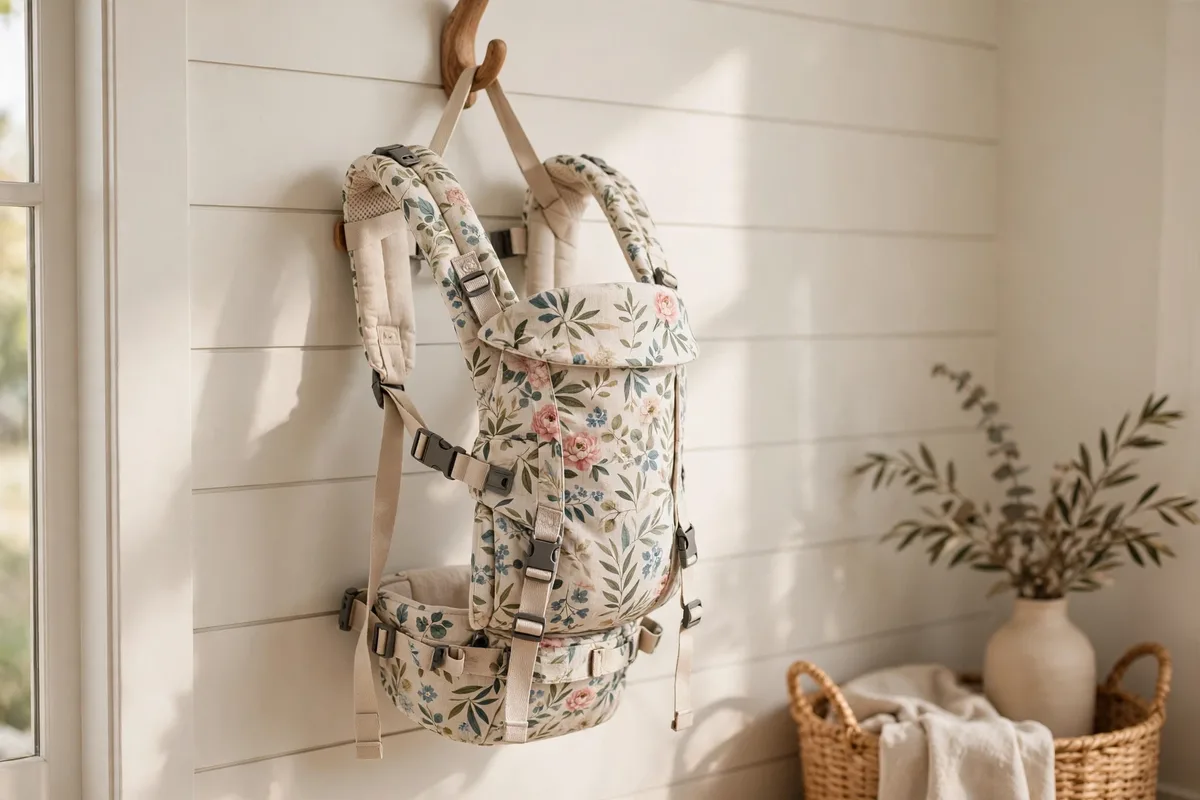
The Free-to-Grow is the fit obsessive’s carrier: its seat width and panel height adjust in increments, so the carrier is sized to the baby at every stage from 7 to 45 lb rather than snapped between a few settings — the most precise M-position maintenance in this guide, and the reason fit-focused parents champion the brand. The carrier is IHDI-acknowledged, carries front-inward and back, and is handmade-finished in fabrics that have made Tula the style carrier of the category, with prints that read as wardrobe rather than equipment.
The honest omission is stated plainly: the Free-to-Grow does not face outward — Tula’s answer is that inward and back are the positions that matter, and families who want the outward phase should look at the Omni or Tula’s own Explore line. Within its positions, the padding and waist support sit at the guide’s top level, and the carrier’s simplicity (fewer features, perfectly executed) is a philosophy some wearers strongly prefer.
Canadian availability runs through baby boutiques and online retail at a premium price. For the parent who reads fit guides for pleasure — and every nursery has one — the Free-to-Grow is the connoisseur’s structured carrier.
Ownership has a community dimension: Tula’s prints and limited runs give the carrier a collector culture unique in the category, and a Free-to-Grow in a beloved print is kept, displayed and handed down like a quilt.
The seat’s snap settings reward a monthly habit: as the baby grows, widen the seat one setting before it looks necessary, because the M-position is maintained by the fabric supporting the thigh to the knee — a seat left narrow too long quietly undoes the ergonomic promise the carrier was bought for.
Yay · Pros
- Incrementally adjustable seat — the most precise fit
- IHDI-acknowledged; 7–45 lb range
- Beautiful fabrics; handmade finish
Hmm · Cons
- No front outward-facing on the Free-to-Grow
- Sizing the seat takes a learning curve
- Premium pricing in Canada
Best for: Fit purists — the adjustable-seat specialist Skip if: You want front outward-facing — the Omni or Tula Explore covers it
3. Lillebaby Complete All Seasons Carrier — Best all-seasons
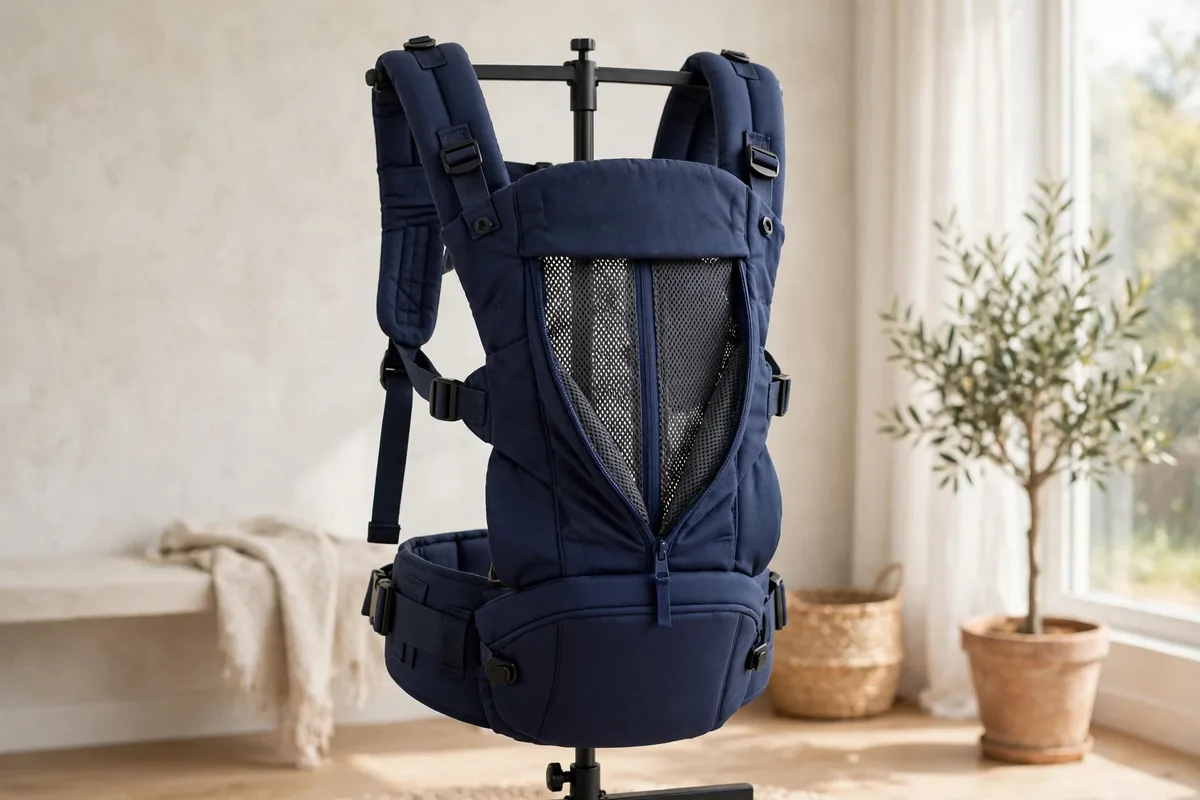
The Lillebaby Complete is the maximalist’s structured carrier: six carry positions (including a forward-facing and a hip carry), a temperature-regulating panel option in its All Seasons version — a zip-down mesh centre for summer over a covered panel for winter, the cleverest climate answer in this guide — and a lumbar support pad that wearers with back complaints single out in reviews with unusual gratitude. The carrier is IHDI-acknowledged and spans the newborn-to-toddler range (7–45 lb class, per the maker).
The two-temperature design is a genuinely Canadian feature: the same carrier serves a January walk (panel up, baby against the wearer’s warmth) and an August fair (panel down, air moving), and the All Seasons’ popularity in this country is the market agreeing. The trade is complexity — more zips, more settings, a manual worth actually reading — which this guide counts as a fair exchange for the versatility, stated openly.
Canadian availability is through baby retailers and online at a mid-premium price, undercutting the Ergobaby while out-featuring it. For the household that wants one carrier to answer every season and position, the Complete is the maximal answer, and its name is accurate advertising.
Ownership rewards the reader: families who learn the carrier’s full repertoire use all of it — the hip carry for the quick school run is the sleeper feature owners evangelize — while skimmers use a third of what they bought.
The All Seasons’ zip panel has a shoulder-season trick owners swear by: panel up but unzipped at the bottom corners vents just enough on a mild autumn day, the configuration the manual never drew and Canadian October demands — one carrier, three climates, no accessories.
Yay · Pros
- Six positions; zip-down mesh panel for summer
- Standout lumbar support
- IHDI-acknowledged; newborn to toddler
Hmm · Cons
- Feature richness means a longer manual
- Bulkier fold than the minimalist rivals
- Canadian pricing sits above U.S. listings
Best for: All-season versatility, including a hip seat position Skip if: You want minimalist simplicity — the Tula strips the idea down
4. BabyBjörn Carrier Harmony (3D Mesh) — Best premium design
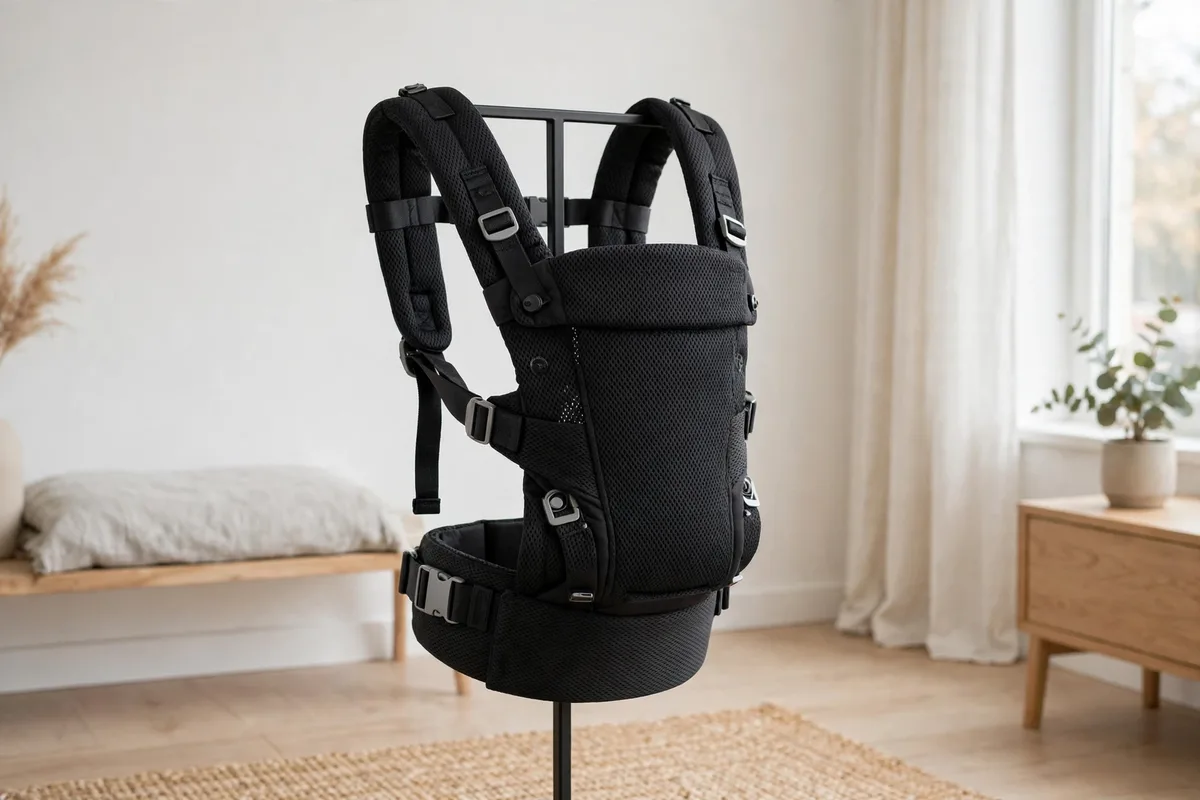
The Harmony is the Scandinavian design entry: a structured carrier in soft 3D mesh with a minimalist’s discipline — four positions, an IHDI-acknowledged ergonomic seat, and a fit system so intuitive that the first wearing takes minutes rather than a video tutorial. BabyBjörn’s decades in this category show in the details: the buckles are one-hand friendly, the mesh is genuinely breathable (the coolest structured carry here), and the whole object folds smaller than its rivals, which travel-heavy families notice weekly.
The honest limits: the Harmony’s weight ceiling (around 33 lb, per the maker) ends its service earlier than the 45 lb class, and its position set is curated rather than complete. What it returns is refinement — the carrier as a piece of Swedish industrial design, in fabrics and colours that coordinate with the stroller fleets of two continents’ city parents.
Canadian availability is through premium baby retail at the guide’s top price. For the urban household whose carrying is daily, public and style-visible — transit, cafés, travel — the Harmony is the carrier that behaves like the rest of their considered objects.
Ownership’s texture is ease: Harmony owners report the carrier being grabbed for the two-minute carries other carriers are skipped for, because putting it on is a five-second decision — and frequency of use is the metric that justifies any carrier’s price.
The Harmony’s compact fold changes travel math: it packs into a carry-on’s corner where bulkier carriers claim a quarter of the bag, which is why the design appears in so many airport photographs — the carrier that travels is the carrier that gets used abroad, not left home as too much kit.
Yay · Pros
- Coolest, most breathable structured carry
- Five-minute learning curve; one-hand buckles
- Folds compact for travel
Hmm · Cons
- Top-tier pricing
- Narrower position set than the maximalists
- Weight range tops out earlier than rivals’
Best for: Premium minimalism and cool carrying Skip if: You need the 45 lb toddler range — the Omni and Tula carry longer
5. Solly Baby Wrap (Modal Stretch Wrap) — Best for newborns

The Solly Wrap is the newborn specialist: a long, buttery stretch of lightweight modal fabric that the wearer ties into a custom-fit pouch, distributing a newborn’s weight across both shoulders and the back with a closeness no structured carrier matches — the fourth-trimester tool that soothes babies and frees hands through the weeks when the baby wants only to be held. Solly’s fabric is the category’s reference for softness, sourced and sewn to a standard the imitators chase, and the wrap’s weight rating (up to about 25 lb by the maker’s guidance) honestly bounds it to the first months, where it is unbeatable.
The learning curve is the price, and it is a week’s price: the tie becomes muscle memory, the videos are excellent, and the fit — being custom every time — holds the hip-healthy position and the airway rules as snugly as the wearer ties them, which is why the guide insists on the maker’s tutorials as part of the product. Two-caregiver households each get a perfect fit from the same wrap, a trick no sized carrier performs.
Canadian availability is online at the lowest price in this guide by a wide margin. For the newborn phase — as the only carrier for the budget-minded, or the first of two for everyone else — the Solly is the gentlest money in the nursery.
Ownership is keepsake-shaped: the wrap that carried the baby becomes the object parents keep when the outgrown gear is sold — a length of fabric with a biography, which no buckle has ever managed.
Practice the tie at the kitchen table, not over the baby: three rehearsals with a cushion build the muscle memory, and the first real wearing should happen at home, fed and calm on both sides — the wrap’s learning curve is a week of evenings, and it ends permanently.
Yay · Pros
- Custom fit every wearing; unmatched newborn closeness
- Lightweight breathable modal; packs to nothing
- Lowest price in the guide by far
Hmm · Cons
- Newborn-and-infancy tool — not a toddler carrier
- The tying learning curve is real for a week
- One position family (front, inward)
Best for: The newborn weeks — and the budget Skip if: You want one carrier to toddlerhood — start with the Omni or Tula
Hip-healthy positioning: the M-shape, explained without the jargon
A baby’s hips develop in their sockets, and the position a carrier holds them in is the whole safety story: the hip-healthy position is the ‘M’ or frog-leg shape — knees higher than the bottom, thighs supported out to the knee, hips spread naturally — because it seats the femoral head deep in the socket the way a pavlik harness does deliberately. The International Hip Dysplasia Institute acknowledges carriers that hold this position, and every structured pick in this guide carries that acknowledgment; narrow-based carriers that let the legs dangle straight down are the design the IHDI’s guidance exists to discourage, especially in the first six months.
The second position rule is airway, and it outranks comfort: a baby’s chin must never press to its chest, the face must stay visible and kissable (the wearer should be able to kiss the top of the head without unstrapping — the fitter’s oldest test), and fabric must never cover the nose and mouth. These are the TICKS-style rules every carrier’s manual repeats, and they are why newborn carrying in structured carriers specifies the infant insert or the maker’s newborn setting exactly, rather than approximately.
Weight ranges deserve the same literal reading: a carrier’s minimum weight is a safety floor, not a marketing suggestion — a 6 lb newborn in a carrier rated from 8 lb sits too low and too loose for airway safety, which is why the wrap (Solly) and the newborn-ready designs (Tula Free-to-Grow’s adjustable seat, Ergobaby’s current Omni with its newborn settings) earn their places here. Premature or low-birth-weight babies belong in carrying conversations with their clinician first; the guide’s conservatism on this point is deliberate.
The wearer’s body is the other half of the fit: a structured carrier transfers the load to the hips through its waist belt — worn snug on the hip bones, not the waist — and a carrier adjusted correctly lets a parent carry a 25 lb toddler with less strain than a badly adjusted one carrying a 12 lb infant. Lumbar support pads, crossable straps and padded shoulders (distributed differently by each pick here) are fit features, not comforts, and the right choice depends on the wearer’s frame and any back history — which is why two-caregiver households should both try the finalist before committing.
And the honest scope note: carriers are for carrying — they are not sleep devices, car seats, or bicycle equipment, and a baby who falls asleep in one should be moved to a flat sleep surface when practical, per the safe-sleep guidance both countries share. Used as designed, a good carrier is among the most evidence-friendly objects in the nursery: it regulates, it soothes, it frees the hands that care. Buy the fit, wear it by the rules, and it disappears into the parenting it enables.
Baby carrier questions, answered
How do I know a carrier is hip-healthy?
Look for the M-position: baby’s knees higher than their bottom, thighs supported to the knee, hips spread naturally, with the carrier acknowledged by the International Hip Dysplasia Institute (IHDI). All five picks here meet that standard. Add the airway rules: face visible, chin off the chest, close enough to kiss. Narrow carriers that dangle the legs straight down are the ones to avoid, especially under six months.
Can I use a carrier with a newborn?
Yes, in a carrier rated for newborns and used exactly as its manual specifies: the Ergobaby Omni line and Tula Free-to-Grow adjust down to newborn size (7 lb class minimums — check your model), while wraps like the Solly are the traditional newborn favourite for their custom fit. The rules are strictest here: minimum weight respected, airway visible, chin off chest. Premature or low-birth-weight babies need their clinician’s guidance first.
When can my baby face outward?
When the baby has the head and neck control to manage the position and the carrier’s maker allows it — commonly around 5–6 months for front outward-facing in the Omni-class carriers. Keep outward sessions short at first (the world is stimulating), watch for the baby slumping (turn them back in), and never let a baby sleep facing out. Back carrying comes later still, per each maker’s milestones.
How long can a baby stay in a carrier?
In most structured carriers, about an hour at a time for young infants, stretching as they grow — with position checks (airway, hips, temperature) at every stop. Babies overheat against a wearer’s body faster than adults expect, so dress the baby for the shared warmth, and in summer choose the mesh-panel versions several picks here offer. If the baby is fussy, hot or slumped, the session is over regardless of the clock.
How do I wash a baby carrier?
Follow the maker’s label: most carriers machine wash cold on gentle and hang dry (remove any foam or inserts first, if the design has them). Wash before first use and whenever the straps get the inevitable milk-and-drool treatment — a clean carrier’s straps adjust more smoothly, which is a fit feature as much as a hygiene one. Spot-clean between washes to stretch the intervals.
Wrap or structured carrier — which is better?
A wrap (like the Solly) gives a custom, womb-like fit that newborns love and costs the least, but it is one baby, one position family, and a learning curve of fabric. A structured carrier costs more and carries from newborn (in the adjustable models) to toddler, in more positions, with load-bearing support for the wearer — and it is the one most households use daily for two years. Many families own both: wrap for the fourth trimester, structured for everything after.
One last fit ritual ties the whole guide together: the two-minute home test. Strap the carrier on, load the baby, and walk the house — stairs, a sit-down, a reach to a high shelf. A carrier that holds its fit and its airway through ordinary life in miniature will hold it on the street; a carrier that needs adjusting every third doorway is telling you, early and cheaply, to try the next size setting or the next pick in this guide.
The short version
Buy the Ergobaby Omni for the one-carrier answer, the Tula Free-to-Grow for the most precise fit, the Lillebaby for all-season versatility, the BabyBjörn Harmony for breathable premium design, and the Solly for the newborn weeks and the budget. Whichever you choose: M-position hips, visible airway, chin off chest — and the waist belt snug on your hip bones.
Last updated: November 18, 2026. We refresh this guide each season and whenever a pick is replaced by a better one.