The best pillows are not the fluffiest, the firmest or the most expensive — they are the ones whose height matches the way you actually sleep. A pillow has one mechanical job: fill the gap between your head and the mattress so your neck stays in line with your spine until morning. Side sleepers have the widest gap to fill, which is why this guide leads with them; back and stomach sleepers need less height, and too much pillow is its own problem. Get the loft right and most “bad pillow” complaints — the stiff neck, the folded-over double pillow, the 3 a.m. fluffing — quietly disappear.
So the five picks below are organised by fit, not by marketing. One is adjustable, so you set the height yourself; two come in a choice of fixed lofts; one is a solid block of slow-response foam; and one is a budget two-pack that treats pillows as the consumables they honestly are. If your mattress itself is part of the comfort problem, our guide to the best mattress toppers in Canada and the USA is the companion read — a topper changes how far your shoulder sinks, and that changes the pillow height you need.
One promise before the picks: every number below is a manufacturer figure or an independent tester’s measurement, labelled as such, and every trial and warranty is described the way the maker actually offers it. this guide sticks to loft, fill, cover and care — the four things that decide whether a pillow still works in month six.
Disclosure: CookSmartPicks is reader-supported. When you buy through links on this page, we may earn an Amazon commission at no extra cost to you. Prices and availability change often — check the current price on Amazon before you decide.
The short answer
Start with the Coop Home Goods The Original if you want to set your own loft, the Purple Harmony if you sleep hot, and the Tempur-Pedic TEMPUR-Cloud if you want solid memory foam that holds its shape all night.
How we chose these pillows
CookSmartPicks is a research-based guide; we do not claim hands-on testing we have not done. For this list we compared manufacturer specifications — fill composition, stated loft, cover materials and care instructions — against independent lab and panel testing from outlets such as Good Housekeeping, Wirecutter, Tom’s Guide, TechRadar and Sleepopolis. Where a maker’s claim and a tester’s finding disagree — a pillow sold as “extra soft” that testers rate medium, say — the review below sides with the tester and says so.
Three filters shaped the final five. The first is loft honesty: we favoured pillows whose height is either adjustable, offered in clearly separated loft options, or measured by independent testers, because a single unlabelled “medium” is where most bad purchases start. The second is foam and fibre accountability — CertiPUR-US or GREENGUARD certification for foams, OEKO-TEX for textiles. The third is care reality: what actually goes in the wash, and what quietly cannot.
The lineup at a glance
| Product | Best for | Why it stands out |
|---|---|---|
| Coop Home Goods The Original Adjustable Pillow | Best overall | Cross-cut memory foam and microfibre fill you add or remove yourself, with a spare bag of fill in the box |
| Purple Harmony Pillow | Best cooling | A ventilated Talalay latex core wrapped in Purple’s honeycomb GelFlex Grid — airflow you can see through |
| Tempur-Pedic TEMPUR-Cloud Pillow | Best memory foam | One solid piece of TEMPUR Material — the deepest, slowest contouring in this guide, and nothing to fluff, ever |
| Beckham Hotel Collection Gel Pillow (2-Pack) | Best budget | Two plush gel-fibre pillows for less than most singles — and the whole pillow machine-washes and tumble-dries |
| Saatva Latex Pillow | Best latex support | A shredded natural Talalay latex core inside a plush down-like outer pillow — bounce underneath, softness on top |
1. Coop Home Goods The Original Adjustable Pillow — Best overall
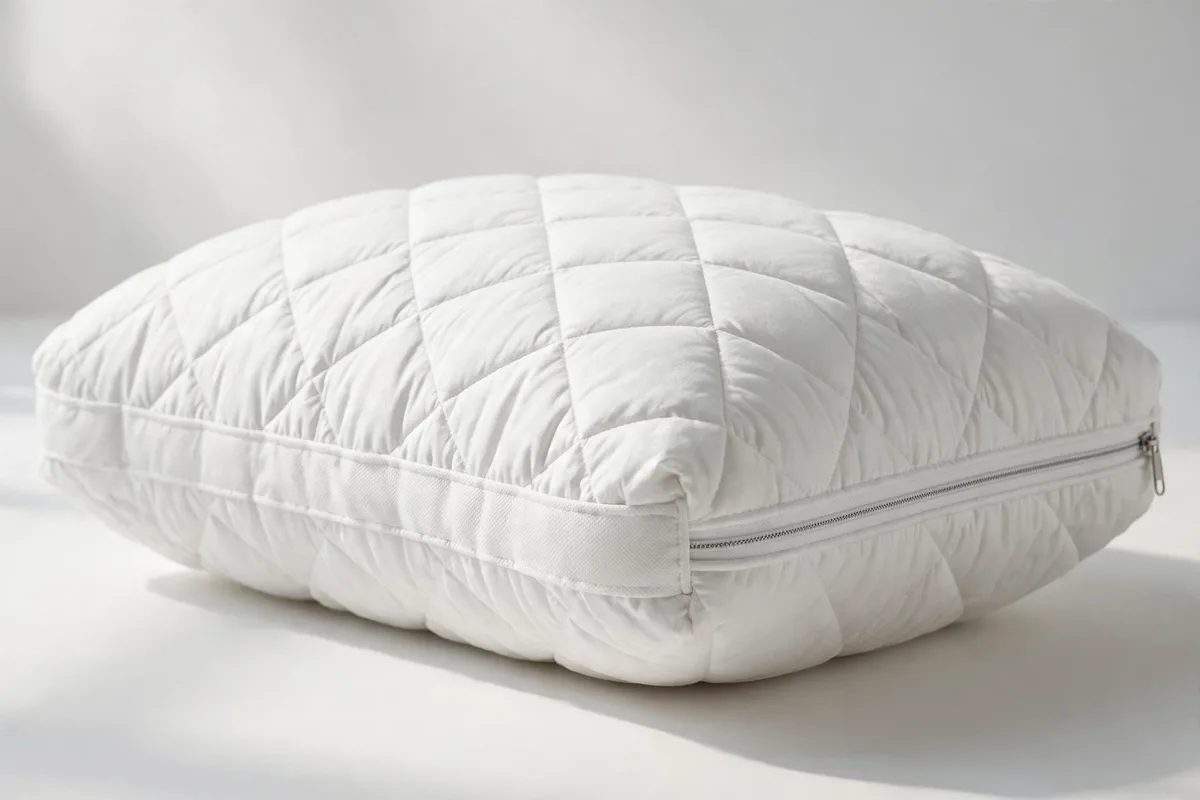
The Original is built around the one idea this whole category keeps circling: nobody’s shoulder width is standard, so the pillow should not be either. Inside the zippered cover is Coop’s blend of cross-cut memory foam and microfibre, and the fill level is yours to set. It arrives generously filled, with an extra bag of fill included, per the manufacturer, so the first move for most back and stomach sleepers is actually taking some out.
Plan on a week, not a night: sleep, notice whether your chin is tipping down (too much fill) or your head is rolling toward the mattress (too little), adjust by a handful, and repeat. Independent testers converge on the same story — Good Housekeeping’s lab named it a best overall pick after at-home trials across sleep positions, Wirecutter credits it with holding its shape better than rival shredded pillows, and Sleep Foundation notes the same trial-and-error settling-in. The payoff is a pillow each sleeper in the house can set correctly — and re-set when the mattress changes.
The foam is CertiPUR-US certified and the pillow carries GREENGUARD Gold certification, per Coop — the two labels worth looking for in this category. The cover is a soft polyester and viscose-rayon knit the brand calls Lulltra, it unzips for washing, and Coop backs the pillow with a long home trial and a multi-year warranty, both unusual at this level. The honest debits: it sleeps warmer than latex or fibre, and a fresh pillow can smell of foam for a day or two — air it before the first night.
Yay · Pros
- Loft and firmness are yours to set — the only pick here that fits every sleep position
- Extra bag of fill included, per the manufacturer, so you can add height back later
- CertiPUR-US foam and GREENGUARD Gold certification, per Coop
- Holds its shape better than rival shredded pillows in Wirecutter’s testing
Hmm · Cons
- Dialling in the fill takes most people several nights of small adjustments
- Memory foam blend sleeps warmer than the latex and knit picks below
- New-pillow foam odour reported by owners for the first day or two
Best for: combination sleepers, couples with different builds sharing a pillow model, and anyone who has returned a fixed pillow for being the wrong height. Skip if: you want a pillow that is perfect out of the bag with zero fiddling — choose a fixed loft below and spend your patience on picking the right height instead.
2. Purple Harmony Pillow — Best cooling
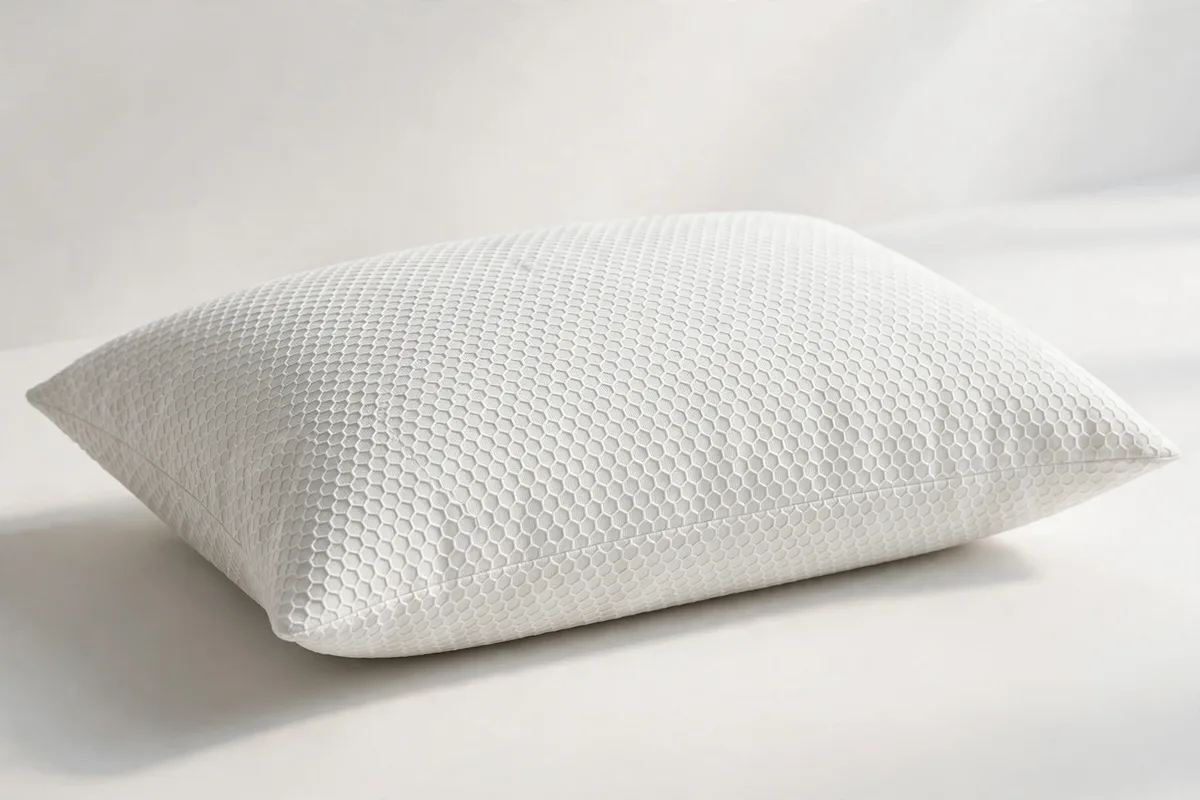
The Harmony takes the opposite route to cooling from gel-infused foam: instead of chemistry, it uses holes. A core of ventilated Talalay latex is wrapped 360 degrees in Purple’s GelFlex Grid, a honeycomb of flexible polymer with open channels running through it, inside a moisture-wicking mesh cover — all per Purple’s published construction. Air moves through the grid rather than around a solid block, which is why independent reviewers keep landing on the same verdict: this is the pillow in the category that genuinely sleeps cool, and it feels cool to the touch when you first lie down.
Loft is a purchase decision here, not an adjustment. Purple sells the Harmony in three heights — Low at 5.5 inches, Medium at 6.5 inches and Tall at 7.5 inches, per the manufacturer — and its own guidance maps Low to back and stomach sleepers, Medium to most side and combination sleepers, and Tall to broad-shouldered side sleepers. Read that mapping seriously: the feel is buoyant and medium, and there is no slow sink to rescue a wrong height choice. Purple offers a home trial, so a loft miss is an exchange rather than a sunk cost — confirm the current terms at checkout, as policies change.
Care is the trade for all that structure. The mesh cover comes off and washes; the grid-and-latex core is spot-clean only, and it should never go through a machine. It is also heavier than a fibre pillow and priced at a premium: you are paying for the grid, a genuinely different material, wrapped around a latex core comparable to good standalone latex pillows. For hot sleepers who have already tried “cooling gel” foam and found it wanting, that difference is the point.
Yay · Pros
- Open honeycomb grid and ventilated latex — the strongest real airflow design in this guide
- Three clearly separated lofts (5.5, 6.5 and 7.5 inches, manufacturer figures)
- Instant, buoyant response — no waiting for foam to soften or re-inflate
- Mesh cover removes and machine-washes
Hmm · Cons
- Loft is fixed at purchase — a wrong height means an exchange, not an adjustment
- Core and grid are spot-clean only; only the cover machine-washes
- Premium price for a single pillow, and heavier than fibre rivals
Best for: hot sleepers who have been disappointed by gel-foam “cooling” claims, and side sleepers who like a responsive, bouncy feel. Skip if: you are unsure of your loft and unwilling to use the trial exchange — the adjustable Coop above removes the guesswork entirely.
3. Tempur-Pedic TEMPUR-Cloud Pillow — Best memory foam
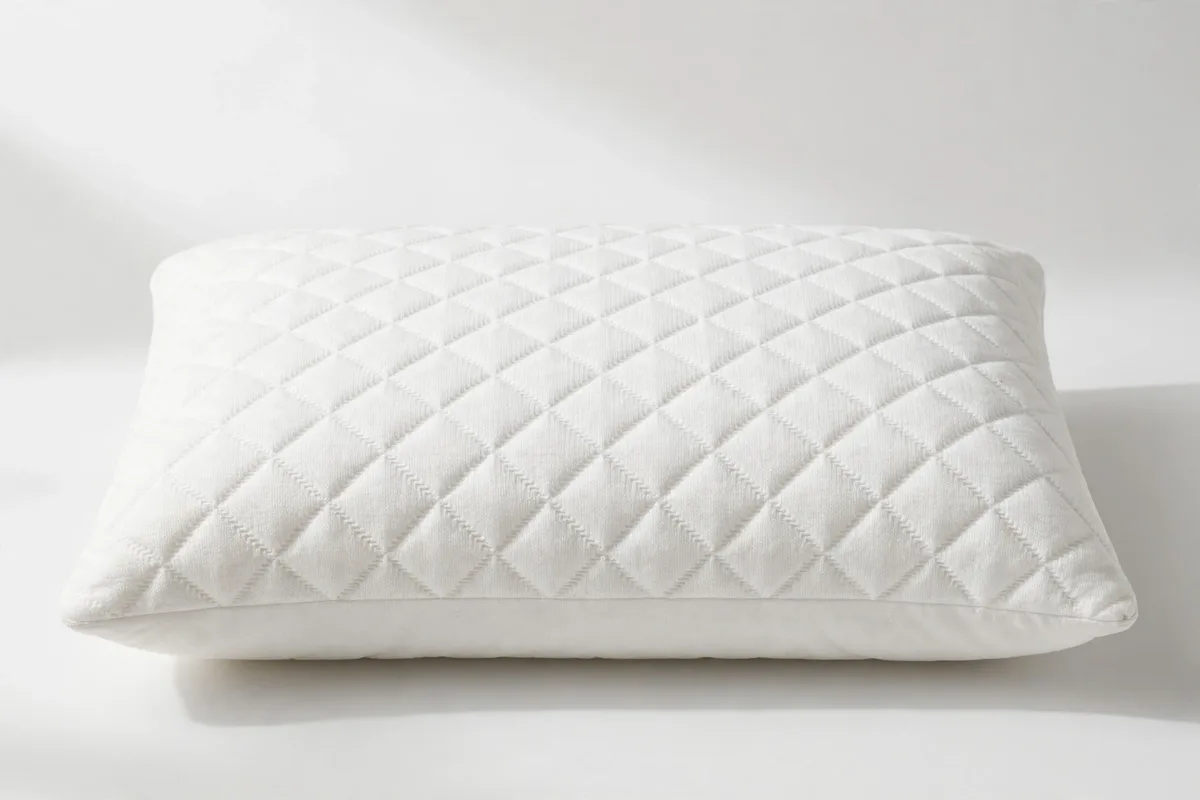
The TEMPUR-Cloud is the traditionalist’s memory foam pillow: a single formed piece of Tempur-Pedic’s proprietary TEMPUR Material rather than shredded fill, so there is nothing to redistribute, bunch or leak. The foam responds to heat and pressure slowly and completely — the classic deep contouring that made the brand famous, with the head settling in and staying put. If shredded pillows feel like sleeping on gravel, or fibre pillows collapse by 2 a.m., a solid core is the direct answer.
Read the label against the testers on one point: Tempur-Pedic markets this pillow as extra soft, while independent testers consistently rate the feel as medium — supportive and dense under the softness. Its loft measures around 5 inches in tester hands, a medium height that suits back sleepers best; average-framed side sleepers manage, but broad-shouldered side sleepers will likely find it short of the height they need, and full-time stomach sleepers should look lower. That is not a flaw — it is a mid-loft, medium-feel pillow being honest about its lane once you read past the box copy.
Ownership is simple and a little strict. The quilted knit cover unzips and machine-washes; the TEMPUR core must never be washed or soaked — water damages the material’s structure, per the maker’s care guidance — so a protector under the pillowcase is cheap insurance. The sharpest caveat is policy: Tempur-Pedic sells its pillows without a sleep trial, per its published return terms, so the loft-and-feel match has to be right at purchase — buy it because the medium-loft, slow-sink description is exactly what you want, not to experiment.
Yay · Pros
- Solid TEMPUR Material core — deep, even contouring with zero fill migration
- Holds its loft all night; dense foam outlasts shredded and fibre fills
- Removable, machine-washable quilted cover
- Backed by Tempur-Pedic’s pillow warranty, per the maker
Hmm · Cons
- No sleep trial — returns are limited to damaged or defective items, per the maker’s policy
- Foam core can never be washed; a protector is effectively mandatory
- Medium loft is short for broad-shouldered side sleepers, and solid foam sleeps warm
Best for: back sleepers and memory-foam loyalists who want the slow, deep Tempur feel in its simplest, most durable form. Skip if: you sleep hot, you are a broad side sleeper, or you need a trial period to feel safe buying — the Harmony and Coop cover those cases.
4. Beckham Hotel Collection Gel Pillow (2-Pack) — Best budget
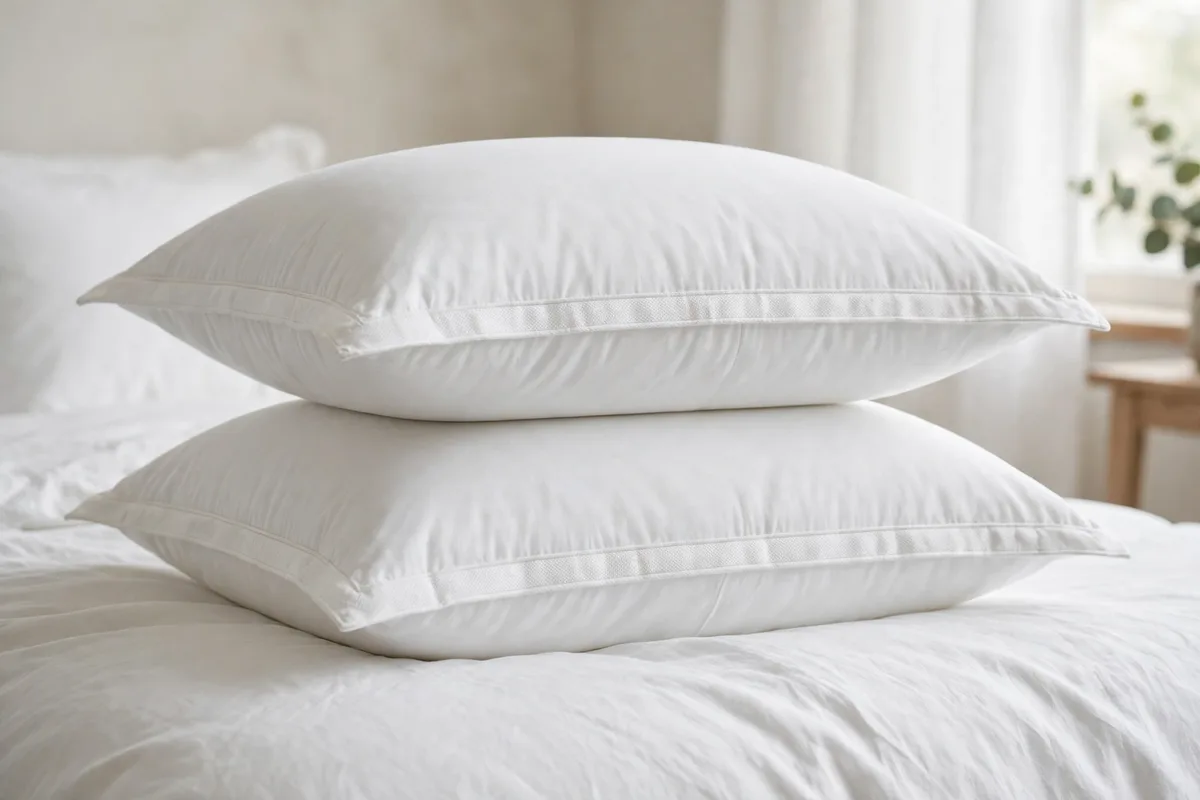
The Beckham set is the budget pick that keeps winning value verdicts from independent testers — Good Housekeeping, Tom’s Guide and Yahoo have all landed on it — because it understands its job: a soft, plump, hotel-style pillow at a two-for-one price, sold in queen and king sizes. The fill is a gel-fibre down alternative inside a cotton cover, and the brand’s no-shift construction claim holds up reasonably in testing: TechRadar’s panel slept on a pair for three weeks and found the pillows kept their shape with little fluffing, including after a wash-and-dry cycle.
The pillows arrive plump and high — around 8 inches of uncompressed loft in lab measurements — but the soft fibre compresses a lot under a head, which is why testers split by position: side sleepers and larger-framed back sleepers tend to love the squashy support, while lighter back sleepers and stomach sleepers can find the starting height pushes the neck up before it settles. The pillows are OEKO-TEX Standard 100 certified, per the brand, and hypoallergenic by construction — no down, no foam, nothing to off-gas.
The ownership maths is the real argument. The whole pillow — fill, cover and all — goes in the washer and the dryer, the only pick here that allows it, which makes these the easiest pillows in the guide to keep genuinely clean. Fibre fill does flatten over a year or two of nightly use; at this price the honest strategy is to treat them as consumables, rotate the pair, and replace without pain. There is no manufacturer warranty to speak of, so you are buying on the testing record and Amazon’s standard returns window — for guest rooms, kids’ beds and a first apartment, that trade is exactly right.
Yay · Pros
- Two pillows for less than most single premium pillows — the value pick across independent roundups
- Whole pillow machine-washes and tumble-dries — the easiest care in this guide
- OEKO-TEX Standard 100 certified and hypoallergenic down-alternative fill, per the brand
- Plump hotel feel that held its shape in TechRadar’s panel test
Hmm · Cons
- One fixed, soft loft — no adjustment if it does not suit your position
- Fibre fill flattens over time; plan on replacement sooner than foam or latex
- No meaningful manufacturer warranty, and the “cooling” gel claim is mild in tester hands
Best for: guest rooms, kids’ and dorm beds, first apartments, and anyone refreshing every pillow in the house at once. Skip if: you need firm, structured neck support or a pillow that lasts five years — spend the difference on the Coop or the Saatva.
5. Saatva Latex Pillow — Best latex support
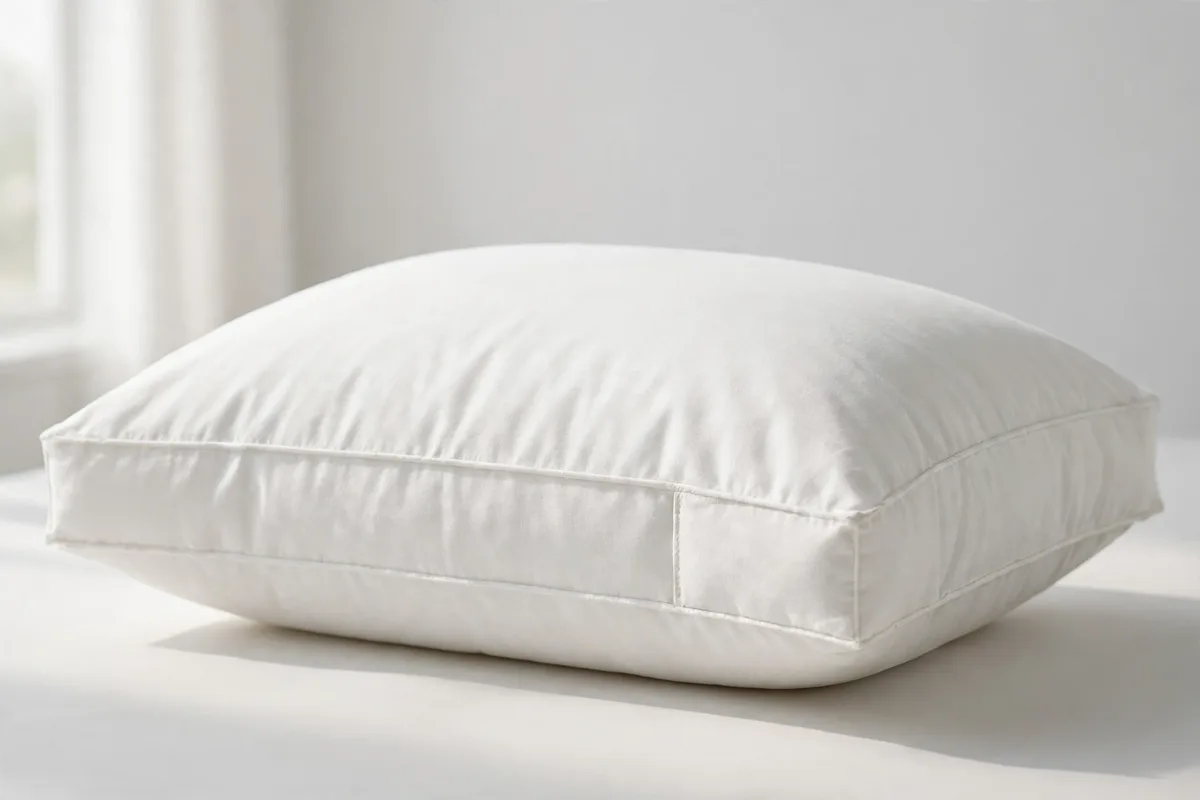
Saatva’s design is a pillow inside a pillow, and each layer has a job. The inner core is shredded natural Talalay latex — springy, durable and breathable — and it sits inside an outer pillow filled with down-like microdenier fibres, all wrapped in an organic cotton cover, per Saatva’s published construction. The result answers the two standard latex complaints at once: solid latex can feel unyielding, and pure down-alternative goes flat. Here the surface gives like a hotel pillow while the latex underneath keeps answering back, which is why Tom’s Guide’s testers scored it at the top of their pillow testing.
Loft comes in two fixed heights chosen at purchase: Standard Loft at roughly 4 to 5 inches, which Saatva aims at back and stomach sleepers, and High Loft at roughly 6 to 7 inches for side and combination sleepers — the maker’s own figures and guidance. There is one honest wrinkle worth knowing: you can remove the inner latex pillow entirely to drop the height and soften the feel, per Saatva, which gives the Standard Loft a small second life as a very low pillow. What you cannot do is fine-tune by the handful like the Coop — the choice is made at checkout, softened by a home trial under Saatva’s bedding return policy.
Care is better than most premium pillows: unzip the cover, set the latex core aside, and both the cover and the outer fibre layer machine-wash, per Saatva’s instructions — only the latex itself stays out of the machine, spot-clean only. The brand also notes its latex is washed to remove allergy-causing proteins and never touches skin directly, though anyone with a serious latex allergy should still make their own call. Saatva suggests replacing the pillow after roughly three years, which matches latex’s real-world lifespan better than the “lasts forever” framing elsewhere. It is the premium pick, priced like one: the money buys natural materials, real washability and support that does not fade by February.
Yay · Pros
- Shredded natural Talalay latex core — responsive support that outlasts fibre and most foams
- Two clear lofts: roughly 4–5 inches or 6–7 inches, per the manufacturer
- Cover and outer layer machine-wash; only the latex core is spot-clean
- GOTS-certified organic cotton cover, per the maker
Hmm · Cons
- Premium price — the most expensive route in this guide
- Loft chosen at purchase; only coarse adjustment by removing the inner pillow
- Heavier than fibre pillows, and not for anyone avoiding latex entirely
Best for: side and combination sleepers who want natural latex support with a soft, hotel-style surface — and the budget to do it once, properly. Skip if: you want to fine-tune height after purchase, or latex is off your list — the Coop adjusts, and the Beckham pair is fibre-only.
Loft is a measurement, not a vibe: matching pillow height to your sleep position
Loft means the height of the pillow with your head actually on it — not the puffed-up number it shows on a shelf. Fibre pillows can present at 8 inches and compress to half of it, while a 5-inch solid foam pillow barely compresses at all. Where this guide quotes a loft, it is the maker’s figure for a height-holding foam or latex pillow, or a tester’s measurement; for fibre, the compressed height under your head is the number that matters.
The target heights by position are consistent across sleep-medicine guidance and maker sizing charts alike. Side sleepers need the most — roughly 5 to 7 inches of working loft — because the pillow must fill the full ear-to-shoulder distance. Back sleepers sit in the middle, around 4 to 5 inches: enough to support the neck’s curve without pushing the chin toward the chest. Stomach sleepers need the least, 3 inches or under, and some do best with no pillow at all; a tall pillow in that position cranks the neck sideways for hours. Saatva’s published sizing guidance lands in exactly these bands, which is a useful cross-check that the ranges are industry consensus rather than one brand’s marketing.
You can measure your own side-sleeping gap in two minutes. Stand with your shoulder lightly against a wall and measure from the side of your neck to the wall — that distance, minus a little for how far your shoulder sinks into your mattress, is the working loft you need. The mattress deduction is the step most guides skip: on a plush pillow-top your shoulder sinks and the gap shrinks; on a firm mattress it stays wide. It is also why changing your mattress can make a favourite pillow suddenly wrong, and why the best mattress toppers in Canada and the USA and your pillow should be thought of as one system.
Finally, treat the first week with any new pillow as calibration, whatever you buy. Necks adapt slowly, and a correct pillow can feel strange for two or three nights after years of a wrong one. Adjustable fills exist precisely for this window — add or remove a handful at a time rather than declaring victory or defeat on night one. Still stiff after a fair week at the right height? The problem may be the mattress or the position itself — and a quieter room helps more than a fourth pillow, which is where the best white noise machines in Canada and the USA earn their place.
Foam labels, certifications and the wash cycle: what pillow ownership actually looks like
Two certifications do real work in this category, and both appear in the picks above. CertiPUR-US is a programme for flexible polyurethane foam: certified foams are made without certain ozone depleters, heavy metals and prohibited phthalates, and are tested for emissions and durability — it is a floor of decency for foam, not a luxury badge. GREENGUARD Gold, which the Coop carries, tests the finished product for low chemical emissions against stricter limits intended for sensitive environments. For textiles, OEKO-TEX Standard 100 — on the Beckham pillows — tests every component of the fabric article against a list of harmful substances. None guarantees comfort; all beat a listing with no third-party testing at all.
Washability is where pillow marketing and pillow reality part company, so here is the honest map for this guide’s five. Exactly one pick — the Beckham — can be machine-washed whole, fill and all, and tumble-dried. Two picks wash in layers: the Saatva’s cover and outer fibre pillow wash while its latex core stays out, and the Coop’s cover unzips for washing while the shredded fill is best aired and fluffed rather than soaked. Two picks are cover-only with strict cores: the Purple Harmony’s grid-and-latex core is spot-clean only, and the TEMPUR-Cloud’s foam must never be washed at all. A washable protector under the pillowcase is the equaliser — it turns every one of these into a pillow whose sleeping surface you can launder weekly.
Trial periods are the last honesty item, and they vary more than the pillows do. The direct-to-consumer brands here — Coop, Purple and Saatva — sell with home trials of varying lengths and return terms that change over time; read the current policy at checkout rather than trusting any roundup’s number, including ours. Tempur-Pedic, at the other pole, sells pillows without a sleep trial at all, per its published terms. If your loft or fill preference is still a guess, the trial is worth more than a small price difference — and the same logic applies to the rest of the bed, from the best heated blankets in Canada and the USA you pull over yourself to the topper under your shoulders.
Pillow questions, answered
What loft pillow do side sleepers actually need?
Most side sleepers need roughly 5 to 7 inches of working loft — the height with your head on the pillow, not on the shelf. Measure from the side of your neck to a wall your shoulder rests against, then subtract a little for how far your shoulder sinks into your mattress. Broad shoulders and a firm mattress push you toward the top of the range; a plush mattress pulls you down it. In this guide, the Coop adjusted high, the Purple Harmony Tall and the Saatva High Loft are the side-sleeper heights.
How long does it take to get an adjustable pillow like the Coop right?
Plan on about a week of small changes rather than one perfect first night. Sleep two nights, then adjust by a handful of fill at a time: chin tipping toward your chest means too much fill for back sleeping; your head rolling down toward the mattress means too little for side sleeping. Independent testers flag the same settling-in period; the payoff is a pillow set to your measurements instead of a factory’s guess.
Can you machine-wash a memory foam pillow?
Not the foam itself — water breaks down memory foam’s structure, and makers such as Tempur-Pedic state plainly that the core must never be washed. What washes is the removable cover, which is why a washable pillow protector matters so much with foam. Shredded foam pillows sit in between: covers wash, fill is better aired and fluffed. The only pick in this guide that machine-washes whole is the fibre-filled Beckham, which is a genuine argument for fibre in guest rooms and kids’ beds.
How often should you replace a pillow?
Sooner than most people do. Fibre pillows typically lose useful support in one to two years, quality foam and latex run longer — Saatva suggests roughly three years for its latex pillow — and hygiene guidance treats pillows as short-lived bedding because of what accumulates in them. Use the fold test: fold the pillow in half and let go. If it does not spring back open on its own, its support life is finished regardless of age.
Do cooling pillows actually work, or is it marketing?
The difference is construction. Gel infusions and “cool-touch” covers change how a pillow feels for the first minutes; testers repeatedly find the effect fades as the material warms to body temperature — TechRadar’s panel found exactly that with gel-fibre pillows. Designs that move air keep working all night: an open honeycomb grid over ventilated latex, like the Purple Harmony, or breathable natural latex like the Saatva. If you sleep genuinely hot, buy airflow, not adjectives.
Why does my neck still hurt with a new, well-reviewed pillow?
Usually because the loft is wrong for your position and mattress, not because the pillow is bad. A top-rated 6-inch pillow will hurt a stomach sleeper, and a soft 4-inch pillow will hurt a broad side sleeper — reviews average across bodies that are not yours. Measure your shoulder gap, check the pillow’s working loft against it, and give a correctly sized pillow a full week before judging. Persistent pain is a reason to talk to a clinician, not to buy a sixth pillow.
The short version
Measure first, then buy: side sleepers need roughly 5 to 7 inches of working loft, back sleepers 4 to 5, stomach sleepers 3 or less. The Coop Home Goods The Original removes the guesswork with fill you tune over a week; the Purple Harmony is the cooling pick, with real airflow through its grid and latex; the Tempur-Pedic TEMPUR-Cloud is the solid memory-foam classic — bought knowingly, since it comes without a trial. The Beckham Hotel Collection 2-pack covers guests and budgets with pillows that wash whole, and the Saatva Latex Pillow is the premium natural-latex build in two honest lofts. Still sorting the rest of the bed? The best mattress toppers in Canada and the USA and the best heated blankets in Canada and the USA complete the same fit-first logic.
Sources
This guide is research-based: we compared manufacturer specifications with the independent testing and reporting below, cross-checked against verified owner reports in Canada and the USA. Specs are the manufacturers’ published figures; where testers disagree with a maker’s claim, the review says so.
- Purple — Pillow Comparison Guide — Manufacturer source for the Harmony’s GelFlex Grid and Talalay latex construction, its three lofts and Purple’s trial and warranty terms.
- Saatva — The Saatva Latex Pillow — Manufacturer source for the two loft heights, shredded Talalay core, washable layers and Saatva’s own loft-by-position guidance.
- Sleepopolis — TEMPUR-Cloud Pillow Review — Independent hands-on testing: medium feel against the ‘extra soft’ label, roughly 5-inch loft, washable cover only, and no sleep trial.
- TechRadar — Beckham Hotel Collection Gel Pillow Review — Three-week panel test of the Beckham pair: shape retention after washing, position-by-position fit, and mild real-world cooling.
- SimplyTheBest — Best Pillow 2026 — Synthesis of Good Housekeeping, Wirecutter, Tom’s Guide and Sleep Foundation testing behind the Coop Original and Beckham verdicts.
Last updated: November 20, 2026. We refresh this guide each season and whenever a pick is replaced by a better one.