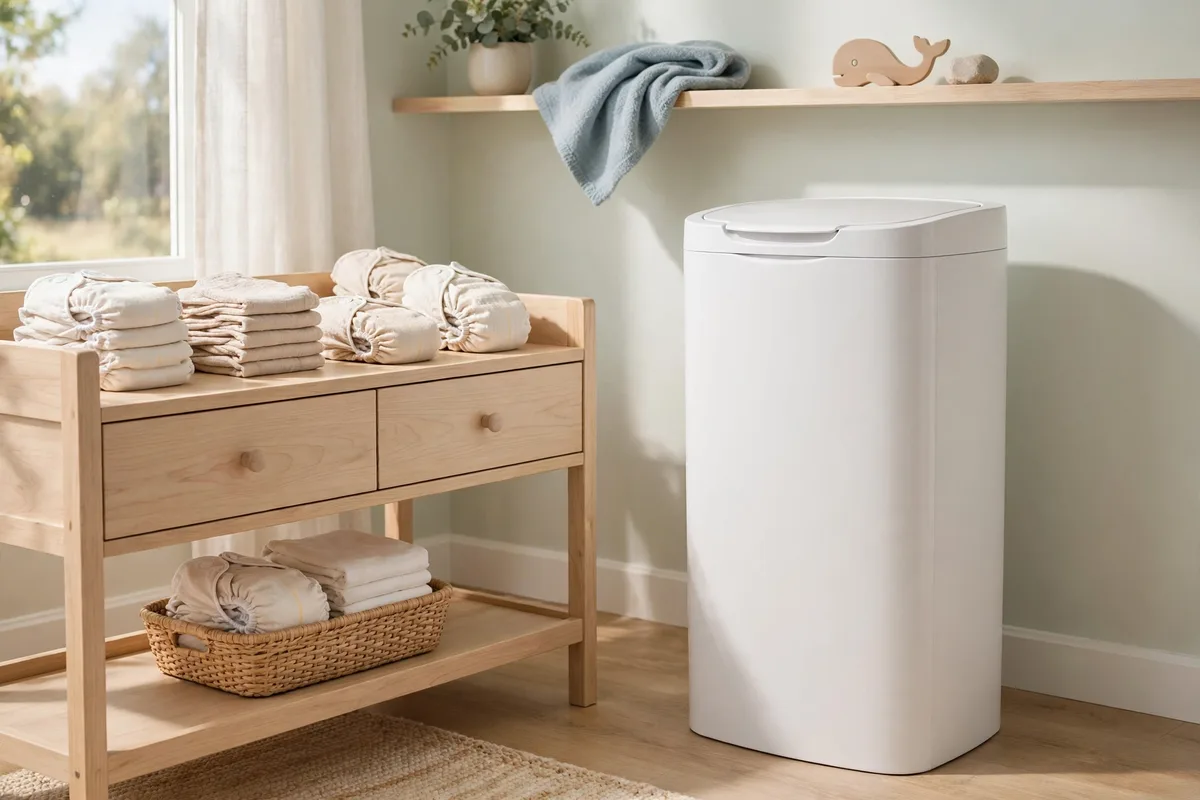
The best diaper pail is not really bought on the day you bring it home. It is bought every week after that, in whatever the pail eats. Stand at a changing table at 3 a.m., baby in one arm and a diaper that could clear a room in the other, and the pail in front of you is either a simple can that takes the same tall kitchen bags already under your sink, or a sealed system that only works with its own refill rings, forever, for as long as diapers last. Both designs can control odour. They just bill you very differently for it.
That split runs through everything below. On one side sit the any-bag pails — the steel Ubbi and Bubula — whose odour strategy is material and a tight lid: steel does not absorb smells the way porous plastic does, so the pail itself never becomes part of the problem. On the other side sit the systems — Diaper Genie, Munchkin and Dekor — which wrap, clamp, twist or trap each load inside proprietary film and trust the seal more than the shell. Neither camp is wrong; they suit different nurseries and different feelings about refill lock-in.
So the five picks below are compared on the things that decide year two, not day one: what the pail eats and how much of it, what the body is made of and whether it holds smells itself, how it opens when one hand is all you have, and how its stated capacity — always quoted in tiny newborn diapers — shrinks as your baby grows. If the rest of the nursery is still coming together, our guide to the best baby monitors in Canada and the USA is the natural companion read.
Disclosure: CookSmartPicks is reader-supported. When you buy through links on this page, we may earn an Amazon commission at no extra cost to you. Prices and availability change often — check the current price on Amazon before you decide.
The short answer
Short on time? The Ubbi Steel is the best diaper pail for most nurseries because it runs on ordinary kitchen bags and its steel body never absorbs odour, the Diaper Genie Complete is the system most parents already know, and the Munchkin STEP seals hardest of all at the pedal.
How we chose these diaper pails
CookSmartPicks is a research-based guide; we do not claim hands-on testing we have not done. For this list we compared manufacturer specifications — body material, seal design, stated capacity by diaper size and, above all, the bag system — against independent hands-on testing and long-term owner reports from Canada and the USA. Every capacity figure below is the maker’s own and is labelled as such, because a pail’s “holds 55 diapers” always means 55 of the smallest newborn diapers, rolled tight, in a way no parent at 3 a.m. rolls one.
Two filters did most of the cutting. The first was refill honesty: we worked out, from each maker’s published diapers-per-refill figures, how much proprietary film a system burns through in a year, and set that against a pail that takes a supermarket kitchen bag. The second was tester disagreement: where independent testing contradicted a brand’s odour claims — and it did, in both directions — the review says so plainly rather than repeating the marketing. Pails whose refills are hard to find in Canada were cut.
The lineup at a glance
| Product | Best for | Why it stands out |
|---|---|---|
| Ubbi Steel Diaper Pail | Best overall | Powder-coated steel body that takes any tall kitchen bag — no proprietary refills, ever |
| Diaper Genie Complete | Best known system | Double Air-Tite clamps, a carbon filter and the refill every drugstore stocks |
| Munchkin STEP Diaper Pail | Best foot-pedal | Patented self-sealing system twists the liner shut every time the lid closes |
| Dekor Plus Hands-Free Diaper Pail | Best refill value | One continuous liner — cut off only what you used and waste nothing |
| Bubula Steel Diaper Pail | Best premium steel | Tall steel-and-aluminium body with an airtight, rubber-sealed lid |
1. Ubbi Steel Diaper Pail — Best overall
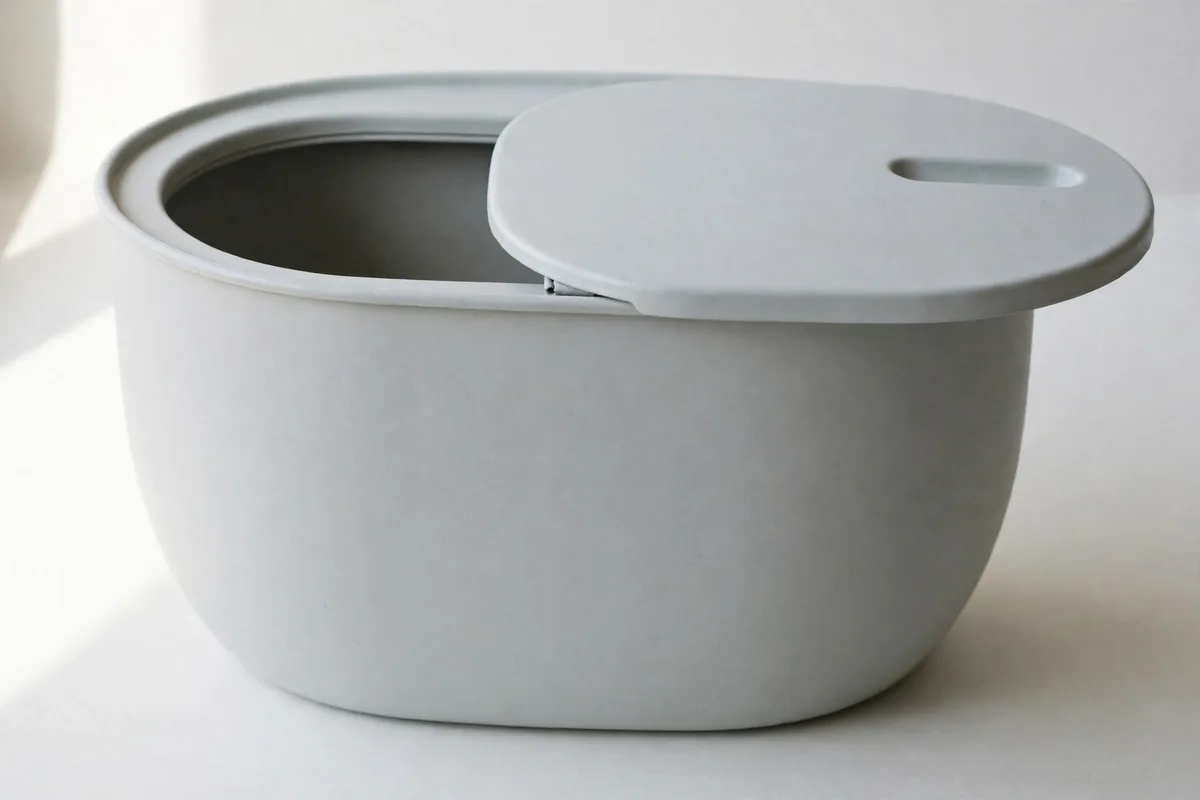
The Ubbi is built around the simplest idea in this category: make the can out of something smell cannot soak into. The body is powder-coated steel with rubber seals around the rim, and Ubbi’s reasoning is simple — plastic is porous and acts like a sponge for odour, while steel blocks it, so the pail never starts to smell of its contents even when empty. A sliding lid does the rest, chosen, per Ubbi, because it disturbs the air inside less than a flip lid when it opens. There are no filters, cartridges or batteries, and nothing to assemble: it works out of the box with any tall 13-gallon kitchen bag, or a reusable cloth liner.
Capacity is where Ubbi is unusually honest. The headline figure is up to 55 newborn diapers, but the maker publishes the whole slide: roughly 50 size-1, 41 size-2, 38 size-3, 31 size-4, 23 size-5 and 20 pull-ups. Read that table and you understand every pail in this guide — the newborn number is always the best case. A childproof lock guards the sliding lid, and the slim oval footprint — about 8.4 by 11.4 inches at the base, per Ubbi — tucks beside a changing table.
Two honest caveats belong here. First, there is no pedal: the sliding lid is an easy one-hand push, but it is not hands-free, and you will get a brief puff of nursery air when it opens — Ubbi itself concedes any pail smells when opened, and advises changing the bag twice a week, which the cheap kitchen bags make painless. Second, independent testers are cooler on the Ubbi than its reputation: BabyGearLab’s head-to-head test scored its odour control near the bottom of the field. Owners who empty it often report no such problem, which is really the same finding stated kindly — this pail rewards frequent, nearly free bag changes. Care is a dry cloth only; Ubbi warns that water and sprays inside an airtight steel can invite condensation and rust.
Yay · Pros
- Takes any tall kitchen bag or cloth liner — zero refill lock-in
- Steel body cannot absorb odour the way plastic does
- Capacity published for every diaper size
- Childproof lock on the sliding lid; slim oval footprint
- No filters, cartridges or batteries to replace
Hmm · Cons
- No foot pedal — the sliding lid is one-handed, not hands-free
- Independent testing scored its odour control below the sealed systems
- Dry-cloth cleaning only; liquids risk condensation and rust
Best for: parents who refuse refill lock-in and will happily swap a nearly free kitchen bag twice a week. Skip if: you want a pedal and a mechanical seal doing the work while a full bag sits for a week.
2. Diaper Genie Complete — Best known system
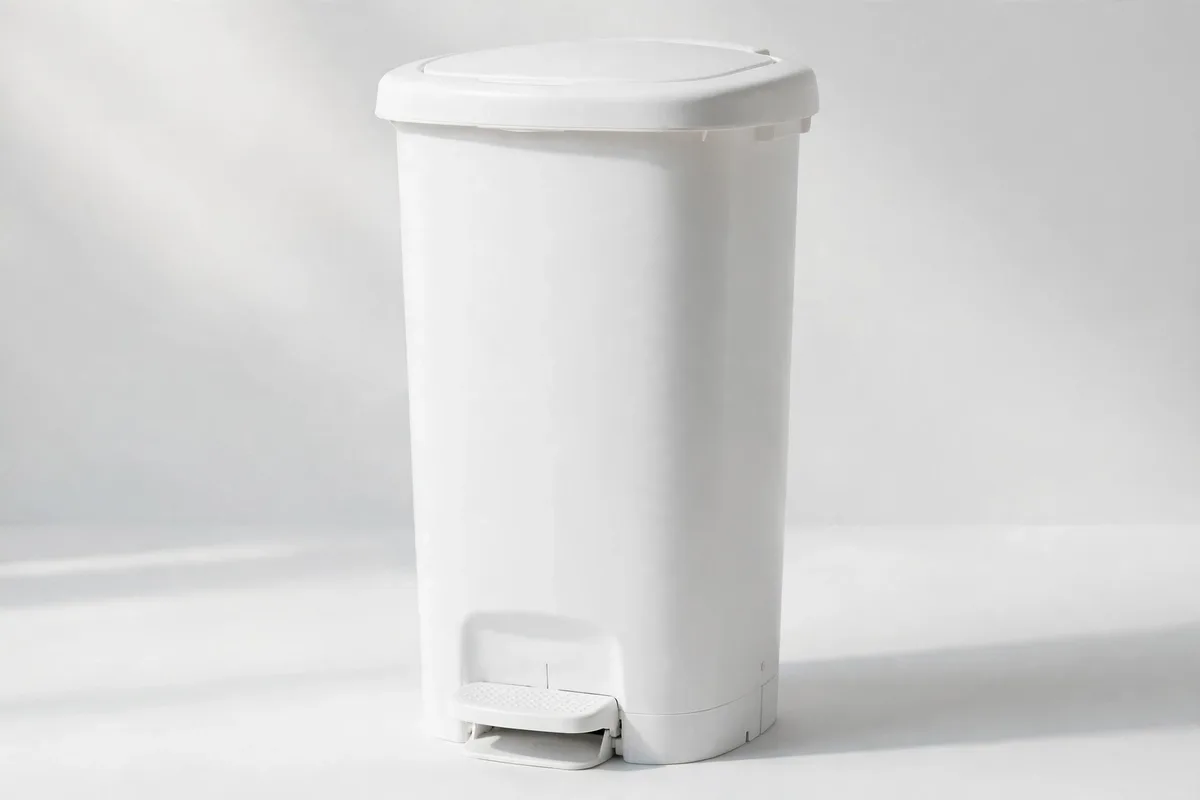
The Complete is the full-featured version of the Diaper Genie system: a foot pedal that opens the lid without bending, Double Air-Tite clamps that close around the bag neck as the lid shuts, and a carbon filter in the lid as a second line of defence. The refills are a continuous multi-layer tube with an odour-locking barrier and a built-in antimicrobial, per the brand, and you push each diaper through the clamps, then cut and knot the tube when it fills. One refill and one carbon filter come in the box, in scented Clean Laundry or unscented versions.
The pail itself holds up to 36 newborn-sized diapers at a time, per Diaper Genie, while a single round refill holds up to 270 — so one ring carries roughly a month of newborn changes before it runs out, and the manual suggests replacing the carbon filter about every 3 months. That is a genuinely low-effort rhythm. The trade is structural, not hidden: the Complete only eats Diaper Genie refills, so the running cost is whatever the rings cost, for the whole diaper career — and the scented film is why the unscented refill matters.
What keeps the Genie on this list is availability — the thing nobody appreciates until a refill runs out on a Sunday night. These rings are stocked in pharmacies, supermarkets and big-box stores across Canada and the USA more widely than any rival system, and the plastic body wipes clean without ceremony. Owner reports are the most divided in the category — devotees who would never switch, and former owners who left over refill costs — and both camps are really reviewing the same fact from opposite ends: the system is effortless, and you pay for the effortlessness in film, forever.
Yay · Pros
- True hands-free pedal with clamp seal and carbon filter
- One refill holds up to 270 newborn diapers, per the maker
- Refills stocked almost everywhere in Canada and the USA
- Plastic body cannot rust and wipes clean easily
Hmm · Cons
- Proprietary refills only — the lock-in is total
- Carbon filters are a second, recurring consumable
- Scented refill film will not suit fragrance-free homes
Best for: parents who want the set-and-forget system and value never being stranded without a refill. Skip if: the idea of buying one brand’s film for two-plus years bothers you more than changing bags does.
3. Munchkin STEP Diaper Pail — Best foot-pedal
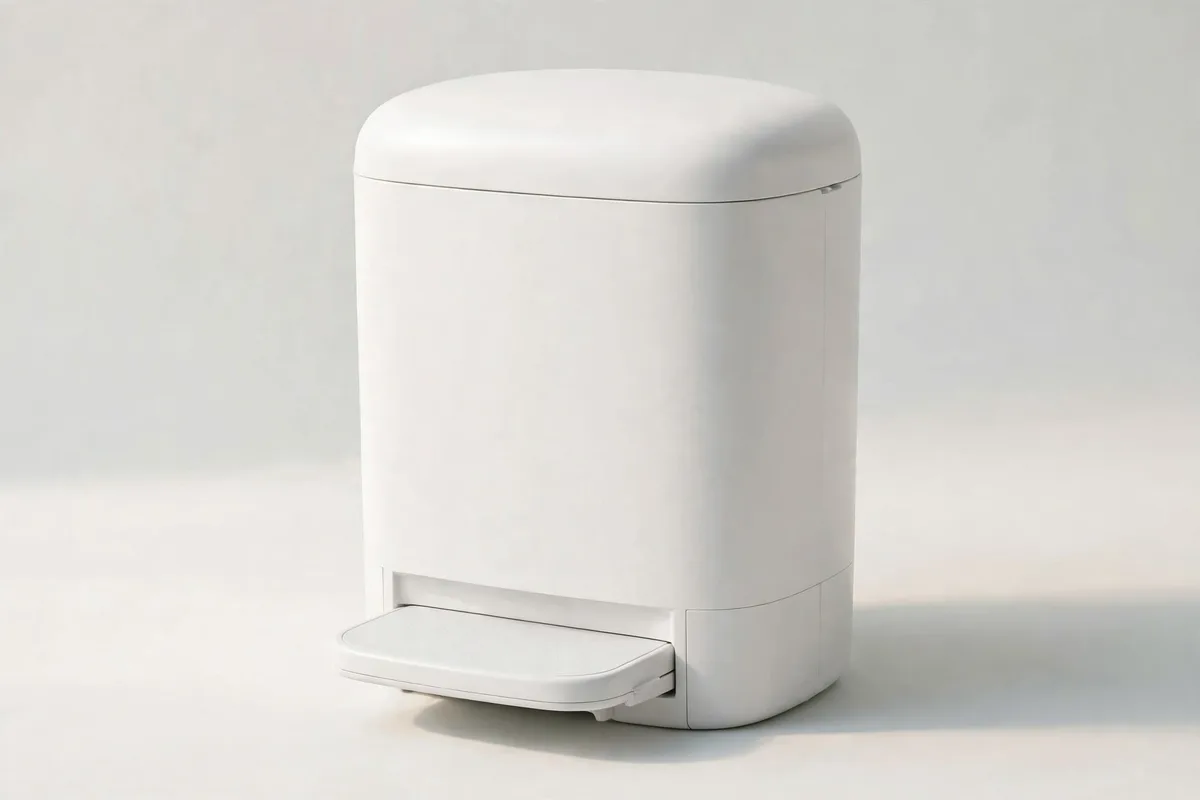
The STEP attacks the exact moment every other pail fails: the deposit. Its patented self-sealing system twists the liner tight each time the lid closes, so the bag stays sealed while the pail is in use, and an Arm & Hammer lavender-scented baking soda puck in the lid keeps absorbing between changes. That mechanism is why this pail keeps winning the odour argument in independent testing: BabyGearLab’s head-to-head of nine pails gave the STEP the top odour score in its test and its overall Editors’ Choice. It also took a 2020 Best Overall Diaper Pail award from the Good Housekeeping Institute.
The STEP is also the most flexible sealed system: per Munchkin, the only pail that works with both refill rings and its Snap, Seal & Toss bags — the bags hold up to about 30 diapers each and snap shut for a cleaner exit, while the rings suit parents who prefer the continuous-tube routine. The box includes one of each plus a starter puck, so you can try both before committing. At 27 inches tall it needs no bending.
The asterisk every tester attaches: the pedal opens the lid, but the STEP is not fully hands-free. You push the diaper down past the seal yourself, and you close the lid by hand to complete the twist — BabyGearLab lists “not hands-free” among its cons for exactly this reason. The second caveat is scent: the puck and the lavender film are part of the system, not an option you can fully delete, so fragrance-sensitive households should think twice. And it is a proprietary ecosystem — the flexibility is between two of Munchkin’s own formats, not freedom from refills.
Yay · Pros
- Self-sealing twist closes the liner on every deposit
- Top odour score in BabyGearLab’s independent head-to-head test
- Works with both refill rings and Snap, Seal & Toss bags
- Baking soda puck keeps working between changes
- Tall, no-bend height with a sturdy step pedal
Hmm · Cons
- Not fully hands-free — you push the diaper in and close the lid
- Lavender scent is built into the system
- Proprietary refills only, in either format
Best for: odour-critical nurseries — small apartments and main-floor changing stations where smell has nowhere to hide. Skip if: you want a true drop-and-done pedal, or a fragrance-free nursery.
4. Dekor Plus Hands-Free Diaper Pail — Best refill value
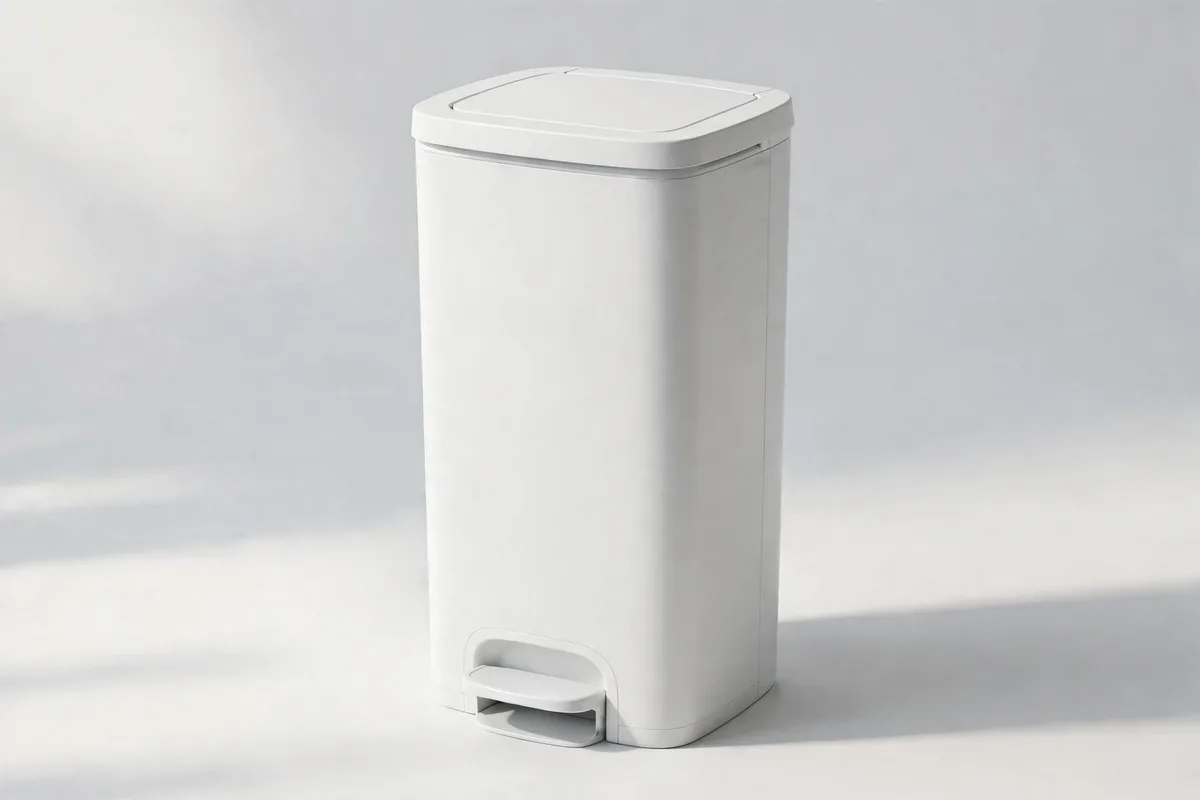
Dekor’s answer to refill waste is elegantly simple: there is no bag, only one long continuous liner. Step on the pedal, drop the diaper through the spring-loaded trap door, and you are done — genuinely hands-free, with no pushing past a seal. When you choose to empty it, you pull down as much liner as the load needs, cut it with the childproof cutter inside the door, tie a knot, and tie the fresh end closed. Empty after two diapers or twenty and the plastic used is the plastic needed — the most economical refill system of the sealed pails, as the arithmetic below supports.
The Plus is Dekor’s largest pail, holding up to 60 newborn diapers at once, per the maker, and each refill roll holds up to 580 in total — the biggest diapers-per-refill figure in this guide. The body is closed-cell ABS plastic, which Dekor positions as the plastic that behaves like metal: it does not absorb odours, cannot rust, and — unlike steel — can be cleaned with bleach. The current Eko Plus version is made with 70% GRS-certified recycled ABS, per the brand. The wide opening also swallows bulky pull-ups and cloth diapers (with Dekor’s washable cloth liner), and when diapers end, the insert pops out and the pail continues life as a handsome pedal bin.
The honest weakness is the seal itself: BabyGearLab’s testing of the Plus found odour control disappointing for a three-layer system — a puff escapes as the trap door cycles — and noted the door can fail to drop a very light diaper, or struggle when the pail is nearly full. Owners who empty frequently — which the cheap-per-diaper liner makes painless — report far better results. Treat the Dekor as a high-capacity, low-waste pail you empty on your schedule rather than a vault, and it is the smartest-running system here.
Yay · Pros
- Continuous liner — you only ever use the film the load needs
- Up to 580 newborn diapers per refill roll, per the maker
- Truly hands-free step, drop, done trap door
- Closed-cell ABS will not absorb odour or rust; bleach-safe cleaning
- Wide opening suits cloth diapers and pull-ups
Hmm · Cons
- Independent testing found its odour control middling
- Trap door can balk at a light diaper or a nearly full pail
- Still a proprietary liner — just a far thriftier one
Best for: twins, cloth-and-disposable mix households, and anyone who hates throwing away half-empty bags. Skip if: maximum odour sealing is the whole point and the pail will sit full between empties.
5. Bubula Steel Diaper Pail — Best premium steel
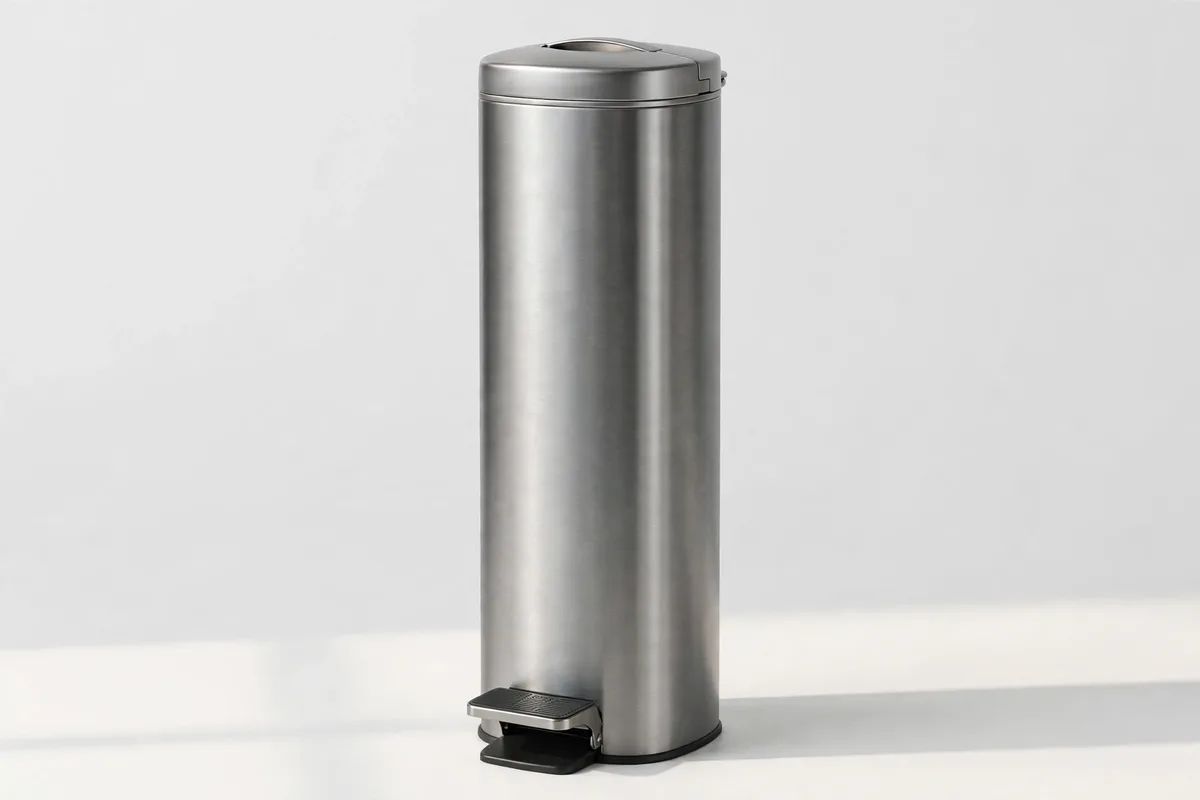
Bubula takes the Ubbi’s steel logic and builds it taller, heavier and more like furniture. The construction is steel and aluminium with an airtight lid and a rubber seal, standing roughly 25 inches high in most listings — several inches above the Ubbi — which matters more than it sounds: the pail’s opening meets a standing adult’s hand instead of asking for the half-bend that gets old by the fortieth change of the week. Like the Ubbi, it asks for no special bags: standard can liners, including ordinary tall kitchen bags, are the whole system.
Capacity is Bubula’s headline claim — the brand says the pail holds up to 50% more diapers than other leading brands, a manufacturer claim we could not verify against a published size-by-size table the way Ubbi’s can be, so treat it as a claim. What is verifiable is the geometry: a taller steel can on standard liners swallows more between changes, and owner comparisons of the two steel pails consistently give Bubula the longer interval between trips to the outdoor bin. When diapers end, it converts to a regular trash can without looking like nursery equipment.
The cautions are about the company, not the can. Bubula is a much smaller brand: its Canadian retail footprint is thinner, and the warranty is one year per the brand’s own site, against Ubbi’s three. Check the exact variant before ordering — listings blur the original push-lid pail and the Step pedal model, whose dimensions differ. If the tall steel idea appeals and you can confirm the pedal version, this is its premium execution.
Yay · Pros
- Tall steel-and-aluminium body — less bending at every change
- Airtight lid with rubber seal; steel cannot absorb odour
- Standard liners only — no proprietary refills
- Converts to a regular household trash can after diapers
- Step-pedal version available for hands-free opening
Hmm · Cons
- Capacity advantage is a brand claim without a published size table
- Smaller brand — thinner Canadian retail and a shorter warranty
- Listings blur the push-lid and Step variants; check before ordering
Best for: taller parents and design-led nurseries that want the steel, no-refill idea in its most substantial form. Skip if: you want the deepest retail support and longest warranty behind a steel pail — that is the Ubbi.
Kitchen bags vs refill rings: the running-cost story, told without a single price
Every diaper pail is two purchases: the can, once, and the film, roughly two thousand times. A newborn goes through about eight diapers a day, and the diaper career runs past two years — so the honest comparison is diapers per unit of whatever the pail eats. On the makers’ own figures: one Diaper Genie round refill holds up to 270 newborn diapers. One Dekor Plus refill roll holds up to 580. A tall kitchen bag in an Ubbi holds about 55 newborn diapers before it is full — but the bag is a commodity you already buy for the kitchen.
Run those numbers forward and the shape of each system appears. The Genie owner buys a refill ring roughly every month and thinks about it never. The Dekor owner buys film about half as often per diaper and wastes none of it, because a continuous liner has no fixed bag size — the two-diaper day and the blowout day cost exactly the plastic they used. The Ubbi or Bubula owner buys nothing dedicated at all, and instead changes the bag twice a week, as Ubbi itself recommends; the steel pails’ running cost is effectively the marginal cost of kitchen bags you were already buying.
There is a waste column too. Fixed-size bags discard the same film whether the load was one diaper or twelve; the continuous liner and the kitchen bag both scale to the load. Scent belongs in the same calculation — several systems bake fragrance into the film itself, which you cannot switch off, while the any-bag pails let you choose unscented bags.
Availability is the last line, and it is a Canadian line as much as an American one. Kitchen bags exist in every village store in both countries; Genie rings are nearly as universal. Dekor and Munchkin refills are easy online and in baby stores but thinner on rural shelves — count the shipping habit, because a pail without its film is just a can. When the changing years end, the same logic follows the pail to its next home beside the best high chairs in Canada and the USA.
Steel, closed-cell plastic and the puff of air: how odour actually escapes
A diaper pail fights smell on three separate fronts, and most disappointment comes from expecting one front to do all the work. The first is storage; the second is the deposit moment, when the lid opens and room air trades places with pail air; the third is the material itself, over months — the quietest and most permanent. Ordinary plastic is porous at a microscopic level; odour molecules lodge in it, and a plastic pail slowly becomes a faint permanent source even when empty and washed. That is the entire case for steel, and for Dekor’s closed-cell ABS, which is manufactured to present far fewer of those pores.
Deposit design decides the second front. A sliding lid, like the Ubbi’s, opens a small aperture and disturbs the air inside least — but seals with nothing more than its gasket when closed. A pedal-and-clamp system, like the Genie’s, mechanically squeezes the bag neck shut after every drop. A self-twisting seal, like the STEP’s, closes the liner itself. A trap door, like Dekor’s, is a one-way valve: brilliant when the diaper’s weight trips it, imperfect when it does not. No design wins all three fronts, which is why independent test rankings and owner satisfaction so often disagree — the lab measures storage and deposit under protocol; owners live with the material for two years.
Placement is the variable nobody prints on the box. A pail belongs within one step of the changing surface, on the side of your free hand — every extra step is a step taken one-handed with a baby on the table. Height matters the same way: the tall pails — Genie, STEP and Bubula all stand around 25 to 27 inches — meet your hand; the shorter Ubbi trades a little stoop for a smaller footprint. If changes also happen downstairs, two modest pails beat one premium pail and a staircase.
Finally, the crawling months rewrite the safety brief, and locks stop being a bullet point: the Ubbi’s childproof lock, Dekor’s locking trap door and access door, and the STEP’s latched front all exist because a determined toddler treats a diaper pail as the most interesting bin in the house. Whatever you choose, the routine that keeps any pail sweet is boring and identical: roll each diaper tight, empty on a schedule rather than at capacity, and let the pail air, lid open, on bag-change day. Skip it, and no seal in this guide will save the nursery — the same discipline later applies to the best baby food makers in Canada and the USA stage, where yesterday’s puree has its own opinions.
Diaper pail questions, answered
Do I really need a diaper pail, or will a lidded kitchen bin do?
A lidded bin works for the first weeks. A real diaper pail earns its place on three things a kitchen bin lacks: a seal designed for the deposit moment (clamps, a twist, a trap door or a gasketed sliding lid), a body material that does not absorb odour over months, and a childproof lock for the crawling stage. If the bin goes out daily, a plain bin can genuinely suffice; in an apartment nursery, the sealed pail is the difference between a room that smells of baby and a room that smells of diapers.
Which diaper pail is cheapest to run?
The any-bag steel pails — Ubbi and Bubula — cost the least to run, because their only consumable is the tall kitchen bags you already buy. Among the sealed systems, Dekor’s continuous liner uses the least film per diaper: one refill roll covers up to 580 newborn diapers on the maker’s figures, against up to 270 for a Diaper Genie round refill. The Genie and Munchkin trade that thrift for a more mechanical seal.
Why does my diaper pail still smell when I open it?
Because every pail does — the makers admit it, Ubbi in almost those words. A pail’s job is to keep odour in while it is closed, not to make a week of diapers smell pleasant at the moment of opening. What separates good systems is whether the room smells when the lid is shut. The fixes are unglamorous: roll each diaper tight, change the bag about twice a week rather than at bursting point, and air the empty pail on change day.
Can I use regular trash bags in a Diaper Genie or Munchkin STEP?
No — both are built around their own refill formats, and ordinary bags will not feed through the clamp or twist mechanisms properly. That is the core trade of the sealed systems. If bag freedom matters to you, choose a pail designed for it: the Ubbi and Bubula take standard tall kitchen bags or cloth liners by design. Dekor sits between the camps — designed around its own continuous liner, which is precisely what makes it the thriftiest proprietary system.
How many diapers does a diaper pail actually hold?
Fewer than the box says, once your baby outgrows the newborn size — every headline figure assumes the smallest diapers, rolled tight. Ubbi publishes the honest version of the table: about 55 newborn diapers, sliding to roughly 38 in size 3, 23 in size 5 and 20 pull-ups. Dekor’s Plus holds up to 60 per fill and the Genie Complete about 36, on their makers’ figures, and both shrink on the same curve. Plan your emptying rhythm on the size your baby wears now, not the size on the box photograph.
Should the diaper pail live in the nursery or the bathroom?
Beside the changing surface, wherever that is — a pail across the hall is a pail that gets bypassed. Most families change in the nursery, so the pail lives there. If changes happen on two floors, a second inexpensive any-bag pail downstairs beats carrying diapers downstairs all day. Engage the childproof lock the day your baby starts pulling up on furniture.
The short version
Buy the Ubbi Steel if you want the simple answer: steel that cannot absorb odour, any kitchen bag, no refills to hunt down. The Munchkin STEP twists shut on every deposit and tops independent odour testing, with the Diaper Genie Complete as the widely stocked alternative; Dekor Plus is the thrifty system — one continuous liner, up to 580 newborn diapers a roll — and the Bubula the tall, premium steel option. Whichever you choose will be emptied one-handed at 3 a.m. beside the best baby monitors in Canada and the USA: pick the bag system first, and the pail second.
Sources
This guide is research-based: we compared manufacturer specifications with the independent testing and reporting below, cross-checked against verified owner reports in Canada and the USA. Specs are the manufacturers' published figures; where testers disagree with a maker's claim, the review says so.
- Ubbi — Diaper Pail FAQ — Manufacturer source for the steel odour-blocking rationale, the size-by-size capacity table (55 newborn down to 20 pull-ups), tall kitchen bag compatibility and dry-cloth-only care.
- Diaper Genie — Complete Diaper Pail — Manufacturer page for the Double Air-Tite clamps, carbon filter, foot pedal and the published figures of 36 diapers in the pail and up to 270 per refill.
- BabyGearLab — The Best Diaper Pails — Independent hands-on testing of nine pails: the Munchkin STEP took the top odour score, while the Ubbi and Dekor lines scored below their marketing — disagreements this guide reports rather than hides.
- BabyGearLab — Dekor Plus Review — Tested review of the trap-door system, including the odour puffs on deposit and the door’s behaviour with light diapers and a nearly full pail.
- JoyLa Baby (Canada) — Munchkin STEP Diaper Pail listing — Canadian retail listing confirming the self-sealing system, dual ring and Snap, Seal & Toss compatibility, included baking soda puck, dimensions and the Good Housekeeping Institute 2020 award.
- Albee Baby — Dekor Plus Diaper Pail Gift Set specifications — Retail specification source for the Plus at up to 60 newborn diapers per fill, up to 580 per continuous refill roll, closed-cell ABS construction and the childproof cutter.
Last updated: November 20, 2026. We refresh this guide each season and whenever a pick is replaced by a better one.