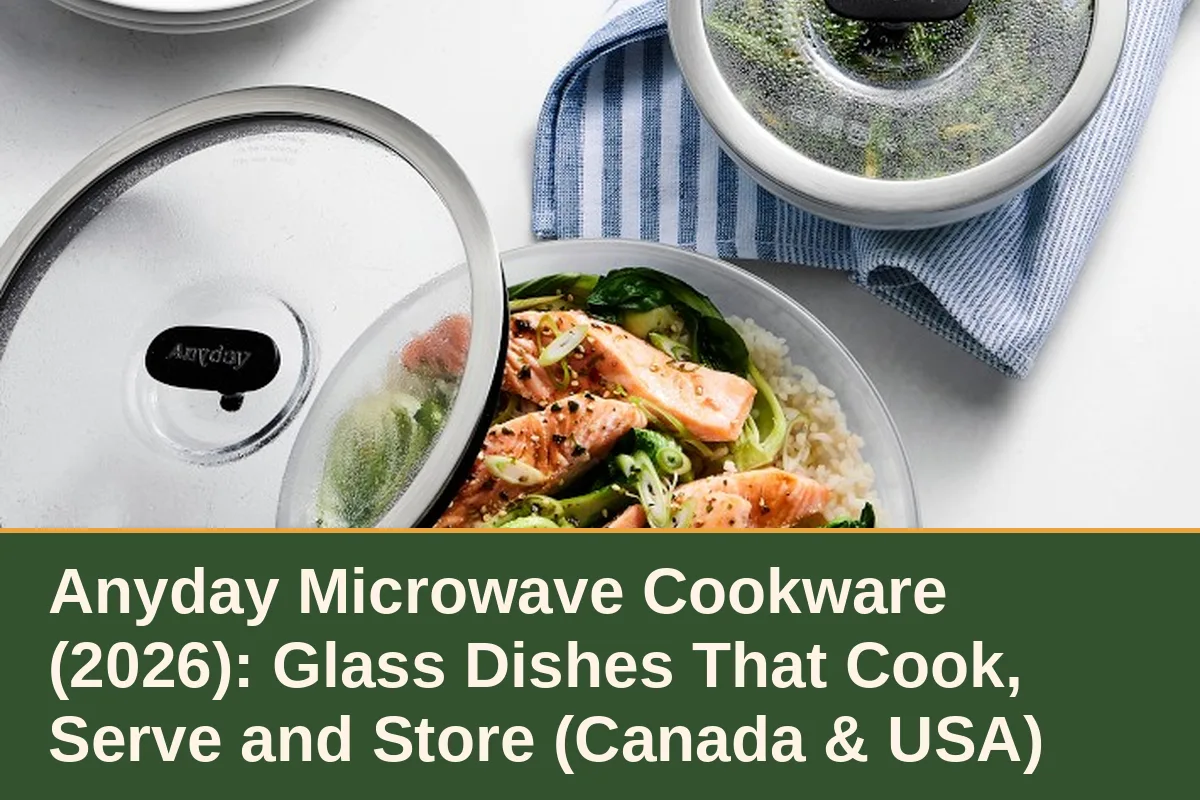
The Anyday system treats the microwave as a steam cooker: thick, thermal-shock-resistant borosilicate glass dishes with glass lids whose stainless knob vents steam while cooking — lifted, it lets excess escape while enough stays in to steam and braise evenly — then pushes down to seal airtight, so the same dish goes straight into the fridge as storage. No plastic touches hot food. Reviewed's kitchen editor tested rice, salmon, poached eggs, ramen and a 20-minute coq au vin, calling the system a no-brainer for simplifying cooking, with tender salmon and fluffy rice. Dishes are oven-safe to 500F (lids to 400F), freezer-safe, dishwasher-safe and stackable, in 4-cup and 7 to 8-cup sizes, shallow and deep.
Key takeaways: expect a learning curve — microwaves vary by wattage, and even with Anyday's large recipe library (adjustable for wattage and power level), testers had rice boil over and an egg miss before dialling in. Glass is heavier than plastic and breaks if dropped. For pure storage without cooking, see our glass meal prep guide and Caraway storage guide.
Cook, serve, store: one dish, three jobs
The storage angle is the quiet revolution: leftovers never change containers, the seal is genuinely airtight with the knob down, and the frosted glass stacks neatly. A quotable way to put it: Anyday is a storage container that went to cooking school. Founded by Steph Chen and endorsed by chef David Chang, the brand's recipe library is part of the product — budget your first week for learning your microwave's power level.
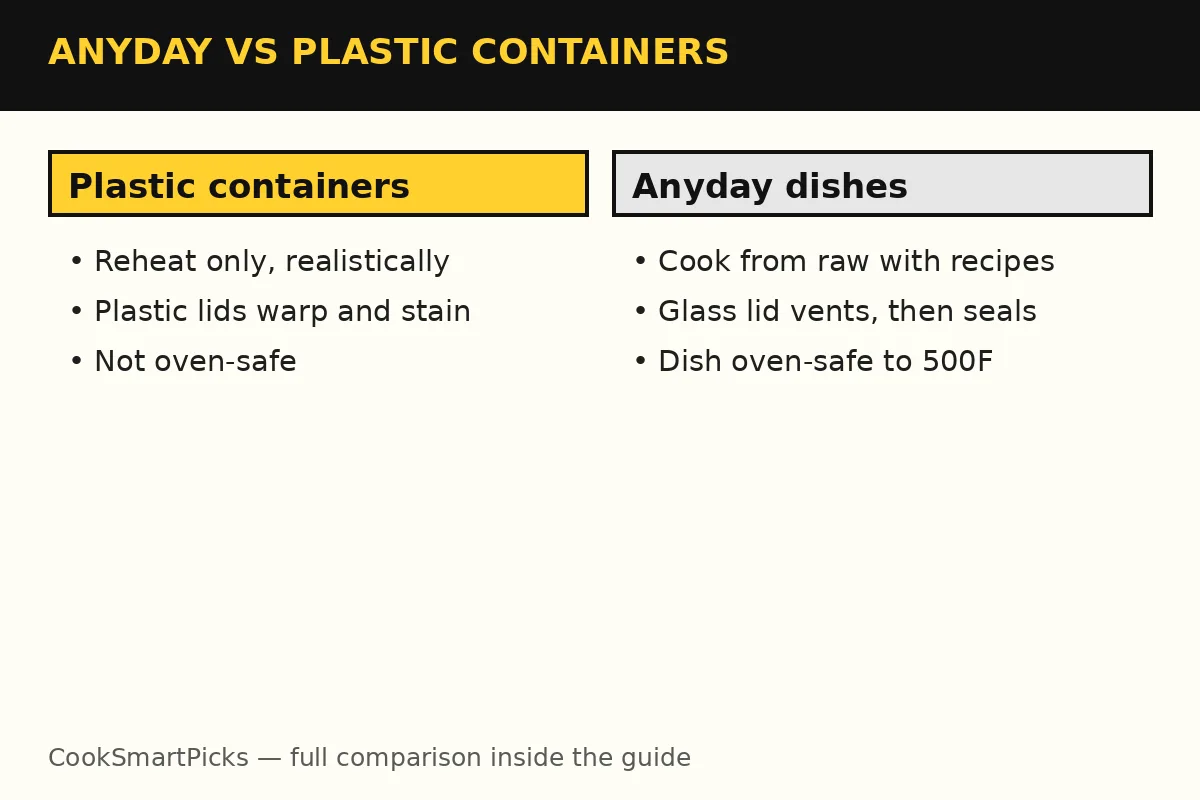
Anyday vs plastic microwave containers
| Feature | Anyday | Plastic containers |
|---|---|---|
| Material | Borosilicate glass dish and lid | Plastic body and lid |
| Cooking | From raw, with vented steam lid | Reheating realistically |
| Storage seal | Airtight, knob-down | Snap lids, varies |
| Oven | Dish to 500F, lid to 400F | Never |
| Weight | Heavy glass, hot to handle | Light |
Pros and cons
Anyday · Pros
- Cooks real meals, not just reheats
- One dish for cooking, serving and airtight storage
- No plastic contact with hot food
Anyday · Cons
- Wattage learning curve: early boil-overs are normal
- Heavy, breakable glass; dishes get very hot
- Costs more than basic glass storage
Best for: small kitchens and dorm-to-office meal routines. Skip if: you only reheat — basic glass storage costs less.
Storage-only glass alternative
If cooking in the microwave is not the goal, classic glass meal-prep sets cover storage for less.
FAQs
Can Anyday dishes really cook raw food?
Yes — the vented glass lid turns the dish into a steam cooker. Reviewers cooked salmon, rice, ramen, poached eggs and coq au vin from raw, adjusting times to their microwave's wattage using Anyday's recipe library.
Are Anyday dishes oven and freezer safe?
The glass dish is oven-safe to 500F and freezer-safe; the lid is oven-safe to 400F. Both are dishwasher safe. Use potholders — the glass gets very hot and has no handles.
How does the Anyday lid vent and seal?
Lift the knob to vent steam during cooking; push it down and the lid seals airtight for fridge storage. The lid rim is stainless steel with a silicone seal, and no plastic touches the food.
What sizes do Anyday dishes come in?
Medium (4 cup) and large (7 to 8 cup) dishes in shallow and deep profiles, sold singly and in Everyday and Complete sets.
Sources
Specs in this guide are the manufacturers' published figures as reported by the sources below; where testers disagree with a maker's claim, the guide says so. We do not print prices — use the buttons above for the live price in your marketplace.
- Decor Imperial — Anyday review summary — Reviewed editor verdict and test menu: salmon, rice, coq au vin, vent knob and oven ratings.
- Tasting Table — Anyday microwave cookware tried — Hands-on: venting knob design, dishwasher safety, 500F and 400F limits, set range.
- Hungry Huy — Anyday cookware review — Week-long test: four sizes, mixed early results and the wattage learning curve.
Last updated: November 20, 2026. We refresh this guide whenever the makers revise these products.