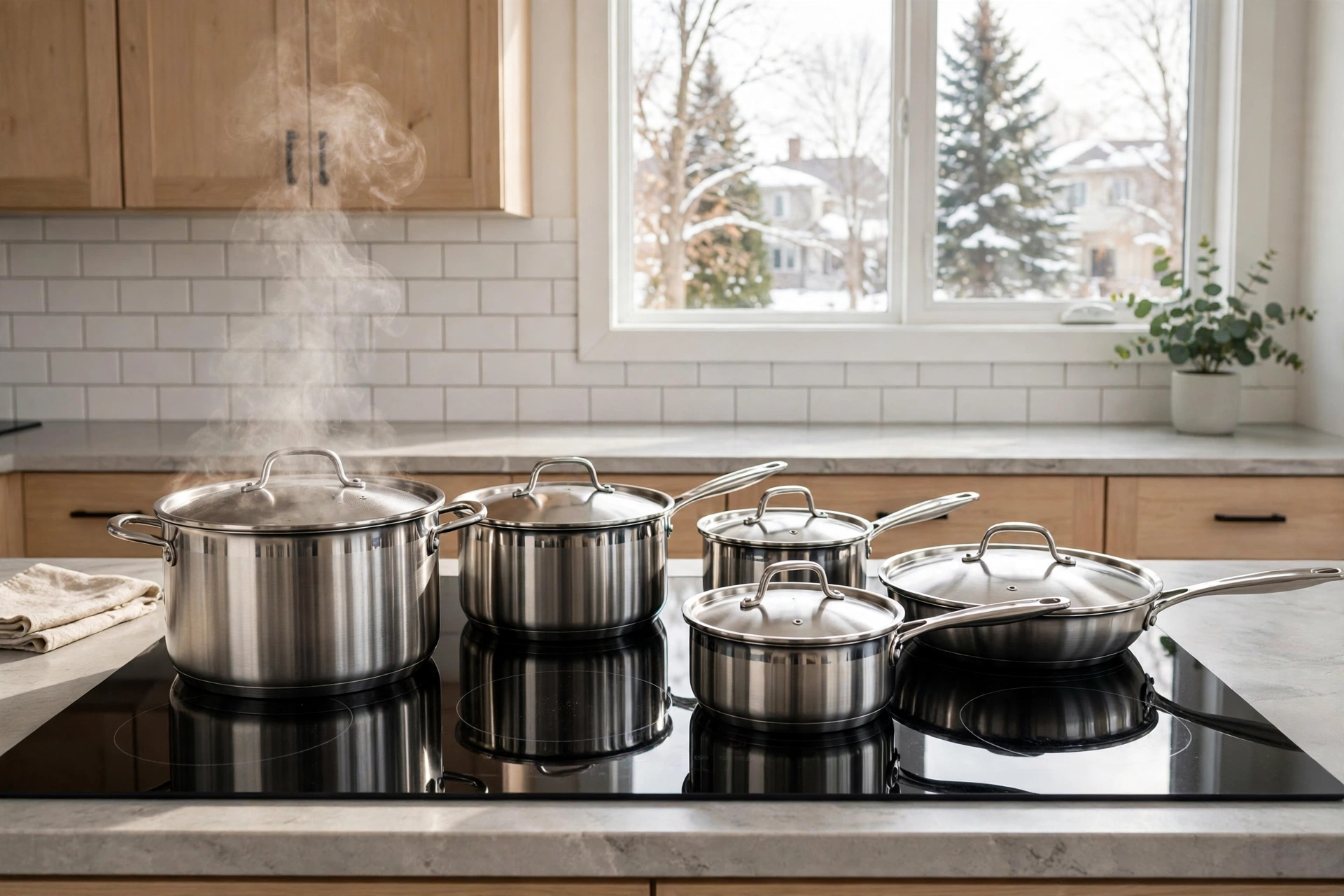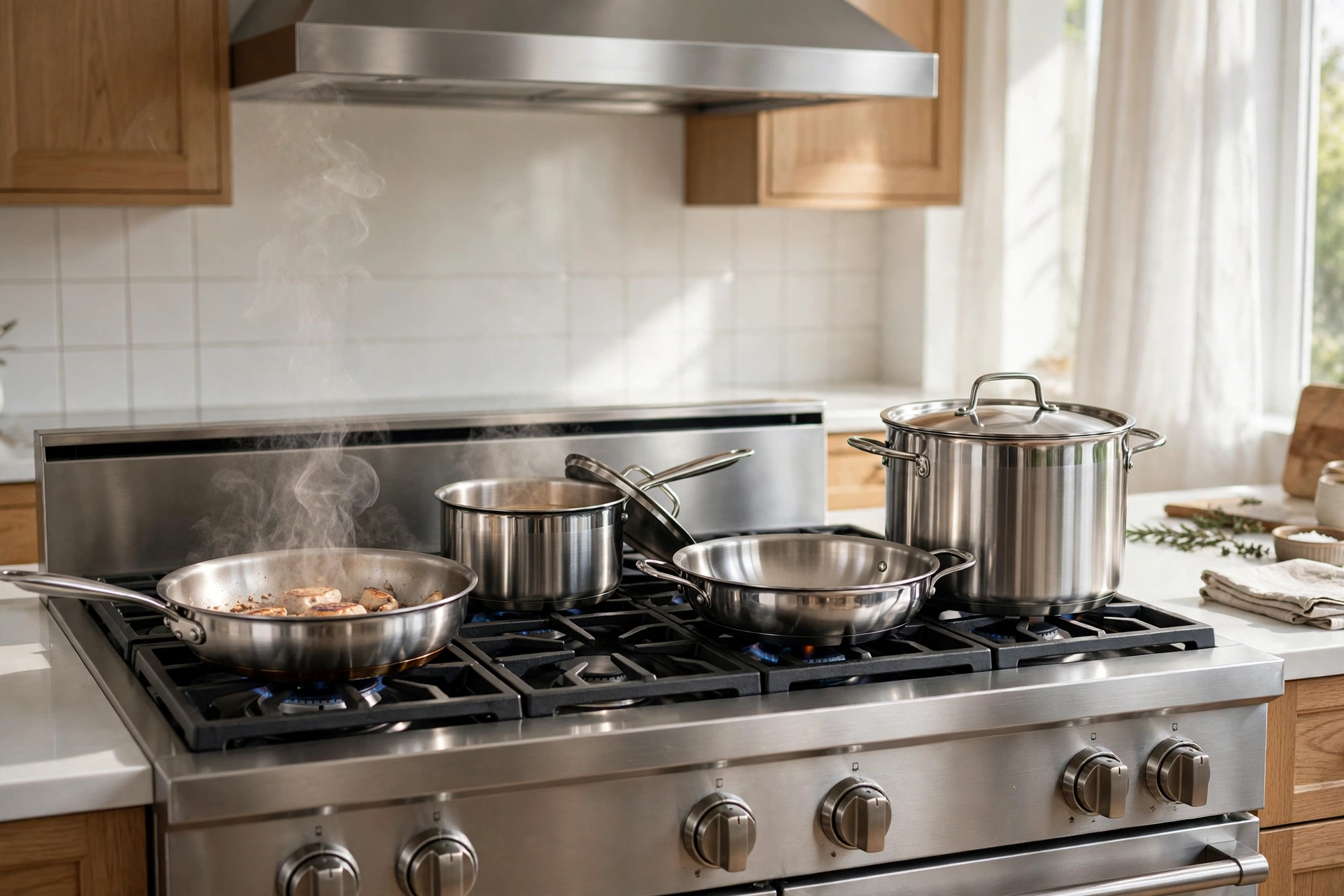
The best stainless steel cookware set is built, not coated: layers of metal bonded into a single pan that will outlive its buyer. This guide is the construction deep-dive. Our general roundup of the best cookware sets in Canada and the USA ranks stainless against ceramic, hybrid and hard-anodized sets; here, stainless competes only with stainless, and the judging criteria are the ones that actually separate the pans — fully clad versus disc base, tri-ply versus 5-ply, core thickness, rim design and induction readiness.
Start with why cladding exists at all. Stainless steel is a poor heat conductor — on its own it scorches food in a ring over the burner — so every good stainless pan is secretly an aluminum or copper pan wearing stainless armour. The cooking surface and exterior are stainless because stainless is hard, non-reactive and easy to clean; the core is aluminum because aluminum spreads heat. The quality of a stainless set is the quality of that sandwich: how thick the core is, whether it runs up the walls, and how honestly the maker counts the layers.
Seven sets are compared below, and they span the construction spectrum on purpose: benchmark tri-ply, two kinds of 5-ply, a value clad set, a forged premium outlier, and the disc-base design that shows where the cheaper construction is genuinely fine. Every set here is induction-ready — stainless exteriors in this class are magnetic — and every oven rating is the manufacturer’s published figure.
Disclosure: CookSmartPicks is reader-supported. When you buy through links on this page, we may earn an Amazon commission at no extra cost to you. Prices and availability change often — check the current price on Amazon before you decide.
The short answer
For most kitchens, fully clad tri-ply is the sweet spot: the Tramontina Tri-Ply Clad on value, the All-Clad D3 as the benchmark. Step up to 5-ply — All-Clad D5 or Made In — for thermal mass and searing stability, not because five is a bigger number than three. Disc bases are fine for stockpots; clad is what frying pans and saucepans deserve.
How we chose these stainless steel cookware sets
CookSmartPicks is a research-based guide; we do not claim hands-on testing we have not done. For this list we compared manufacturer specifications — layer structure, core materials and thickness where published, oven ratings, rim and handle design, warranty — against metallurgy explainers from the makers themselves, independent roundups and long-term owner reports in Canada and the USA. Where brands count layers differently, we say so rather than repeating the bigger number.
Two filters mattered most. The first is wall construction: for fry pans, sauté pans and saucepans, fully clad bodies were required for a top ranking, because walls that heat evenly are the entire point of clad cookware; disc-base construction was admitted only where its role is honestly framed. The second is induction readiness with a flat, full-diameter base — every set here uses a magnetic exterior grade and publishes its compatibility. Finish, handle comfort and open-stock support broke the ties.
The lineup at a glance
| Product | Best for | Why it stands out |
|---|---|---|
| All-Clad D3 Stainless 10-Piece Set | Best overall benchmark | The original tri-ply — the set every other clad pan is measured against |
| All-Clad D5 Brushed Stainless 10-Piece Set | Best 5-ply stability | Five alternating layers for slower, steadier heat and delicate sauces |
| Made In Stainless Clad 10-Piece Set | Best modern 5-ply | Chef shapes including a rounded saucier, made in Italy |
| Tramontina Tri-Ply Clad 12-Piece Set | Best value clad | Whole-clad tri-ply at a mid-range price — the independent-test darling |
| Cuisinart MultiClad Pro 12-Piece Set | Best mid-range | Tri-ply with drip-free rims and solid lids, rated to 550°F |
| Hestan ProBond 10-Piece Set | Best premium forged | Cold-forged bodies with sealed rims and a thicker conductive core |
| Duxtop Whole-Clad Tri-Ply 10-Piece Set | Best budget clad | Whole-clad 18/10 tri-ply with a steamer insert included |
1. All-Clad D3 Stainless 10-Piece Set — Best overall benchmark
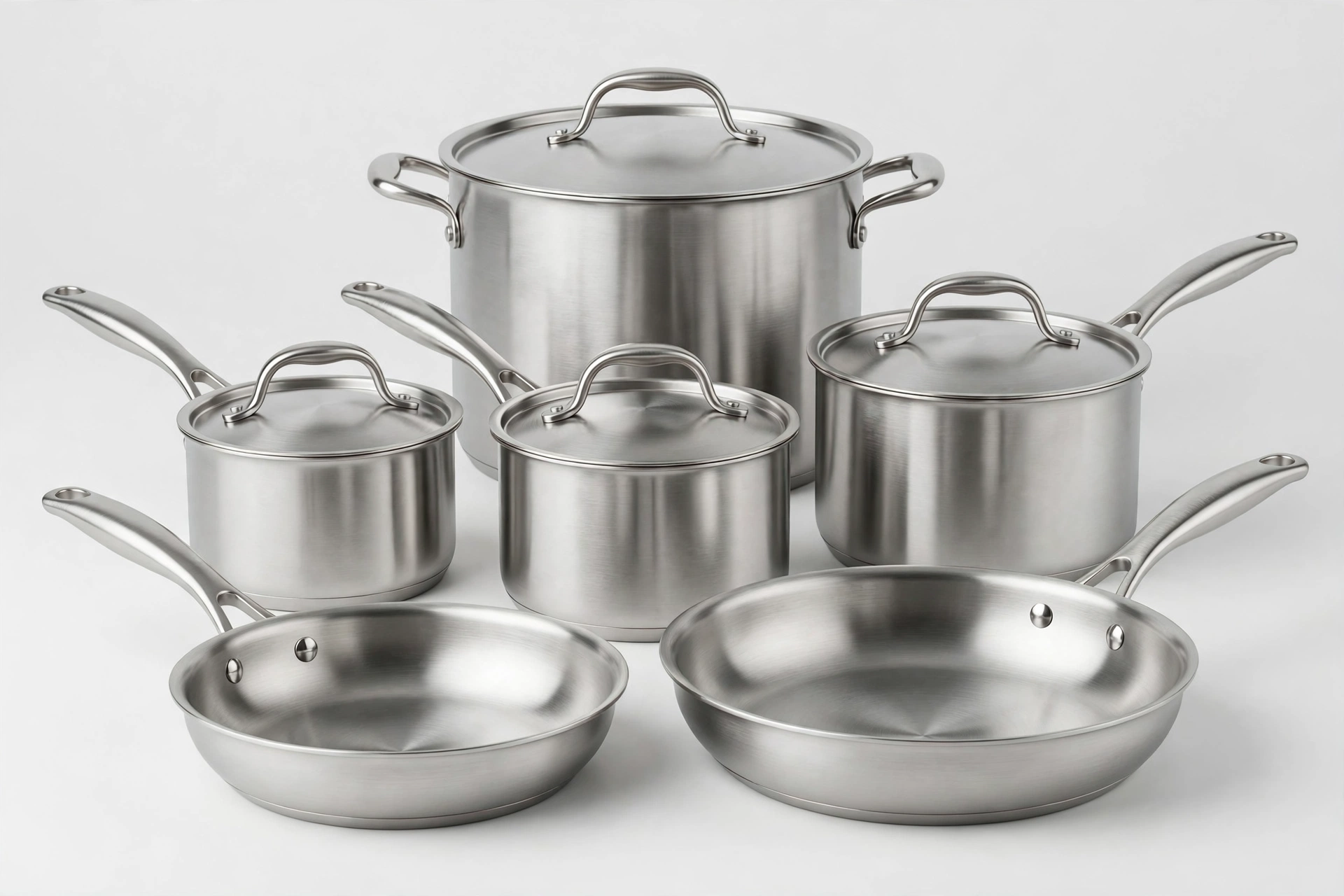
The D3 is where clad cookware begins: John Ulam, a metallurgist, bonded aluminum between stainless layers in Canonsburg, Pennsylvania in 1971, and the recipe has not needed changing since. Three functional layers — a substantial aluminum core, stainless inside and out — bonded base to rim. All-Clad rates the set oven and broiler safe to 600°F and backs it with a limited lifetime warranty. On the burner, the D3’s core is thick enough that the pan heats evenly without the hot ring that exposes thin clad pans.
Understand All-Clad’s layer counting and you understand the whole category’s marketing. All-Clad counts functional layers: its D3 aluminum core is itself engineered from bonded aluminum layers, which — counted the way some rivals count — would make D3 a five-layer pan. All-Clad calls it three because the core works as one conductor. Neither number is a lie; they are different accounting. What predicts performance is total core thickness and bond quality, and on both, the D3 remains the benchmark other sets are tested against.
The ownership case is support: open-stock pieces, replacement lids and five decades of parts availability in Canada and the USA. The case against is price and the love-it-or-hate-it handle. If budget allows one benchmark set, this is it — the same conclusion our induction guide reaches from the cooktop side.
Yay · Pros
- The original fully clad tri-ply, made in the USA
- Oven and broiler safe to 600°F (manufacturer figure)
- Core thickness that still benchmarks the category
- Limited lifetime warranty; unmatched parts and open-stock support
Hmm · Cons
- Premium price across the whole set
- The contoured handle divides opinion
- Brushed exterior shows heat tint and water spots readily
Best for: cooks who want the reference standard, kept for decades. Skip if: value leads your decision — the Tramontina covers most of this ground for less.
2. All-Clad D5 Brushed Stainless 10-Piece Set — Best 5-ply stability
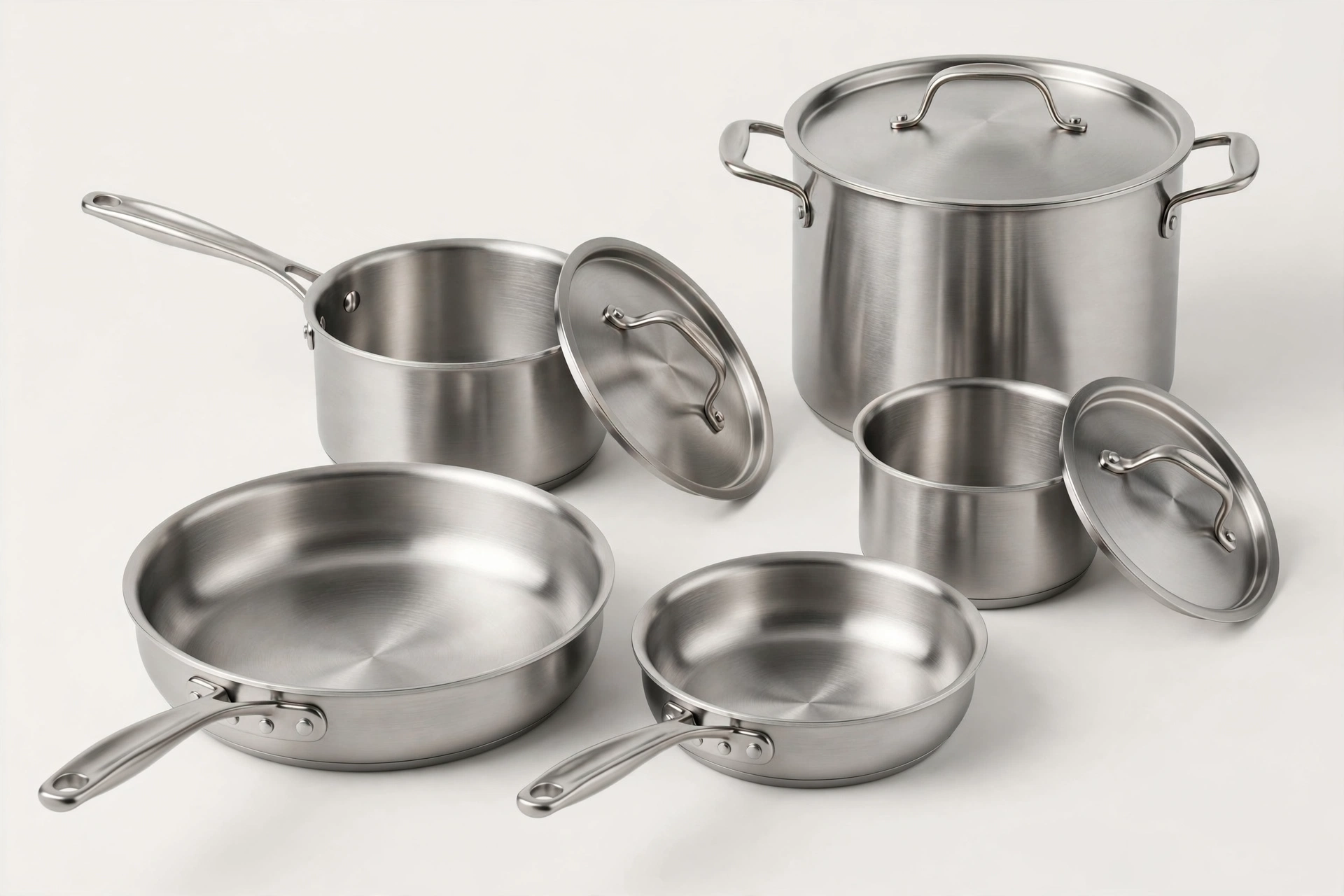
The D5 answers a specific cooking complaint: a responsive pan can overshoot. Five alternating layers — stainless, aluminum, stainless, aluminum, stainless — add mass and a second conductive layer, so the pan heats more gradually and holds a steadier temperature. All-Clad positions D5 for delicate sauces and controlled searing, and rates it oven and broiler safe to 600°F. The brushed finish hides fingerprints and minor scuffs better than the D3’s polish.
Who actually tastes the difference? Sauce cooks. A hollandaise or a custard over a burner that cycles on and off — induction elements do exactly this at low power — stays smoother in a pan whose temperature coasts instead of seesawing. Searing tells the same story in the other direction: the D5’s surface temperature dips less when a cold steak lands, so the crust forms instead of steaming. These are refinements, not revolutions — a D3 in skilled hands cooks the same dinner — but they are real, and they are the honest case for 5-ply.
The costs are the honest case against: more money, more weight, slower preheats. If your cooking is weeknight-fast, the D5’s steadiness buys you little. If your cooking is sauce-led and patient, it is All-Clad’s best set.
Yay · Pros
- 5-ply mass holds steadier temperatures for sauces and searing
- Brushed finish hides wear better than polished steel
- Oven and broiler safe to 600°F (manufacturer figure)
- Same lifetime support and open stock as D3
Hmm · Cons
- The priciest mainstream construction here
- Heavier, and slower to preheat than tri-ply
- Benefits are refinements — wasted on purely fast weeknight cooking
Best for: sauce cooks and patient searers who feel burner cycling in a light pan. Skip if: speed and value lead — D3 or Tramontina serve you better.
3. Made In Stainless Clad 10-Piece Set — Best modern 5-ply
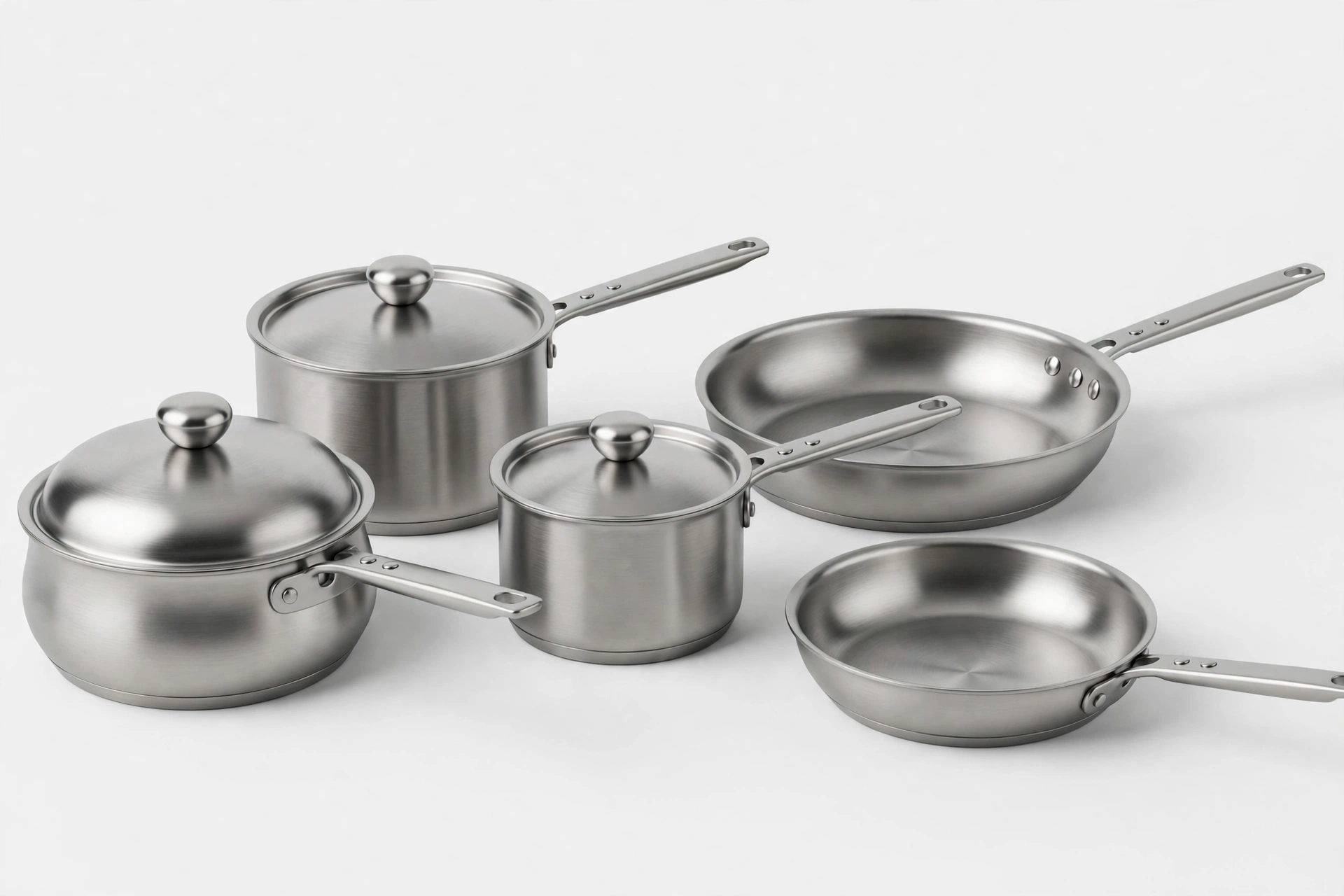
Made In’s Stainless Clad is the 5-ply set designed by the chefs it supplies: five layers with two aluminum alloys at the core, made in Italy, with an induction-optimised magnetic exterior. Where it separates from All-Clad’s 5-ply is shape. The set’s saucier — fully rounded where wall meets base — is the pan sauce cooks actually want, because a whisk reaches the whole surface and nothing hides in a corner to scorch. The fry pans’ proportions and handle angles come from the same professional brief.
Made In counts its layers the inclusive way — five physical layers — and publishes the core’s alloy logic openly: a responsive aluminum alloy paired with pure aluminum for conductivity. That transparency is worth more than the number. The performance story matches the D5’s — mass, steadiness, sear stability — with a slightly livelier feel that testers attribute to the alloy blend.
Support is direct: lifetime warranty, open stock and replacement pieces in Canada and the USA, at a price that undercuts D5 while matching its construction class. For a buyer choosing a first premium set today, the honest contest is D3’s heritage versus Made In’s shapes — and shapes are a legitimate thing to choose on.
Yay · Pros
- 5-ply with two aluminum alloys; published core logic
- Rounded saucier is the best sauce shape in this guide
- Induction-optimised exterior; lifetime warranty
- Priced below the D5 in the same construction class
Hmm · Cons
- Direct-to-consumer only — no store shelf to handle before buying
- Heavier than tri-ply, like all 5-ply
- Younger brand than All-Clad’s five-decade record
Best for: sauce-led cooks choosing a first premium set on shapes and construction. Skip if: you want to handle pans in a store first, or the deepest heritage brand.
4. Tramontina Tri-Ply Clad Stainless Steel 12-Piece Set — Best value clad
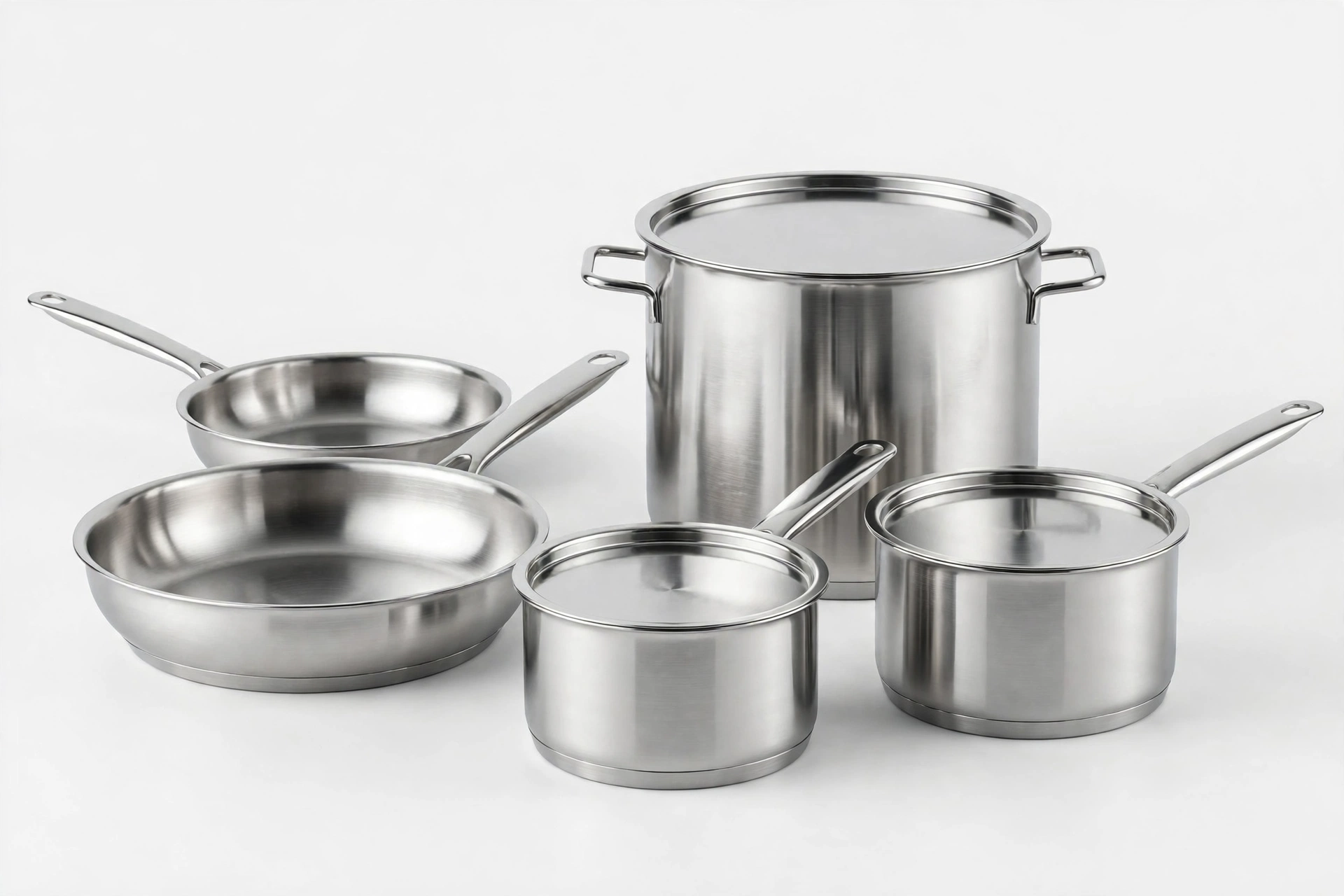
Every clad comparison eventually meets the Tramontina problem: a whole-clad tri-ply set, made in Brazil, oven-safe to 500°F, that independent testers repeatedly find cooking within a whisker of sets costing far more. The construction is the genuine article — aluminum core, stainless both sides, base to rim, magnetic exterior for induction. The 12-piece lineup is the fullest among the value sets, and the lids, rims and rivets are finished to a standard that embarrasses its price class.
The differences from All-Clad are real but small: a slightly thinner core, a 500°F ceiling instead of 600°F, and a brand ecosystem with less open-stock depth. In blind cooking terms — evenness, response, searing — most home cooks will not find the gap without instruments. That is precisely why this set tops value rankings year after year, and why it also leads our induction guide.
If your decision rule is performance per dollar, the research ends here. Spend the savings on one great skillet or a better knife. If your rule is buy the benchmark once, the D3 above is waiting. Both rules are respectable; this guide’s job is to make the trade visible, and the trade has never been smaller than it is with this set.
Yay · Pros
- Whole-clad tri-ply at a mid-range price — the value benchmark
- Oven-safe to 500°F; induction-ready magnetic exterior
- Independent testers rank its cooking beside premium sets
- Full 12-piece lineup with quality lids and rims
Hmm · Cons
- Core slightly thinner than All-Clad’s
- 500°F ceiling is the lowest among the clad sets here
- Less open-stock depth for add-on pieces
Best for: value-led buyers who refuse to compromise on construction. Skip if: you want the benchmark brand and its support network, price aside.
5. Cuisinart MultiClad Pro Stainless Steel 12-Piece Set — Best mid-range
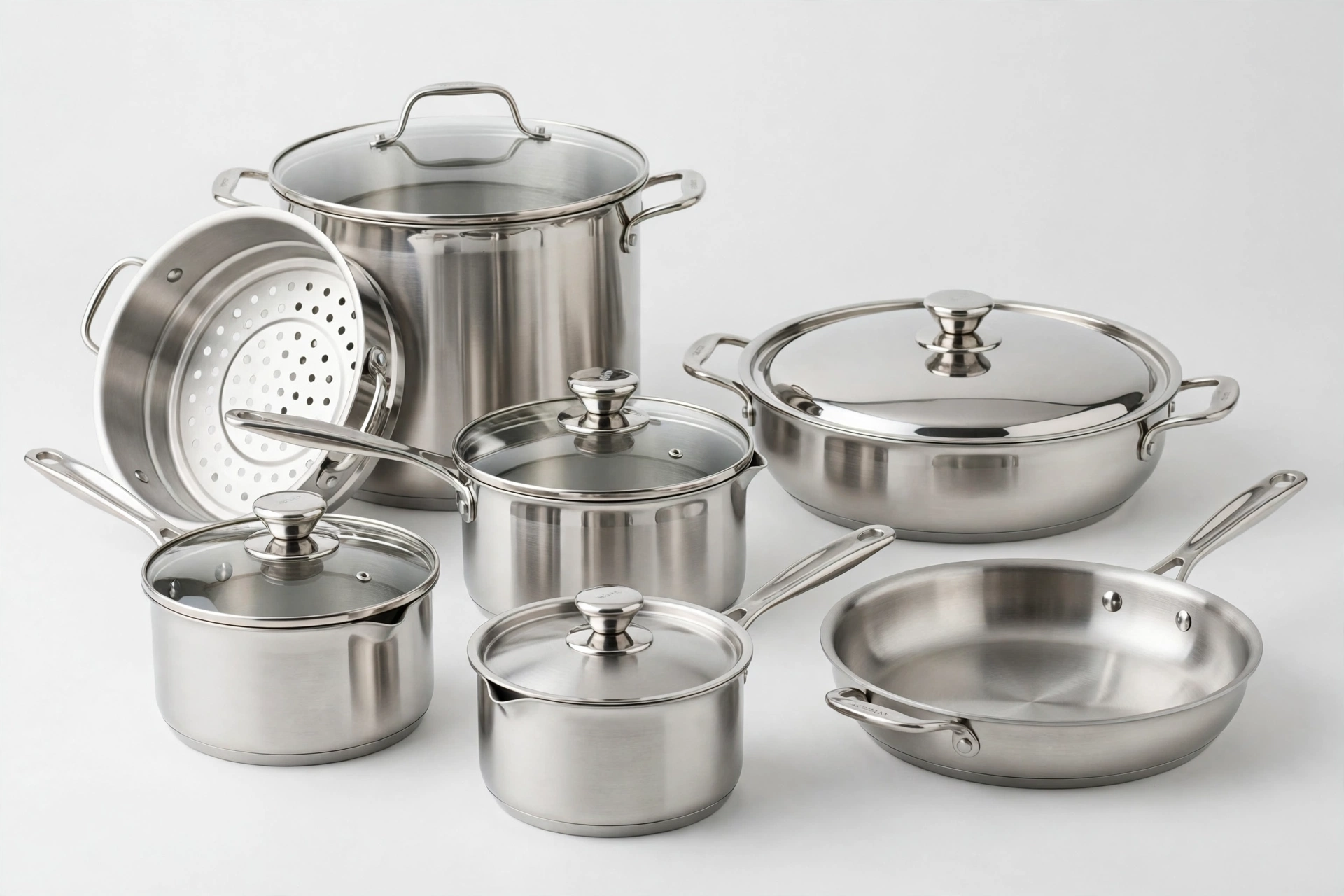
Cuisinart’s MultiClad Pro is whole-clad tri-ply with two details the other mid-range sets skip: tapered rims engineered for drip-free pouring, and solid stainless lids across the set. Cuisinart rates it oven-safe to 550°F — between the Tramontina’s 500°F and All-Clad’s 600°F — and the aluminum core runs base to rim with a magnetic exterior for induction.
The pouring rim sounds like garnish until you decant a sauce nightly: clad pans with plain rims dribble down the exterior and bake onto it; the MultiClad Pro’s tapered edge breaks the stream cleanly. It is the kind of detail that comes from a maker watching people cook, and it is the honest reason to choose this set over its closest rival. Solid lids add the second reason — they tolerate oven finishing and stack flat, where glass lids trade visibility for fragility.
Against it: pricing that wanders close to All-Clad territory between promotions, and handles that run warmer on long simmers. Bought at its common promotional level, the MultiClad Pro is the mid-range set for cooks who pour, finish in the oven and stack their storage.
Yay · Pros
- Whole-clad tri-ply with drip-free tapered rims
- Oven-safe to 550°F (manufacturer figure)
- Solid stainless lids suit oven work and stacking
- Induction-ready magnetic exterior
Hmm · Cons
- List price drifts near All-Clad’s between promotions
- Handles warm up on long simmers
- Core a touch thinner than the benchmark’s
Best for: sauce pourers and oven finishers in the mid-range. Skip if: you catch the Tramontina at a lower price — the cooking gap is small.
6. Hestan ProBond Stainless Steel 10-Piece Set — Best premium forged
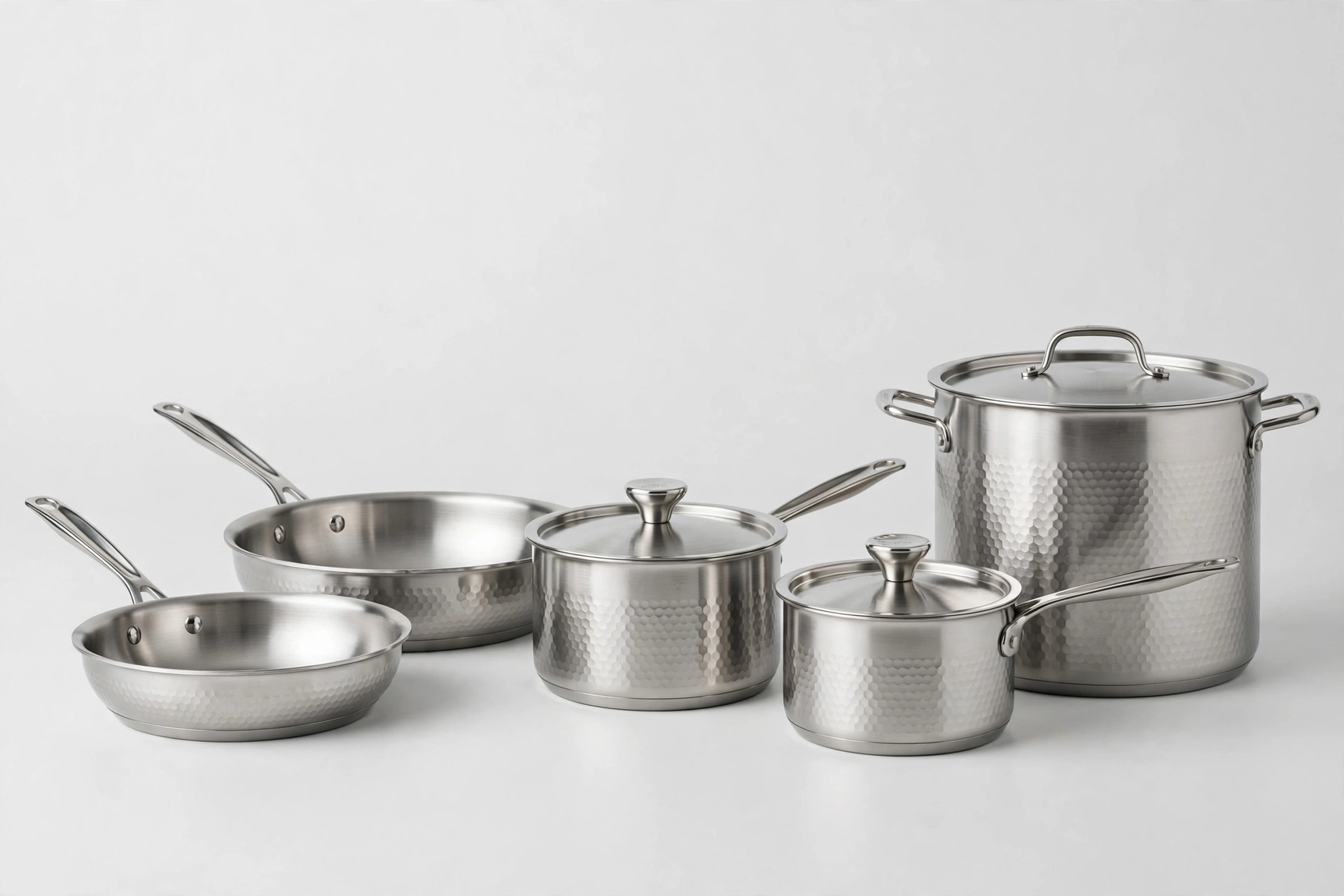
Hestan builds the ProBond differently: the bodies are cold-forged rather than stamped, which the maker credits for a thicker, more even conductive core — Hestan publishes the ProBond’s pure aluminum core as substantially thicker than standard clad — and the rims are sealed, so the layered edge is closed against dishwasher water and corrosion for life. The set is tri-ply in count, induction compatible, and rated oven and broiler safe to 600°F, made in Italy.
Sealed rims are the detail owners of older clad pans will understand instantly: an unsealed rim exposes the aluminum core’s edge, and years of dishwashing can corrode that edge into a dark, rough line. ProBond removes the failure mode entirely. Combined with the forged body’s evenness, it makes the set the engineering-led pick — the one whose advantages are structural rather than cosmetic.
The price is the premium tier’s, and the brand’s open-stock depth in Canada is still growing. For a buyer who keeps pans for decades and runs them through the dishwasher without apology, ProBond’s sealed, forged construction is the most considered design in this guide.
Yay · Pros
- Cold-forged bodies with a thicker published aluminum core
- Sealed rims — no exposed core edge to corrode
- Oven and broiler safe to 600°F (manufacturer figure)
- Made in Italy; induction compatible
Hmm · Cons
- Premium pricing across the set
- Open-stock availability in Canada still developing
- Heavier feel than stamped tri-ply rivals
Best for: decade-scale owners who dishwasher their pans and hate rim corrosion. Skip if: budget matters at all — every set above this paragraph costs less.
7. Duxtop Whole-Clad Tri-Ply Stainless Steel 10-Piece Set — Best budget clad
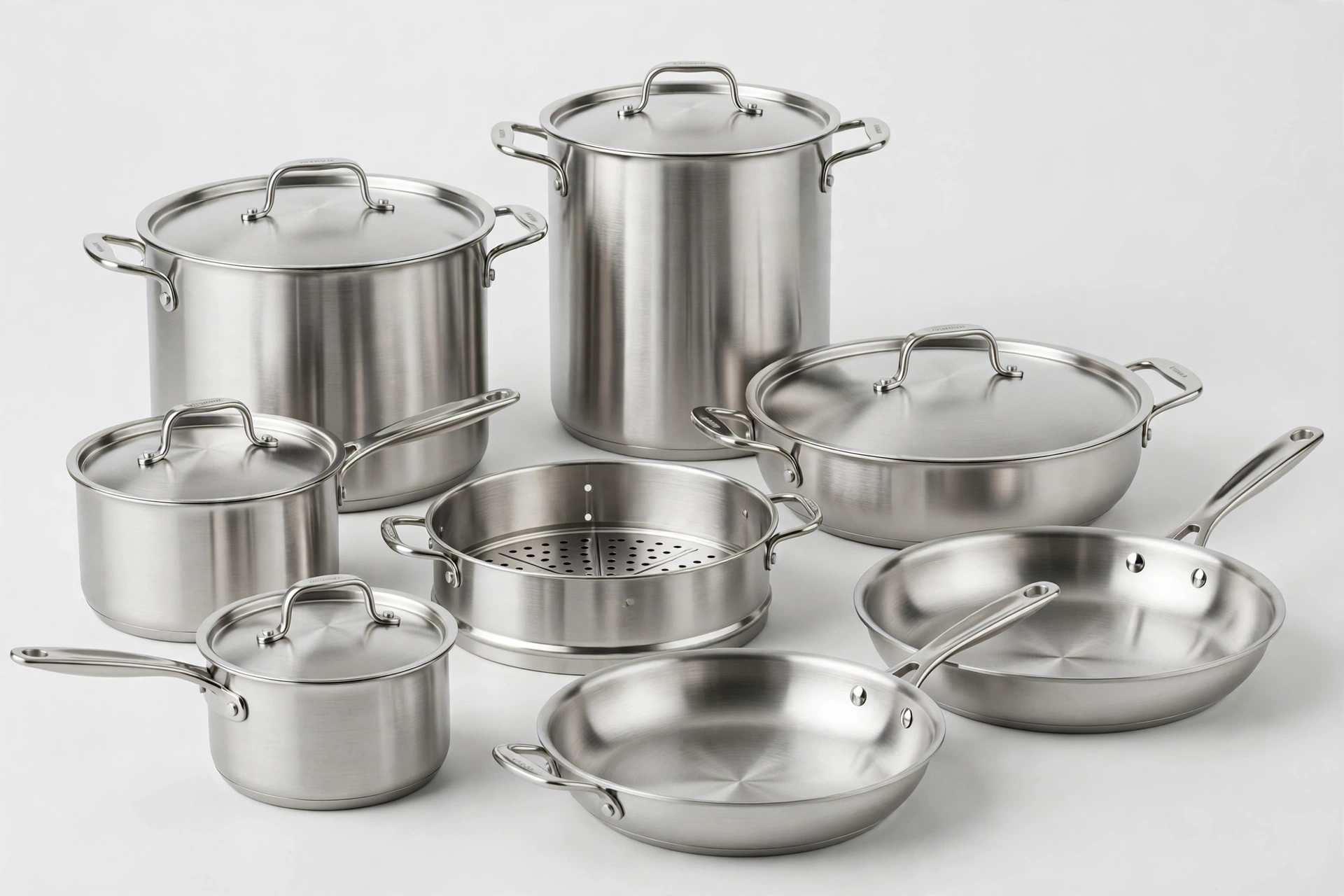
The Duxtop closes the list by collapsing the last excuse for a disc-base first set: whole-clad tri-ply — 18/10 stainless, aluminum core, magnetic exterior, base to rim — at the lowest price here, with a steamer insert in the box and a limited lifetime warranty behind it. Duxtop rates the set oven-safe to 500°F and dishwasher-safe. Secura, its maker, builds induction burners for a living, and the bases are flat and full-diameter accordingly.
In construction terms the Duxtop is the Tramontina’s recipe at a further step down in finish: the polish is plainer, the handles less sculpted, the lids lighter. The sandwich itself — the part that cooks — is honestly made, and owner reports from induction households praise exactly what the construction predicts: even heat, flat bases, clean-poured rims.
For a first clad set, a student kitchen, a cottage or a rental, this is the floor of the category — and the floor is whole-clad, which says everything about how far stainless value has come. The disc-base alternative at this price buys you cooler walls and a delamination risk to save money the Duxtop already saved.
Yay · Pros
- Whole-clad tri-ply at the lowest price in this guide
- Steamer insert included; limited lifetime warranty
- Flat, full-diameter bases — proper induction behaviour
- Oven-safe to 500°F (manufacturer figure)
Hmm · Cons
- Finish and handles a step below the mid-range sets
- Thinner lids than the premium picks
- Brand ecosystem and resale are modest
Best for: first clad sets, cottages, rentals and student kitchens. Skip if: you are buying the decades-long set — invest one tier up.
Tri-ply vs 5-ply: what the extra layers actually buy
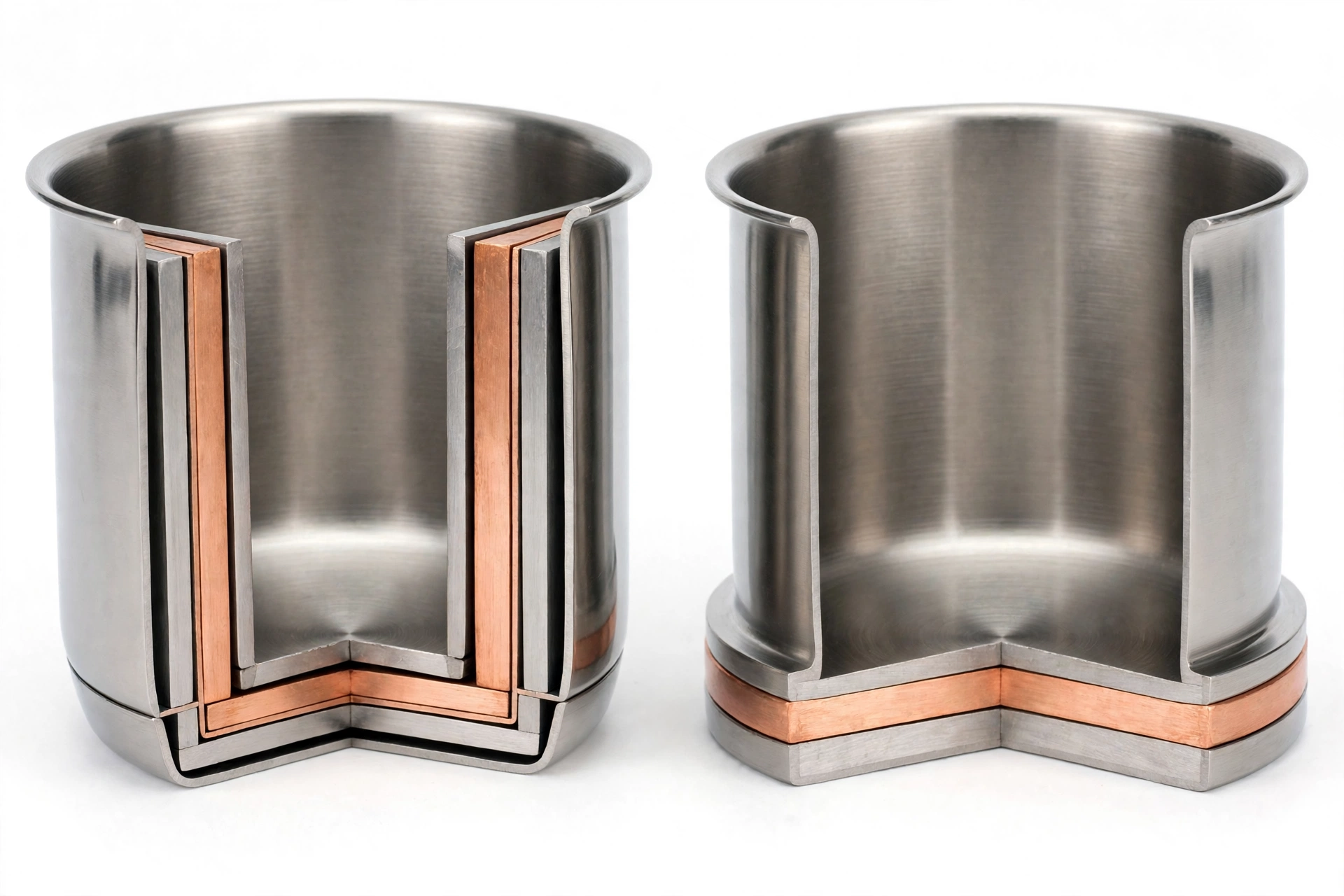
Strip the marketing away and the tri-ply versus 5-ply question is a question about mass and steadiness. A tri-ply pan — stainless, aluminum, stainless — heats responsively: turn the burner up and the surface follows quickly; turn it down and it sheds heat quickly. That responsiveness is a virtue for most cooking, which is why tri-ply remains the benchmark construction decades after its invention. A 5-ply pan interleaves more layers and usually more total metal. It heats a little more slowly, and in exchange its temperature coasts: a cold steak drops the surface temperature less, and a cycling induction element’s on-off pulses smooth out before they reach a delicate sauce.
Layer counting, meanwhile, is accounting, not physics. All-Clad counts functional layers and calls its core one layer even though the core itself is built from bonded aluminum sheets; Made In counts physical layers and calls a similar sandwich five. A “5-ply” pan from one brand can therefore be thinner in total than a “tri-ply” from another. The numbers that predict performance are total thickness, core material and bond quality — which is why this guide names constructions and makers rather than crowning a ply count.
The buying rule that survives all of it: choose tri-ply for responsive everyday cooking and value; choose 5-ply if you cook delicate sauces on a cycling burner, sear thick proteins often, and do not mind weight and slower preheats. Nobody needs 7-ply or 9-ply claims from marketplace brands — beyond five honest layers, returns vanish and prices become fiction.
Fully clad vs disc base: where each construction belongs
A disc-base pan bonds its layered metal into a puck under a single-layer stainless body. The base can be excellent — thick, flat, induction-ready — and for liquid cooking it barely matters that the walls are plain steel, because the liquid itself carries heat up the sides. Stockpots, pasta pots and kettles are disc-base’s legitimate home, and a mixed kitchen — clad fry pans, a disc-base stockpot — is a rational way to spend less.
The failure appears where food meets wall. In a fry pan or sauté pan, ingredients touch the sides constantly; a single-layer wall runs cooler than the base, so fond forms unevenly and the pan’s edge is a dead zone. In a saucepan, a sauce line scorches at the base’s edge while the wall above stays tame. Add the long-term risk — the disc’s edge is a bonded seam that years of thermal cycling and dishwashing can eventually open — and the clad premium explains itself for any pan whose walls do real cooking.
Every set ranked at the top of this guide is fully clad for exactly that reason, and the disc construction appears here only as the budget alternative whose role is stated honestly. If a listing will not tell you whether its “tri-ply” runs up the walls or stops at the base, it has told you the answer. Fully clad makers say “whole-clad” or “clad throughout” in the first line, because it is the thing worth saying.
Induction readiness and stainless: the exterior grade is the whole story
Stainless cookware’s induction secret is that the pan wears two different steels. The cooking surface is an austenitic grade — 18/8 or 18/10, named for its chromium and nickel content — chosen because it is non-reactive and barely magnetic. The exterior of every set in this guide is a ferritic, magnetic grade, chosen so induction elements can couple with the base. Run a magnet over a clad pan and you can feel the design: weak grip inside, firm grip on the base.
That is also why the magnet test belongs in every induction shopper’s pocket, as our induction guide explains — and why a stainless set that fails it is not “old fashioned” but simply built for gas-era kitchens. All seven sets here publish induction compatibility and use magnetic exteriors; if you inherit or buy vintage stainless, test before you blame the cooktop.
One induction habit protects clad pans of any brand: preheat on medium and step up. Induction can drive a cold base to searing temperature startlingly fast, and thermal shock across a bonded sandwich is how even great pans eventually warp. Thirty seconds of patience is the cheapest warranty in cooking.
How to read a stainless listing like a metallurgist
A stainless listing gives you four numbers and hopes you read the wrong one first. Read them in this order instead. Construction language: “fully clad,” “whole-clad” or “clad throughout” means the sandwich runs up the walls; silence on the point means a disc base. Steel grades: 18/10 or 18/8 names the cooking surface’s chromium and nickel — both are fine, 18/10 marginally harder — while the exterior grade goes unnamed because its job is magnetism, not marketing. Core material: aluminum for value and response, copper where a premium brand bothers, and thickness wherever a maker is brave enough to publish it.
Oven rating next: 500°F covers nearly all home cooking, 600°F adds broiler freedom, and anything beyond is spec-sheet theatre for home ovens. Then warranty — limited lifetime is the class standard here, and a one-year warranty on a stainless set is a confession. Piece count last, and with suspicion: count vessels and lids you will use, ignore utensils and bonus gadgets, and remember that an 8-piece set of the right shapes beats a 17-piece set padded with spoons.
Finally, handle the pan if you possibly can — or buy where returns are painless. Handle angle, pan balance with a litre of water aboard, and lid fit are the specs no listing publishes and the ones you will feel ten thousand times. The sets in this guide are the ones whose published construction survives this reading; the in-hand test is the only exam left, and it is yours to administer.
The preheat test: cooking on stainless without the sticking
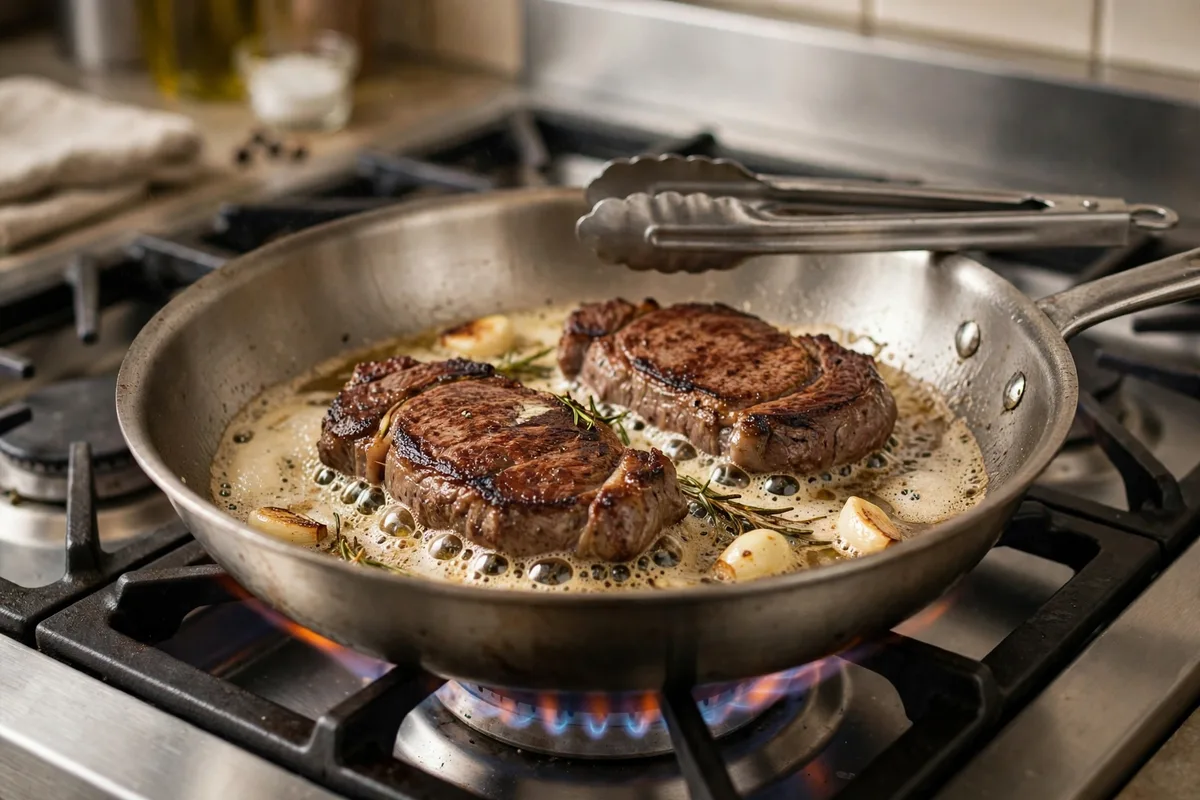
Stainless has one technique gate, and it opens in the first week: preheat the empty pan over medium heat, then flick a few drops of water in. If the drops sizzle and vanish, the pan is warm but not ready. If they skitter across the surface as rolling beads — the Leidenfrost effect — the pan is at searing temperature and food will release cleanly once its crust forms. Add oil, let it shimmer for a few seconds, then add the food and leave it alone; the urge to move it early is what tears crusts and creates the sticking stories stainless is blamed for.
Temperature discipline cuts both ways. A pan preheated far past the bead stage smokes its oil on contact and grabs food instead of releasing it — if you overshoot, lift the pan off the heat for twenty seconds rather than cooking through the mistake. Sauces and eggs prefer the gentler end: warm pan, warm fat, food in before the fat smokes. Fond — the browned layer a good sear leaves — is not a cleaning problem but an ingredient: deglaze with wine, stock or water and it becomes the pan sauce, which is half the reason restaurants cook on stainless at all.
Learn this one test and the category’s entire reputation flips: the “sticky” material becomes the one that sears hardest, sauces best and cleans with a deglaze and a sponge. Every set in this guide rewards the skill identically, because the skill lives in the cook, not the brand — which is the deepest reason to buy construction and warranty, and learn the water-drop test once.
Stainless steel cookware questions, answered
Is tri-ply or 5-ply better?
Neither, absolutely. Tri-ply is lighter, cheaper and more responsive; 5-ply is steadier and better for delicate sauces and hard searing. Compare total thickness and maker quality before ply count — brands count layers differently, so the number alone proves nothing.
What does fully clad mean, and why does it matter?
The bonded layers run from the base all the way up the walls, so the whole pan heats evenly. Disc-base pans layer only the bottom; their walls stay cooler, which is fine for stockpots and limiting for fry pans and saucepans.
Does stainless steel stick to food?
Food sticks to cold or overheated stainless and releases from correctly preheated stainless. Heat the pan, add fat, let it shimmer, then add food — proteins release once their crust forms. It is a technique material, not a coating, and it rewards learning in a week.
Is all stainless steel cookware induction compatible?
No. The exterior must be a magnetic ferritic grade. Every set in this guide is built that way, but vintage and budget stainless may not be — the magnet test on the base settles it in seconds.
How do I clean discoloured or rainbow-tinted stainless?
Rainbow heat tint and white mineral spots are cosmetic and harmless. A paste of baking soda or a splash of vinegar restores the finish; stuck fond is best removed by deglazing the hot pan with water, which is also how pan sauces start.
How long should a stainless set last?
Decades. There is no coating to wear out, the construction does not fatigue under normal use, and every set here carries a long or lifetime warranty. Stainless is the buy-once category of cookware — which is the entire premise of this guide.
The short version
Short on time? Buy the All-Clad D3 for the benchmark, the Tramontina Tri-Ply Clad for value, or the Made In 5-ply for sauce-led cooking. Then see how stainless performs on induction in our best induction cookware sets guide, weigh it against coatings in the best ceramic cookware sets, or compare all materials at once in the best cookware sets in Canada and the USA.
Sources
This guide is research-based: we compared manufacturer specifications with the independent testing and reporting below, cross-checked against verified owner reports in Canada and the USA. Specs are the manufacturers’ published figures; where testers disagree with a maker’s claim, the review says so.
- Canadian Kitchen Store — Tri-Ply vs 5-Ply Stainless Cookware, Explained — Plain-language metallurgy: fully clad versus disc base, where each belongs, and what to check for induction.
- All-Clad — D3 vs D5: Stainless Steel Layers Explained — All-Clad’s own account of functional layer counting — the source for why ply numbers are not comparable across brands.
- Made In — What’s the Difference Between 3-Ply and 5-Ply Stainless Steel? — Made In’s layer-by-layer account of its 5-ply core, including the two-aluminum-alloy design.
- Popular Science — The Best Induction Cookware — Independent roundup naming the All-Clad D3 its best stainless pick — cross-checked against this guide’s rankings.
Last updated: November 20, 2026. We refresh this guide each season and whenever a pick is replaced by a better one.