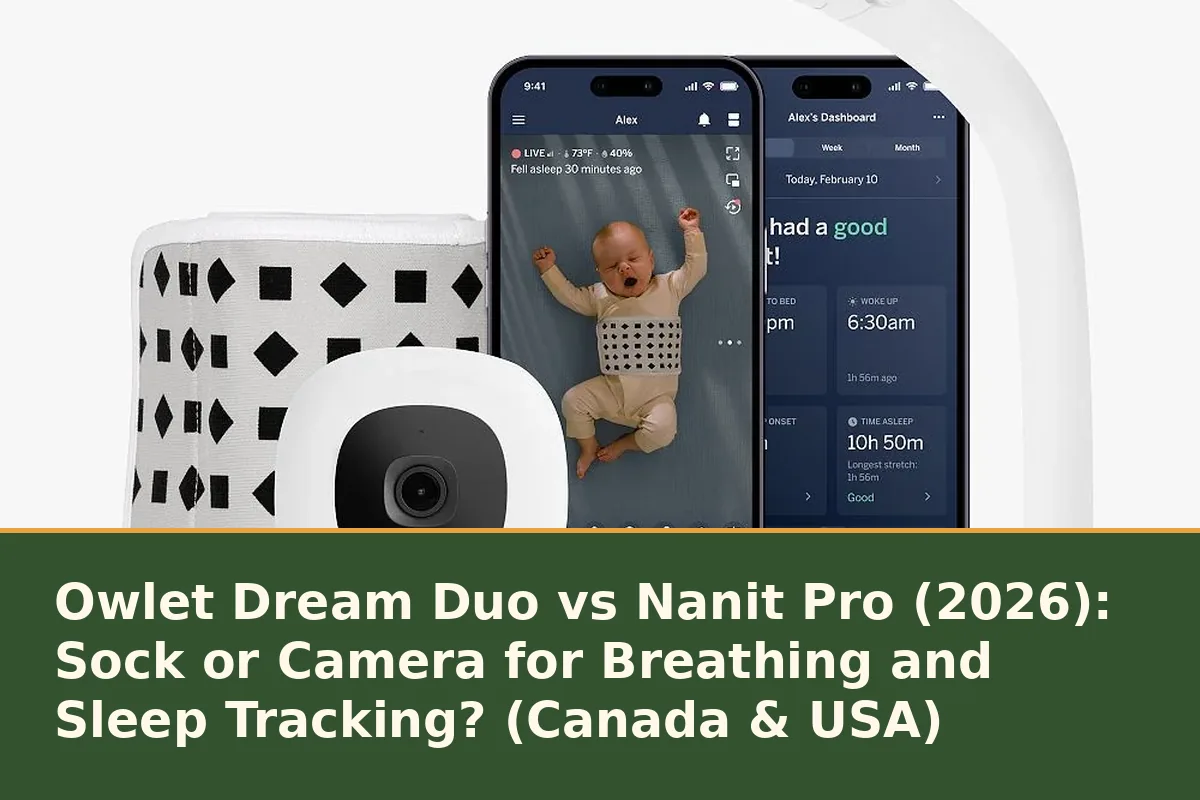
The Owlet Dream Duo and the Nanit Pro answer the same parental question — “is my baby sleeping safely?” — from opposite directions: Owlet puts a sensor on the baby (the Dream Sock measures heart rate and oxygen from the foot, paired with a camera), while Nanit watches from above and tracks breathing motion by reading the pattern on its Breathing Wear band, with nothing electronic touching the skin. Choose Owlet for vital-sign numbers; choose Nanit for the deepest sleep analytics and a contact-free setup. Neither is a medical device, and neither replaces safe-sleep practice.
Key takeaways: the measurement is the difference. A sock can report heart rate and oxygen saturation; a camera cannot — it reports movement and breathing motion only. Everything else (video quality, app polish, alerts) is secondary to which of those two data types you actually want at 3 a.m.
What each system actually measures
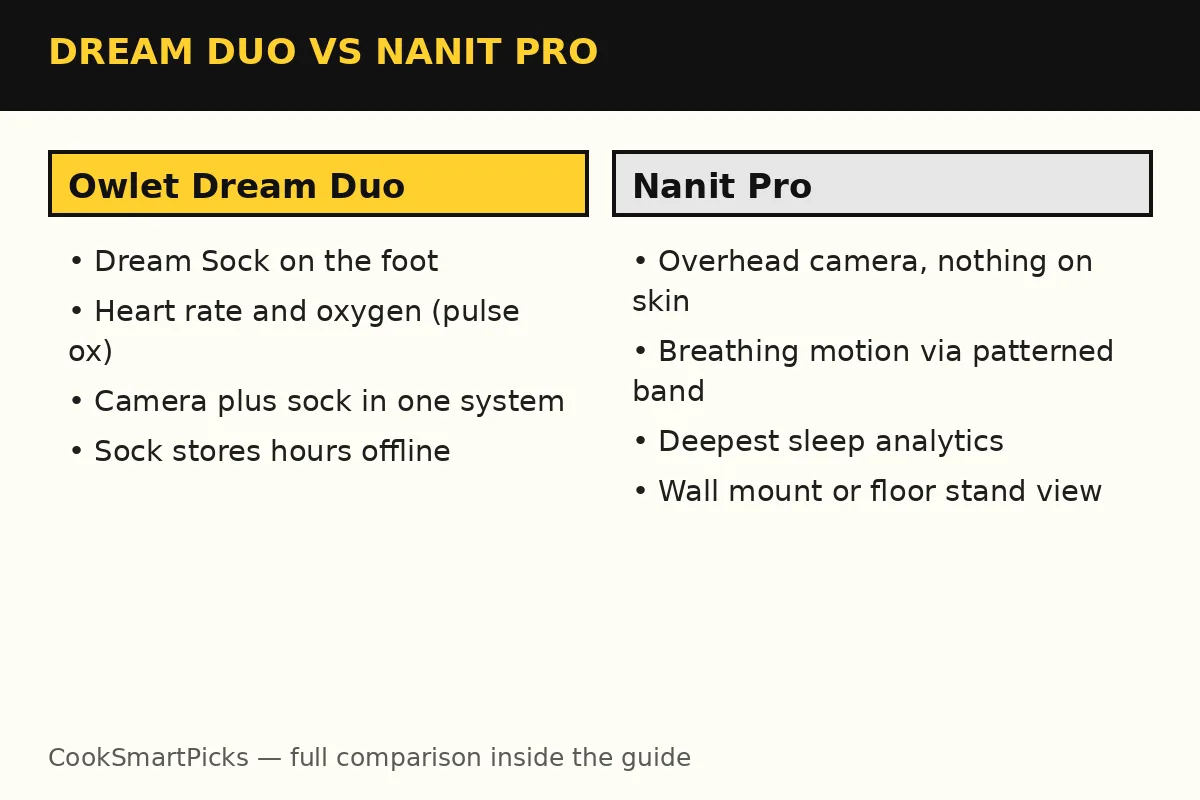
Owlet's Dream Sock is a pulse-oximetry wearable: it tracks heart rate and blood oxygen and pairs with the Dream camera in the Duo bundle, with sleep insights in the app. Nanit's overhead camera uses computer vision: sleep tracking runs from the camera alone, and breathing-motion monitoring requires Breathing Wear — a swaddle or band printed with a pattern the camera reads — which tracks the rise and fall of the chest and alerts if motion stops. Nanit does not measure heart rate or oxygen. A quotable way to put it: Owlet measures the baby; Nanit measures the crib.
Both systems stream 1080p-class video with night vision, temperature and humidity sensing and two-way audio. Both lean on subscriptions for their best analytics — Nanit's Insights plan for sleep coaching and trends, Owlet's app tiers for extended history — so budget the plan, not just the hardware, whichever you choose. For the wider field, see our baby monitor guide.
Side by side
| Feature | Owlet Dream Duo | Nanit Pro |
|---|---|---|
| Sensor type | Wearable sock (pulse oximetry) | Overhead camera (computer vision) |
| Heart rate / oxygen | Yes — from the Dream Sock | No |
| Breathing tracking | Via sock vitals | Breathing motion, needs Breathing Wear |
| On the baby | Sock on the foot | Patterned band/swaddle only; no electronics |
| Sleep analytics | Sleep insights in app | Deepest in class: stages, trends, coaching (Insights) |
| Camera view | Room camera | Overhead crib view (wall mount or floor stand) |
| Offline behaviour | Sock stores several hours of data | Camera records locally during outages |
The honest safety note every monitor guide owes you
Consumer monitors are convenience and information tools, not medical devices, and no monitor prevents SIDS. Safe sleep — baby on their back, on a flat firm surface, in an empty crib — matters more than any gadget in this guide, a point paediatric guidance makes consistently. Treat alerts as prompts to check, expect occasional false alarms from a slipped sock or a bunched swaddle, and round out the nursery with the basics in our white noise machine guide and bottle warmer guide.
Pros and cons
Owlet Dream Duo · Pros
- Only system here with heart rate and oxygen numbers
- Sock keeps sensing when the baby leaves the crib view
- Camera and sock designed to work as one system
Nanit Pro · Pros
- Nothing electronic on the baby; breathing wear is just fabric
- Best-in-class sleep analytics and overhead view
- Split-screen multi-camera support for siblings
Both · Cons
- Best analytics sit behind subscription plans
- False alarms happen (slipped sock, hidden band pattern)
- Premium pricing before accessories and plans
Best for: numbers-focused parents (Owlet); analytics-focused parents who dislike wearables (Nanit). Skip both if: a simple video monitor plus safe-sleep practice already lets you sleep — it is a legitimate choice.
The camera-first option: Nanit Pro
If the overhead view and sleep coaching are the appeal, check Nanit listings below — and remember Breathing Wear is sized, so growing babies need the next band, a running cost Owlet's sock shares in its own way.
FAQs
What is the difference between the Owlet Dream Duo and the Nanit Pro?
Owlet measures the baby directly: its Dream Sock reports heart rate and oxygen, paired with a camera. Nanit measures from above: its camera tracks sleep and, with a patterned Breathing Wear band, breathing motion. Nanit does not report heart rate or oxygen.
Does the Nanit Pro monitor breathing without a wearable?
Breathing-motion monitoring needs Nanit Breathing Wear — a swaddle or band with a printed pattern the overhead camera reads. The fabric carries no electronics. Sleep tracking itself works from the camera alone.
Are Owlet and Nanit medical devices?
No. Both are consumer wellness monitors. They do not prevent SIDS, and safe-sleep practice — back to sleep, flat firm surface, empty crib — remains the protection that matters.
Do these monitors need a subscription?
The hardware works without one, but the deepest analytics do not: Nanit's sleep coaching and trends sit in its Insights plan, and Owlet's extended history and insights sit in its app tiers. Budget the plan alongside the hardware.
Sources
Specs in this guide are the manufacturers' published figures as reported by the sources below; where testers disagree with a maker's claim, the guide says so. We do not print prices — use the buttons above for the live price in your marketplace.
- TeachToddler — Nanit vs Owlet Baby Monitor (2026) — Side-by-side of the sock vs camera approaches, what each measures, and false-alarm behaviour.
- Top Baby Picks — Nanit Pro Smart Baby Monitor Review — Nanit specs, overhead sleep tracking, Breathing Wear requirements and the safe-sleep caveat.
- The Family Advisors — Best Baby Monitor 2026 — Three-way comparison of Nanit Pro, Owlet Dream Duo and CuboAi with monitoring-method table.
Last updated: November 20, 2026. We refresh this guide whenever the makers revise these products.