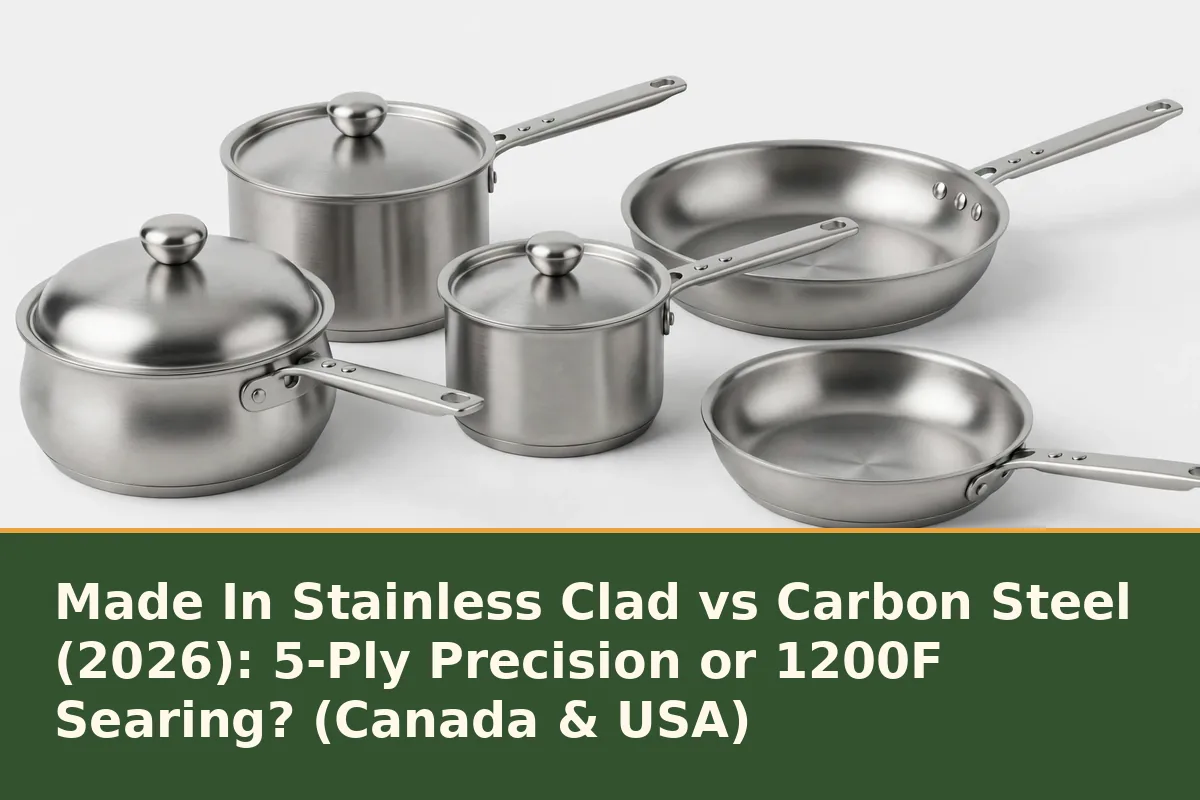
The Made In Stainless Clad Frying Pan refuses the usual Cookware shortcut of one winner. Professional kitchens stock both materials because they do different jobs: stainless clad for precision, sauces and anything acidic; carbon steel for violent heat and searing. Made In sells both at chef grade - 5-ply stainless from Italy and pre-seasoned carbon steel - so this guide splits the decision by what you actually cook.
Key takeaways: the stainless line bonds five layers around an aluminium core at about 2.7 mm, is induction-ready and oven-safe to 800F; the carbon line is 99 percent iron and 1 percent carbon, arrives pre-seasoned, shrugs off 1200F and open flame, and weighs about 3 lb in a 10-inch pan against 5.4 lb for cast iron.
What is new and why it matters
Made In own professional guide confirms the material split and limits used here - stainless to 800F, carbon steel to 1200F, cast iron to 900F, all induction-compatible - and independent review synthesis adds the heat-test results and the roughly 2.7 mm clad thickness.
A quotable way to put it: Carbon steel is the only common pan material rated from a home burner to a 1200F wood-fired oven without changing pans. Related reading: our carbon steel pan guide our ceramic cookware guide our All-Clad D3 vs D5 guide.
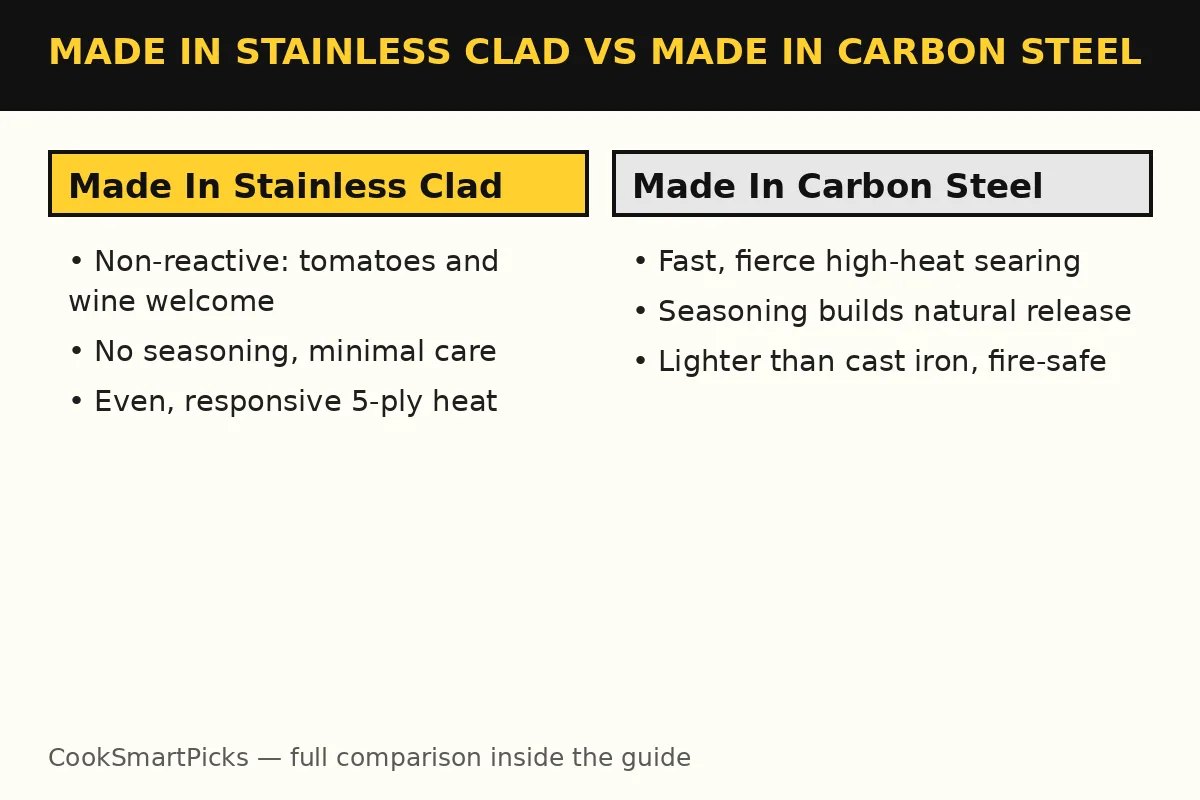
Made In Stainless Clad Frying Pan vs Made In Carbon Steel Frying Pan
| Feature | Made In Stainless Clad | Made In Carbon Steel |
|---|---|---|
| Construction | 5-ply stainless and aluminium, about 2.7 mm | 99 percent iron, 1 percent carbon |
| Oven limit | 800F | 1200F, open fire and grill |
| Weight (10 in pan) | About 2.25 lb | About 3.0 lb (cast iron about 5.4 lb) |
| Care | Hand wash recommended | Hand wash only, keep seasoned and dry |
| Acidic food | Yes - non-reactive surface | Avoid long acidic simmers (strips seasoning) |
| Origin | Italy | France (knives and copper also France); some lines Sweden per maker guide |
Pros and cons
Made In Stainless Clad - Pros
- One brand, both professional answers: this guide compares materials by job instead of crowning a fake overall winner
- Independent heat testing put the Made In 12-inch stainless ahead of an All-Clad rival on boil time and heat retention
- Carbon steel delivers cast-iron searing at roughly half the weight, and its seasoning genuinely improves with every service
Cons and watch-outs
- Carbon steel is a commitment: hand wash, dry on the stove, mind the seasoning, and keep long tomato simmers in the stainless
- Stainless sticks for eggs and fish until preheat and fat are right - technique is part of the price
- Premium direct pricing on both lines - stated plainly; neither is a budget pan
Best for: stainless for sauce, weeknight versatility and acidic cooking; carbon for steak, stir-fry and eggs-over-time. Many serious kitchens end with one of each - the honest answer this guide leads with.
The alternative: Made In Carbon Steel Frying Pan
Choosing only carbon steel counters with speed and sear: it heats faster, releases better as seasoning builds and goes over open fire, at the cost of hand care and acidic-food limits the stainless does not have.
FAQs
Is Made In stainless really 5-ply?
Yes. Five bonded layers - stainless cooking surface, a three-layer aluminium core and a magnetic stainless exterior for induction - at about 2.7 mm total thickness.
Can carbon steel go in the oven?
Yes, to 1200F per the maker, including broiler, grill and open fire. The stainless clad line is rated to 800F.
Why not cook tomato sauce in carbon steel?
Acid slowly strips the seasoning layer that gives carbon steel its release. Stainless is non-reactive, so acidic and long-simmered food belongs there.
Stainless or carbon steel: which one pan should I buy?
Stainless if one pan must do everything with the least care. Carbon if searing is your main job and you will keep it seasoned.
Sources
Specs in this guide are the manufacturers' published figures as reported by the sources below; where testers disagree with a maker's claim, the guide says so. We do not print prices — use the buttons above for the live price in your marketplace.
- Made In - What cookware do professional chefs use? — Maker guide: material roles, 5-ply construction, oven limits (800F stainless, 1200F carbon, 900F cast iron), weights and origins.
- Reviews Chronicle - Made In cookware review 2026 — Review synthesis: independent heat tests versus All-Clad, 2.7 mm thickness, line origins and care requirements (prices not printed in our guide).
- KitchenPanGuide - Made In cookware materials benchmark — Materials benchmark: construction, reactivity, induction compatibility and oven limits by exact product line.
Last updated: November 20, 2026. We refresh this guide whenever the makers revise these products.