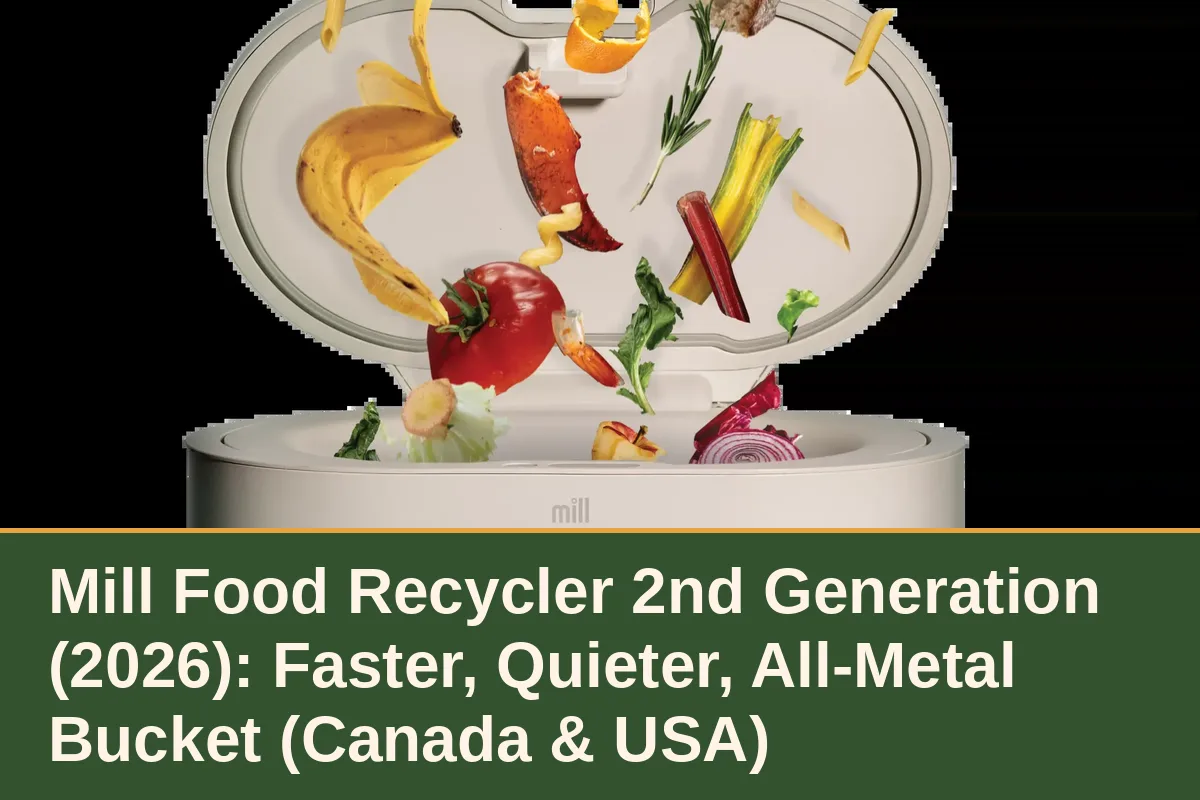
The Mill Food Recycler (2nd generation) is a kitchen bin with a job: it takes the day's food scraps — including small chicken bones — and dries and grinds them overnight into odourless, shelf-stable grounds, shrinking volume by about 80 percent per Mill, so the 6.5-litre bucket empties roughly monthly instead of nightly. Gen 2 rebuilds the inside around the original's two complaints: vertical augers replace the horizontal paddles, heating now wraps the whole bin interior instead of only the bottom, the bucket is all metal with a PFAS/PFOA-free ceramic coating, and cycles are faster and quieter. It is organisation for the waste stream itself — the bin that ends the smelly under-sink caddy.
Key takeaways: Mill is not a composter and says so: the output is dehydrated grounds, which you can mail back through Mill's chicken-feed programme, add to a pickup service where offered, or use in the garden as an input. Gen 2 also added a purchase option alongside the rental plans, and new stainless and black finishes joined the original white in fall 2025.
What actually changed in Gen 2
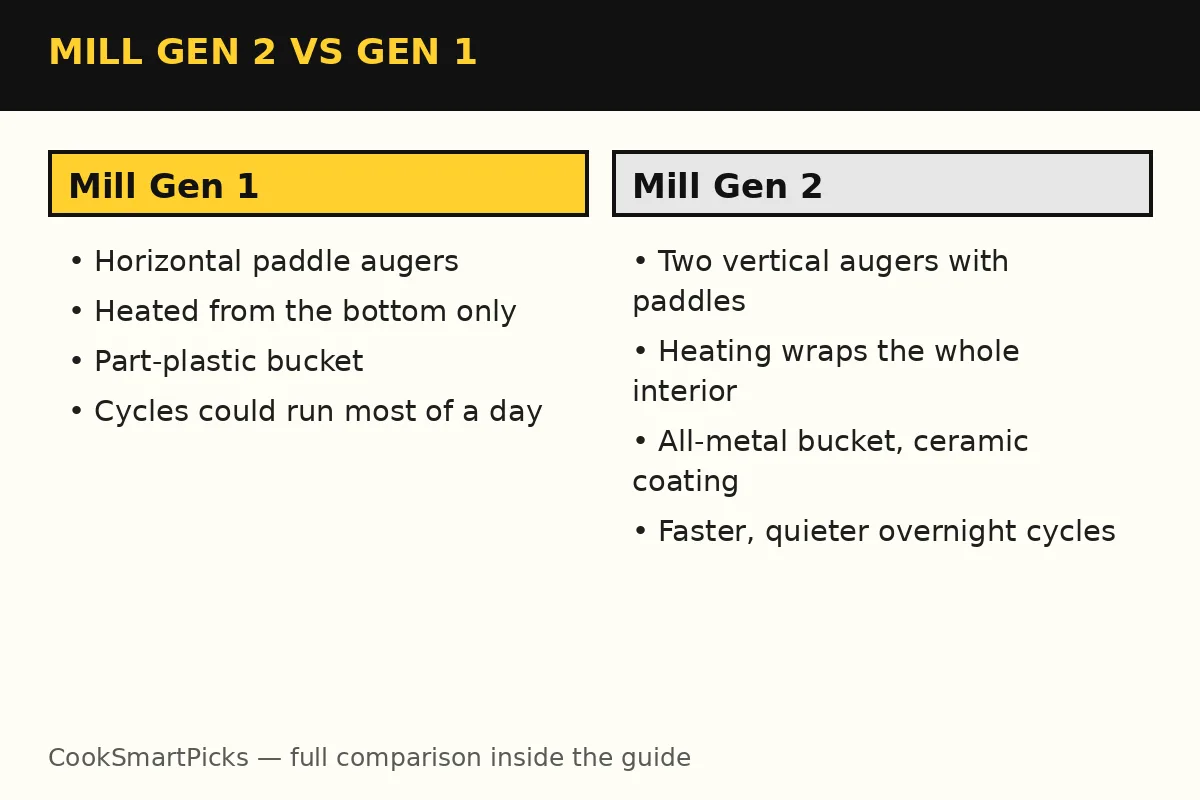
Three engineering changes matter. The augers: two vertically mounted rods with arm-like blades chop and mix in three directions, where the first generation's horizontal paddles could jam and ran long. The heat: the element now contacts the entire bin interior, and the all-metal bucket transfers that heat instead of insulating against it, so drying finishes hours sooner. The software: machine learning trained on the first generation's fleet data sizes each cycle, with dual humidity sensors (inlet and exhaust) deciding when a load is actually dry. Reviewers who lived with both generations report the practical result plainly: a 10 p.m. cycle is done by morning, quietly enough not to disturb evening television. A quotable way to put it: Gen 1 proved the idea; Gen 2 made it keep a household schedule.
The honest limits belong in an organisation guide. The grounds still have to go somewhere — mail-back boxes take storage space, and households with good municipal compost pickup gain the least. The bin is a substantial appliance (about 27 inches tall, 58 lb per Mill's specs) that needs a permanent kitchen spot, unlike the caddies in our electric kitchen composter guide, and the grounds are an input to compost or feed, not finished compost themselves.
Gen 2 vs Gen 1, side by side
| Feature | Mill Gen 2 | Mill Gen 1 |
|---|---|---|
| Grinding | Two vertical augers with dislodge paddles | Horizontal paddles |
| Heating | Whole-interior heating element | Bottom heating only |
| Bucket | All metal, ceramic-coated, 6.5 L | Part-plastic bucket |
| Cycle behaviour | Overnight; ML-sized run times | Could run most of a day |
| Noise | Redesigned seal and augers — markedly quieter in reviews | Noticeable in open-plan homes |
| Buying | Purchase or rental plans | Rental-first launch |
| Output | Dry grounds: mail-back, pickup or garden input | Same grounds programme |
Pros and cons
Mill Gen 2 · Pros
- No smell, no fruit flies: scraps dry the same night
- Bucket empties about monthly — a genuine organisation win
- Takes small bones and most kitchen scraps (oyster shells excluded)
- App tracks impact and handles boxes, filters and pickup
Mill Gen 2 · Cons
- Premium appliance pricing, plus filters and optional pickup costs
- Grounds are not compost — they still need a destination
- Big, heavy, permanent footprint for a bin
Best for: households without municipal compost pickup, bear- and pest-prone areas where scraps cannot sit, and anyone whose kitchen organisation fails at the waste step. Skip if: your city collects food waste weekly — a good sealed caddy from our sensor trash can guide and the under-sink layouts in our under-sink organiser guide solve it for far less.
The simpler route
If you only need scraps contained and odour-controlled between pickups, a countertop electric composter from our composter guide is the smaller commitment. The Mill earns its place when the whole waste routine — daily scraps, monthly emptying, no smell — is the thing being organised.
FAQs
What is the difference between the Mill Gen 2 and the original Mill?
Gen 2 replaces the horizontal grinding paddles with two vertical augers, heats the whole bin interior instead of only the bottom, uses an all-metal ceramic-coated bucket, and sizes cycles with machine learning and dual humidity sensors. Reviewers find it faster and significantly quieter; the grounds programme and app carry over.
Is the Mill a composter?
No — Mill says so itself. It dries and grinds scraps into shelf-stable grounds. Those grounds can go back to Mill for chicken feed, into a pickup service, or into your garden and compost as an input; they are not finished compost.
How often do you empty the Mill?
About monthly for a typical household, per Mill: drying shrinks scraps by roughly 80 percent, and the bucket holds 6.5 litres (about 12 lb of fresh scraps per load cycle). Heavy cooking households will empty sooner.
What cannot go in the Mill?
Very little: Mill's own guidance excludes a short list such as oyster shells and large bones. Small chicken bones, coffee grounds, dairy and cooked foods are accepted — check Mill's current accepted-items list, since it updates.
Sources
Specs in this guide are the manufacturers' published figures as reported by the sources below; where testers disagree with a maker's claim, the guide says so. We do not print prices — use the buttons above for the live price in your marketplace.
- Fast Company — Mill, the garbage bin for food scraps, gets a redesign — Gen 2 announcement coverage: vertical augers, whole-bin heating, purchase option and the 10,000-user milestone.
- Domino — Our Editor's Honest Review of the Mill Food Recycler — Year-long editor test: overnight cycles, 212-degree drying, app, new fall 2025 finishes and the honest cost picture.
- Mill — official product page and tech specs — Manufacturer specifications: 6.5-litre bucket, dimensions, weight and the 80 percent volume-shrink claim.
Last updated: November 20, 2026. We refresh this guide whenever the makers revise these products.